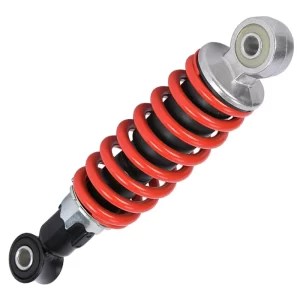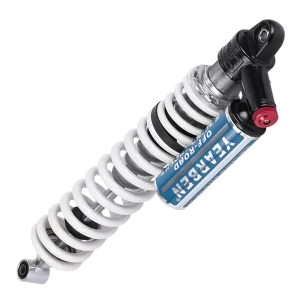
When a UTV bottoms out mid-corner or over a sharp whoop, it’s usually a signal that the shock absorber’s combination of spring rate, damping, and gas pressure isn’t matched to the load the vehicle is actually carrying. That mismatch can come from worn internals, an undersized spring, or a shock tuned for a lighter vehicle, and no amount of preload adjustment will fully correct it. This article looks at what causes bottoming out from an engineering standpoint, which adjustments actually help, and when a custom-built shock absorber from a manufacturer like Yearben is the right path to a lasting fix.
What Happens When a UTV Shock Absorber Bottoms Out
A coilover shock absorber stops motion when the coil spring binds (coil bind) or when the piston inside the shock body reaches the end of its stroke. Either condition sends impact force straight into the chassis and the rider. At the same moment, the shock oil can cavitate. Tiny vacuum bubbles form behind the piston, and the damping force drops almost to zero. Repeated bottoming deforms the shock’s internal seals, and a shock that bottoms out frequently will start losing oil within 20 to 30 hours of aggressive riding. A worn seal then lets air mix into the oil, which reduces rebound control even when the suspension is not fully compressed.
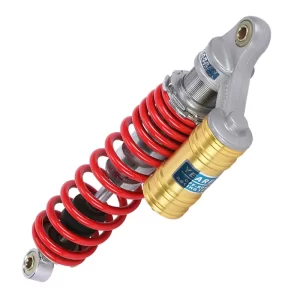
Mechanically, there is only so much stroke. If the spring rate is too low, the ride height sags and the shaft spends most of its time near the bottom of the travel window. The bump stop may catch the final inch, but a rubber stop can only absorb a small fraction of the energy from a miss-timed g-out or a hard landing. The real solution starts with understanding exactly why the shock is running out of travel in the first place.
Common Causes of UTV Shock Bottoming Out
Most bottom-out conditions can be traced to one of three root problems: the spring is too soft, the damping is too weak, or the internal gas pressure has dropped. Often two or three of these happen at once.
Is Your Spring Rate Too Low?
A spring rate selected for a stock, unloaded UTV might work fine on smooth trails. Add a full tool rack, a passenger, and aftermarket bumpers, and the same spring will collapse under the added mass. Spring rate is a function of wire diameter, coil count, and material. Replacing a 225 lb/in spring with a 250 lb/in spring changes the force needed to compress it by about 10 percent, which can pull the ride height back into the center of the travel window. The baseline is to measure sag with your usual riding load. If the shock sits more than 30 percent into its stroke at rest, the spring rate is undersized.
Why Does Nitrogen Pressure Matter for Bottoming Out?
Nitrogen pressure inside the reservoir or the shock body resists oil cavitation. When pressure drops, either through a slow leak or after the shock has been overheated, the oil is more likely to foam. Foam compresses easily, so the shock loses its resistance during fast compression events. Bottom-out hits that would normally be absorbed by the damping circuit suddenly transfer all their energy into the chassis. A shock with 150 psi of nitrogen may arrest a g-out, while the same shock at 60 psi will hit the bump stop hard.
| Symptom | Likely Cause | Check |
|---|---|---|
| Sag exceeds 30% of stroke | Spring rate too low | Measure ride height fully loaded |
| Harsh bottom-out on fast hits only | Nitrogen pressure low or oil cavitation | Pressure test the reservoir |
| Shock body shows oil film | Seal failure from repeated bottoming | Visual inspection for wetness around shaft |
| Ride feels soft even after preload added | Spring rate still insufficient | Replace spring with higher rate |
Adjustments That Reduce Bottoming Out — and Their Limits
Before ordering a new set of shocks, there are several adjustments worth trying. Not all of them deliver what the marketing copy promises.
Can I Just Crank Up the Preload?
Adding preload raises the ride height, which gives the shock more available travel before it reaches the bump stop. It does not change the spring rate. A softer spring with high preload will still compress easily under a heavy load, and the first inch of travel can feel harsh because the spring is already under high static load. Preload is best used to compensate for small weight changes, maybe 30 to 50 pounds. If you need more than about three full turns of preload collar to restore sag, the spring itself is wrong.
Oil viscosity and nitrogen pressure also play roles that adjustments cannot fully fix. A thicker oil will increase damping force, but it may also make the shock harsh at low speeds. Recharging nitrogen to the proper pressure restores anti-cavitation performance, but only if the seals are intact. If the shock body is scored or the seal head is worn, new oil and gas will escape quickly, and the bottoming returns.
When Custom Shock Tuning Becomes Necessary
Once the basic adjustments reach their limit, the next step is to look inside the shock. The piston, shim stack, and gas pressure work together to define how the shock manages energy. OEM shocks on many utility UTVs are fitted with a single-stage piston and a linear damping curve that prioritizes low-speed plushness. Under high-speed compression, the same piston provides too little resistance, and the shock blows through the stroke.
We see this pattern frequently in our factory. A customer brings a UTV that rides well on graded roads but bottoms out in sand dunes or on rocky climbs. The fix is not simply a stiffer spring. It involves a two-stage compression shim stack that adds high-speed damping without choking the low-speed compliance. In our experience, a remote-reservoir shock with a 46 mm piston and a nitrogen charge of 200 psi, matched to a dual-rate spring, can eliminate bottoming in a 1,800-pound UTV where a 2.0-inch emulsion shock with a single-rate spring failed within the first day of hard driving.
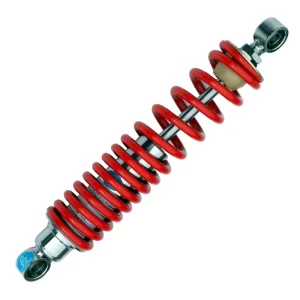
The key is to match the damping curve to the sprung mass and the terrain. A shock tuned for fast desert chop needs a digressive high-speed curve so the wheel can react quickly. A shock for rock crawling benefits from a progressive curve that ramps up resistance near the end of the stroke. Both profiles can be built into a custom shock, and both require a manufacturer that understands how to select and stack shims, not just one that assembles off-the-shelf components.
Sourcing UTV Shocks That Won’t Bottom Out: What to Ask a Manufacturer
When you are evaluating a shock supplier, the conversation should go beyond catalog part numbers. Request the damping force curves for your weight range, the spring rate options, and the nitrogen working pressure. A manufacturer that cannot supply a dyno graph is likely selling shocks with a single, untested configuration.
At Yearben, we regularly work with importers, OEMs, and aftermarket brands to produce UTV shock absorbers with specific bore sizes, piston types, and seal compounds. Our factory has built more than 200 shock models across ATV, UTV, and off-road applications, with a production capacity of 1.5 million units per year. That volume supports a level of component consistency and batch testing that smaller workshops cannot match.
| Specification | Trail Riding | Dune and Desert Racing |
|---|---|---|
| Spring rate (front) | 225-275 lb/in | 300-350 lb/in dual-rate |
| Shock body diameter | 2.0 inch | 2.5 inch with remote reservoir |
| Nitrogen pressure | 180 psi | 220 psi |
| Piston type | Single-stage | Two-stage compression |
| Oil volume | Standard | Increased for heat dissipation |
When you ask about minimum order quantities for custom-valved shocks, a qualified factory will tell you how many units they need to amortize the setup cost and will provide a sample shock for your evaluation before full production. If your program involves a UTV model with a known bottoming tendency, it is worth confirming the damping curve and spring rate directly with the engineering team before finalizing any order, reach out at info@yearbenshocks.com.
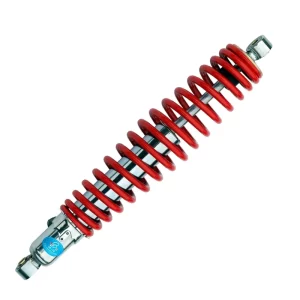
Getting UTV Shocks Built to Your Specs
Bottoming out is not just uncomfortable. It is damaging your suspension, steering, and chassis joints with every hard impact. Off-the-shelf shocks often settle for “good enough” because they are built to an average load range that most riders exceed once they add a passenger and gear.
A shock absorber built to your exact specifications, with the right spring, the right oil volume, and a nitrogen charge matched to your terrain, removes the root cause. That is what we do at Yearben.
To discuss a custom UTV shock order, send your vehicle weight, riding style, and performance goals to info@yearbenshocks.com or call +86-523-86566899. Our engineering team will work with you to define the piston, valving, and spring setup that prevents bottoming out while keeping the ride controlled over varied terrain.
UTV Shock Bottoming Out: Common Questions
What is the first thing to check when a shock bottoms out?
Start with loaded sag. Measure the eye-to-eye length with the UTV loaded as you usually ride it. If the shock compresses more than 30 percent of its total travel at rest, the spring rate is too soft for the actual weight. That single measurement often points directly to the spring, without needing to tear down the shock.
Is it normal for new shocks to bottom out?
No, but it happens when someone installs a shock tuned for a different vehicle weight or riding style. A shock designed for a stock UTV may bottom immediately if the vehicle carries a heavy aftermarket cage and larger tires. In most cases, the shock is not defective, it is simply under-sprung for the application.
In the projects we have supported, riders often try heavier oil first, thinking it adds damping. Thicker oil does increase compression and rebound, but it cannot compensate for a spring that is 50 lb/in too soft. The result is a shock that is harsh on small bumps and still bottoms on big ones. The correct order is to get the spring rate right, then re-valve for the oil weight and piston you intend to run.
Can a reservoir shock stop bottoming out better than a non-reservoir?
A remote reservoir adds oil volume and separates the nitrogen charge from the oil. This delays heat fade and reduces the chance of cavitation during fast, repetitive hits. The extra oil volume also lowers the peak internal temperature by roughly 15 to 25 percent in sustained high-speed use, keeping the damping more consistent. The reservoir itself does not change the spring rate, but it keeps the shock functioning correctly when you need it most.
Does bottoming out damage the shock permanently?
Yes, and the most common failure is a cut seal. When the piston slams the bottom of the shock body, metal particles can score the chrome shaft. That scoring then destroys the seal lip, causing oil loss and eventual nitrogen leakage. A shock that bottoms hard a few times a season may survive. One that bottoms on every ride will fail prematurely. If your shocks have been bottoming regularly and you notice oil film on the shaft, it is worth confirming the seal condition and piston clearance. Share your vehicle weight and riding conditions, and we can help you determine whether a rebuild or a custom-tuned replacement is the more economical path.
If you’re interested, check out these related articles:
Damping-Adjustable-Shock-Absorber
Utv-Shocks-For-Off-Road
Remote-Reservoir-Shocks-Manufacturer
Off-Road-Coilover-Shocks
Triple-Bypass-Shock-For-Off-Road