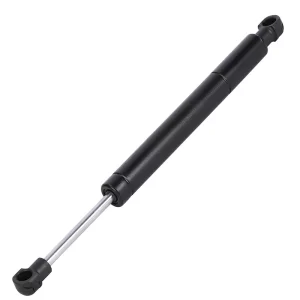
Gas vs oil shock absorber performance comparisons tend to focus on damping response alone, but twenty years of suspension engineering teaches you that durability and application matching decide whether a shock works where it counts. Oil shocks provide predictable long-term load control, while nitrogen-charged gas shocks resist fade under rapid, repetitive impacts. The choice isn’t simply about better versus worse; it’s about matching the damper’s internal design to the vehicle’s weight, speed, and duty cycle. I’ve guided OEM programs through both types and can clarify when gas delivers the edge and when oil is the smarter long-term bet.
How Gas and Oil Shocks Work and Differ
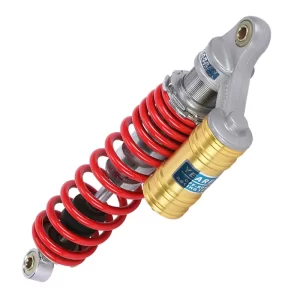
The gas vs oil shock absorber question starts with the internal construction. Both types convert kinetic energy into heat by forcing hydraulic oil through a piston valving stack. An oil-damped shock relies on the displacement of the piston rod to compress a mechanical spring or an air pocket for volume compensation; some use a foam cell to control aeration. A gas shock adds a nitrogen charge, typically at 100 to 250 psi, that pressurizes the entire oil column. This gas pressurization reduces cavitation, the formation of vapor bubbles when oil pulls away from the piston, and keeps damping force consistent during rapid cycling. Monotube gas shocks separate oil and gas with a floating piston, while emulsion designs let the gas mix with the oil, relying on the shock’s orientation to keep the gas at the top.
Gas shocks respond faster to small, high-frequency inputs because the pressurized oil instantly resists piston displacement without the momentary lag caused by air pockets in a non-pressurized shock. This translates to sharper steering feedback and better tire contact on washboard and chatter. Oil shocks offer more consistent low-speed damping because there is no gas charge to bleed off over time, and the valving can be tuned for progressive, load-sensitive control, valuable for heavy vehicles and seat dampers.
Fade resistance is where gas shocks pull ahead decisively. Under extended hard use, the oil in any shock heats up, thinning the fluid and lowering damping force. A gas shock’s charge maintains constant pressure on the oil, delaying the aeration that accelerates fade. In dyno testing, a properly charged gas monotube can hold damping consistency within 10 percent over 20 minutes of continuous cycling, while an oil shock may lose 20 to 30 percent damping force as air contamination builds. This matters most in desert racing, aggressive trail riding, and any application where shock oil temperature routinely exceeds 120 degrees Celsius.
Cavitation is another differentiator. When the piston moves too fast on rebound, the pressure behind it drops below the oil’s vapor pressure, creating bubbles that collapse violently and erode shims and pistons. Gas pressurization raises the bulk modulus of the fluid, suppressing bubble formation. For piston speeds over 1.0 m/s, gas shocks are effectively mandatory if you expect the valving to survive a season.
| Performance Factor | Gas Shock (Nitrogen-Charged) | Oil Shock (Non-Pressurized) |
|---|---|---|
| Small-bump compliance | Excellent, immediate response | Good, slight initial lag |
| High-speed damping stability | Superior, resists fade | Moderate, fades earlier |
| Cavitation resistance | High at rated pressure | Limited without pressurization |
| Low-speed control | Good, can be pressure-dependent | Excellent, fully valve-controlled |
| Long-term consistency | Declines as gas leaks | Gradual oil degradation |
| Rebuild interval | Shorter (200–500 hours off-road) | Longer (500–800+ hours) |
Choosing Between Gas and Oil for Your Application
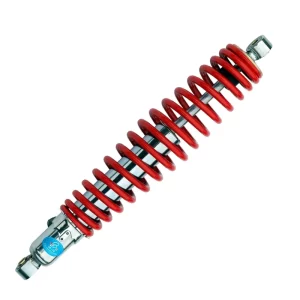
Matching the shock type to the vehicle’s primary use case prevents premature failure and rider dissatisfaction. For high-speed desert runners, Baja trucks, and aggressive UTV trail rigs where piston speeds routinely exceed 0.8 m/s and oil temperatures climb, gas-charged coilovers or reservoir shocks are the minimum. The nitrogen charge keeps the damping consistent from start to finish, and remote reservoirs add oil volume for better heat dissipation. Yearben’s off-road gas coilover shocks, for instance, use a threaded spring perch and nitrogen charge adjustable from 150 to 250 psi, hardening the damping curve for the customer’s terrain.
For heavy, low-speed vehicles (commercial mowers, agricultural sprayers, and mining equipment seat suspensions), hydraulic oil dampers without gas charging offer more stable load control at a lower cost. The damping is purely valve-driven, so it holds fine-tuned low-speed bypass characteristics that a gas shock might mask with its charge. I’ve specified 38 mm hydraulic seat dampers for construction vehicle seats where the 200 to 300 kg operator weight plus machine vibration requires a damper that will not lose pressure on a 12-hour shift. Oil dampers last longer in this steady-state, low-piston-speed environment.
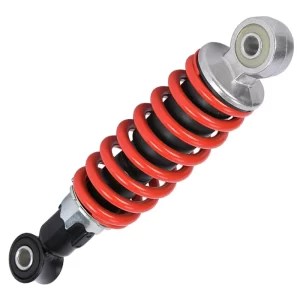
For mid-range UTVs and ATVs used for mixed trail and utility work, emulsion gas shocks (where gas mixes with oil) provide a good balance: better fade resistance than pure oil with a simpler, lighter package than a remote reservoir. Matching spring rates and shock valving to the actual vehicle weight remains more important than the presence of nitrogen.
If your program involves mixed-use vehicles where conditions change rapidly (an ATV that hauls feed in the morning and runs trails in the afternoon), confirm damping curves across the full speed range before finalizing your BOM. We can run dyno profiles for your weight spec and duty cycle; reach out at info@yearbenshocks.com.
Manufacturing Quality and Long-Term Reliability
A shock absorber’s type means little if its build quality lets it down. For gas shocks, the integrity of the nitrogen charge depends entirely on the seal stack and the assembly process. I’ve inspected returned units where nitrogen had migrated past the seal within three weekends of riding because the manufacturer used a single-lip nitrile seal with no backup ring. In our production line, gas shocks receive a triple-lip seal assembly (a combination of an elastomer wiper, a primary PTFE lip seal, and an O-ring energizer), and every unit is pressure-tested at 2.5 times its working charge for 30 minutes before shipping. The floating piston O-ring in a monotube is just as critical; we use a filled PTFE energizer with a backup ring to prevent gas bypass even after 400 hours of testing.
Oil shock reliability hinges on fluid quality and contamination control. Oil that is too thin at working temperature will fade early; oil that is too viscous will cause harsh low-speed damping. We specify a 10W synthetic hydraulic fluid with a viscosity index above 150, which maintains consistent shear stability between minus 20 and 140 degrees Celsius. Clean assembly matters more than the oil spec. At our factory, oil is filtered to 5 microns and filled under vacuum to prevent air entrapment, which kills damping consistency as effectively as a lost gas charge.
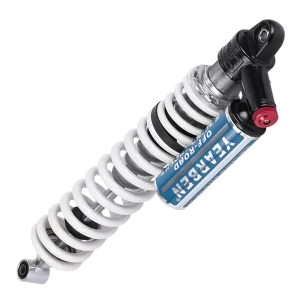
Rebuilding expectations: gas shocks typically need a rebuild every 200 to 500 hours of hard off-road use because the gas pressure bleeds down gradually; an oil shock can run 500 to 800 hours or more, but the oil itself should be changed at the 300-hour mark to remove wear particles. The rebuild cost is similar, so the real difference is whether your riding schedule accommodates the more frequent service intervals of a gas shock.
Sourcing the Right Shock for Your Program
Choosing a supplier for gas or oil shocks involves more than comparing catalog photos. At the OEM level, you need a factory that can dyno-tune damping to your exact spring rate and vehicle corner weight, not just ship a generic valving. For gas shocks, ask about the nitrogen charging method: a lost-fill process (where gas is injected and the port welded shut) is cheap but makes future rebuilding difficult; a Schrader valve or needle fill port allows field recharge and is the mark of a serviceable design. Confirm that every shock undergoes a pressure-decay test and a full travel dyno cycle before packing.
For oil dampers used in seat suspensions or steering dampers, the cylinder bore finish and rod chrome plating determine lifespan. A 0.2 μm Ra bore finish with a hard chrome rod measured to at least 20 μm thickness will outperform a coarser finish every time. At Yearben, we supply hydraulic dampers from 18 mm to 41.5 mm cylinder diameters, all with honed bore finishes and hardened chrome rods, and we provide full test data with each batch.
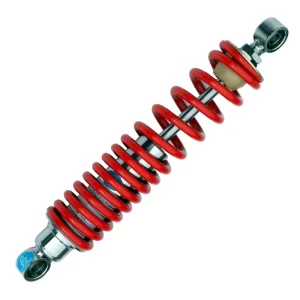
When ordering a custom shock run, the information the factory needs is: extended and compressed lengths (eye-to-eye or stem dimensions), upper and lower mount types, spring rate if coilover, vehicle corner weight, and intended use case. A serious manufacturer will ask these questions; a trading company will take your money and ship whatever is on the shelf. We have handled OEM programs for Polaris RZR and Can-Am Defender replacement shocks, Joyner 800cc UTVs, and commercial lawn equipment, all with spec-exclusive valving protected by contract. If your program requires a specific damping curve or a unique length, we can work from your drawing or reverse-engineer a sample.
Taking the Next Step with Your Shock Program
Suspension performance headaches usually trace back to one of two things: a shock type misapplied to the wrong load case, or a manufacturing detail that slipped past QC. I have spent two decades solving both problems at the factory level, and the fix often is not switching from oil to gas or vice versa; it is getting the valving, charge, and seal package right for your exact machine. Whether you are speccing a 38 mm seat damper for a mining truck or a 2.5-inch remote reservoir coilover for a desert racer, the first step is a technical conversation that pins down your corner weights, travel, and duty cycle. Send your part number, vehicle specs, and quantity to info@yearbenshocks.com, or call +86-523-86566899. We will confirm the configuration and provide a full performance data sheet before you commit to a sample order.
Frequently Asked Questions About Gas and Oil Shock Absorbers
Can I replace oil shocks with gas shocks on my ATV?
Yes, if the mounting dimensions match and you re-spring and re-valve for the gas shock’s internal pressure. Gas shocks add a small spring force that changes the ride height; you will need a slightly softer main spring to compensate. More importantly, a gas shock requires different rebound valving because the charge pushes back on the piston. I have seen drop-in gas shocks without re-valving cause a harsh, over-sprung ride that wears out bushings. A full swap is a tuning exercise, not a parts-bin change. If your ATV carries heavy loads at low speed, the original oil shock may be the better tool.
How do I know if a gas shock has lost its charge?
The simplest field test is to remove the shock, compress it by hand, and release. A fully charged gas shock will extend on its own; a flat one will stay compressed or extend slowly. On the vehicle, loss of charge results in a sudden drop in high-speed damping and a bouncy, uncontrolled feel over choppy terrain. If your shock feels fine on smooth roads but turns vague the moment you hit rollers, suspect the nitrogen. I recommend a pressure check with a no-loss gauge every 50 hours of hard off-road use.
Which lasts longer, a gas shock or an oil shock?
Oil shocks generally last longer between rebuilds because there is no gas charge to leak. In our testing, a quality hydraulic damper on a commercial mower can exceed 800 hours before the oil noticeably shears down. A gas shock used in desert racing may need a recharge or rebuild at 200 to 300 hours. However, gas shock life depends heavily on seal quality and charge pressure; a well-built monotube with premium seals and a conservative 150 psi nitrogen fill can match an oil shock’s interval if used within its design envelope. The real difference is that a gas shock’s failure mode is sudden, while an oil shock’s is gradual.
Are gas shocks worth the extra cost for a utility UTV?
If your UTV spends more time hauling feed and crawling fence lines than at full throttle, the gas charge’s fade resistance is not likely to be the limiting factor. An oil-damped emulsion shock or even a pure hydraulic damper with the correct spring rate will control body motion reliably at a lower part cost. I have worked with fleet operators who tried gas shocks on their Polaris Ranger service units and switched back because the cost per unit-hour did not improve. Spend the budget difference on a better spring package and correct preload. If the same UTV also runs fast recreational trails on weekends, a gas emulsion shock splits the difference nicely.
What should I ask a factory before ordering custom gas shocks?
Request the full dyno curve for your specific weight and travel, not just a sample sheet from a different model. Ask about the gas charging process (Schrader valve versus welded port), the seal material and lip configuration, and whether they pressure-test every unit before shipping. Confirm the rod diameter and surface hardness (at least 20 μm chrome over hardened steel) and the oil specification and fill volume. A factory that answers these questions with data, not reassurances, is worth your business. Share your requirements at info@yearbenshocks.com and we will provide the full engineering package for review.
If you’re interested, check out these related articles:
4X4-Shock-Absorber-Supplier
Remote-Reservoir-Shocks-Manufacturer
Ride-on Mower Shock Absorbers 38mm, Shock Absorber Manufacturer
Best-Off-Road-Shocks