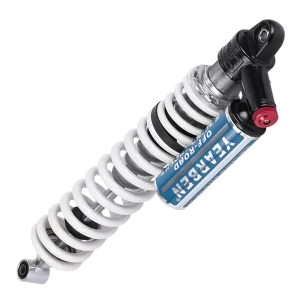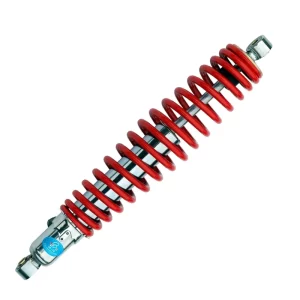
Adding a heavy bumper, winch, and armor can drop the front of a 4×4 truck by an inch before the trail begins. Most off-the-shelf front coilovers for 4×4 trucks are valved for stock weight, which ignores the real axle load after the build is complete. That mismatch causes bottoming, fades damping on rock ledges, and shortens seal life. I have spent years specifying coilover shocks for heavy off-road rigs, and the pattern is consistent: a coilover ordered with a spring rate, travel, and internal valving matched to the measured axle weight consistently outlasts and outperforms a premium off-the-shelf unit on rock crawling terrain. This guide walks through the critical specs and how to get them right.
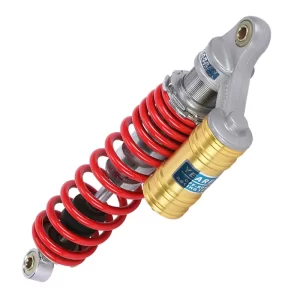
How Front Coilovers Manage Axle Load and Articulation in Rock Crawling
A front coilover packages the coil spring and shock absorber into a single assembly, which changes how the suspension handles both static load and dynamic movement. On a 4×4 truck set up for rock crawling, the front axle often carries 55 to 65 percent of the vehicle’s total weight once you add a heavy winch bumper, a winch, and thick skid plates. A shock that cannot generate enough damping force for that actual sprung weight will cycle too quickly, causing the body to lurch over obstacles and leaving the driver with less control at slow speed.
The coilover spring sets ride height and absorbs the primary impact force, while the internal hydraulic circuit controls how quickly the spring compresses and extends. In our manufacturing and testing work, we frequently see that generic spring rates selected for a catalog spec sheet fail when the real corner weight is 200 pounds heavier than the designer assumed. The coilover then rides lower than intended, reducing uptravel, and the internal piston runs deeper in the compression stroke where damping is stiffer. That narrows the usable range of the shock and makes every ledge feel harsher than it should.
Choosing Spring Rate and Travel Length for Your Truck’s Measured Weight
Spring rate is the first variable to lock in. For a typical full-size 4×4 with a winch and aftermarket front bumper, the front spring rate often lands between 350 and 500 lb/in to support the extra mass without excessive preload. A rock crawler that sees slow, precise tire placement benefits from a slightly softer rate that lets the suspension cycle deep into the travel without unloading suddenly, whereas a truck that also sees higher-speed desert runs may need a steeper rate to prevent hard bottoming at speed.
Travel length must match the suspension geometry. If your control arms and steering can handle 10 inches of wheel travel, ordering a coilover with only 8 inches of stroke wastes articulation. But an overly long coilover that forces the driveshaft or brake lines to bind at full droop becomes a failure point on the trail.
| Front Axle Weight Range | Suggested Spring Rate | Typical Travel Length |
|---|---|---|
| 2,200–2,600 lb | 350–400 lb/in | 8–10 in |
| 2,600–3,000 lb | 400–450 lb/in | 9–11 in |
| 3,000–3,400 lb | 450–500 lb/in | 10–12 in |
Weigh your front axle with the truck fully loaded, including fuel, passengers, and recovery gear, before selecting a spring rate. Preload adjustments can fine-tune ride height by about half an inch, but they cannot compensate for a spring rate that is 50 lb/in off target without compromising droop travel or making the ride punishing over small chatter.
If your front axle weight sits between two common rate options, leaning toward the softer rate and using a slightly higher internal compression damping shim stack often yields better ride compliance on rock ledges without sacrificing control on the road.
Valving and Damping Adjustments for Rock Crawling vs. Overlanding
Valving determines how the coilover resists movement. For rock crawling, the priority is a strong low-speed compression to support the truck’s weight during slow, controlled descents, with enough high-speed blow-off to absorb a sudden hit when a tire drops off a ledge onto the next rock. Rebound damping needs to be firm enough to prevent the unloaded wheel from snapping downward into a hole, but soft enough to let the tire re-contact the ground quickly after lifting.
A truck that splits duty between rock crawling and overlanding miles asks for a compromise. Valving that is perfect for crawling tends to feel overdamped on corrugated dirt roads at speed, causing the shock to pack up and the ride to become harsh. If your build genuinely needs dual performance, an adjustable coilover lets you open the bypass or clicker for highway sections and close it down for technical rock sections. The internal shim stack still sets the baseline, so it is worth confirming with the manufacturer that the adjustment range covers both use cases before committing.
When Remote Reservoirs and Larger Pistons Make a Difference
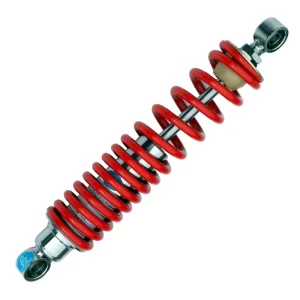
Piston diameter and oil volume directly control how well a coilover resists fade during sustained crawling or repetitive high-speed hits. A 2.0-inch piston moves less fluid per inch of stroke than a 2.5-inch piston, which means the smaller piston must generate damping pressure through higher fluid velocity. That adds heat, and heat lowers the oil viscosity, softening the damping force after 20 or 30 minutes of continuous work.
A remote reservoir increases the total oil volume and separates the nitrogen gas from the working fluid, which slows temperature rise and allows the coilover to maintain consistent damping over a longer run. For a rock crawler that spends an hour working a single obstacles, the extra cooling can mean the difference between a stable front end and a shock that progressively loses control. Vehicles that stay under 35 mph and operate in short bursts can often rely on a monotube or piggyback design without a remote reservoir, but once axle weight exceeds 3,200 pounds and ambient temperatures are high, the extra oil volume becomes a practical requirement.
| Piston Diameter | Typical Oil Capacity per Shock | Heat Management |
|---|---|---|
| 2.0 in | 300–350 ml | Fades under sustained crawling beyond 20 min |
| 2.5 in | 450–550 ml | Holds damping force through a full hour of rock crawling |
| 2.5 in w/ remote | 550–700 ml | Remains consistent even in high-ambient heat and prolonged use |
Custom-Manufactured Coilovers: What Factory Precision Brings to Performance
Most coilover failures I have seen in the field can be traced to a manufacturing shortcut that the end user never sees: a bore finish that is too rough, a seal material not rated for the shock oil temperature, or a nitrogen charge that was not verified after assembly. In our factory, the monotube body bore is honed to a surface finish that keeps seal drag low while retaining oil film under side load, and every coilover is pressurized on a nitrogen charging station with a calibrated gauge before it leaves the line.
Choosing a factory that builds its own pistons and valving shim stacks gives you control over the damping curve. We machine pistons to specific port sizes and stack shims in configurations that match the intended vehicle weight and terrain, rather than relying on a one-size-fits-all catalog valve. That level of detail means the coilover arrives ready to bolt on without requiring a re-valve before the first trail run.
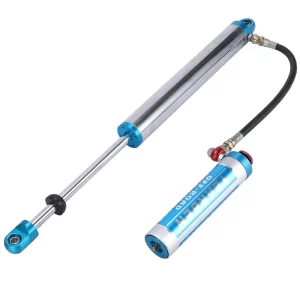
When you are ordering a custom coilover, the factory should ask for your front axle weight, the tire diameter, the desired ride height, and the primary terrain. From that data, an engineer can calculate the appropriate spring rate, select the valving profile, and choose the piston size. If the manufacturer cannot walk you through that process over a phone call or email, the coilover you receive may be nothing more than a painted shelf unit with a generic tune.
Specifying Coilovers That Match Your Rig, Not a Catalog Compromise
Buying a coilover that was built for a lighter truck and then cranking the preload to hold up a heavy nose never ends well. The spring binds at full compression, the ride turns brittle on washboard, and the internal pressures spike high enough to blow past the seal. The alternative is a coilover that starts with your numbers.
Our engineering team at Taizhou Yearben builds front coilovers to your specified spring rate, travel, and valving, with piston sizing and reservoir type determined by your actual front axle weight and the terrain you run. Send your truck’s front axle weight, tire size, and intended use to info@yearbenshocks.com, or call +86-523-86566899 for an engineer-assisted spec walkthrough. We will confirm the right configuration and lead time without pushy sales pressure, because we would rather build a coilover that fits than replace one that failed.
Common Questions About Specifying Front Coilovers
What is the difference between a coilover and a standard shock with a separate spring?
A coilover combines the coil spring and shock into a single unit that mounts between the frame and the lower control arm, which allows fine ride height adjustment through a threaded spring perch. A separate spring and shock setup splits those two functions across different mounting points and often limits ride height tuning to fixed spring pads or spacers. For rock crawling, the ability to corner-adjust preload and precisely set ride height after adding heavy accessories is why most serious crawler builds move to coilovers.
How do I know if my coilover spring rate is too stiff?
A spring rate is likely too high for rock crawling if the front end skips sideways over chatter bumps at low speed or if the coilover fully extends before the opposite tire drops into a holes, unloading the suspension abruptly. Too much rate also reduces the effective droop because the spring cannot compress enough under the static weight to reach the intended ride height without excessive preload. Reducing the rate by 50 lb/in while slightly firming the compression valving often restores compliance without losing body control.
Can I reuse my existing coilovers after adding a heavy bumper and winch?
You can, but the coilover will ride lower on the same spring because the added nose weight compresses the spring further. That change shifts the piston’s resting position deeper into the compression zone, leaving less uptravel and often creating a harsher initial impact feel. If the weight increase exceeds 150 pounds, the existing valving may also be too soft to control the extra mass, causing excessive body roll and brake dive. A spring rate upgrade and a re-valve are strongly recommended to keep the suspension working in its designed stroke range.
How long does it take to get custom coilovers built after providing specs?
Build time depends largely on whether the coilover is based on an existing platform or requires machined components that differ from standard production. A custom-tuned coilover that uses an existing piston diameter, body length, and mount style can usually ship within two to three weeks after the spec is confirmed. A fully bespoke unit with a non-standard shaft length or specific bracket dimensions may extend lead time to four or five weeks. If your build deadline is tight, share the required date early—we can often prioritize an order without sacrificing quality control. When you are ready to start, email your front axle weight and planned terrain to info@yearbenshocks.com and we will confirm the build timeline the same day.
If you’re interested, check out these related articles:
Ride-on Mower Shock Absorbers 38mm, Shock Absorber Manufacturer
Coilover-Shock-Absorber
Oil-free lawn mower shock absorber 24mm
Damping-Adjustable-Shock-Absorber
Hydraulic-Seat-Damper-Cylinder-Diameter-24MM