
In nearly two decades of shock absorber development, I’ve seen adjustable dampers become the default choice for OEMs across ATV, UTV, and off-road platforms. The gap between a promising clicker design and a production-ready damper is where most procurement plans stall. The real challenge isn’t the adjuster mechanism itself—it’s defining the click settings, validating them through a structured sample process, and confirming the factory can replicate that performance at volume. This article maps that path, from the first spec sheet to signed production, grounded in what we’ve learned building thousands of click-adjustable dampers at Yearben.
How Do Click Adjustments Change Damping Force?
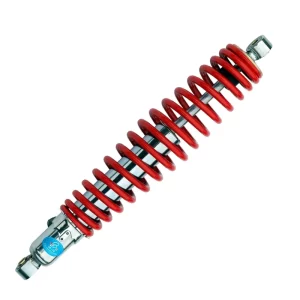
A click-adjustable damper alters oil flow through a metering orifice, usually with a needle valve controlled by a detented knob. Each click moves the needle deeper into or out of the seat, changing the cross-sectional flow area. On the rebound side, this shifts the knee of the damping curve; on compression, it adjusts how quickly the shock absorbs an impact.
In monotube designs we produce for off-road use, the compression adjuster often works on a separate bridge circuit while the rebound adjuster modulates the piston bleed. A half-turn of the adjuster can shift low-speed damping force by 10–30% depending on piston design and oil viscosity. The click count—typically 20 to 30 total detents—represents the resolution of the adjustment, but the absolute force delta per click is what matters. I’ve mapped adjustment curves on multiple platforms and found that the first five clicks from fully closed produce the steepest force change; the last ten clicks add finer trim. That nonlinearity is intentional and helps tuners dial in baseline stiffness before fine control.
What OEM buyers often overlook is that the clicker mechanism introduces its own internal friction and seal drag. A poorly machined detent ball can cause inconsistent feel and even shift the adjustment during use. That’s why we validate every adjuster assembly for torque consistency and detent clarity before it leaves the factory.
What Specifications Define an OEM Click Adjustable Damper?
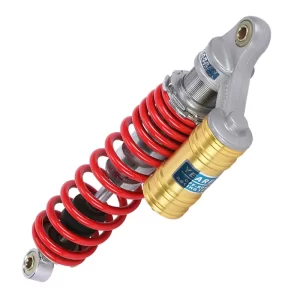
Without a complete spec sheet, sample approval becomes guesswork. We require the following parameters for every custom adjustable damper project:
| Parameter | Typical OEM Input | Yearben Validation |
|---|---|---|
| Extended / compressed length | Eye-to-eye length range | Fixture measurement ±1 mm |
| Spring rate and preload | Rated kg/mm or lbs/in | Load-deflection test to 5% tolerance |
| Damping force at 0.3 m/s | Rebound / compression in N | Dyno curve with 5-click average |
| Click count and range | 20–30 detents | Torque gauge and travel index |
| Nitrogen charge pressure | 100–150 psi typical | Pressure drop test after 12 h |
| Mounting style and bushings | Eyelet ID, bushing material | Durometer check and press-fit force |
| Surface finish | Zinc-nickel, e-coat, or anodized | Salt spray ISO 9227 to requirement |
Beyond the list, you need to specify the clicker’s reference position. Most OEMs define full-soft as the baseline and count clicks toward full-stiff. We’ve also had customers request a “shipping click” setting, the detent position where the damper is assembled and nitrogen-charged, so that it arrives at a predictable baseline. Locking that into the drawing prevents endless recalibration during incoming inspection.
How Should You Evaluate a Click Damper Sample?
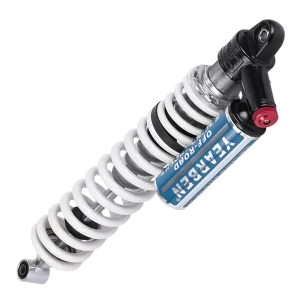
Sample evaluation is the gate that separates a paper design from a producible damper. I recommend a sequence that catches the most common failure modes before volume orders begin.
- Visual and dimensional inspection. Check weld appearance, adjuster knob alignment, overall length tolerances, and eyelet parallelism. A welding spatter inside the reservoir or a misaligned eyelet can indicate process control gaps.
- Click detent feel. Clicks should be distinct and repeatable. Rotating through the full range 10 times should not produce binding or looseness. We use a torque plateau gauge to flag units with weak detents.
- Dyno test at three temperatures. Run the damper at room temperature, after a cold soak (0 °C), and after heat soak (80 °C oil temperature). The damping force shift across temperatures reveals how stable the oil and seal compound are. A 15% force drop at high temperature is typical for mineral oil; larger swings suggest seal lip leakage or gas intrusion.
- Nitrogen retention. Leave the damper pressurized for 48 hours and remeasure. A loss exceeding 5 psi indicates a micro-leak, often at the adjuster shaft seal.
- Cycle durability sampling. On pre-production batches, we run a 50,000-cycle durability test at 0.6 m/s stroke speed. The dyno curve before and after must overlap within 10% of peak force.
If your program involves sustained high-speed desert running, the oil temperature spike can reveal valve instability that a room-temperature dyno test misses. Confirm with the supplier that the sample was tested under heat soak conditions. For specific heat management requirements, share your duty cycle and we’ll confirm the baseline with a full thermal map. Reach out at info@yearbenshocks.com.
What Quality Checks Confirm a Production-Ready Damper?
A single good sample is easy. Consistent production at scale is the real test. When I audit a factory line for adjustable dampers, I look for three things: process control on the adjuster assembly, traceability of the damping components, and documented batch testing.
The adjuster sub-assembly must be built to a torque spec, not just a visual check. Over-tightening the detent screw can compress the O-ring seal unevenly and cause gas leakage. Under-tightening leads to creep and eventual loss of click feel. We torque every adjuster housing to a fixed value and record the pass/fail on a pressure-decay tester.
Piston and shim stack consistency is the next frontier. A 0.1 mm deviation in shim thickness changes the damping knee by up to 8% on a 46 mm monotube. We source shim stock with a ±0.01 mm thickness tolerance and verify the stack height before assembly. That level of control isn’t automatic—you need a supplier whose incoming inspection includes micrometer checks on every shim batch, not just the first article.
Batch dyno testing is non-negotiable. We pull one damper per 50 from the production line and run the full force-velocity curve against the master sample. If the curve deviates beyond the agreed tolerance band, the entire batch is held for root cause analysis. For OEMs requiring IATF or ISO 9001 traceability, we provide a serialized report linking each test curve to the material heat lot and operator station.
How Do You Move from Sample to Volume OEM Production?
Once the sample passes and the quality protocol is signed, the timeline depends on tooling availability and raw material lead times. For a new click-adjustable damper family with custom valving and spring rates, we typically deliver the first sample within four weeks and move to production within eight to ten weeks after sample approval. Minimum order quantities start at 200 units for standard configurations and 500 for designs requiring dedicated adjuster tooling.
Packaging and logistics matter as much as the damper itself. The clicker knob and adjuster shaft are vulnerable to impact during transit. We use polyethylene end caps and individual foam wraps for each damper, then place them in double-wall export cartons. For ocean freight to North America or the Middle East, we’ve audited drop-test performance at 1.2 m multiple-faces—our standard packaging passes without knob deformation.
The real transition to volume production is not about speed; it’s about parameter lock. Once the click count, damping curves, and assembly torques are frozen in the production control plan, every batch must replicate the approved sample. We retain a master sample from the approval lot and a copy of the dyno curve on file, and we re-baseline the production line quarterly against that reference. That discipline is what separates an OEM supplier from a trading company.
The sample tells you if the design works. The factory tells you if it works 500 times in a row. We’ve built our production lines around the precision required for clicker mechanisms—each adjuster is validated on the assembly line for click torque and damping delta before final charge. To start the sample process, send your target spec, spring rate, and projected quantity to info@yearbenshocks.com or call +86-523-86566899. We’ll ship a sample within 4 weeks and provide the full dyno report for your review.
Common Questions About OEM Adjustable Dampers
How many clicks should an adjustable damper have?
The click count is a balance between resolution and mechanical reliability. Most off-road dampers use 20 to 30 detents; that range provides enough tunability without making the adjuster sensitive to vibration. More than 30 clicks can create such fine movement increments that the detent spring force becomes unreliable. I’ve tested units with 40 clicks where the force difference between adjacent positions was indistinguishable on a dyno. For OEMs, we recommend 24 clicks as a practical compromise: the first 8 clicks from closed produce meaningful stiffness steps, and the remaining range offers fine trim.
Can I use the same click setting for compression and rebound?
Rarely. Rebound and compression strokes have different flow paths and force targets. Rebound damping controls the rate at which the suspension extends after an impact, which is usually stiffer than compression to prevent top-out. Compression damping manages how much force is transmitted to the chassis. In a typical adjustable damper, the rebound adjuster controls the piston bleed and the compression adjuster handles a separate bridge circuit, so they are independently tunable. If you have a single adjuster that affects both directions, the calibration is a compromise and works best when the ride frequency is constant. For most OEMs, specifying independent rebound and compression clickers yields a wider tuning window.
What’s the minimum order quantity for custom click adjustable dampers?
MOQ depends on whether the design uses off-the-shelf adjuster components or requires custom-machined adjuster bodies and detent mechanisms. For dampers that adapt an existing adjuster platform with custom valving and spring rates, the MOQ can be as low as 200 units. If the project needs a new adjuster housing, unique click count, or non-standard detent geometry, the MOQ typically starts at 500 units to amortize the tooling cost. We always reserve the right to adjust MOQ based on the complexity of the adjuster assembly, but we’ll provide a firm MOQ in the quotation after reviewing your specification sheet.
How do I ensure the sample matches future production dams?
Retention systems and documented process control are the only guarantees. When you approve a sample, insist that the factory retains one unit from the approval lot as a physical reference and locks the production parameters—shim stack configuration, adjuster torque, nitrogen fill pressure, and paint specification—into a control plan. We maintain retained samples from every OEM project and re-test them quarterly alongside production units. If your quality system requires IATF 16949-level traceability, we can link production batches to the master sample in the inspection report. Share your requirements and we’ll confirm compliance documentation availability before the first production run.
If you’re interested, check out these related articles:
Off-Road-Coilovers
Gas Charged Dual Rate Coilover Shock Absorber
Best-Off-Road-Shocks