When you need to source shock absorbers for ATVs, UTVs, off-road vehicles, or even seat and lawn mower applications, the comparison between manufacturers often starts from price. After two decades designing, testing, and customizing dampers, I have found that a price-first comparison misses the factors that determine whether a batch of shocks performs consistently over the lifecycle of your vehicle — or fails in the first 100 hours. The real comparison is about manufacturing discipline, technical traceability, and the engineering decisions hidden behind the catalog specs. The five areas below are the ones that actually separate a factory you can rely on from one you will be chasing.
What Does the Factory’s Core Capability Actually Cover?
Volume and catalog breadth are the first things most buyers check, but they are not where the comparison should end. I start by looking at the range of damping architectures a manufacturer truly builds in-house. A factory that only assembles twin-tube emulsion shocks cannot suddenly deliver a monotube remote-reservoir shock with consistent nitrogen pressure retention, no matter how clean their catalog looks.
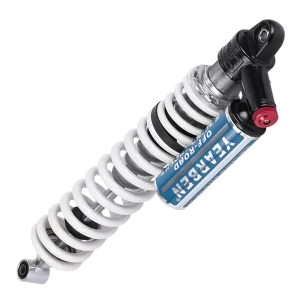
The real question is whether the production line has handled the specific combination of body diameter, stroke length, and mounting configuration your application demands. When we at Yearben supply shocks for a 4×4 overlanding build versus a commercial lawn mower deck suspension, the piston design, seal compound, and oil-volume-to-gas-chamber ratio are fundamentally different. If the manufacturer has not built across that range, they are learning on your order. I look for a facility where a 38mm heavy-duty seat damper and a 2.5-inch off-road coilover with remote reservoir are both native to the floor — not exceptions. That pattern signals a legitimate in-house capability rather than a trading company collecting parts from three sub-suppliers.
Can the Factory Prove Its Quality Before You Pay the Invoice?
Certifications are the starting line, not the finish. ISO 9001 is table stakes; I look for process-level evidence that the factory runs dimensional inspection on every piston rod, not just a batch sample. Over the years I have seen too many orders where the pre-production samples were perfect and the production order arrived with a 15% leak rate because only the samples saw full pressure testing.
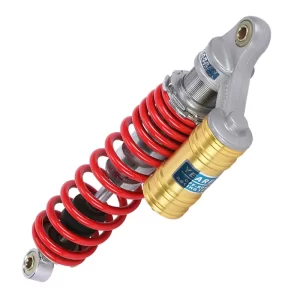
The comparison shifts when you ask how the factory verifies consistency. At our facility, every completed shock runs through a dynamometer load test where damping force is plotted against velocity, and the curve is compared against the approved master sample. That is not a costly addition — it is how you catch a rod seal with marginally high breakaway friction before it leaves the plant. Ask any potential manufacturer what percentage of units undergo full damping-force testing. If the answer is “samples only” or they hesitate, you have found a comparison point that matters far more than the unit price.
How Customizable Is Their OEM Process — Really?
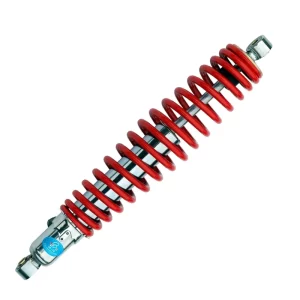
Many catalogs say “customization available,” but what that means in practice varies dramatically. The core engineering variables are inside the damper: piston port geometry, shim stack configuration, and gas-chamber fill pressure. I consider whether the manufacturer can supply a full damping-force curve before cutting tooling, based on your vehicle weight, motion ratio, and intended use.
For example, a steering damper for a zero-turn lawn mower and one for a 450cc ATV built for trail riding share a similar cylinder diameter, but the damping profile is totally different. The mower needs high low-speed damping to prevent steering flutter; the ATV needs controlled high-speed blow-off for sudden impacts. A factory that cannot split the damping curve into low- and high-speed regimes is not really customizing — it is picking a different spring rate. I confirm that the engineering team can discuss shim thickness, piston bleed, and nitrogen charge in detail. That conversation alone often eliminates manufacturers who are simply reselling generic stock.
Does the Factory Have a Real Production Consistency Track Record?
Batch-to-batch variation is the biggest hidden cost in shock absorber procurement. When the damping force varies by more than 10% between two orders of the same part number, your vehicle’s ride height, rebound control, and bottom-out resistance shift — and your end customer notices before you do.
I compare manufacturers by looking at how they control three specific variables: rod-chrome roughness, bore-finish roundness, and seal-gland concentricity. These are not visible on a spec sheet, but you can ask for their in-process inspection limits. For monotube shocks, bore finish directly affects seal life; a few microns of ovality will cause wear patterns that leak after 500 cycles. A factory that openly provides those tolerance ranges, and has the coordinate measuring machine data to back them up, is operating at a different tier. I also ask how they track seal compound lot numbers and tie them to production dates — because when a seal formulation changes, you need to know which batch is in which customer’s hands before a field failure surfaces.
Can They Handle Your After-Sales and Technical Support Responsibly?
The comparison extends beyond the initial purchase order. Even the best-manufactured shock can fail if the application conditions change or the end user misadjusts preload. I evaluate whether the manufacturer has an engineering point of contact who can review your vehicle installation photos, calculate motion ratios, and recommend a damping curve adjustment — not just process a replacement order.
We maintain a cross-reference library tied to each OEM customer: original damping curve, valving configuration, and any field observations from prior batches. When a customer reports bottoming-out on a new machine and sends a short video, we can isolate whether the issue is spring rate, gas pressure loss, or an incorrect rebound setting — often within a day. That kind of support is a differentiator, especially for buyers in markets where downtime means lost season revenue. Without it, a lower unit price is quickly erased by the cost of handling returns and rework.
For readers who are comparing multiple vehicle shock absorber manufacturers, it helps to remember that the spec sheets look similar from factory to factory. The difference is in the engineering process behind them. If you are evaluating a manufacturer for an OEM or private label program, ask about their in-house damping dynamometer, their bore-finish inspection process, and how they track seal compound batches across production runs. The answers — or the hesitation — will give you a clearer comparison than any price list can.
If you are currently sourcing shock absorbers for ATVs, UTVs, seat dampers, or lawn and turf equipment, share your part number, target travel, and damping requirements with us at info@yearbenshocks.com, or call +86-523-86566899, and we can discuss how our manufacturing and testing process aligns with your program needs.
Frequently Asked Questions About Comparing Shock Absorber Manufacturers
What is the single most revealing question to ask a shock absorber manufacturer during evaluation?
Ask whether they can provide a damping-force-velocity plot from a production dynamometer test, not a design simulation. A manufacturer that tests every unit or at least a statistically valid sample will have this data ready. If the answer is that they test only pre-production prototypes and then rely on visual inspection, quality is not being verified at the level that prevents field failures.
Are Chinese shock absorber factories reliable for OEM-quality dampers?
Reliability is not a national characteristic; it is a process result. Some Chinese factories operate at the same engineering standards as any Western tier-one supplier — in-house dynamometers, full traceability on rod and seal batches, and documented PPAP-level submissions. Others are assembly operations with no capability to adjust damping curves. The key is to audit the factory’s testing infrastructure and traceability records, not to judge by origin alone. I have worked with facilities that exceed EN and SAE test protocols daily, and I have also seen facilities that cannot explain why their damping force varies batch to batch.
How do I verify that a manufacturer’s customization claim is not just a spring rate change?
True customization means the manufacturer can modify the piston valving — shim count, diameter, and stack order — to shape the damping curve at both low and high piston velocities. Ask for a before-and-after force-velocity graph from a previous custom project. If they cannot supply one, they are probably swapping springs and calling it tuned. A dampers engineer should be able to discuss crossover points and digressive vs. linear behavior; if the conversation stays at spring preload, the capability is limited.
What is the most common oversight when comparing manufacturers based on unit price alone?
Unit price comparisons often ignore batch consistency costs. A shock that costs 5% less but has a 20% wider damping-force tolerance band will require you to handle field returns, ship replacements, and manage customer complaints. Over a production run of 1,000 units, those hidden costs can be three to five times the initial price difference. I always recommend requesting the factory’s internal tolerance data for damping force variation across the last three production batches of a similar part number.
Can the same factory supply shocks for both ATVs and commercial seat dampers?
It can, but only if the production line is genuinely flexible. ATV shocks require precise high-velocity damping control and durable rod coatings; seat dampers demand consistent low-speed damping and long-life seals at modest stroke cycles. A factory that handles both often has separate assembly and test stations calibrated for each product family. If they try to run both on a single line without distinct quality checks, performance compromises appear quickly. If your program involves multiple vehicle platforms, discuss whether the manufacturer segregates quality-control parameters by product type — it is a strong indicator of operational discipline.
Whether you are comparing vehicle shock absorber manufacturers for a single niche model or a multi-platform OEM program, the most useful comparisons happen when you can discuss the technical data behind the catalog. Send us your shock absorber specifications, expected annual volume, and any specific durability targets; our engineering team will review the configuration and confirm testing and lead time details at info@yearbenshocks.com.
If you’re interested, check out these related articles:
Piggyback-2-0-Coilover-Shock
Fixed-Preload-Atv-Shock-Absorbers
Utv-Shocks-For-Off-Road