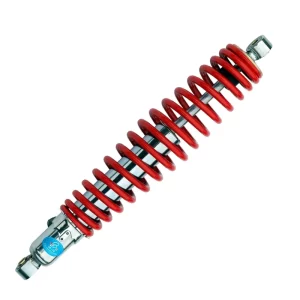
An off road shock that dominates a desert race can ruin a rock crawling trip. The same damping curve that keeps a trophy truck planted at speed will resist the slow articulation a crawler needs to keep tires on the ground, and an overland rig loaded with gear demands a spring rate and heat capacity neither racing nor crawling setups are built for. I have spent years tuning and manufacturing dampers for ATVs, UTVs, and 4x4s, and the single most expensive mistake I see is fitting the wrong shock for the discipline you actually drive. This comparison breaks down what each discipline demands from your suspension so you can choose shocks that work for your terrain, not against it.
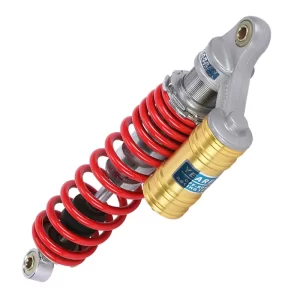
Why One Shock Almost Never Works for Three Disciplines
Racing, crawling, and overlanding each shape a shock absorber differently. Racing punishes the damper with rapid, repeated compression cycles that generate extreme heat. The oil viscosity thins, fading starts, and the nitrogen charge expands, altering damping force. A crawler never sees that kind of shaft speed. Its main enemy is fluid cavitation during slow, deep articulation, where the piston struggles to displace oil evenly. Overlanding sits somewhere in between, asking a shock to manage sustained mid-speed damping while carrying vehicle weight for hours, sometimes days, without service intervals.
I have measured oil temperatures approaching 130 °C in racing shocks after a single hard stage, a condition that would boil the fluid in a typical twin-tube damper. Yet that same racing piston and shim stack, optimized for high-flow, stiff-damping events, will feel wooden and unresponsive when a crawler creeps through axle-deep ruts. The conflict is not just about valving. Spring rate, reservoir type, and bore finish tolerance all shift depending on whether you are chasing stage times, climbing ledges, or crossing a continent. Understanding those differences before you order is the difference between a suspension that works and one that fights you.
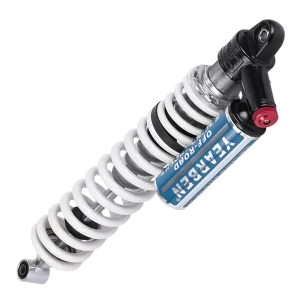
The Shock Specs That Actually Determine Off-Road Performance
Before separating the disciplines, a handful of specifications carry weight across all three. Focusing on these numbers, rather than just tube diameter, will get you closer to a correct shock match the first time.
| Spec | What It Controls | Why It Matters Off-Road |
|---|---|---|
| Piston diameter and port geometry | Oil flow rate and damping force linearity | Larger, precisely ported pistons reduce cavitation at low speed and flatten the damping curve at high speed |
| Shim stack configuration | Compression and rebound valving character | Determines whether the shock digs in on sharp hits or blows off too fast; valving must match vehicle weight and unsprung mass |
| Reservoir type (remote, piggyback, none) | Heat capacity and oil vs nitrogen separation | Remote reservoirs add oil volume and cooling surface; piggybacks are lighter; non-reservoir shocks fade sooner under sustained use |
| Spring rate and preload | Ride height and initial compliance | Correct spring rate prevents bottoming and topping out while preserving small-bump sensitivity |
| Rod finish and seal material | Friction and seal life | A polished, hard-chrome rod with PTFE-lined seals reduces stiction and survives abrasive dust better than standard rubber seals |
I evaluate every prototype against these five parameters on our dyno before it ever leaves the factory. A shock that looks right on paper can still fail the heat cycle test if the oil path is too restrictive, and that failure shows up first in the seal lip temperature. If your shock supplier cannot produce a damping force vs velocity chart at multiple temperatures, treat the spec sheet as incomplete.
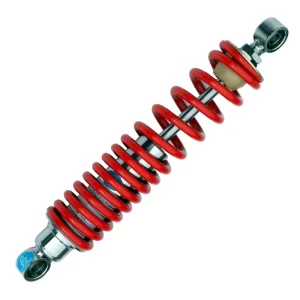
Racing Shocks: Heat Management and High-Speed Control Define the Winner
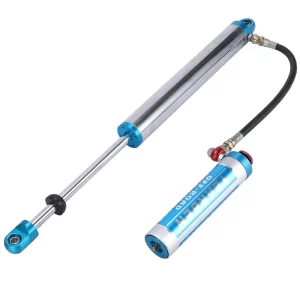
Desert racing, short-course, and Baja-style events push a shock absorber into a thermal fight it cannot afford to lose. The primary demand is high-speed compression damping that controls bottoming without spiking, combined with enough rebound to return the wheel before the next impact. Remote reservoirs are not an option here; they are a requirement. The added oil volume slows temperature rise, and the separating piston keeps nitrogen from mixing with aerated fluid. In our testing, a remote reservoir monotube with a 2.0-inch piston can run roughly 20 °C cooler than an equivalent piggyback under the same cycle load, a margin that keeps the damping curve stable into the final laps.
Bypass shocks add external tubes with adjustable check valves that progressively engage as the piston travels deeper into the body. This lets you run a softer initial zone for compliance, then clamp down harder in the last third of travel to prevent harsh bottom-outs. For a vehicle crossing square-edge holes at triple-digit speeds, that multi-zone control is the difference between finish and DNF. The cost is more complexity, more seals to service, and more weight, but the speed benefit is real. If you are racing, budget for dyno time to set the bypass zones; a mis-tuned bypass shock will fight itself.
Crawling Shocks: Articulation and Low-Speed Authority
Rock crawling reverses the priority list. Shaft speed is low, heat is rarely the limiting factor, and the suspension spends most of its time near full droop or full compression. What matters is how smoothly the shock transitions across its stroke at near-zero velocity. An emulsion shock, where oil and nitrogen mix in a single chamber, can work well here because the foaming that would destroy a race shock never develops at crawler speeds. The downside is that the damping force can become inconsistent on off-camber sections if the vehicle sits for long periods and the gas migrates.
Spring rate choice is also more critical for crawling than for racing or overlanding. A progressive-rate coil can help prevent the rear end from unloading on steep climbs, but too much progression will reduce droop travel exactly when you need it. I prefer a dual-rate setup with a tender coil that collapses early, giving full travel at ride height while still ramping up under compression. The tender coil stack, crossover ring position, and main spring length all need to be calculated from the vehicle’s corner weight, not guessed from a generic fitment chart.
Overlanding Shocks: Comfort, Consistency, and the Long Haul
Overlanding demands the widest operating window. You might spend three days on pavement to reach a trail that alternates between washboard, sand, and rocky ascents, all while carrying fuel, water, and camping gear that change the spring load. The shock must handle sustained mid-speed damping without fading, deliver enough low-speed rebound control to avoid wallow on the highway, and survive dust and mud without seal failure.
Monotube dampers with a larger piston (46 mm or above) and a piggyback reservoir have become the practical standard for overland builds because they offer better heat rejection than a twin-tube and less weight penalty than a full remote setup. The piston band material deserves attention here: a PTFE-carbon composite band holds its tolerance longer than a standard bronze-filled band under abrasive dust, and that directly affects seal life on a multi-week trip. I have seen a set of high-quality monotubes carry a loaded 4×4 across 5,000 km of varied terrain with no measurable damping loss, but only when the valving was matched to the actual corner weight, not the factory curb weight.
Matching Your Shock Choice to the Discipline That Drives You
If your rig does a little bit of everything, a remote-reservoir adjustable shock with a broad damping range is the safe middle ground. Adjustability shifts the damping knee on both compression and rebound, so you can firm up for high-speed sections and soften for slow technical trails. But adjustability without proper spring selection still leaves half the equation unsolved. The spring carries the weight; the shock controls the motion. If the spring sags too much, no amount of damping adjustment will recover lost travel or prevent bottoming.
The table below maps your primary terrain to the shock features that matter most.
| Terrain Priority | Recommended Shock Type | Key Feature | Valving Focus |
|---|---|---|---|
| Pure desert racing | Remote reservoir bypass or adjustable monotube | Multi-zone compression, high heat capacity | High-speed compression, controlled rebound |
| Rock crawling / slow trails | Emulsion coilover or piggyback monotube | Long travel, progressive or dual-rate spring | Low-speed control, smooth stroke transition |
| Overlanding / mixed surface | Piggyback monotube or remote reservoir adjustable | Mid-sized piston, heat-tolerant seals | Broad damping range, weight-matched spring |
| General recreation, light off-road | Non-adjustable gas monotube | Affordability, low maintenance | Balanced comfort, minimal fade |
If your program involves weight that varies trip to trip, or you are changing tire size and unsprung mass, it is worth confirming the spring rate and valving before placing a bulk order. A shock built for a 1,500 kg vehicle will behave very differently under a 2,200 kg load.
When Your Build Needs More Than a Catalog Part
Most off-the-shelf shocks are valved for an average vehicle weight and an assumed terrain mix that may not match your actual route. As a suspension engineer, I see this mismatch show up as premature seal wear, fluid fade, and drivers who blame the track when the shock simply cannot keep up. The fix starts with identifying the primary terrain and corner weight, then building the damping curve around those numbers instead of hoping a universal valve code works.
Our team at Yearben builds off-road shocks with the piston, shim stack, spring rate, and reservoir configuration matched to your specific discipline and vehicle spec. Whether you need a high-flow racing monotube, a dual-rate crawler coilover, or a long-distance overland damper, we can engineer the right damping curve and validate it on our test dyno before shipping. Send your part number, vehicle weight, and intended terrain to info@yearbenshocks.com or call +86-523-86566899 to start a spec sheet.
What Suspension Buyers Ask About Off-Road Shocks
Why does a racing shock make a crawler feel stiff?
Racing shocks are valved with high-speed compression in mind: they resist rapid shaft movement to control bottom-out. At the low shaft speeds a crawler produces, that same valving generates very little flow resistance, so the shock feels harsh because the initial digressive blow-off never activates. The piston never moves fast enough to reach the bypass or shim deflection point, leaving the suspension locked in its firmest zone. For rock crawling, you want a more linear, low-speed-focused damping curve that allows the wheel to articulate without fighting the shock.
Can I use the same shock for overlanding and occasional rock crawling?
It depends on your spring rate and the shock’s low-speed behavior. A piggyback monotube with an adjustable rebound circuit works reasonably well for both, provided the spring is not too stiff for crawling and not too soft for highway load. The main risk is that a dual-purpose tune will sacrifice some ride comfort on corrugations to maintain crawling control. In programs we support, a two-stage shim stack with a softer low-speed compression zone and a firmer high-speed knee often covers the gap. Share your primary terrain split and we can confirm whether a single tune or a quick-swap spring setup makes more sense.
How do I know if my shock is fading during a long overland trip?
Fade announces itself as a progressive loss of rebound control, the rear end starts to float or wallow over rollers that it handled firmly in the first hour. Touch the shock body after a long graded-road section; if the reservoir is too hot to hold for more than a couple of seconds, the oil is thinning and damping force is dropping. A remote reservoir with a larger oil volume and external finned body will cool faster, but if you are already past that point, you likely need a piston with wider oil galleries or a higher oil viscosity index. If your current shocks show consistent fade, share your load weight and route type and we can recommend a thermal upgrade.
If you’re interested, check out these related articles:
Adjustable-Gas-Shock-Absorbers
Twin-Tube-Hydraulic-Seat-Damper-28MM
Oil-free lawn mower shock absorber 24mm
Triple-Bypass-Remote-Reservoir-Shock