
Most shock absorber selection guides stop at definitions. They tell you what a coilover is, what a reservoir does, and how a bypass shock works—as if each category exists in a vacuum. As a suspension engineer who has designed and tuned all three types for OEM ATV, UTV, and off-road vehicle programs, I can tell you the real question isn’t what these shocks are. It’s when one architecture will outperform the others for the vehicle weight, travel speed, and heat cycle you actually run.
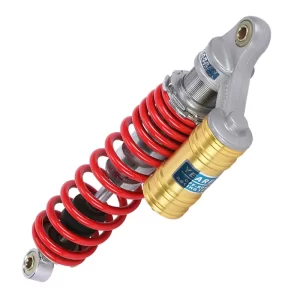
What Separates Bypass, Reservoir, and Coilover Shocks at the Engineering Level
All three shock types control suspension movement by converting kinetic energy into heat via hydraulic damping. The differences come down to three design choices: whether the spring is integrated, how the fluid and gas are managed, and where and how damping force is adjusted.
A coilover shock integrates the coil spring around the shock body on a threaded perch, making it a complete corner assembly. A reservoir shock adds an external canister—piggyback or remote—to increase fluid volume and gas separation for better heat dissipation. A bypass shock takes reservoir architecture further by mounting external tubes with check valves that open at specific stroke positions, creating multiple damping zones without internal valving changes.
These aren’t interchangeable upgrades. They solve different thermal and tuning problems. If you select one without matching it to the primary demand of your program—spring support, sustained heat rejection, or multi-zone control—you’ll end up with a shock that fades, feels harsh, or requires constant revalving.
Coilover Shocks: When Spring Support and Compact Packaging Work in Your Favor
Coilovers are the default choice when the suspension layout demands a combined spring-and-damper unit in a single eye-to-eye package. In ATV and UTV applications where space between the frame and control arm is limited, a coilover replaces the separate spring and shock to save width and simplify mounting.
The engineering trade-off is clear: the threaded spring perch gives preload and ride height adjustment without changing springs. That is useful for vehicles that run different load states—adding a passenger, gear, or a plow blade. However, the oil volume inside a smooth-body or emulsion coilover is limited. Once the shock is worked hard for 15 to 20 minutes of high-speed off-road running, the internal fluid temperature rises, viscosity drops, and the damping force fades. Emulsion coilovers, which mix gas and oil without a separating piston, fade faster because the fluid aerates under repeated cavitation.
This is why we recommend coilovers for utility ATVs, entry-level recreational UTVs, road-legal buggies, and lawn equipment where sustained high-speed shock activity isn’t the primary demand. They’re also the right starting point for OEMs who need a certified, validated corner assembly that ships ready to bolt in.
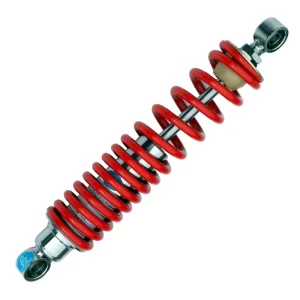
Reservoir Shocks: Why More Oil Volume Changes Everything Under Heat
A reservoir shock—whether piggyback or remote—separates the gas charge from the fluid with a floating piston or bladder, then adds an external canister that expands total oil capacity by 20 to 40 percent over a comparable coilover body. The immediate result is a larger thermal mass. More oil takes longer to heat up, and the reservoir body itself provides additional surface area for heat rejection.
The separation of gas and oil also eliminates aeration. In a properly charged reservoir shock, the gas never comes into contact with the working fluid, so even after an hour of aggressive whoop sections, the damping curve remains more consistent than an emulsion shock at half the run time. The hose and bracket layout for remote reservoirs adds a layer of complexity, but it also allows the reservoir to be placed away from exhaust or brake components that add heat soak.
For trail riders who cover long distances at moderate speed, reservoir shocks often provide enough heat reserve without the added cost and weight of bypass tubes. At Yearben, we frequently supply piggyback reservoir coilovers for 4×4 trucks and remote reservoir shocks for UTV desert racing teams that need better fade resistance but don’t yet require multi-zone bypass tuning. If your program involves repeated high-speed runs that last longer than 20 minutes, moving from an emulsion coilover to a remote reservoir design is the single most effective upgrade for damping consistency.
Bypass Shocks: When Tuning Zones Let You Separate Compression Control by Stroke Position
Bypass shocks add one to three external bypass tubes, each with a check valve and adjustable jet. These tubes bypass the main piston at specific stroke positions, so damping force changes only in that portion of travel. A three-tube bypass can be set to provide more resistance near full compression to prevent bottoming, less resistance in the mid-stroke to let the suspension move freely over chatter, and a separate setting for rebound.
The design gives tuners the ability to shape the compression curve without opening the shock. That is a major advantage in racing, where track conditions change between practice and the main event. It also means the shock can be soft over small bumps and progressively stiff at the end of travel—something no single-stage piston can achieve alone.
However, bypass shocks are mechanically complex. Each tube requires precision machining of the check valve seat and consistent jet sizing across all four corners; tolerance stack-up leads to corner-to-corner imbalance that the driver feels as unpredictable handling. They also require more frequent seal and o-ring maintenance than non-bypass designs. In OEM applications, we see triple bypass shocks specified primarily for high-end desert racing builds—Trophy Trucks, Class 1 buggies, and select UTVs running over 200 horsepower—where the ability to tune zones independently justifies the added cost and maintenance.
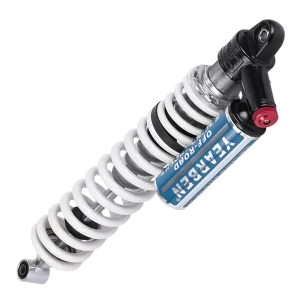
Matching Shock Type to Vehicle Weight, Travel, and Speed
The selection matrix becomes clearer when you look at the simultaneous demands of weight, travel, and speed:
| Vehicle Profile | Recommended Shock Type | Key Reason |
|---|---|---|
| Utility ATV, light UTV, lawn equipment | Coilover (emulsion or piggyback) | Moderate speed and load; spring integration matters more than heat rejection |
| Trail UTV, overland 4×4, heavy ATV | Reservoir (remote or piggyback) | Sustained mid-speed running requires more thermal reserve |
| Rock crawler, low-speed technical 4×4 | Coilover with remote reservoir | Articulation demands long travel, heat from high torque at low speed |
| Desert pre-runner, high-speed UTV, sand rail | Reservoir coilover with bypass tubes | Continuous high-speed hits demand both thermal reserve and zone-specific compression control |
| Trophy Truck, Baja buggy, Dakar rally vehicle | Triple bypass with remote reservoir and coilover | Full range of heat, multi-zone tuning, and high-cycle durability |
There is no single best shock type. A coilover that fades in one application may be perfectly matched to vehicle weight and typical run time in another. The mistake I see most often is selecting a shock by category name rather than by the thermal load and stroke-control needs the vehicle actually generates.
OEM and Customization: Engineering the Shock Around the Program
When we work with an OEM or a team building a custom vehicle, the conversation doesn’t start with shock type. It starts with corner weight, motion ratio, target wheel travel, and expected heat input. From there, the architecture follows.
For a production ATV that will operate in cold climates with occasional high-speed trail use, we often engineer a threaded-body coilover with a remote reservoir and a cooling fin design on the canister—bypass tubes would add cost without a clear performance return. For a high-horsepower desert UTV expected to run at race pace, we move to a 2.5-inch or larger body with an external bypass system, large remote reservoir, and valving tuned to the specific shock curve the team requests.
If your program involves a new platform where weight distribution or motion ratio is still being finalized, it is worth sharing your target vehicle specs early—even before CAD is complete. We can often shortlist the appropriate shock architecture and tube sizing while there is still flexibility in suspension packaging. Reach out at info@yearbenshocks.com with your part number and quantity, and we’ll confirm whether your requirements suit an off-the-shelf design or a custom build.
Common Questions About Shock Selection
Which shock type costs less to manufacture and maintain?
Coilovers, especially emulsion types, have the lowest part count and simplest assembly process, so manufacturing cost and service intervals are both lower. Reservoir shocks add a canister, hose, and separation piston, increasing both production cost and the number of seals that will require replacement over the shock’s life. Bypass shocks are the most expensive to build and maintain, with each tube adding machining steps, check valve assembly, and additional oil volume. For a utility vehicle where downtime is expensive, a coilover without bypass tubes often represents the best balance of cost and serviceability.
Do I need a reservoir if I already run a coilover with a piggyback?
Not always. A piggyback reservoir already separates gas from oil and adds some additional fluid volume. The question is whether the thermal load on your vehicle exceeds what that volume can absorb before damping fades. If shock bodies are too hot to touch after a typical run, or damping consistency drops noticeably during a session, a remote reservoir with a larger canister—or additional cooling fins—will extend the thermal ceiling. It is not simply a yes-or-no upgrade; the reservoir size and placement should be calculated to match the heat rejection rate required.
Can bypass tubes be added to any reservoir shock?
No. Bypass tubes require dedicated check valve ports machined into the shock body and precise alignment of the bypass inlet position relative to the piston stroke. Retrofitting tubes to a standard smooth-body reservoir shock is not practical because the body wall thickness and internal clearance aren’t designed for bypass flow. The bypass architecture must be engineered into the shock from the start. If program needs later shift toward multi-zone control, the shock bodies will need to be replaced, not modified.
How do I decide between a 2-tube and a 3-tube bypass shock?
The extra tube adds a third compression zone, typically for fine-tuning the initial bump compliance separately from mid-stroke support. On heavier vehicles or those with very high wheel rates, three zones give the tuner more resolution to prevent harshness without sacrificing bottom-out resistance. On lighter vehicles, two tubes often provide enough separation to manage the key stroke transitions, and the third tube adds cost and complexity without a proportional improvement in ride quality. If you are unsure, share your vehicle’s corner weight and travel targets with us at info@yearbenshocks.com or call +86-523-86566899, and we’ll help you determine whether the third zone justifies the investment for your specific use case.
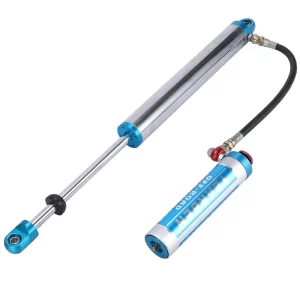
When is a coilover without a reservoir still the right call?
When the vehicle’s run time and load don’t push the shock oil into a temperature range where viscosity loss becomes measurable. Many lawn mower, golf cart, and light utility applications never reach sustained high cycle speeds, so the improved mounting convenience and spring integration of a coilover outweigh any thermal concerns. For these programs, the priority is reliable, maintenance-free performance over a 5- to 10-year service life. An emulsion coilover with a durable shaft seal and consistent factory charge will meet that demand reliably. If your application involves occasional heavier use and you want to confirm the design margin, reach out with your vehicle weight and expected duty cycle and we’ll run the numbers.
If you’re interested, check out these related articles:
Adjustable-Shock-Absorber-For-Car
Off-Road-Coil-Over-Shocks-Manufacturer
Steering-Damper-18MM
Best-Off-Road-Coilover
Hydraulic-Seat-Damper-Cylinder-Diameter-24MM