
A coilover that leaves the factory as one tuned assembly saves you from the most common suspension headache I see in off‑road builds: a spring and damper that fight each other. The difference between a coilover shock and a separate spring‑and‑damper layout is not just whether the spring sits around the shock body. It is about who takes responsibility for the damping curve matching the spring rate before the first mile is driven. I have spent more than twenty years specifying shock absorbers for ATVs, UTVs, and buggies, and I have watched too many separate‑component combinations drift out of harmony because nobody validated them as a unit. A factory‑built coilover makes that validation the manufacturer’s job, not yours.
What a Coilover and a Separate Spring‑Damper Actually Are
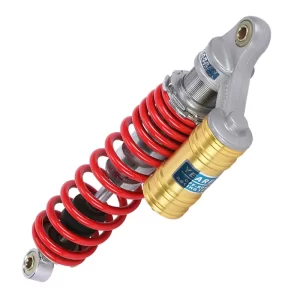
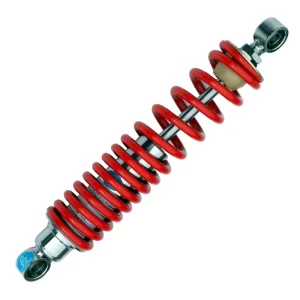
A coilover shock is a single assembly where the coil spring is captured over the shock body, usually between a threaded lower perch and an upper mount. The shock provides the hydraulic damping, and the spring handles the static load. Because both are engineered together, the damping shim stack and gas charge can be tuned to the exact spring rate and expected motion ratio.
A separate spring‑and‑damper layout splits those two jobs. The spring sits somewhere else in the suspension linkage: a coil on a control arm, a torsion bar, a leaf pack. The damper is a standalone shock absorber mounted independently. That means the damping force is acting through a lever ratio that the spring does not share, and the two components may come from different manufacturers with no shared validation.
Why a Factory‑Matched Coilover Dials Out the Guesswork
When we develop a coilover shock at Yearben, the first thing we lock is the spring rate for the target vehicle weight and motion ratio. Then we build the damping curve to control that specific spring. We test the assembly on a dyno to confirm low‑speed compression for body control, high‑speed blow‑off for square‑edge hits, and rebound that keeps the tire on the ground without packing. You receive a unit where the nitrogen pressure, piston design, and shim configuration already agree with the spring.
If you instead order a bare damper from one supplier and a spring from another, you are the test lab. I have seen builders spec a spring rate that feels right at ride height but the damper cannot control it on rebound, so the vehicle pogos on whoops. Or the high‑speed valving is too stiff for the light spring the builder chose for plush low‑speed ride, and the shock hydraulic locks over stutter bumps. Reconciling those mismatches takes repeated revalving and spring swaps. A coilover collapses that iteration into a finished product.
When a Separate Spring and Damper Earns Its Keep
That does not mean separates are inferior. They earn their place when the chassis was originally designed around them, or when the build demands spring rates and damping forces that no off‑the‑shelf coilover can deliver as a single unit. In a long‑travel trophy truck with a massive bypass shock and a separate coil carrier, the shock body is too large and the heat load too high for an integrated coilover. The spring lives on a separate bypass rack or on the axle itself, and the shock handles pure damping. That layout gives the tuner independent spring preload and valving adjustment, which matters when you are chasing tenths of a second in the desert.
Separates also let you experiment with different spring materials and geometries without being limited to the coilover’s perch diameter and stroke. For custom‑chassis builds where motion ratios are unusual, separates can be the faster path to a working suspension, provided you accept the tuning hours that come with them.
Packaging and Installation: One Unit vs Two Mounting Points
A coilover replaces a separate spring seat and shock mount with a single upper and lower mount, which often simplifies the suspension cradle and saves space around the axle. In a tight UTV front end or a small buggy, that reduction in mounting points is valuable. The threaded perch also gives you ride‑height adjustment without changing springs, which is an advantage coilover owners quickly learn to use.
Separates spread the load across more attachment points, which can be a strength in heavy chassis. But they demand that those points stay aligned under full compression and droop. If a coil spring bows on a separate perch because the arm geometry changes at full bump, you lose rate and introduce binding. An integrated coilover with its captive spring and hardened shock body surfaces handles that better because the spring’s axis stays locked to the damper rod.
How Each Setup Ages in the Field
Coilover shocks we build for off‑road use run hardened chrome shafts, multi‑lip seals, and nitrogen‑charged reservoirs that keep the oil from aerating during long runs. When a seal eventually wears, the whole unit gets rebuilt: the shock and spring disassembled together, the piston band and oil replaced, and the gas recharged. The spring itself rarely fails. What fails if you ignore maintenance is the damper, and a rebuild restores both function and ride height if you mark the perch setting before disassembly.
With separate springs and dampers, you can swap the shock without touching the spring, which can be convenient for fleet vehicles. But the spring’s isolators and perches also wear, and when they degrade, the spring loses its seated position, causing noise and unplanned rate changes. Because two separate parts carry the load, you have twice as many wear points to inspect. I have seen separate coil springs rub through powder coat on a control arm seat, creating a stress riser that led to a crack.
Which One Suits Your Off‑Road Program
If you are building or refreshing a UTV, a lightweight buggy, or an ATV where the factory suspension was already a coilover, sticking with a high‑quality aftermarket coilover like our Off Road Coilover Shocks gives you a controlled, repeatable result. The installation is faster, the valving matches the spring out of the box, and you get a unit that has been dyno‑tested as a complete damping system.
If your vehicle uses a separate spring‑and‑damper layout from the factory and you are not redesigning the suspension geometry, replacing both components with well‑matched equivalents keeps the original engineering intent intact. For serious race builds that demand independent spring and bypass damping adjustments, separates remain the tool the fast teams use.
The common thread is that mismatched components cause more field failures than any inherent design weakness in either approach. If your current setup loses ride height after hard use, or the damping fades earlier than you expect, the problem is unlikely to be the layout itself. It is far more often a spring rate and valving mismatch that was never reconciled before the parts were bolted on. We find that mismatch regularly when we benchmark worn take‑off units, and it almost always traces back to separate components that were shipped from different warehouses with no shared test record.
The real decision is not simply coilover versus separate. It is whether you want the spring and damper calibrated as a system before they reach your hands. We take that burden on with every Coilover Shock Absorber we ship, because when you are riding hard enough to feel the difference, the last thing you need is a pairing that was never proven to work together.
Common Questions From Builders Deciding Between Coilovers and Separates
Is a coilover just a shock with a spring on it?
Not in a professional sense. It is a matched damper‑and‑spring assembly where the damping valving, gas charge, and spring rate are calibrated together on a dyno. A shock with a spring slipped over it that was not tuned as a unit may still be called a coilover, but without shared validation it is just a parts stack. When you spec a coilover from a manufacturer that dyno‑tests every order, you are buying that validation, not just hardware.
Do separates always cost less?
The component cost can be lower, but the tuning cost often cancels the savings. If you value your weekends and don’t have access to a shock dyno, a validated coilover typically costs less in time and avoided spring swaps. For a race program where the team already owns a dyno and a spring inventory, separates can be a smart investment because you can fine‑tune each element independently.
Which layout is easier to maintain for a recreational rider?
A coilover requires a rebuild when the damper wears, but that rebuild is a well‑documented process and the spring does not need replacement. With separates, you can replace the shock independently, which sounds simpler, but you must still confirm the new shock’s valving matches the old spring rate, or you reintroduce the mismatch that a coilover avoids on day one. For most riders, a properly built coilover is the lower‑maintenance choice over the long term.
Can I convert my separate spring setup to a coilover?
Sometimes, if the chassis has the clearance and the mounting points can accept the coilover’s load path. This is not a bolt‑on job in most cases. The upper shock mount must carry the spring load it was never designed for. We have helped shops reinforce shock towers to do this conversion on older UTVs, and it works well when the geometry is favorable and the mount is properly gusseted. If your shock mounts are light stampings, the engineering cost of the conversion makes it hard to justify.
What is the single biggest cause of coilover underperformance?
Incorrect preload that puts the coilover outside its designed damping window. A coilover tuned for a 200 lb/in spring with 12 inches of travel will not behave the same if you crank in preload that raises the effective rate to 250 lb/in because the damping shim stack was not set for that force profile. Set the spring preload to give the correct ride height without eating into the droop travel, and leave the valving to the dyno sheet.
If your next build involves a spring and damper that need to survive repeated heat cycles and high‑speed hits, send your target weight, motion ratio, and ride height preference to info@yearbenshocks.com. We will confirm the coilover or matched separate combination that keeps your shock and spring working as one system, not as two components that never met before they landed on your bench.
If you’re interested, check out these related articles:
Driver-Seat-Damper-24MM-Cylinder-Diameter
Fixed-Preload-Atv-Shock-Absorbers