Most off-road suspension articles tell you which shocks to buy — not how they’re made, how to compare factories, or what separates a shock that lasts three seasons from one that fades halfway through the first. After two decades designing and manufacturing suspension components for everything from 500cc sand rails to heavy 4×4 overland trucks, I see the same pattern: buyers focus on brand names and miss the engineering details that determine whether a suspension system works for their specific platform.
Types of Off-Road Suspension Systems
Off-road suspension is not one product family — it is a collection of architectures, each designed around different heat management, packaging, and damping requirements. The four main types you will encounter are emulsion coilovers, piggyback reservoir shocks, remote reservoir setups, and multi-tube bypass dampers. Emulsion coilovers are the simplest: oil and nitrogen mix inside a single body, the piston compresses the mixture, and damping force comes from that combined medium. They work reliably when travel is moderate and heat buildup is low — sand rails and lighter buggies are typical applications.
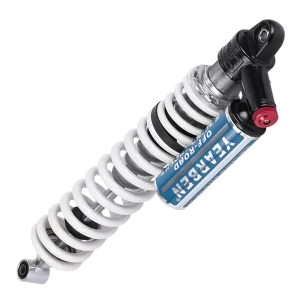
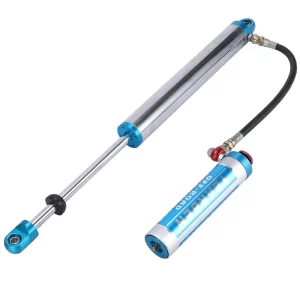
Piggyback shocks attach the gas reservoir directly to the shock body. This separates oil from nitrogen, which reduces cavitation and keeps damping more consistent as the shock heats up. Remote reservoir shocks take this further by moving the reservoir off the body and connecting it via a high-pressure hose. The extra fluid volume and separation buy more cooling headroom; that is why you see remote reservoirs on desert trucks that run sustained high speeds over whoops and washboard.
Bypass shocks add a second layer of tuning: multiple external tubes allow oil to bypass the main piston at specific points in the stroke, creating position-sensitive damping. A triple-bypass shock, for instance, can be valved to soften the initial compression zone, firm up in the mid-stroke for chassis support, and open again near full compression to avoid a harsh bottom-out. These are the most complex units to set up and the most effective when your terrain demands progressive control beyond what a single shim stack can deliver.
Coilover vs Separate Spring and Damper
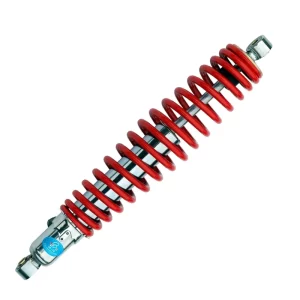
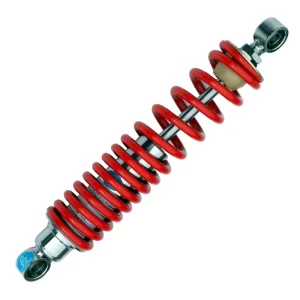
The coilover configuration — a shock absorber with a coil spring mounted directly over the body — saves packaging space and simplifies installation. It is the default for most UTVs, buggies, and 4×4 lift kits we support. A separate spring and damper setup, where the spring sits on the axle or control arm and the shock mounts independently, offers more flexibility in spring rate tuning and can reduce unsprung weight slightly. In practice, we see demand shift toward coilovers for their bolt-on convenience, while custom desert racing builds often opt for separate components to fine-tune motion ratios.
Monotube vs Twin-Tube Shocks
Monotube shocks use a single cylinder with a floating piston separating oil from the nitrogen charge. Twin-tube designs add an inner working cylinder and an outer reservoir, with oil flowing between them through a base valve. Monotubes dissipate heat faster and resist fade better under prolonged use because the oil contacts the outer wall directly — not an inner cylinder inside another cavity. Twin-tubes are more forgiving of side loads and generally less expensive to manufacture, but they heat-soak sooner. For any off-road application where sustained high-speed damping matters, monotube construction is the engineering standard we apply across our off-road shock line.
Remote Reservoir and Bypass Shocks
Remote reservoir shocks add fluid capacity and cooling area. When paired with a bypass circuit, they become the dominant choice for trophy trucks, Baja racers, and high-HP side-by-sides. The reservoir also allows factory nitrogen charging at higher pressures without risking emulsion, which keeps rebound consistent over long runs. Production complexity increases — hose assemblies, end fittings, and reservoir brackets all add cost and quality control steps — but the performance window widens enough to justify the price for vehicles that push suspension thermals hard.
Design Requirements by Vehicle Type
Suspension design parameters shift depending on vehicle weight, weight distribution, and intended use. A buggy under 700 kg with a rear-engine layout demands different spring rates, stroke lengths, and damping curves than a 2.5-ton overlanding 4×4 with a rooftop tent and full armor. I start every OEM conversation by asking not what vehicle the customer has, but what the fully loaded axle weights are at the front and rear — that number drives every spring and valving decision that follows.
Suspension for Buggies and Sand Rails
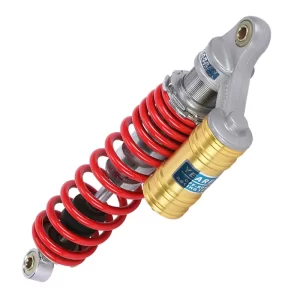
Buggies are light, rear-biased, and usually run A-arm suspension with wide travel arcs. The shocks need relatively low spring rates and high rebound damping to control the lightweight chassis after a compression event. Too much compression damping makes the car skip over small chop; too little rebound sends the back end pogoing off jump landings. We typically specify 2.0-inch body coilovers with emulsion or piggyback reservoirs for 500cc to 800cc Baja-style buggies. Shock travel between 10 and 14 inches covers most builds, with spring rates in the 150 to 250 lbs/in range depending on corner weight and motion ratio.
Suspension for Off-Road Trucks and 4x4s
Trucks and 4x4s present a fundamentally different problem: heavy, with a front weight bias on engine-forward layouts, often running solid axles or long-travel IFS conversions. Coilover shock bodies need to move up to 2.5 inches in diameter to handle fluid volume and thermal load. Spring rate requirements climb steeply — a 4×4 coilover set for a Land Cruiser or Jeep running a front bumper and winch might call for 450 to 600 lbs/in primary springs, sometimes with a tender coil to manage droop. Shock travel targets also differ: rock crawling needs less overall travel but more articulation and low-speed damping control; desert running demands full droop-to-bump travel with fade resistance as the number-one priority.
The common mistake I see is choosing a shock based on vehicle make and model without calculating the actual sprung mass at each corner. That leads to wrong spring preload, incorrect ride height, and damping curves that never sit in the right range. When our engineering team quotes a custom coilover for a customer, the first data point we ask for is corner weight — without it, we are guessing.
Manufacturing Quality Indicators
A shock absorber that looks machined and anodized on the outside can still fail inside during the first hard run. The quality markers that separate a production-grade shock from a serious off-road unit are found inside the assembly and on the test bench, not in photographs.
Welding, Sealing, and Pressure Testing
Every reservoir mount, hose end fitting, and eyelet connection carries a weld. For off-road shocks, we TIG-weld all structural joints and follow each weld with a pressure test at 2 to 3 times the normal operating pressure. A pin-hole weld defect may hold nitrogen on the bench but fail after the first thermal cycle in the desert. We have seen competitors’ shocks with MIG-welded reservoir brackets crack under repeated impact — the misalignment and low penetration are easy to miss unless you section a sample and inspect the weld profile. That is the kind of detail a factory audit should expose. After welding, each shock is charged with nitrogen and submerged in a water tank to check for micro-leaks. Shocks that pass then move to a dyno for damping force verification against the specified curve — not just a sample, but every unit in a custom batch if the customer requires full traceability.
If you are sourcing shocks that will be run hard and hot, ask the factory to share their weld procedure specification and show you a sectioned sample. A clean weld with full root penetration and no porosity is the minimum baseline.
Surface Coatings and Corrosion Resistance
Off-road vehicles see mud, salt, sand, and pressure washer abuse. The shock body finish and coating choices dictate how long the unit survives before pitting or seizing threads. We offer multiple coating options: hard anodizing with a dyed finish for aluminum bodies, zinc-nickel plating for steel components, and ceramic-based topcoats for extreme corrosion environments. Threaded spring perches benefit from a dry-film lubricant coating to prevent galling during preload adjustment. A shock that looks clean after six months of hard use is not an accident — it is a material and process selection made before the first part was machined.
For coastal or high-humidity regions, I recommend specifying a salt-spray test certification — 720 hours minimum — and confirming that the coating covers internal threads and mounting hardware, not just visible externals.
Sourcing Process and Checklist
Buying shocks from a factory is not the same as ordering from a catalog. The conversation should begin with engineering, not sales.
Factory Audit and Quality Certifications
Before committing volume, you need to verify that the factory actually builds shocks — not just assembles kits from sub-suppliers. When I visit a prospective supplier, the audit checklist includes these five non-negotiable items:
- In-house CNC machining and honing capability for shock bodies and pistons.
- A nitrogen charging station with calibrated pressure gauges and leak-down test protocol.
- A shock dynamometer with documented calibration records — not just a dyno on the floor, but one that is used daily.
- Welding certifications and sectioned weld samples for each shock series.
- ISO 9001 or IATF 16949 certification, with internal audit records available for review.
A factory that passes these five checks has the backbone to build consistent off-road shocks. A factory that cannot show you a dyno curve from last week’s production is one to avoid, regardless of price.
MOQ, Lead Times, and Custom Options
Minimum order quantities vary sharply between catalog-based production and custom engineering. For an existing design — say, a 2.0 emulsion coilover with a standard mounting configuration — the MOQ might be 50 to 100 units depending on material availability. A custom shock with a new piston, specific valving, and non-standard end fittings can start at 200 units to justify the tooling and setup time. Lead times for standard items typically run 30 to 45 days. Custom orders, including prototype validation, usually require 60 to 90 days from final spec confirmation to shipment. Plan accordingly: the engineering phase adds weeks, but it prevents months of field failures later.
Customization and Ordering
Custom shock development follows a structured sequence, and skipping steps almost always results in a product that underperforms — or fails.
Providing Specs: Travel, Spring Rate, and Mounting
Start with the vehicle. Provide the fully loaded corner weights, desired ride height, available bump and droop travel, and motion ratio of the suspension linkage. Then specify the mounting type: eyelet-to-eyelet, stud top, or a combination. Include the bolt diameter and bushing width. Do not assume the factory knows your vehicle — even if they have built shocks for a similar model, the aftermarket variation in suspension geometry is too wide to trust without hard numbers. I have seen a 10 mm difference in extended length render a shock unusable because the builder swapped lower control arms. The spec sheet is the contract; everything else is assumption.
Once we have the mechanical dimensions, we calculate the required spring rate and select a damping force curve that matches the vehicle weight and terrain. Damping is not one curve — it is a family of curves for low-speed, mid-speed, and high-speed piston velocities, each tuned for a specific chassis behavior. A shock built for rock crawling may have very high low-speed compression to resist body roll; the same shock on a desert truck would be unnecessarily harsh over small chop. That kind of tuning decision is where engineering experience matters more than catalog listings.
From Prototype to Production Run
After design freeze, we produce two to four prototype shocks and ship them with a dyno plot and installation checklist. The customer validates fitment, cycles the suspension through full travel, and runs a field test. Any adjustment — spring rate tweak, rebound curve revision, mount angle change — comes back to our engineering team as a revision request. Once the prototype is signed off, we move into production. The full batch undergoes the same pressure test and dyno verification as the prototypes, and we retain a golden sample for future reference.
This process is not fast, but it is correct. Rushing from spec to mass production without field validation is the single most common mistake I see in suspension sourcing projects.
Common Questions About Off-Road Suspension Sourcing
What is the difference between emulsion coilover and piggyback reservoir shocks?
Emulsion coilover shocks mix oil and nitrogen inside the single body. That works at moderate temperatures but can foam under sustained hard use, causing damping fade. Piggyback reservoir shocks separate the nitrogen behind a floating piston in an attached reservoir, which maintains consistent damping longer by keeping the oil bubble-free. For vehicles that see 20-minute hard runs at speed, piggyback or remote reservoirs are worth the cost.
How do I determine the right spring rate for my build?
Spring rate depends on corner weight and motion ratio. You need to weigh each corner of the fully loaded vehicle — not just the curb weight, but with fuel, passengers, and gear. Then divide by the motion ratio squared to get the required spring rate at the shock. Without those numbers, any spring rate guess is a gamble. Our engineering team calculates rates from customer-supplied corner weights as a standard part of the quotation process.
What is long travel suspension, and when is it needed?
Long travel suspension increases the distance the wheel can move from full bump to full droop, typically by using longer control arms, extended axles, and custom shock mounts. It is needed for high-speed desert running where the wheels must follow deep ruts and absorb large impacts without lifting the vehicle. A typical long travel setup on a Baja buggy might provide 18 to 24 inches of wheel travel, while a stock UTV may have 10 to 12 inches. The shocks must be matched in stroke and valving to the extended travel arc.
How long does a custom shock order take from engineering to delivery?
Standard products ship in 30 to 45 days. A full custom project — new valving, non-standard mounts, and prototype validation — usually takes 60 to 90 days after the final spec is confirmed. The variable is field testing: if the prototype requires revisions, add another 15 to 30 days per revision cycle. I always advise customers to budget three months for a first-time custom build to avoid scheduling pressure that forces compromises.
Can one factory supply shocks for multiple vehicle types — buggies, trucks, and 4x4s?
Yes, provided the factory has in-house engineering capability across those platforms. Yearben produces coilovers for ATVs, UTVs, buggies, and 4×4 trucks under the same quality management system. The key is whether the engineering team understands the different damping requirements and has the dyno data and field experience to tune for each vehicle class — not whether they have a long product list. Confirm that capability with specific examples before committing a multi-platform order.
Getting your suspension system right starts with a conversation about your vehicle, your terrain, and your performance targets. Send your corner weights, desired travel, and intended application to info@yearbenshocks.com, or call +86-523-86566899 to discuss your requirements directly with our engineering team. We’ll provide a detailed spec proposal and lead time estimate within three working days.
If you’re interested, check out these related articles: