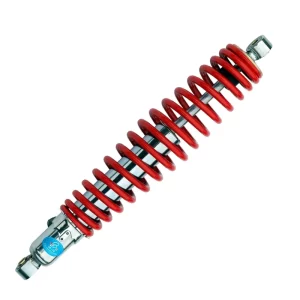
Choosing between independent suspension and a solid axle for your off-road build sets the foundation for every other component decision you’ll make. While most discussions revolve around articulation counts and ride comfort, the shock absorber you bolt to either system is what ultimately converts suspension potential into usable performance. After two decades of designing and manufacturing dampers for ATVs, UTVs, buggies, and 4×4 trucks, I’ve learned that the right shock can bridge the inherent compromises of each platform, but only when you match damping, travel, and valving to how the suspension actually loads the shock.
How Independent and Solid Axle Suspensions Differ
An independent suspension allows each wheel to move up and down without directly affecting the opposite wheel. Control arms, CV axles, and a coilover shock assembly usually make up the system. Solid axle suspension, on the other hand, links both wheels on a rigid beam. When one wheel hits a rock, the opposite side reacts, which provides tire-down force on the ground but also transmits motion across the axle. This fundamental difference changes how shocks experience load.
Off-Road Performance: Independent vs Solid Axle
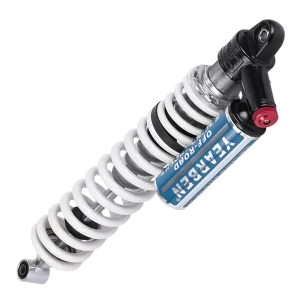
Both systems have strengths that surface in different terrain. A side-by-side comparison clarifies where each design excels.
| Performance Factor | Independent Suspension | Solid Axle |
|---|---|---|
| Wheel Articulation | Less predictable without long-arm geometry | High, predictable articulation |
| High-Speed Stability | Wheels follow terrain independently, less body roll | Can feel unsettled under axle hop |
| Ride Comfort | Smoother, each wheel absorbs impacts separately | Harsher, more body motion transmitted |
| Durability | More moving parts, CV axles are a potential failure point | Simple, heavy-duty beam axle |
| Rock Crawling | Can lift a tire on uneven surfaces | Keeps tires on ground better |
| Desert Racing | Superior handling and precise damping control | Requires heavy damping to manage unsprung mass |
While a solid axle’s simplicity and strength make it a favorite for rock crawlers, independent setups dominate Baja racing because shock tuning can deliver precise wheel control at speed.
Shock Absorber Requirements for Each Suspension Type
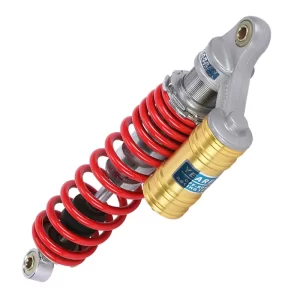
Independent suspension often positions a coilover shock near the control arm. This generates side loads and misalignment forces on the shock shaft and seals that a solid axle simply does not create. I’ve seen front independent setups destroy budget shocks in under a hundred miles of hard trail riding because the shock was never engineered for the angle changes at full droop and compression. Independent applications demand hardened shafts, robust seal packs, and often a spherical bearing mount to prevent premature wear.
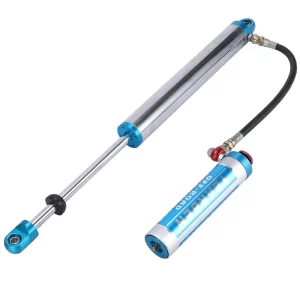
On a solid axle, the shock typically mounts vertically and handles less side load, but it must control a heavier unsprung mass and resist axle wrap under acceleration. That calls for a shock with enough low-speed compression damping to prevent the rear from squatting excessively on climbs and enough high-speed rebound to keep the tire planted over washboard. For many solid axle rigs, a remote reservoir or piggyback design helps manage heat buildup during extended desert runs, where sustained damping loads can cook the oil.
How to Choose Shocks for Independent and Solid Axle Builds
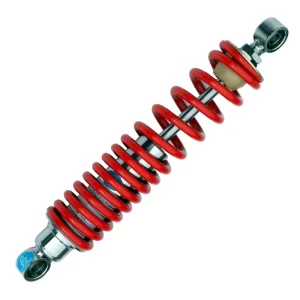
Start by measuring your actual travel and motion ratio. For an independent front, you will likely need a coilover with adjustable spring preload and damping, especially if you run varying vehicle weights. Our Piggyback 2.0 coilover offers separate compression and rebound adjustment, which lets you tune out the understeer that can plague IFS rigs.
For solid axle vehicles, focus on shock length and damping tune. Monotube shocks provide consistent damping under prolonged use, and a remote reservoir helps with cooling if your rig sees high-speed desert terrain. If your truck runs leaf springs, a twin-tube hydraulic shock with firm valving can control rear axle hop without excessive cost. When building a rock crawler, I recommend a shock with a softer initial compression to allow early articulation but a firm progressive end to prevent bottoming. If your program involves a custom link suspension or a heavier-than-stock vehicle, it is worth confirming the valving with the manufacturer before finalizing your parts list; reach out at info@yearbenshocks.com.
Sourcing Quality Off-Road Shocks: What to Look For
Not all shocks survive off-road abuse equally. In our factory, we dyno-test every batch of dampers against the specified damping curve and run cycle tests for seal durability on high-misalignment mounts. When sourcing shocks, ask the manufacturer for quality control traceability, seal material specifications (PTFE is standard for extended off-road life), and whether they nitrogen-charge to a verified pressure before packaging.
We manufacture a wide range of off-road shock absorbers including remote reservoir, piggyback, coilover, and bypass designs, all built with hardened chrome shafts and double-sealed piston assemblies. Our annual capacity of 1.5 million units and ISO-certified production line mean consistent quality whether you order 50 shocks or 5,000.
If you are building an independent or solid axle off-road platform and the off-the-shelf options do not match your travel, damping, or mounting requirements, share your build spec and part number needs with us. We can confirm stock or custom options and deliver a damping solution that matches how your suspension actually moves. Contact Chen Yibo at info@yearbenshocks.com or call +86-523-86566899.
Common Questions About Off-Road Suspension and Shocks
Is independent always better for high-speed off-road driving?
Not always. Independent suspension generally provides more stable handling at speed and allows each wheel to react to terrain without upsetting the chassis. That is why it dominates desert racing. However, a well-tuned solid axle with properly valved shocks and a sway bar can also run fast desert sections confidently. The shock package matters as much as the suspension layout.
Can I use the same shock on both solid axle and independent suspension?
No. The load paths and motion ratios are completely different. A shock built for a solid axle typically has straight mounts and valving optimized for vertical travel, while an independent shock often requires spherical bearings to handle angle changes. Using the wrong type leads to premature seal failure and inconsistent damping.
How do I know if my off-road shocks are fading on long runs?
Fading shows up as a loss of damping after sustained use, often felt as increased bobbing or bottoming out over terrain that the shocks used to control comfortably. The root cause is usually oil overheating and foaming. Switching to a remote reservoir or piggyback shock that separates gas from oil and provides better heat dissipation fixes the problem.
What shock modifications help a solid axle ride smoother on pavement?
The key is to reduce high-speed compression damping while maintaining enough rebound to keep the tire in contact. An adjustable shock lets you soften the damping for street driving and stiffen it for off-road. A progressive-rate coil spring or a properly valved emulsion shock can also smooth out jolts without sacrificing off-road control. If your current shocks feel jarring on pavement, share your vehicle weight and spring setup with us and we’ll confirm whether a re-valve or a different shock model is the right fix.
If you’re interested, check out these related articles:
Ride-on Mower Shock Absorbers 38mm, Shock Absorber Manufacturer
Damping-Adjustable-Shock-Absorber
Lawn mower steering damper 18mm