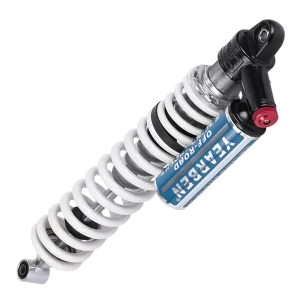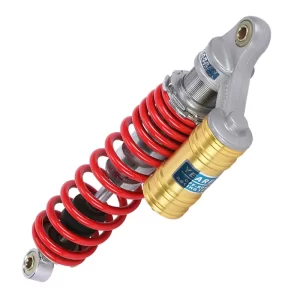
Hydraulic damper technology powers controlled motion in everything from heavy truck seats to commercial lawn mowers and fitness equipment. Yet selecting the right damper for your program requires more than matching a spec sheet. As a suspension engineer who has overseen shock absorber development for ATVs, NEVs, and industrial seating, I have seen that the critical factor is not the component itself but the manufacturer’s ability to adapt a proven base design to the specific stroke, damping force, and durability demands of your application. This guide covers the design considerations, manufacturing quality signals, and customization workflows that procurement teams need to evaluate when sourcing hydraulic dampers for seating, mowing, and fitness.
How Hydraulic Dampers Work Across Seats, Mowers, and Fitness
A hydraulic damper dissipates kinetic energy by forcing oil through precision orifices inside a cylinder. The piston rod, cylinder bore diameter, and valving stack determine how much damping force is produced at a given velocity. That same basic mechanism serves three distinct motion control problems.
In seat suspensions, the damper must provide a progressive resistance curve: soft compression for small road inputs and firm end-of-travel control to prevent bottoming. In lawn mowers, steering dampers reduce kickback through the wheel while deck suspension shock absorbers absorb terrain impacts. Fitness equipment, particularly rowing machines and elliptical trainers, requires consistent damping across a fixed stroke length to maintain a stable resistance feel.
The cylinder bore is the primary differentiator across applications. Light-duty seat dampers and steering dampers often start at 18 mm or 24 mm. Heavy equipment seats and commercial mower deck suspensions move into 35 mm to 38 mm territory. Fitness applications that carry body weight plus momentum may need 41.5 mm bores with adjustable valving.
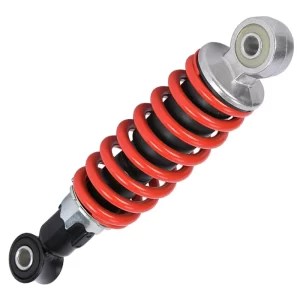
| Application | Typical Cylinder Bore (mm) | Stroke Range (mm) | Damping Characteristic |
|---|---|---|---|
| Driver seat suspension | 24–38 | 40–120 | Progressive, with rebound control |
| Lawn mower steering/deck | 18–24 | 30–80 | Linear, high cycles |
| Fitness equipment | 38–41.5 | 100–150 | Consistent, adjustable optional |
| Heavy equipment seats | 35–41.5 | 60–150 | High load, progressive |
What Bore Diameter Fits Your Load?
Bore size drives maximum damping force. A 24 mm cylinder generating 800 N at 0.3 m/s can manage a standard driver seat, but a 100 kg operator on rough terrain may push that into fade territory. Our team typically specifies 38 mm for mining and construction seats to make sure the damper sits well within its thermal capacity even on multi-shift operations.
Can One Base Design Cover All Three Industries?
Yes, if the manufacturer designs the cylinder body and seal gland to accept different piston rod lengths and valving configurations. We routinely produce a common 38 mm twin-tube body that serves as a heavy seat damper, a mower deck shock, and a fitness resistance damper by changing the piston, rod length, and mounting ends. That standardization is what brings MOQ efficiency for buyers who need small volumes across two or three product lines.
Key Specs to Specify: Cylinder Bore, Stroke, and Damping Force
Procurement engineers should anchor their RFQ on three parameters: bore diameter, total stroke, and damping force at a reference velocity. The bore sets the force ceiling. The stroke defines motion range. The damping force curve tells whether the damper will feel too stiff or too soft in the actual mechanism.
For seats, the damping curve usually calls for a digressive profile: high force at low shaft speeds to control body motion roll, then a plateau so the seat does not jar on sharp bumps. Lawn mower steering dampers need a near-linear curve because handlebar feedback must stay predictable. Fitness equipment dampers are often specified with a linear or slightly progressive curve to avoid a sudden resistance jump mid-stroke.
Providing these three data points plus the mounting configuration to a supplier reduces the back-and-forth. A clear target velocity for damping force (0.3 m/s or 0.5 m/s) and the expected temperature range (passenger seat vs. engine bay adjacent) let the factory select the correct oil viscosity and seal material.
If your program involves designs that cross from pure seat damping into structural vibration control for mower decks, the damping force curve requirements shift. Our engineering team can review your load case and help you pin down the right bore-and-valving combination before you lock the BOM. Reach out with your stroke and load data at info@yearbenshocks.com.
Hydraulic Damper Material Quality: Chrome Plating and Seal Life
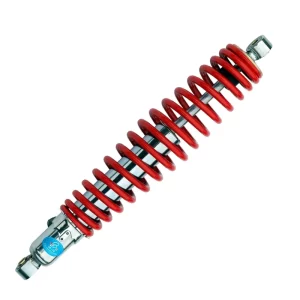
The long-term performance of a hydraulic damper is decided by two surfaces: the piston rod’s chrome plating and the inner cylinder bore finish. Chrome plating thickness, hardness, and micro-crack density directly affect seal wear rates. We require a minimum chrome thickness of 20 microns and a hardness above 800 HV for rods used in fitness equipment, because high cycle counts and sustained side loads accelerate seal degradation.
Bore surface roughness (Ra < 0.2 µm) and a consistent cross-hatch pattern secure adequate oil retention at the piston seal interface. In our production, every damper body undergoes an air-tight pressure test after assembly to catch any micro-porosity in the body tube or rod seal gland before it reaches the customer.
Seal material choice follows application temperature and fluid compatibility. NBR seals handle standard mineral oil and temperatures from -30°C to 100°C, covering most seating and mowing scenarios. PTFE-based seals step in when the damper sits near heat sources or when the fitness equipment manufacturer demands a low-stiction start-up, which matters for smooth-stroke trainers.
| Quality Point | Inspection Method | Yearben Standard |
|---|---|---|
| Chrome thickness | Eddy current gauge | ≥ 20 µm for fitness; ≥ 15 µm for standard seats |
| Bore roughness | Profilometer | Ra ≤ 0.2 µm |
| Seal leak test | Pressurized air dunk tank | Zero leakage at 3 bar for 30 s |
| Cycle durability | Automated test rig | > 200,000 cycles at full stroke |
Hydraulic Damper Customization and MOQ Across Industries
A factory that already produces hydraulic dampers for seats, mowers, and fitness equipment can offer meaningful MOQ flexibility. Instead of requiring 1,000 units of a bespoke design, we can start with an existing bore size and modify the mounting ends, stroke, and valve stack in smaller pilot runs, often 200 to 300 units for a first sample order.
Customization typically involves:
- Mounting eyelet diameter and bushing type (rubber, spherical, or pressed-in steel)
- Rod end thread specification
- Stroke length, within the cylinder body’s allowable range
- Damping valve tuning to match the target force-velocity curve
- Surface finish (zinc plated, painted, or stainless steel body)
When a fitness OEM needed a 150 mm stroke damper with a flat resistance curve and M12 rod ends, we adapted our 38 mm twin-tube seat damper platform. The bore and seal system were already validated, cutting the sampling cycle from six weeks to three. Once field tests passed, the production MOQ fell to 500 units because the core body tooling was shared with other active programs.
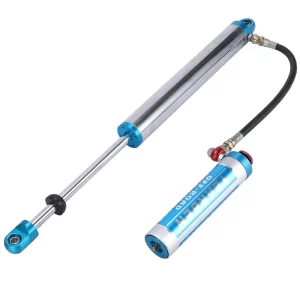
Procurement teams that manage multiple vehicle or equipment lines benefit from consolidating dampers with one factory that can cover the range. It reduces supplier qualification overhead and allows cross-family volume aggregation, which in turn lowers unit pricing even when individual SKU volumes are modest.
Sourcing Hydraulic Dampers Through a Single OEM Partner
Managing seat, mower, and fitness damper programs with separate suppliers multiplies quality audit work and makes volume consolidation impossible. Yearben Shock Absorber Technology operates a single production campus that handles cylinder honing, chrome plating, assembly, and pressure testing for dampers from 18 mm to 41.5 mm bore, serving all three application categories. This vertical integration shrinks your supplier count and lets you pool quantities across product lines for better pricing.
Engineering support during the sampling phase is the real value differentiator. We review your mounting geometry and force targets and return a dimensioned drawing before you commit to tooling. Once production ramps, our batch testing and chrome plating records stay consistent because the process remains under one roof. If you are evaluating a new damper platform or looking to consolidate from multiple vendors, send your target specs, quantities, and delivery timeline to info@yearbenshocks.com or call +86-523-86566899. We will confirm whether a standard platform or a modified existing design meets your requirements with the shortest sample lead time.
Common Questions About Multi-Application Hydraulic Damper Sourcing
What cylinder diameter do I need for my application?
Cylinder diameter selection starts with the maximum expected force. A lightweight seat suspension with 80 kg operator mass may only need a 24 mm bore, while a fitness trainer that sees dynamic loads up to 150 kg plus the user’s body weight typically requires 38 mm or 41.5 mm. Provide your target damping force at a stated velocity, and the manufacturer can confirm the bore size and whether a monotube or twin-tube architecture fits better.
Can one supplier handle seat, mower, and fitness dampers simultaneously?
Only if the factory has existing tooling and validation data across those bore ranges. A supplier that makes only ATV coilovers will not have the small-bore, high-cycle experience needed for steering dampers and fitness equipment. Audit for multi-diameter honing capability and seal supplier diversity. We run 18 mm through 41.5 mm bores on the same production line, so mixed-model scheduling is routine.
What information should I provide for a custom damper quote?
Send the following: total extended and compressed length, stroke, mounting type and dimensions, damping force target at one or two velocities, expected cycle count per day, and installation orientation. If you have a current part number or a competitor sample, include that. We can reverse-engineer the damping curve and return a dimensional drawing within five working days for most seat and mower applications.
How do I verify chrome plating quality before approving a sample?
Request a chrome thickness measurement report and a cross-section micrograph showing hardness indent. For fitness equipment dampers, also ask for a neutral salt spray test result to 96 hours per ISO 9227. During a factory audit, check whether chrome plating is done in-house or outsourced; in-house plating usually gives tighter process control. We plate and test rods on-site to maintain end-to-end traceability.
What is the typical lead time for custom hydraulic dampers with adjustable settings?
A first-article sample with a standard bore and modified stroke usually takes three to four weeks. If adjustable valving is added, allow one extra week for valve stack tuning and dyno validation. Production lead times settle to 30 to 45 days once the design is locked and tooling qualified. For programs that draw on an existing validated platform, we can trim sample delivery to two weeks. Share your sample timeline requirements and we will confirm which bore platforms can meet them at info@yearbenshocks.com or call +86-523-86566899.
If you’re interested, check out these related articles:
Adjustable Seat Damper 41.5mm
Damping-Adjustable-Shock-Absorber
Gas Charged Dual Rate Coilover Shock Absorber
4X4-Heavy-Duty-Suspension
Ride-on Mower Shock Absorbers 38mm, Shock Absorber Manufacturer