
When an ATV bottoms out on a rocky descent or a UTV loses composure mid-whoops, the root cause often traces back to inadequate gas charge pressure or mismatched damping characteristics in the shock absorber. Gas shock absorbers have become the standard for serious off-road applications because they solve a fundamental problem that oil-only designs cannot: consistent damping performance under sustained heat and repeated high-speed compression cycles. For procurement managers and vehicle integrators sourcing shocks for ATVs, UTVs, and off-road platforms, understanding the engineering differences between gas shock types, their performance envelopes, and factory specification options determines whether the final product survives real-world abuse or generates warranty claims.
Why Gas Shock Absorbers Outperform Hydraulic-Only Designs Off-Road
The core advantage of a gas shock absorber lies in nitrogen pressurization. In a conventional hydraulic shock, oil flows through valving to create damping resistance, but the oil itself can aerate under aggressive use. When an ATV hammers through successive impacts at speed, the rapid piston movement creates cavitation bubbles in the oil. These bubbles compress instead of the oil, causing damping force to drop unpredictably. Riders describe this as the shock “going soft” or “fading” mid-trail.
Gas pressurization eliminates this failure mode. By charging the shock body with nitrogen at pressures typically ranging from 150 to 250 PSI depending on application, the gas keeps the oil under constant pressure. This pressure prevents bubble formation even when oil temperature climbs past 200°F during extended desert runs or competition use. The result is damping consistency from the first impact to the thousandth.
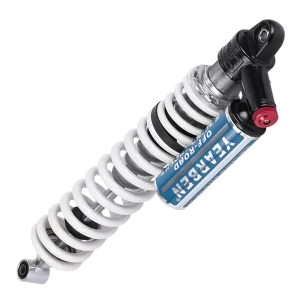
I have observed this difference directly when comparing shock performance data across different charge pressures. A shock charged at 180 PSI maintained within 5% of its baseline damping force after 500 continuous compression cycles at 2 inches per second velocity. The same shock body with only 100 PSI charge showed 18% damping degradation under identical test conditions. For a UTV running high-speed desert terrain, that degradation translates to noticeably reduced control and increased bottoming frequency.
The nitrogen also serves a secondary function in monotube designs: it compensates for oil volume displacement as the piston rod enters the shock body during compression. Without this compensation, hydraulic lock would occur. The gas chamber compresses slightly to accommodate the rod volume, maintaining smooth operation throughout the stroke.
Gas Shock Absorber Types for ATV and UTV Applications
Not all gas shocks share the same architecture. The three primary configurations each serve different performance requirements and cost targets.
| Type | Construction | Best Application | Typical Price Range |
|---|---|---|---|
| Monotube | Single tube, floating piston separates gas and oil | Racing, high-performance trail, desert | Higher |
| Twin-tube gas charged | Inner and outer tube, gas in outer chamber | Utility ATV, moderate trail use | Mid-range |
| Piggyback reservoir | Monotube with external reservoir | Aggressive trail, dune, competition | Highest |
Monotube gas shocks place the nitrogen charge below a floating piston at the bottom of the shock body. Oil occupies the space above this piston, and the main damping piston operates within the oil column. This design offers the fastest heat dissipation because the single tube wall transfers heat directly to ambient air. For ATV shocks used in racing or aggressive trail riding, monotube construction provides the most consistent performance.
Twin-tube gas charged shocks use a more complex internal architecture where oil flows between an inner and outer tube through base valving. The gas charge occupies a portion of the outer tube. This design costs less to manufacture and tolerates minor seal wear better than monotube designs, making it suitable for utility ATVs and moderate recreational use. However, heat dissipation suffers because the outer tube insulates the inner working chamber.
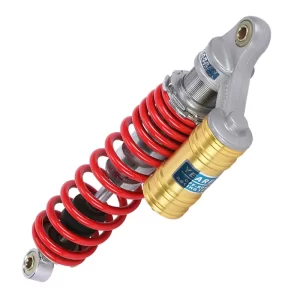
Piggyback reservoir shocks add an external reservoir connected to the main body by a hose or direct mount. This reservoir increases total oil volume and provides additional gas charge capacity. The extra oil volume absorbs more heat energy before temperature rises significantly, while the larger gas chamber maintains more stable pressure as oil expands with heat. For UTV shocks running competition or extended high-speed desert use, piggyback designs offer measurable advantages in fade resistance.
Specifying Gas Shock Absorbers for OEM and Aftermarket Programs
When sourcing gas shock absorbers for production vehicles or aftermarket kits, several specifications require precise definition to avoid fitment issues and performance mismatches.
Stroke and travel define how much suspension movement the shock accommodates. A 500cc sport ATV typically uses front shocks with 8 to 10 inches of travel, while a high-performance UTV may require 14 to 18 inches. The shock stroke must match the suspension geometry’s designed travel, accounting for bump stop engagement. Specifying a shock with insufficient stroke causes premature bottoming; excessive stroke wastes potential travel and adds unnecessary weight.
Body diameter affects oil volume and heat capacity. Common sizes include 1.5-inch, 2.0-inch, and 2.5-inch body diameters. Larger bodies hold more oil and dissipate heat faster but add weight and require more mounting space. For most ATV applications, 1.5-inch or 2.0-inch bodies suffice. UTVs running desert racing benefit from 2.5-inch bodies on all four corners.
Mounting configuration includes eye-to-eye length, mounting hardware type, and reservoir orientation for piggyback designs. Eye mounts, clevis mounts, and stem mounts each require different frame provisions. I have encountered programs where a 5mm difference in eye-to-eye length caused binding at full droop, requiring costly tooling changes. Confirming mounting dimensions against actual suspension geometry drawings before production commitment prevents this failure mode.
Gas charge pressure should match the intended use case. Higher pressures increase low-speed damping firmness and improve fade resistance but can create harshness on small bumps. Lower pressures feel more compliant but sacrifice high-speed performance. Most off-road vehicle shocks ship with charge pressures between 150 and 200 PSI, with adjustment capability for end users who have nitrogen charging equipment.
If your program involves specific spring rates or progressive damping requirements, confirming the shock’s valving compatibility before finalizing your BOM prevents integration problems during vehicle validation.
Damping Adjustment Options and Their Manufacturing Implications
Adjustable damping has become increasingly common in performance ATV and UTV applications. The adjustment mechanism affects both end-user experience and manufacturing complexity.
Compression adjustment controls how quickly the shock compresses under impact. External compression adjusters typically use a needle valve or clicker mechanism that restricts oil flow through the compression circuit. More clicks of adjustment generally means finer tuning resolution but also higher manufacturing cost due to tighter machining tolerances on the adjuster components.
Rebound adjustment controls how quickly the shock extends after compression. This adjustment prevents the suspension from “packing down” during repeated impacts and affects how the vehicle tracks over washboard surfaces. Most adjustable shock absorbers offer rebound adjustment as a minimum feature.
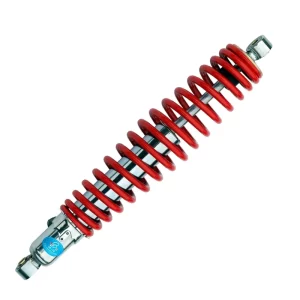
Dual and triple adjustment configurations add separate high-speed and low-speed compression circuits. High-speed compression controls response to sharp impacts like rocks and G-outs. Low-speed compression affects body roll, brake dive, and weight transfer during cornering. These circuits require additional internal valving and external adjusters, significantly increasing part count and assembly time.
| Adjustment Type | Typical Click Range | Manufacturing Complexity | End-User Skill Required |
|---|---|---|---|
| Single rebound | 12-24 clicks | Low | Basic |
| Compression + rebound | 12-24 each | Medium | Intermediate |
| Dual-rate compression + rebound | 8-16 each circuit | High | Advanced |
For OEM programs targeting recreational users, single rebound adjustment often provides sufficient tunability without overwhelming the customer. Competition-focused products justify the cost and complexity of dual-rate systems because their users understand how to exploit the adjustment range.
Factory Capabilities That Affect Gas Shock Quality
The difference between a gas shock that performs reliably for years and one that fails prematurely often traces to manufacturing process control rather than design intent. Several factory capabilities directly impact finished product quality.
Bore finish quality on the shock body inner surface affects seal life and damping consistency. A bore finish rougher than 8 Ra microinches accelerates seal wear and allows oil bypass around the piston. Honing equipment condition and operator skill determine whether bore finish meets specification consistently across production runs.
Nitrogen charging accuracy requires calibrated equipment and controlled procedures. Undercharging causes premature fade; overcharging creates excessive harshness and can damage seals over time. Factories with automated charging stations and pressure verification testing produce more consistent results than those relying on manual charging with spot checks.
Seal installation cleanliness matters because a single particle of debris trapped under a seal lip creates a leak path. Clean room or controlled environment assembly areas, combined with proper seal lubrication procedures, reduce early-life seal failures that generate warranty claims.
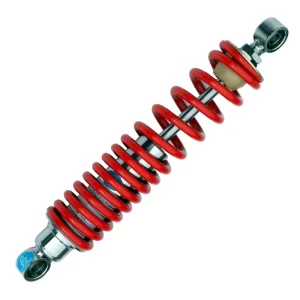
Cycle testing before shipment verifies that each shock meets damping specifications. A proper test cycles the shock through its full stroke at multiple velocities while measuring force output. Comparing measured force curves against specification limits catches assembly errors and component defects before shipment. Factories that skip this step or test only samples from each batch ship more defective units.
When evaluating potential suppliers for off-road coilover shocks, requesting documentation of these process controls provides insight into expected quality levels. A factory that cannot explain their bore finishing process or show their charging station calibration records warrants additional scrutiny.
Common Gas Shock Failures and Their Root Causes
Understanding failure modes helps both in specifying appropriate products and in diagnosing field returns.
Oil leakage past the main seal typically results from seal wear, contamination damage, or shaft surface defects. Chrome plating quality on the piston rod directly affects seal life. Plating thickness below 15 microns or poor adhesion allows corrosion pitting that damages seals during operation. Specifying hard chrome plating with minimum 20-micron thickness and proper post-plating polishing reduces this failure mode.
Loss of gas charge occurs through the floating piston seal in monotube designs or through the Schrader valve in serviceable units. Floating piston seals that see excessive temperature cycling eventually lose elasticity and allow nitrogen to migrate into the oil chamber. This manifests as gradually increasing fade over time, often noticed as “the shocks don’t feel as good as they used to” complaints.
Damping inconsistency between shocks in a matched set creates handling imbalance. This results from valving variation during assembly, inconsistent gas charge pressure, or oil viscosity differences. Factories that batch-match shocks by testing and grouping units with similar force curves produce better vehicle dynamics than those shipping random pairs.
Bottoming harshness despite adequate travel often indicates insufficient hydraulic bump stop action in the valving. The shock should progressively increase resistance as it approaches full compression, not hit a hard stop. This requires proper bump stop piston design and valving, which some lower-cost manufacturers omit to reduce part count.
Selecting the Right Gas Shock Configuration for Your Application
The decision matrix for gas shock selection balances performance requirements, cost constraints, and end-user expectations.
For utility ATVs and entry-level UTVs, twin-tube gas charged shocks with fixed damping provide adequate performance at the lowest cost. These vehicles see moderate speeds and occasional rough terrain. Specifying monotube construction adds cost without proportional benefit for this use case.
For sport ATVs and recreational UTVs, monotube gas shocks with single or dual adjustment offer the performance headroom these vehicles need. Riders push harder, speeds increase, and the suspension sees more demanding duty cycles. The improved heat dissipation and adjustment capability justify the cost premium.
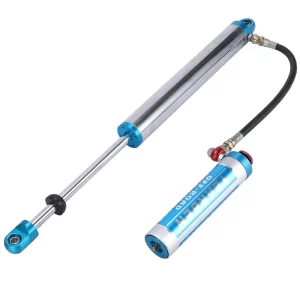
For racing ATVs, competition UTVs, and desert vehicles, piggyback shocks absorber or remote reservoir shocks with full adjustment become necessary. The additional oil volume and gas capacity prevent fade during extended high-speed runs. Multiple adjustment circuits allow tuning for specific track conditions. The cost premium is substantial but matches the performance expectations of this market segment.
For modified and overland vehicles that see varied terrain and carry heavy loads, gas shocks with higher-than-stock spring rates and increased gas charge pressure handle the additional weight without excessive sag. Adjustable damping allows tuning for different load conditions between empty and fully loaded configurations.
Working with a Gas Shock Manufacturer: What to Specify
When engaging a manufacturer like Yearben for custom gas shock development or OEM supply, providing complete specifications upfront accelerates the quotation and sampling process.
Required specifications include:
– Eye-to-eye length at full extension and full compression
– Body diameter and reservoir configuration
– Mounting hardware type and dimensions
– Spring rate and preload requirements if coilover
– Desired adjustment features
– Operating temperature range
– Target vehicle weight and intended use severity
Helpful additional information includes:
– Suspension geometry data showing motion ratio
– Competitor product benchmarks if available
– Annual volume projections for tooling amortization decisions
– Quality certifications required for your market
Yearben maintains production capability for monotube, twin-tube, and reservoir configurations across the full range of body diameters used in ATV, UTV, and off-road applications. With over 200 shock absorber models in current production and annual capacity exceeding 1.5 million units, the factory supports both catalog product orders and custom development programs.
If your application requires specific valving characteristics, non-standard mounting configurations, or private label packaging, sharing your complete requirements with the engineering team at info@yearbenshocks.com allows accurate quotation and realistic timeline estimates. For urgent inquiries, contact +86-523-86566899 directly.
Frequently Asked Questions About Gas Shock Absorbers for Off-Road Vehicles
What gas pressure should I specify for ATV shock absorbers?
Most ATV applications perform well with nitrogen charge pressures between 150 and 200 PSI. Sport and racing ATVs benefit from pressures toward the higher end of this range for improved fade resistance during aggressive riding. Utility ATVs used primarily for work tasks can run lower pressures around 150 PSI for a more compliant ride over rough terrain. The optimal pressure also depends on rider weight and typical load; heavier riders or frequently loaded vehicles may need 10-20 PSI additional charge to maintain proper ride height and damping characteristics. Share your vehicle weight and use profile to confirm the appropriate charge pressure for your specific application.
How do I know if my gas shock needs recharging or replacement?
Several symptoms indicate gas charge loss: the shock feels softer than when new, damping fades noticeably during extended use, or the shock makes a sloshing sound when cycled by hand. If the shock body shows no oil leakage and the symptoms appeared gradually over time, recharging may restore performance. However, if the floating piston seal has failed, recharging provides only temporary improvement before the gas migrates again. Shocks with visible oil leakage, bent shafts, or damaged chrome plating require replacement rather than service. When multiple shocks from the same production batch show similar symptoms, investigating the root cause with your supplier prevents recurring issues.
Can gas shocks be rebuilt, or are they disposable?
Rebuildability depends on the shock design and manufacturer intent. Many performance-oriented gas shocks feature serviceable construction with replaceable seals, valving components, and bushings. These units can be rebuilt multiple times if the body and shaft remain undamaged. Economy shocks often use crimped or staked construction that prevents disassembly without destroying the unit. When specifying shocks for applications where rebuild capability matters, confirm the design supports service and that rebuild kits will be available. For fleet applications or rental vehicles, rebuildable shocks often provide lower total cost of ownership despite higher initial purchase price.
What causes gas shock absorbers to overheat during use?
Overheating results from converting kinetic energy to heat faster than the shock can dissipate it. Factors that accelerate heating include high-speed operation over rough terrain, undersized shock body diameter for the application severity, insufficient oil volume, and ambient temperature extremes. When a shock overheats, oil viscosity drops and damping force decreases, creating the fade sensation. Upgrading to larger body diameter shocks, adding external reservoirs, or switching to synthetic shock oil with better high-temperature stability all address overheating. If your current shocks fade consistently during normal use patterns, the specification may be undersized for your actual operating conditions.
How do monotube and twin-tube gas shocks compare for UTV use?
Monotube shocks offer faster heat dissipation, more consistent damping under hard use, and typically longer service life in demanding applications. Their single-tube construction transfers heat directly to ambient air, while twin-tube designs trap heat in the inner chamber. Twin-tube shocks cost less to manufacture and tolerate minor seal wear better because the outer tube contains any small leakage. For recreational UTV use at moderate speeds, twin-tube gas shocks provide adequate performance at lower cost. For sport UTVs, racing applications, or any use involving sustained high speeds, monotube construction delivers measurably better fade resistance and damping consistency. Share your typical use conditions and we can recommend the appropriate configuration for your program.
Industry Standards and Technical Resources
SAE International — J2730 Shock Absorber Nomenclature and Terminology, 2019
ISO — ISO 10326-1 Mechanical Vibration Laboratory Method for Evaluating Vehicle Seat Vibration, 2016
If you’re interested, check out these related articles:
Damping-Adjustable-Shock-Absorber
Ride-on Mower Shock Absorbers 38mm, Shock Absorber Manufacturer
Hydraulic-Seat-Damper-Cylinder-Diameter-24MM
Triple-Bypass-Remote-Reservoir-Shock