When a 4×4 is loaded for extended backcountry travel, its shocks are asked to manage a combination of sustained vehicle weight, hours of corrugation, and ambient heat that most catalog specifications ignore. Most off-the-shelf shock absorbers are not valved for these conditions. I have spent over twenty years engineering and manufacturing suspension components, and the shocks that survive long-distance overlanding share one trait: the valving curve, oil volume, and seal materials are matched to the actual operating envelope, and that matching rarely happens without factory-level specification. This guide walks through the selection of 4×4 overlanding shocks for multi-day remote travel: the types, critical specs, factory quality checks, and the process of ordering a set built to your load and route.
Overlanding Travel Creates Demands That Standard Shocks Often Miss
Overlanding is not a short burst of speed. It is hours of corrugated dirt, loaded to gross vehicle weight, with no chance to cool down. The shock absorber on a long-distance overland build does three jobs at once: it controls the motion of the heavily loaded sprung mass, it manages the energy of the unsprung mass over relentless small hits, and it dissipates heat from continuous high-speed compression cycles. The most common failure I see in off-the-shelf shocks used in this application is not a broken shaft or a blown seal. It is viscosity fade. The oil thins from sustained heat, damping force drops, and the vehicle begins to pitch and wallow, sometimes after only a few hours on the trail.
A shock built only to a length and a generic damping rate cannot solve this. The damping curve must account for the vehicle’s actual corner weight with fuel, water, and gear, plus the anticipated percentage of time on fast gravel versus slow crawling. Without that work, the shock will be overdamped in one situation or underdamped in the next. Heat management matters equally. The oil volume and body surface area directly determine how long the shock can maintain consistent force before fade begins. For overlanding, the shock body needs to be larger, the oil capacity higher, and the nitrogen charge set to hold the oil column firm across a wider temperature range than a short-course race shock would ever require.
Monotube, Twin-Tube, and Reservoir Types Compared for Long-Distance Use
The choice of shock construction is the first specification gate. I have summarized the differences that matter for sustained, loaded travel below.
| Shock Type | Cooling Capability | Fade Resistance | Travel Efficiency | Typical Overland Suitability |
|---|---|---|---|---|
| Twin-tube | Low; oil surrounds inner tube, traps heat | Moderate; fades earlier under sustained load | Packed length is longer for same stroke | Acceptable for light rigs, short days |
| Monotube (non-reservoir) | Moderate; oil and gas in one body | Good; larger oil volume than twin-tube | Better stroke-to-length ratio | Suitable for moderate loads and pace |
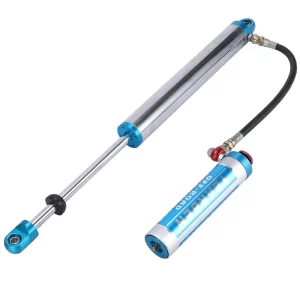
| Monotube with piggyback reservoir | Good; extra oil volume, no remote hose complexity | Good; reservoir separates gas from oil, increases oil capacity | Same as monotube; reservoir does not reduce stroke | Strong choice for most overlanding |
| Monotube with remote reservoir | Best; reservoir placed for airflow, largest oil volume | Best; largest thermal mass, cooling from remote placement | Same as monotube; flexible mounting | Best option for heavy rigs, high-speed sections, extreme ambient heat |
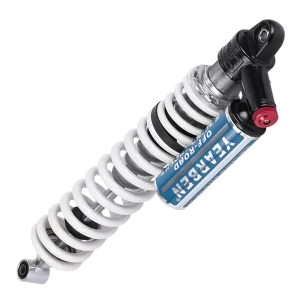
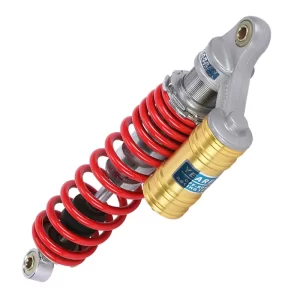
A remote reservoir does not add travel. It adds oil volume and isolates the gas charge, delaying the point where nitrogen dissolves into the oil under repeated cycles. In my experience, a heavily loaded 4×4 crossing a long washboard plain can push a piggyback shock to its thermal limit. The remote reservoir, even if it adds installation complexity, buys margin when the pace is steady and the track is rough.
If your program involves a vehicle with a non-standard wheelbase, custom suspension links, or frame modifications, it is worth confirming the shock’s damping range and thermal capacity against your build weight before finalizing your BOM. A factory that can share dyno plots at different stroke frequencies gives you data, not marketing claims. Reach out at info@yearbenshocks.com with your loaded vehicle weight and intended terrain profile, and we can confirm whether a remote-reservoir monotube or a piggyback unit fits the use case without overcomplicating the install.
Matching Shock Specifications to Vehicle Load and Suspension Travel
The right shock type is only half the equation. The valving and spring specifications must align with the vehicle’s actual load distribution, not the stock curb weight. A 4×4 with a roof tent, drawer system, auxiliary fuel tank, and spare tire carrier can easily add 500 kg or more to the rear axle. If the spring rate is not recalculated for that figure, the shock will spend too much time deep in the compression stroke, running on the progressive end of the valving curve where damping force stacks up and ride quality degrades. The spring rate is derived from the corner weight and the desired natural frequency. For an overland rig, I typically target a rear natural frequency near 1.5 to 1.8 Hz when loaded, which keeps the vehicle settled without pitching quickly on uneven surfaces. Preload must be set so that static ride height is achieved with approximately 30 to 40 percent of the total shock stroke used as sag. That sag window ensures the shock has enough extension travel left for the wheels to drop into dips and holes.
Suspension travel for overlanding does not need to be extreme. Most builds work well with 8 to 10 inches of travel at each corner, provided the shock is tuned to use that travel progressively. The front end often needs more travel than the rear because it takes the larger single-hit inputs at speed. The rear needs enough droop to keep the tire in contact with the ground on undulating terrain. A common mistake I see is specifying a shock with more travel than the control arms and driveline angles can support, which leads to binding and premature wear.
How Do I Calculate Spring Rate for a Loaded Overland Vehicle?
Start with the actual corner weight, measured with the vehicle fully loaded with fuel, water, passengers, and gear. Divide the corner weight by the desired compression at ride height (sag). For example, if the rear corner weighs 800 kg and you want 80 mm of sag, you need a spring rate of 10 kg per mm. That rate is then cross-checked against the shock’s motion ratio on the vehicle. A trailing arm suspension with a 0.7 motion ratio needs a considerably higher rate at the spring than a direct-to-axle mount.
How Much Suspension Travel Is Enough for Long-Distance Off-Road?
For most overlanding in a 4×4-based platform, 8 to 10 inches of total wheel travel is a balanced target. Less than that reduces comfort and traction on corrugated roads. More than that requires significant chassis and driveline modification, longer control arms, and often a custom shock that extends the factory mounting points, all of which add complexity and failure points that work against long-distance reliability.
Factory-Level Manufacturing Factors That Affect Shock Longevity
A shock that looks right on a specification sheet can still fail early if the manufacturing process is not built around consistent quality. The internal bore finish of the shock body directly affects seal life. A rough bore wears the main shaft seal prematurely, leading to oil loss and gas leakage. In our facility, the bore is honed to a surface finish of Ra 0.2 µm or better, measured after honing and verified before assembly. We pressure-test every shock body at 1.5 times the maximum operating pressure to catch weld porosity before the unit is filled. The nitrogen charge is done with a precision needle charging system that holds final pressure within a five-psi window, because a charge that is too low lets the oil cavitate, and a charge that is too high makes the shock harsh on small bumps.
The valving stack is another area where factory discipline separates a consistent product from a lottery. A stack of shims that is simply torqued to a number without a bleed and blow-off check will produce a different damping curve from one piston to the next. We dyno each batch of shocks on a programmable dyno at multiple speeds to confirm that the force-velocity curve sits within the tolerance band. If you are ordering a set of four shocks for a specific vehicle build, you want that dyno sheet, and you want the four units to be within a few percent of each other, not just “within spec.”
What Factory Tests Show That a Shock Will Last?
Look for three tests from the manufacturer. First, a high-pressure leak test on the body before assembly. Second, a full-stroke cycle test on a dyno at a temperature that simulates extended use, typically 500 to 1000 cycles at a shaft speed that matches real driving. Third, a gas retention test over time to confirm that the nitrogen fill is stable. If the factory cannot provide data from these tests or only quotes a “pressure test” without specifics, the shock is untested for overlanding workloads.
Key Information for Ordering Custom Overlanding Shocks
A factory can build a shock to your vehicle, but only if you provide the right input data. The minimum set of information includes: vehicle make, model, and year; front and rear loaded axle weights; current suspension type (leaf spring, coil, independent); available shock extended and compressed lengths from your existing mounts; mounting style (eyelet, stem, or bolt-through); desired shock type (monotube, reservoir, piggyback); and the primary terrain and load profile. If you are working with a custom suspension setup, include the motion ratio at each corner and whether the shock is mounted in a trailing or leading arm arrangement.
Custom shocks for overlanding typically carry a minimum order quantity that varies with the level of specialization. A standard monotube with reservoir adapted to your lengths and valving may have an MOQ of 20 to 50 units, depending on the factory. Completely bespoke designs with unique body lengths, custom clevis ends, or non-standard shaft diameters require higher lot sizes and longer lead times. In our workflow at Yearben, we ask for an initial set of drawings or measurements, confirm feasibility within one week, produce a sample pair for fit and dyno validation, and then proceed to the production run. Lead times for production runs range from 30 to 45 days once the sample is approved.
What Data Should I Send to Get a Meaningful Quotation?
Send the loaded axle weights, the available eye-to-eye lengths at full extension and full compression, the mounting type with bolt diameter, and a brief description of your typical trip profile (hours per day, terrain mix, average ambient temperature). That is enough for a factory engineer to propose a shock type, a body diameter, a spring rate if coilover, and a first-pass valving curve.
Off-Road Shocks Built for the Long Haul
If shock fade, pressure loss, or inconsistent damping are cutting your trips short, the root cause is often not that you chose the wrong brand. It is that the shock was never matched to your vehicle’s real weight, your sustained pace, and the heat you generate hour after hour. A factory-assembled set of 4×4 overlanding shocks, valved to your build and tested to the conditions you actually drive, does not leave those variables to chance.
Tell us your loaded axle weights, your travel numbers, and your terrain profile. We will confirm feasibility, propose a damping solution matched to your overlanding requirements, and walk you through the sample and production process. Reach our engineering team at info@yearbenshocks.com or call +86-523-86566899.
Common Questions About Overlanding Shock Selection
Do I need a remote reservoir for overlanding, or is a piggyback enough?
A piggyback reservoir is enough for most overlanding when the vehicle is not run at sustained high speeds on corrugated surfaces for more than an hour or two at a time. It adds oil volume and separates the nitrogen charge without the extra hose length. If you cross long desert stretches at 40 to 60 mph with a heavy load, however, a remote reservoir is worth the extra complexity. It moves the oil reservoir into cooler airflow and typically holds 15 to 30 percent more oil than a piggyback of the same body size, which directly extends the time before fade becomes measurable.
What if my vehicle weight changes a lot between trips?
A common overlanding scenario is a vehicle that is light for short weekend trips and heavily loaded for month-long expeditions. The correct spring rate for the heavy trip will be too stiff when the vehicle is light. In those cases, a dual-rate coilover setup or an adjustable preload collar lets you manage the ride height and spring rate for both configurations. I recommend selecting the spring rate for the heavy configuration and using the tender spring or preload adjustment to reduce harshness at lighter weight. It is a compromise, but it keeps the shock from spending the heavy trip bottomed out.
How long do custom overlanding shocks typically last?
In programs I have supported, properly specified monotube shocks with remote reservoirs used for overlanding have lasted between 40,000 and 70,000 kilometers before a rebuild was needed. The rebuild interval is more dependent on shaft seal condition and oil contamination than on the damping structure wearing out. Regular inspection of the shaft for pitting and replacing the seal wiper before it hardens extends the service interval. If you operate in extremely fine dust or mud, that interval may shorten. A factory that uses hardened chrome shafts and high-grade Viton seals will give you a longer first life than budget alternatives.
Can I order just a pair of front shocks, or must I buy a full set?
For a custom overlanding order, most factories prefer to build a full set of four to keep the valving matched across the vehicle. That ensures the front and rear damping curves are designed together, which is critical for pitch control over uneven terrain. However, if you already have a properly matched rear setup and only need fronts, many factories will accept a smaller order. At Yearben, we produce front or rear sets separately as long as the vehicle data is complete and we can validate the compatibility with your existing rear shocks.
What happens if a custom shock does not perform as expected on my vehicle?
With a factory that follows a sample validation process, you do not buy a production run without testing. We build one pair of sample shocks to your specifications, send them to you for fitment and initial driving impression, and then refine the valving if needed before production. If you still see unexpected behavior, the tuning data from your feedback gets applied to the next pair. A serious OEM will stand behind that loop. Share your loaded axle weights and terrain profile with us at info@yearbenshocks.com, and we will map out the sample and testing steps before you commit to a production order.
If you’re interested, check out these related articles:
Hydraulic-Shock-Absorber-24MM
Adjustable-Shock-Absorber-For-Car
Adjustable Seat Damper 41.5mm
Oil-free lawn mower shock absorber 24mm
Adjustable-Gas-Shock-Absorbers