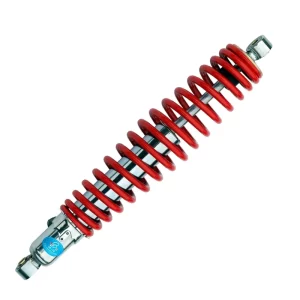
Coilover shocks for off-road trucks deliver superior suspension control and load handling by combining a coil spring and damper into a single unit. However, achieving the right performance depends on matching spring rates, valving, and travel to the vehicle’s specific weight and terrain requirements. While most guides focus on retail product comparisons, this article examines the engineering and sourcing considerations that determine whether a coilover setup actually performs in rugged conditions. Drawing on decades of shock absorber manufacturing experience, I’ll explain what specifications to prioritize, how to work with a factory for custom orders, and what quality indicators separate reliable coilovers from those that fail under stress.
How Do Coilover Shocks Improve Off‑Road Truck Performance?
A coilover shock eliminates the need for a separate spring perch by integrating a coil spring around the damper body. This gives the builder full control over ride height and corner weight balance. On off‑road trucks, the difference is immediate: the suspension articulates more freely over rocks, and the vehicle stays composed on high‑speed desert runs.
The reason is consistent damping force across a wider range of travel. Stock twin‑tube shocks often cavitate when worked hard, especially on washboard roads where the piston cycles rapidly. In our work with off‑road truck builders, a properly valved coilover consistently eliminates harsh bottoming and provides far greater control compared to standard shocks. The coil spring also supports heavier accessory loads—winches, bumpers, bed racks—without sagging, which a conventional shock simply cannot compensate for.
What Specifications Do You Need to Match for Off‑Road Coilovers?
Ordering the right coilover starts with four parameters: spring rate, damping valving, extended/compressed length, and rod diameter. Get any of these wrong and the shock will either ride harshly, blow through travel too easily, or physically bind at full articulation.
How to calculate the right spring rate for a lifted truck
Spring rate is determined by the corner weight of the truck and the motion ratio of the suspension linkage. First, measure the sprung weight at each corner with the truck fully loaded for typical use. Divide by the suspension’s leverage ratio (motion ratio squared). The result is the required spring force at the coilover’s mounting angle. As a practical starting point, most light pickups run 250–350 lb/in springs, while full‑size overland rigs often need 400–600 lb/in. We always recommend ordering springs in matched pairs from the same production batch to avoid side‑to‑side height variation.
| Truck Type | Approx. Front Corner Weight | Recommended Spring Rate |
|---|---|---|
| Mid‑size pickup (Tacoma, Ranger) | 1,100–1,300 lbs | 300–400 lb/in |
| Full‑size half‑ton (F‑150, Silverado 1500) | 1,400–1,600 lbs | 400–500 lb/in |
| Heavy overland or diesel (F‑250, Ram 2500) | 1,800–2,200 lbs | 550–700 lb/in |
What travel length is needed for rock crawling vs desert racing
For rock crawling, you need maximum droop with a modest compression stroke; an 8‑inch travel shock with 5 inches of droop is common. Desert racers require both compression and rebound travel to handle high‑speed impacts. A 10–12 inch travel shock with roughly equal compression and rebound split is typical. Extended and compressed lengths must be measured on the truck at full droop and full bump to avoid over‑compressing the shock.
What Are the Differences Between Remote Reservoir, Piggyback, and Smooth Body Coilovers?
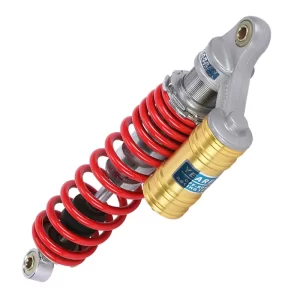
Coilover bodies come in three main configurations, and the choice directly impacts heat management and packaging.
| Type | Reservoir Location | Cooling | Packaging Difficulty | Best For |
|---|---|---|---|---|
| Smooth body | No external reservoir | Least | Easiest | Light‑duty off‑road, daily drivers |
| Piggyback | Reservoir attached to shock body | Moderate | Moderate | General off‑road use with some high‑speed work |
| Remote reservoir | Reservoir mounted via hose | Best | Most complex | High‑speed desert, racing, heavy trucks |
When should you choose a remote reservoir over a piggyback
Remote reservoirs offer a larger oil volume and better heat dissipation because the reservoir can be placed away from exhaust heat and has greater surface area. For trucks that see sustained high‑speed running—Baja‑style or long desert tracks—a remote setup is worth the extra plumbing. Piggyback shocks are a good middle ground for weekend trail rigs where packaging space is limited. The key is ensuring the hose length does not restrict placement and that the hose fitting uses a high‑pressure seal rated for at least 3,000 psi.
How to Order Custom Coilover Shocks from a Factory
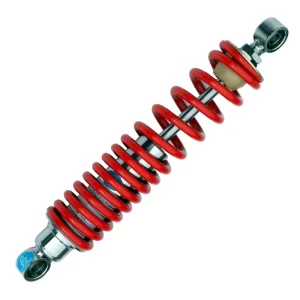
When off‑the‑shelf lengths or spring rates don’t fit a custom‑fabbed suspension, working directly with a manufacturer is the most practical path. We routinely handle orders for one‑off builds, small fleet runs, and prototype vehicles. The process starts with a clear set of specs.
Provide the factory with these measurements for each corner:
1. Extended eye‑to‑eye or stem‑to‑eye length at full droop
2. Compressed length at full bump (with bump stop compressed)
3. Upper and lower mount types (bushing ID, bolt diameter, stud size)
4. Corner weight as described earlier
5. Desired ride height adjustment range (usually ±1 inch from static)
6. Terrain and driving style (rock crawling, desert, mixed)
With these numbers, the factory can recommend a shock body diameter (typically 2.0 or 2.5 inches for off‑road trucks), rod diameter (5/8 or 7/8 inch), valving stacks, and reservoir type. Custom orders typically start at 20–50 units, though some manufacturers will accept a 10‑unit trial run with a tooling fee. Lead times range from 4–8 weeks depending on component stock. If your build requires specific damping curves or non‑standard mounting points, it is worth confirming your specs with an engineer before placing an order—reach out at info@yearbenshocks.com.
How to Verify Manufacturing Quality Before Ordering Coilovers
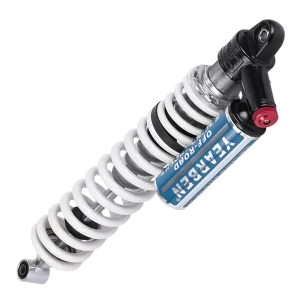
Not all coilovers are built to the same standard. A shock that looks correct on the outside can fail prematurely due to poor internal tolerances or inadequate testing. Over the years, we’ve seen failures from improperly hardened rods, seal blow‑by, and nitrogen leakage that could have been caught with proper quality control.
Ask the manufacturer these questions before committing to an order:
1. Do you run a dynamometer test on every completed shock? (A velocity‑force curve should be provided)
2. What is the rod surface hardness and chrome plating thickness? (Typically Rockwell C 50+ and 20–30 microns)
3. Are the seal stacks rated for the expected shaft speeds and temperatures of off‑road use?
4. Can you provide a sample unit for destructive fatigue testing? (Shock should cycle 200,000+ cycles without leakage)
5. What is the nitrogen charge pressure and how do you verify zero‑leak after assembly? (We submerge every unit in a water tank and check for bubbles over 30 seconds)
A factory that cannot answer these questions in detail is cutting corners. We build each off‑road coilover with individually dyno‑tested valving, double‑lipped PTFE/urethane seals, and hard‑chrome‑plated rods ground to a 0.2 Ra finish. Every shock leaves the line with a signed test report. These are the indicators that separate a shock that lasts one season from one that lasts five.
If your off‑road truck project demands coilovers that match your exact build specs and you want manufacturing quality you can verify, we’re ready to discuss your requirements. Send your vehicle details and target performance to info@yearbenshocks.com or call +86-523-86566899. We’ll review your specs and return a feasibility assessment and quotation within three working days.
Questions Off‑Road Truck Owners Ask Before Ordering Coilovers
What is the difference between a coilover shock and a standard shock absorber?
A coilover shock integrates a coil spring around the damper, allowing ride height adjustment and spring preload tuning. A standard shock only provides damping; it relies on a separate spring (leaf, torsion bar, or coil) elsewhere in the suspension. For off‑road trucks, the coilover simplifies packaging and gives the builder far more control over sag and weight transfer. The tradeoff is that coilovers require careful spring rate selection and periodic preload checks, whereas a standard shock is simpler but offers less tuning ability.
Can I install coilovers on my truck without a lift kit?
Yes, coilovers can be designed to work at stock ride height or with a mild lift. The key is the extended and compressed length. If the shock’s stroke matches the OEM suspension’s range of motion, you don’t need a lift. However, many coilovers for off‑road trucks are built with longer travel to accommodate a 2‑6 inch lift. Providing the factory with your exact mounting dimensions ensures the shock fits without over‑extending CV joints or steering components.
How do I maintain coilover shocks for maximum longevity?
Clean the shock body and rod after every trip that involves mud or salt. Inspect the rod for nicks; even a small scratch can damage the seal. Check nitrogen pressure every 12 months—pressure loss changes damping and allows cavitation. Our shocks use a Schrader valve for easy recharging. If the shock body shows oil residue, have the seal stack replaced before the fluid level drops and the shock loses damping completely.
Are custom coilovers worth the extra cost over off‑the‑shelf options?
For a daily driver with mild trail use, off‑the‑shelf coilovers are often sufficient. But for a truck that carries heavy accessories, runs high‑speed desert, or uses custom suspension links, a factory‑tuned coilover built to your exact corner weights and travel requirements pays off in both performance and reliability. The cost difference narrows when you factor in the expense of re‑valving or replacing an ill‑matched shock later.
What certifications should a coilover manufacturer have?
Look for ISO 9001 at minimum, which indicates a quality management system. For serious off‑road use, ask about material certifications for the rod (e.g., DIN 2391 for precision steel tubes) and seal ratings. A manufacturer that also supplies OEM or Tier‑1 automotive customers is held to stricter process controls. We maintain full traceability on every batch, from raw material to final dyno sheet. If you’re evaluating suppliers and need help verifying claims, send the factory’s documentation to info@yearbenshocks.com and we’ll point out what to watch for.
If you’re interested, check out these related articles:
Piggyback-2-0-Coilover-Shock
Driver-Seat-Damper-24MM-Cylinder-Diameter
Twin-Tube-Hydraulic-Seat-Damper-28MM
Aluminum-Utv-Shock-Absorber
Utv-Shocks-For-Off-Road