
Hydraulic shock absorber pressure testing separates a damped assembly that will hold nitrogen through a service interval from one that will fade after the first hard run. Most buyers ask about dyno curves, but pressure testing is the production check that catches seal extrusion, end cap leakage, and charge loss before they leave the factory. At Yearben, I have watched too many teardown reports trace a field failure back to a leak that a short bench test could have caught. The useful question is not whether a supplier pressure tests. It is what pressure, for how long, and against which pass-fail limit.
Why Does Hydraulic Shock Absorber Pressure Testing Matter?
A dyno curve shows damping force at a set shaft speed. It does not show whether the shock holds nitrogen through a month of thermal cycling. Pressure testing closes that gap.
In production, we separate static seal leak-down from charge retention. A hydraulic shock absorber can produce a clean dyno plot at mid-range shaft speed and still lose reservoir pressure over a few days. The field result is cavitation, fading, and a rod that no longer returns cleanly. We run pressure testing as a production gate, not a type test, because a leak that passes a visual check will still fail a buyer’s service life target.
What Pressures Does a Production Leak Test Confirm on a Hydraulic Shock Absorber?
Three pressures matter on a production bench. The first is the gas charge inside the reservoir or behind the floating piston. The second is the hydraulic oil pressure generated when the piston moves. The third is the static seal test pressure applied to the rod guide and end caps. Each answers a different question, and they are not interchangeable.
| Test pressure | What it checks | Common pass/fail signal |
| Gas charge | Piston or bladder seal integrity | Pressure drop below the print |
| Hydraulic working pressure | Piston band and bore flow path | Offset in the damping curve |
| Static seal leak-down | Rod guide and end cap O-rings | Visible weep or decay over hold time |
A supplier that cannot name all three usually only tests the outer body for leaks. That misses the floating piston leak in a monotube design, which is one of the most common causes of fade after hard use.

How Long Does a Leak Test Hold Pressure?
Hold time depends on the part and the customer’s standard. For seat dampers and small hydraulic units, an inline station holds for a short interval measured in seconds. For off-road shocks with remote reservoirs or piggyback chambers, we hold for several minutes at full stroke during batch audit because a slow seal weep takes longer to show. The pass/fail limit is set from the measured decay, not from a fixed stopwatch alone.
What Pressure Values Are Used for Different Shock Absorbers?
The test value follows the working pressure envelope on the drawing. A lawn mower steering damper tests at a low single-digit bar range, a seat damper at a mid-single-digit bar range, and a coilover with remote reservoir at a higher pressure depending on nitrogen fill and body diameter. If a supplier applies one generic pressure to every part number, that is a sign their test cell is not tied to the BOM.
How Is the Test Run and What Do Failures Reveal?
On our line, a hydraulic shock absorber passes through a static hold station and a stroking station. The static station clamps the body, seals the ports, and pressurizes the rod cavity. The stroking station cycles the shaft under pressure so the seal lip wipes the rod under load, which is where many leaks first appear.
- Pull vacuum on the oil circuit to remove trapped air before the test.
- Apply the specified test pressure to the circuit or gas chamber.
- Hold for the interval on the control card and monitor the transducer.
- Stroke the shaft through the working range and recheck for decay.
- Pass the unit only if decay stays below the limit and no oil film forms at the rod guide.
Most failures are visible only through the transducer trace. A rod seal that weeps at full working pressure may look dry at low pressure, so a low-pressure spray test will miss it. The same applies to an end cap O-ring that was pinched during assembly and only opens under full pressure.
Why Do Rod Seals Fail at High Pressure?
Rod seal extrusion happens when the pressure spike forces the seal edge into the clearance gap at the rod guide. The most common causes are a missing back-up ring, a rod with a rough or wavy finish, or a guide bore that was machined out of round. I look at the seal condition after teardown before I change the test limit, because the leak is usually a symptom, not the root cause.
What Causes Nitrogen Charge Loss in Remote Reservoirs?
Most charge loss comes from the floating piston seal or the Schrader valve, not the hose. In remote reservoir designs, the piston o-ring wears against the bore every time the shock extends and compresses. If the bore finish is too coarse or the piston is not sized to the tube, gas bleeds past slowly. We verify with a pressure decay test before installing the hose, then again after assembly to separate the reservoir leak from the hose connection.
If your program requires a customer-specific pressure decay limit, confirm the hold time and pass/fail value before locking the BOM. Send your drawing to info@yearbenshocks.com and we will match your test requirement against our inline cell.

What Should Buyers Check Before Accepting a Pressure Test Procedure?
A certificate that says “pressure tested” is not enough. I want to see the procedure behind it. The print should call out the test pressure and hold time for each part number. The transducer should be calibrated with a serialized record. The pass/fail limit should be a number, not an operator judgment. The station should stroke the shaft under pressure rather than only holding static pressure. Nonconforming parts should be quarantined and traced, not re-run until they pass.
Ask a supplier to explain why a part failed its last pressure test. A good engineer can name the seal, the bore condition, or the charge leak. A weak supplier will talk about the weather or say the operator was new. That answer tells you more than the certificate does.
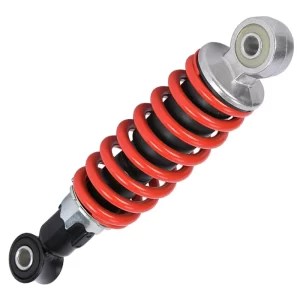
Where Can You Send a Shock Absorber Pressure Test Requirement?
A pressure test result with no pass/fail value tells you nothing. Some buyers receive a certificate, then find the supplier tested the wrong pressure because the sales order never carried the drawing. We close that gap by matching the test cell parameters to your part number before the first production run. If you are sourcing hydraulic shock absorbers and need a documented pressure test procedure, send your part number, charge spec, and target service interval to info@yearbenshocks.com or call +86-523-86566899. We will confirm the exact pressure, hold time, and data package before you commit.
What Questions Do Buyers Ask About Shock Absorber Pressure Testing?
Is a pressure test the same as a dyno test?
No. A pressure test checks sealing and charge retention. A dyno test measures damping force at shaft speeds. They catch different failures, so one does not replace the other. A shock can hold pressure and still have wrong valving, or it can dyno correctly and still leak nitrogen. Production lines that only dyno sample are not verifying the seal system.
Do all hydraulic shock absorbers need a pressure test?
Many buyers assume pressure testing only matters for high performance off-road shocks. The opposite is true for high cycle applications. A seat damper on a commercial truck cycles thousands of times a day, and a slow rod seal weep becomes a failed seat in months. If the unit is serviceable or carries a long warranty, the test cost is small compared with a field lot recall.
How is pass/fail determined on a pressure decay curve?
It depends on the test setup. For an inline static test, the control limit is a maximum pressure drop over a fixed hold period. For a stroking test, the limit is set against a master curve from the approved sample. If the production curve shifts outside the band, the unit is rejected. The limit should come from the drawing or the customer standard, not from the machine default.
What should I ask a supplier before placing a hydraulic shock absorber order?
In projects I manage, the most useful single request is a copy of the pressure test procedure with the part number, pressure, hold time, and reject limit filled in. Then ask how the station is calibrated and what happens to rejected parts. If the answers are vague, the test is likely not truly controlling the process. Share your part number and charge spec with us at info@yearbenshocks.com and we will confirm whether our inline test matches it.
If you’re interested, check out these related articles:
Off-Road-Coil-Over-Shocks-Manufacturer
Custom-Shocks-And-Struts
Damping-Adjustable-Shock-Absorber
Hydraulic-Steering-Damper
Hydraulic-Seat-Damper-Cylinder-Diameter-24MM
