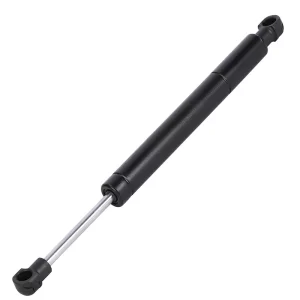
Front ride height that keeps dropping after a few hard rides is almost never fixed by cranking preload again. We see this pattern in ATV, UTV, and off-road coilover work: a vehicle comes in with the front end sitting low, the owner has added preload two or three times, and the spring has already taken a permanent set. Front shock absorbers sagging after use usually means the coil spring has lost free length, a perch has moved, or the gas charge is low enough to change shaft extension. The repair starts with measurement, not adjustment. Here is how to separate those causes and what to replace so the front end holds height.
Why Does a Front Shock Absorber Sag After Repeated Use?
On most coilover and spring-over-shock applications, the damper itself does not carry ride height. The coil spring sets static height. When a front shock absorber sags after use, the cause is nearly always in the spring-perch assembly or the gas charge, not the piston valving. Spring steel gradually loses free length under repeated compression, especially when the spring is worked near its maximum load. The result shows up as a lower front ride height even though the shock still feels firm during a bounce test.
Riders and technicians often blame the shock because the whole assembly is called a shock absorber. That misdiagnosis leads to unnecessary replacement. A spring with 3 mm less free length than specification can drop the corner by more than that at the wheel depending on motion ratio, and it will sit unevenly side to side.

Gas pressure loss is the other honest cause. A front gas shock with a worn shaft seal leaks nitrogen over months. The shock still damps, but reduced gas pressure lets the shaft settle shorter under static load on emulsion designs. The drop from gas loss is smaller than spring set, usually in the single-digit millimeter range on an ATV or UTV. Spring fatigue is the main suspect when the front end sits visibly low.
How Do You Measure the Sag Instead of Guessing?
Start with two measurements recorded on level ground with the vehicle at its normal loaded weight. Measure ride height from a fixed reference point on each front corner, then measure spring free length if the coilover can be removed. A side-to-side ride height difference above 3 mm matters more than the absolute number.
| Measurement | What it reveals |
|---|---|
| Left versus right ride height, loaded | Uneven spring set or preload mismatch |
| Spring free length against drawing spec | Permanent coil set from overload or fatigue |
| Static shaft extension at rest | Low nitrogen charge or incorrect spring rate |
| Preload ring position against build sheet | Perch movement or incorrect initial setting |
A common mistake is measuring with the vehicle unloaded and then adding a heavy winch, bumper, or plow. That changes the required spring rate, not the health of the spring. We ask for loaded axle weight because a spring that sags under added load is usually under-specified, not failed.
Record the free length of each spring while it is off the damper. If a spring is 4 mm shorter than the opposite side and the preload settings match, replace that spring. Do not infer gas pressure from the shock body alone.
When Does Spring Fatigue Need More Than Preload?
Preload changes ride height by compressing the installed spring. It does not restore lost free length or correct a spring rate that is too soft for the vehicle. In our testing, too much preload shortens usable travel and increases coil binding at full compression.
Spring Free Length Loss
A spring that has taken a set will measure shorter than the drawing free length before installation. If the free length loss is small but the vehicle sits lower, the spring may still be usable with a rate correction. If the spring is shorter across every coil and the finish shows scuffing where coils have touched, it is done. We replace it rather than stretching it. Stretching coil spring steel is not a service that holds height over time.
Threaded Perch Movement
On adjustable coilovers, the threaded spring perch can back off after hard landings or if the lock ring was not tightened to the assembly spec. A perch that has moved lowers the corner without any spring defect. Measuring the perch position against the build sheet finds this in seconds.
Gas Pressure Loss
A low nitrogen charge does not usually create the first 10 mm of front sag, but it compounds the problem. With the spring removed, a healthy gas shock extends fully without being pulled. A shock that stays partially collapsed after service or shows oil mist at the seal has lost charge and needs a seal rebuild or replacement.

If your front end carries a winch, snowplow, or heavy front bumper, the required spring rate changes more than most fitment tables show. Confirm the loaded corner weight and free length before adding preload again. Send those two numbers plus the vehicle model to info@yearbenshocks.com and we will confirm whether the spring rate is the root cause.
Which Replacement Parts Stop Front Sag From Returning?
Once the cause is confirmed, replace only the part that failed. A shock with good damping and no seal leak can be reused with a new spring. A spring that has not sagged can be reused with a new seal kit if gas pressure was the cause. Replacing the full coilover assembly is the shorter path when the shaft is scored, the spring has lost more than a few millimeters of free length, or the unit cannot be disassembled for service.
Choose a spring rate based on the loaded corner weight and intended use, not the original equipment rating alone. For example, front coilovers specified for a bare ATV will sag again when the same machine runs a plow or a heavy brush guard. We set the initial spring rate so the assembled coilover sits near the middle of its adjustable range at the customer’s real travel requirement.
We also replace the spring seat and top bushing when we rebuild sagged assemblies. A worn bushing or a distorted seat changes installed height as much as a weak spring. Reusing them with a new spring often recreates the original ride height loss within weeks.

What Should You Send Us to Confirm a Sag-Resistant Replacement?
Front end sag that returns after a preload adjustment is a specification problem, not a maintenance problem. Yearben builds OEM and replacement front coilover shocks around the actual spring free length, loaded corner weight, and travel requirement of the vehicle. Send the current spring free length, vehicle model, loaded front axle weight, and a side-on photo to info@yearbenshocks.com or call +86-523-86566899. We will confirm whether the sag is spring-related and quote matching front shock absorbers with the correct initial preload.
What Questions Do Owners Ask After Front Shock Sag?
Can I just add preload to bring the front back up?
No. Preload only moves the coilover within its travel range. If the spring has lost free length, added preload restores ride height but reduces droop travel and increases the chance of coil binding at full compression. It also masks a failing spring until it sags again. Measure free length first. If free length is within spec and the perch has moved, then re-setting preload is the correct fix.
Is sag always caused by the spring?
Not always. Spring fatigue is the most common cause, but a backed-off threaded perch, a worn top bushing, or low gas pressure can each lower the front end. The spring is the first check because it carries ride height, but I have seen clean springs with a backed-off perch cause the same visual drop. Measure the perch position and spring free length before condemning any part.
How much height loss is normal during break-in?
Some settling is expected as the spring seats against the perch and the bushings compress, but visible front sag is not normal break-in. On ATV and UTV coilovers we build, height change after initial use should be small and stable. If the front end drops more than a few millimeters and keeps dropping, measure the spring free length and compare side to side.
Should I replace one front shock or both?
Replace the pair unless the vehicle has only one damaged corner from impact. Damping and spring rate should match side to side. A new coilover on one side with a worn spring on the other creates uneven ride height and inconsistent response. In OEM replacement programs we quote matched pairs with the same free length and rate. If you are not sure whether your front springs have taken a set, send the spring free length, loaded front axle weight, and a side-on photo to info@yearbenshocks.com. We will tell you whether a spring, a seal kit, or a matched pair of front coilovers is the shorter path.
If you’re interested, check out these related articles:
Heavy duty seat damper 35mm, Shock Absorber Manufacturer
Steering-Damper-18MM
Customized Steering Dampers 24mm