For procurement teams managing vehicle, equipment, and off-road product lines, sourcing suspension dampers across multiple categories from separate suppliers adds unnecessary complexity. Wholesale suspension dampers procurement through a single multi-line manufacturer consolidates quality standards, reduces lead time risk, and simplifies technical communication. As a suspension engineer who has overseen damper development for ATVs, utility vehicles, commercial seating, and lawn equipment, I’ve seen how fragmented supply chains cause inconsistent performance and delayed production. This guide explains what to look for in a multi-line damper factory and how to structure sourcing decisions for consistent results.
The Case for Consolidating Damper Sourcing
Sourcing dampers for a single product is straightforward: find a factory that makes that damper, qualify the sample, and order. The challenge appears when your catalog spans multiple vehicle types, each with distinct damping requirements. A UTV coilover shock operates under entirely different loads, stroke lengths, and thermal conditions than a hydraulic seat damper for a commercial truck. Yet purchasing these from separate suppliers multiplies quality oversight, inflates logistics costs, and fragments technical support.
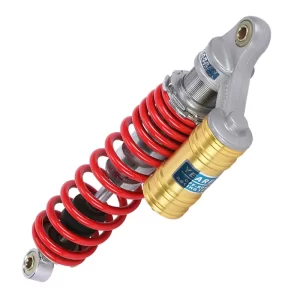
A factory that produces hydraulic dampers, gas-charged shock absorbers, steering dampers, and seat dampers under one roof brings engineering continuity. The same metallurgy team selects chrome-plated rod materials for both a lawn mower shock absorber and a heavy-duty ATV coilover. The same welding protocol governs reservoir canisters on off-road shocks and cylinder end fittings on steering dampers. This integration reduces the variability that creeps in when multiple standalone factories interpret your specification drawings differently.
We’ve supported brands that transitioned from three separate suppliers to a single multi-line source. The immediate gain was shorter internal qualification cycles because the factory’s base material certifications, surface treatment documentation, and test reports already covered all product categories. Instead of chasing three sets of paperwork, the quality team reviewed one consistent documentation package.
Evaluating Multi-Line Production Capability
A factory that claims multi-line capability must demonstrate it through segmented production cell management, not just a broad product catalog. During audits, I look for dedicated assembly fixtures for each damper family. A coilover shock assembly line that also builds monotube steering dampers without dedicated changeover tooling will eventually produce tolerance drift.
| Damper Type | Typical Applications | Key Manufacturing Controls |
|---|---|---|
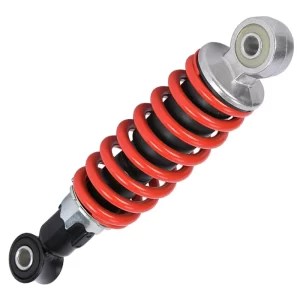
| Coilover shocks | ATV, UTV, off-road buggies, 4×4 trucks | Spring perch welding alignment, nitrogen charge verification, dyno sweep across compression and rebound |
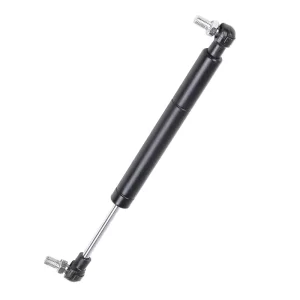
| Hydraulic dampers | Seats, lawn mowers, fitness equipment, agricultural cabins | Chrome plating thickness on rod, seal gland concentricity, low-speed bleed drilling accuracy |
| Steering dampers | ATV, UTV, lawn mowers, zero-turn mowers | Cylinder bore finish for consistent stiction, rod straightness under side load, centering valve calibration |
| Gas-charged monotube shocks | Racing trucks, trophy buggies, heavy equipment | Separator piston fit, oil fill volume precision, high-pressure nitrogen sealing |
The production layout should physically separate assembly areas by diameter class and by fluid type. Hydraulic dampers using standard mineral oil cannot share filling stations with gas shocks using high-viscosity synthetic fluid without cross-contamination risk. I’ve traced fading damping force in a batch of seat dampers back to a shared oil manifold that had residual gas-charged oil from the previous shift. The fix was implementing dedicated filling circuits per product line, which raised line changeover time but eliminated the contamination source.
Ask the factory to walk you through a changeover procedure from a 38mm hydraulic damper to a 60mm coilover shock. The time they need for fixture swaps, fluid purging, and calibration tells you whether they manage multi-line production systematically or simply crowd product types onto the same line.
Achieving Quality Consistency Across Damper Types
The engineering risk in multi-line sourcing is that niche products receive less process attention than high-volume lines. A factory running 10,000 ATV coilovers per month may assign its most experienced technicians to that line and rotate junior staff onto the seat damper station. This imbalance shows up in seat damper warranty rates that don’t match the factory’s overall quality record.
We control this by requiring process capability data from every product line, not just the flagship ones. A coilover shock that dyno-tests within ±5% of target force across 200 consecutive units is an excellent result, but it doesn’t guarantee the 24mm hydraulic steering damper holds the same statistical consistency. The factory should provide separate Cpk reports for each damper family, with torque-stroke curves, seal drag measurements, and leak-down test pass rates broken out by product category.
In one project, a lawn mower shock absorber line was producing acceptable initial damping force but failing after 300 cycles on the fatigue rig. Root cause investigation revealed that the chrome plating thickness on the piston rod was at the low end of specification for that diameter. The coilover line used thicker plating as standard because its rods were larger. The lawn mower line had simply inherited the lower limit without adjustment. Once we specified a uniform minimum plating thickness across all rod diameters, the fatigue failure rate dropped. This is the kind of cross-line learning that a multi-line factory can apply, provided the quality team treats each damper type as a distinct process rather than a variation of the same one.
Customization and OEM Flexibility
Multi-line sourcing works best when the factory accepts that your product families share design DNA but require distinct adaptations. A seat damper for a truck suspension seat may need an adjustable damping clicker mechanism, while a steering damper for the same brand’s utility vehicle line needs a fixed centering characteristic with a specific mounting bracket geometry. The factory’s engineering team must handle both customization paths within the same order system.
The key capability to verify is in-house cylinder honing and piston machining. When a factory outsources these core processes, customization lead times stretch because each design change requires coordinating with an external machine shop. A multi-line dampers manufacturer that turns its own pistons, hones its own cylinders, and welds its own brackets can iterate faster. We recently completed a custom steering damper program that required three seal gland design revisions to accommodate a non-standard side load specification. Because honing and gland machining were in-house, each revision cycle took four days instead of the two weeks typical when subcontracting is involved.
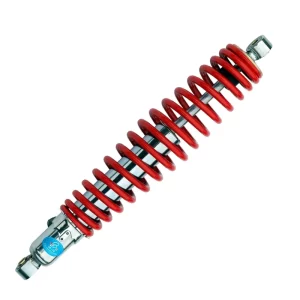
For OEM buyers planning a long-term multi-line program, ask about spec exclusivity protection. A factory that supplies your competitor with identical damper configurations erodes your product differentiation. The reputable multi-line manufacturers maintain a dedicated tooling and parameter library for each OEM customer, ensuring that a UTV shock absorber developed for your platform is not re-issued to another brand. Confirm that the factory’s ERP system tags your part numbers with exclusivity flags and restricts production access accordingly.
Managing Mixed Orders: MOQ, Lead Time, and Logistics
Ordering 500 coilovers plus 200 seat dampers plus 150 steering dampers in one shipment sounds efficient, but the supplier’s minimum order quantity policy can undercut that planning. Some factories apply line-level MOQ to each damper type individually, even when the total order value is substantial. This forces buyers to accept inventory they don’t need or split the order anyway.
A multi-line agreement should negotiate a blended MOQ based on total container volume or total order value, with per-line minimums set low enough to accommodate prototyping and warranty replacement volumes. We typically structure these with a base order volume commitment across all damper families, with quarterly release schedules that allow product-mix adjustment. The factory gains production forecasting stability, and the buyer avoids stockpiling slow-moving items.
Freight consolidation is another advantage. A shipment combining multiple damper types into one container avoids the documentation duplication, customs clearance delays, and inland transport coordination that plague split-supplier sourcing. The dock-to-dock cost per unit drops measurably when the entire order originates from a single factory gate. We’ve seen landed cost reductions of 18% to 22% on multi-line shipments compared with the aggregate cost of separate orders from three suppliers.
If your program involves high-volume production across several platforms, it’s worth mapping out a quarterly container plan before finalizing supplier negotiations. Share your part numbers and estimated quantities with us at info@yearbenshocks.com, and we’ll confirm which damper families align with a single shipment consolidation strategy.
Common Questions About Multi-Line Damper Sourcing
Can one factory genuinely match the specialization of a single-category manufacturer?
Yes, provided the factory’s engineering depth is organized around damper technology rather than around a single vehicle platform. A manufacturer that understands monotube gas shock dynamics, hydraulic flow control, and coil spring matching can apply that knowledge across ATV, seat, and steering applications. The risk is not technology breadth but management bandwidth. A factory that allocates dedicated engineering resources to each product family, with separate testing protocols and quality benchmarks, is not diluting its expertise. Check that the organizational chart shows distinct engineering leads for each damper category, not one lead spanning all lines.
How do I verify that a factory’s small-line quality matches its high-volume line?
Request separate process capability data for each product category, not aggregated factory-wide statistics. A factory may show an overall defect rate of 0.5%, but if that number masks a 2% defect rate on steering dampers and 0.1% on coilovers, your small-line program is at risk. During factory visits, spend time observing the line that will produce your lowest-volume item. Watch for manual workarounds, undocumented process adjustments, or gauges past calibration. These signals often predict quality issues that won’t appear in a summary report.
What’s the lead time difference between a mixed order and a single-type order?
A mixed order typically adds one to three weeks to a standard lead time, depending on the production cell changeover complexity. The factory sequences production by damper type, so if your order requires three different product families, it occupies three production slots. You can shorten this by synchronizing your order release with the factory’s production planning cycle. Releasing your forecast 90 days ahead allows the scheduler to place your mixed order into sequential slots without disrupting other customers. If your program includes launch-critical timelines, email your part breakdown to info@yearbenshocks.com and we’ll review production slot availability.
If you’re interested, check out these related articles:
2-0-Air-Shock
Hydraulic-Steering-Damper
Heavy Equipment Seat Shock Absorber 38mm
Heavy duty seat damper 35mm, Shock Absorber Manufacturer