Most procurement teams evaluate a hydraulic damper supplier by the sample that lands on their desk. A single hand-built unit can pass every bench test and still tell you nothing about whether the factory can reproduce that performance across a 5,000-unit production run. After two decades of building and auditing damper production lines, I have seen the gap between sample quality and batch consistency sink more sourcing programs than any design flaw ever did. This guide walks through the audit points that separate a controlled, repeatable manufacturing operation from a workshop assembling dampers that happen to look right.
What to Check Before You Walk the Production Floor
A factory audit starts with documents, not machines. Request the process control plan for the damper family you are buying before you book a flight. This document maps every production step — cylinder honing, rod chrome plating, seal installation, oil filling, gas charging — and specifies the control method, inspection frequency, and acceptance criteria at each station. If the factory cannot produce a control plan within 48 hours of your request, the production engineering behind their dampers is probably tribal knowledge held by a shift supervisor rather than a documented system. Tribal knowledge does not scale across shifts or survive workforce turnover.
The second document to request is the PFMEA for the assembly line. A process failure mode and effects analysis tells you the factory has systematically thought through what can go wrong — a scratched rod during insertion, an incorrect oil fill volume from a miscalibrated meter, a seal lip folded during assembly — and built detection or prevention into the process. I have watched hydraulic dampers leave final inspection with a dry rod seal that passed the leak test only because the oil had not yet migrated past the wiper. A factory with a completed PFMEA has already identified that failure mode and hardened their assembly procedure against it.
Evaluating the Cylinder Honing and Chrome Plating Stations
The bore finish inside a hydraulic damper cylinder directly controls seal life and friction consistency. On the production floor, you are looking for two things at the honing station: the crosshatch angle specification posted at the machine, and surface roughness measurement records from the current shift. Honing that produces a consistent 35° to 45° crosshatch angle with Ra values between 0.15 and 0.30 µm provides adequate oil retention without accelerating seal wear. If the operator cannot show you the profilometer readings from the last hour of production, assume the bore finish is being judged by eye.
For the chrome plating line, verify the plating thickness measurement method and the batch qualification records. Chrome thickness on damper rods typically ranges from 20 to 40 microns, and too thin a deposit will wear through at the seal lip within months of field use. Ask to see the salt spray test records for the plated rods — a minimum of 96 hours to red rust per ISO 9227 is a reasonable baseline. I have rejected more than one batch of rods where the chrome looked bright and uniform but the microcracking pattern under magnification revealed the plating bath chemistry had drifted. The rods passed visual inspection and failed in the field six months later.
Material Traceability and Component Verification
Walk the incoming material holding area. Raw cylinder tubing, chrome-plated rod stock, seal kits, and damper oil should all carry batch identification linking back to the supplier’s heat number or production lot. Without upstream traceability, a sudden spike in field failures becomes nearly impossible to contain because you cannot isolate which production window produced the defective dampers.
Pull a seal kit from the assembly line and compare it against the drawing specification. The lip geometry, compound designation, and hardness should match the approved vendor list. Substitution of a nitrile seal for a specified hydrogenated nitrile compound — because the purchasing department found a cheaper alternative — is one of the most common silent quality degradations I encounter during audits. The damper will still assemble. It will still pass the end-of-line leak test. It will start weeping at the rod guide within the first 200 hours of service because the compound cannot handle the operating temperature range.
| Audit Checkpoint | What to Verify | Red Flag |
|---|---|---|
| Bore finish documentation | Ra values, crosshatch angle records from current shift | No profilometer on-site or records older than one shift |
| Chrome plating QC | Thickness measurement method, salt spray records | Plating thickness below 20 µm or incomplete batch logs |
| Seal material traceability | Compound and hardness match drawing spec | Mixed seal inventory without batch segregation |
| Oil fill calibration | Fill volume verification per shift | Manual fill without calibrated meter or weigh-scale check |
| End-of-line dyno test | Full stroke damping curve with pass/fail window | Test limited to leak check only; no force-velocity data captured |
If your program involves custom damping curves or application-specific valving, it is worth confirming the factory has the in-house capability to build and validate prototype valving stacks before committing to a production schedule — reach out at info@yearbenshocks.com.
Production Testing That Actually Predicts Field Performance
Ask to stand at the end-of-line test station for 30 minutes and watch consecutive dampers come through. Every damper that ships should be stroked through its full travel at a controlled velocity while the test system plots the force-velocity curve against the specified tolerance band. A damper that pumps up on the dyno — showing increasing gas pressure from oil aeration — or produces a hysteresis loop wider than the specification should be rejected automatically.
Beyond the end-of-line test, ask what the factory does for periodic product audit testing. A responsible hydraulic damper manufacturer pulls random units from finished goods and runs them through an extended durability cycle — typically 1 million to 3 million cycles at rated stroke and velocity — while monitoring damping force degradation and seal integrity. The factory should provide summary reports from the most recent durability audit. If the only thing tested at final inspection is whether the damper extends after compression, you are buying from an assembler, not a manufacturer.
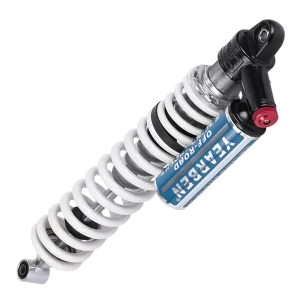
Assessing Production Capacity and Scheduling
Production capacity is not the number of dampers the factory claims it can make per month on its website. It is the number of dampers that can pass the dyno test per shift with the current staffing level. Walk the line during a production shift and count completed units for one hour. Multiply by operating hours per shift and shifts per day. If your order volume exceeds 60% of that observed capacity, the factory will either cut corners on testing or delay your shipment.
Also confirm the welding and gas-charging capacity. Hydraulic dampers for seat applications and steering systems require consistent nitrogen charge pressures, and a bottleneck at a single gas-charging station can stall an entire production run. Check whether the factory uses individual port charging with pressure verification per unit or batch charging in a pressure vessel. Individual charging with per-unit verification eliminates the risk of an undercharged damper reaching your customer because its neighbor in the batch leaked slightly during the cycle.
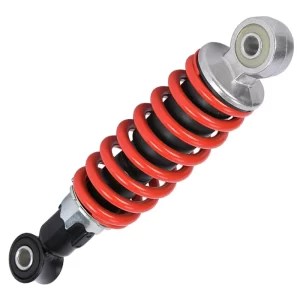
Production Capacity and Scheduling
Observe the weld stations that join mounting eyes or brackets to the damper body. Even a small porosity defect in a circumferential weld will crack under cyclic loading — and a damper that separates from its mount is a safety failure, not a performance complaint. Ask whether the factory performs destructive sectioning on welding coupons from each shift to verify penetration depth and inspect for internal porosity. A factory that never cuts open its own welds is relying on luck.
Check the nitrogen charging station setup. Inconsistent charge pressure across a batch changes the damper’s extension force and can create a handling complaint that is difficult to diagnose in the field because it mimics a valving issue. A proper gas-charging station uses a precision regulator with digital readout and pressurizes each damper individually while monitoring for pressure decay before sealing the fill port. Batch charging in a common pressure vessel is faster but masks individual unit leaks.
Common Questions About Hydraulic Damper Factory Audits
What is the most commonly missed quality issue during an audit?
In my experience, seal compound substitution without design review is the single most common hidden defect. The damper passes assembly, passes the end-of-line test, and begins weeping in service because the seal material cannot handle the actual operating temperature range. Always verify the seal compound markings against the approved material specification directly at the assembly station — not from a document in the quality office.
How many dampers should I sample during an audit?
For a production audit, pull at least five consecutive units from the line and witness the complete test cycle on each. Then ask the factory to pull five units from finished goods inventory produced on a different shift. If the second set shows wider performance variation than the first, the factory’s shift-to-shift process control needs investigation before you place an order.
Should I audit the factory even if I only need a small initial order?
Yes, and probably more carefully than for a large order. Small-quantity orders are often treated as low-priority runs where attention drifts. If the factory knows you are watching their process control systems — not just inspecting the sample they hand you — your small batch gets built with the same discipline as a volume order.
Can I rely on ISO certification as a substitute for an on-site audit?
ISO 9001 certification confirms that a documented quality system exists. It does not confirm that the honing machine operator checked the crosshatch angle this morning or that the oil fill meter was calibrated before the current shift. Certification reduces audit scope but never replaces direct verification of the processes that affect your specific damper design. If your program requires documented batch traceability or specific surface finish parameters, confirm those directly rather than assuming the quality system covers them. Share your audit requirements with our engineering team and we can walk you through the process capabilities relevant to your damper specification — reach us at +86-523-86566899 or info@yearbenshocks.com.
If you’re interested, check out these related articles: