Long travel shocks for a 500cc to 800cc Baja buggy aren’t something you pull off the shelf. The difference in power output and chassis weight between a lightweight 500cc single-seater and a heavier 800cc dual-seater shifts how much inertia the suspension has to manage on every compression and rebound stroke. I’ve lost count of the times I’ve seen builders install high-end shocks with off-the-rack valving, only to chase ride height sag or harsh bottoming. The core mistake is treating shock specs as a parts catalog choice instead of a set of engineering requirements driven by vehicle weight, engine output, and target terrain. This article maps out the key shock dimensions, spring rate logic, and damping parameters needed to get a 500cc–800cc buggy dialed in, whether you’re building fresh or replacing worn components.
What Long Travel Shock Specs Matter Most for a 500cc-800cc Baja Buggy?
Before weighing spring rates, start with the shock’s stroke and eye-to-eye length. On a Baja buggy using long travel arms, the shock stroke needs to accommodate the full suspension cycle without topping out the shock’s internal travel stop or bottoming the bump stop. Measure the chassis’s droop-to-bump travel at the shock mounting points, then add a small safety margin, roughly 0.5 inch, to prevent mechanical binding. A 500cc single-seat buggy with 12 inches of wheel travel typically runs an 8-inch stroke coilover, whereas an 800cc two-seater pushing 16 inches of travel calls for a 10-inch or even 12-inch stroke shock.
Shaft diameter also influences durability. A 14 mm shaft works for lighter 500cc builds, but the additional side loads on an 800cc buggy pulling hard through corner ruts demand a 16 mm or 18 mm shaft. I’ve observed shaft deflection on under-spec’d units leading to premature seal wear and oil weepage after a single desert weekend. Nitrogen charge pressure in the reservoir, set as a static value before mounting, must balance the spring’s force and prevent cavitation in the damping circuit. We start at 250 psi for most builds in this displacement range, then bump to 280–300 psi for heavier vehicles or extended high-speed whoop sections where fluid aeration risk climbs.
Coilover, Bypass, or Reservoir: Which Shock Type Fits Your Buggy?
| Shock Type | Key Perk | Trade-Off | Best Fit |
|---|---|---|---|
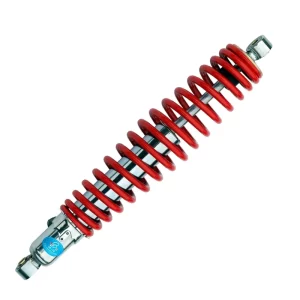
| Emulsion Coilover | Simple construction, low weight, lower cost | Oil and nitrogen mix under sustained cycling, causing fade | Play buggies, short-course racers under 500cc |
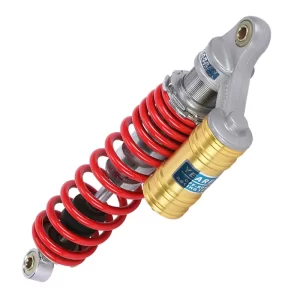
| Piggyback Reservoir | Better oil/nitrogen separation, modest heat capacity gain | Reservoir can be damaged if chassis flex is high | Mid-power 500-600cc buggies with moderate travel |
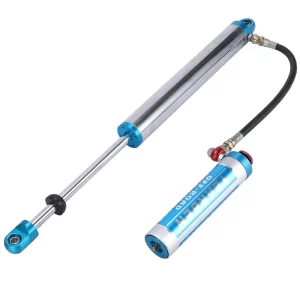
| Remote Reservoir | Greatest heat dissipation, largest oil volume, tunable routing | Extra weight, complex mounting, higher cost | 800cc race buggies, long desert runs |
| Bypass (2-tube/3-tube) | External compression and rebound zone adjustment, progressive bottoming | More tuning variables, higher cost, valving knowledge needed | Professional race teams, trophy trucks |
Choosing between these designs depends on how hard the engine pushes the vehicle and for how long. A 500cc buggy running 45-minute heat races can get away with a well-tuned piggyback coilover; the lighter mass generates less heat. But pulling 100 miles of Baja whoops in an 800cc machine heats the oil in an emulsion shock quickly, thinning it and reducing effective damping. A remote reservoir triples the oil volume and can include an internal bladder to keep nitrogen separate, stabilizing damping force across the temperature range. Bypass shocks add external adjusters that let you shift compression and rebound zones without disassembly, valuable if you tune for different course sections, but they require a disciplined setup process.
How Should You Match Spring Rate and Damping to Engine Output and Vehicle Weight?
Spring rate selection must start from measured corner weights, not guesses. Weigh each corner with the buggy in full race trim—fuel, driver, spares—then multiply by the motion ratio squared to get the required spring rate at the shock. For a typical 500cc buggy corner weight of 280–320 pounds, with a motion ratio of 0.7, a 180–220 lb/in spring keeps ride height stable. An 800cc buggy pushing 380–450 pounds per corner needs 250–300 lb/in springs to maintain the same chassis attitude. These are starting points; preload adjustment can fine-tune within about 10% of the spring’s rating.
Damping, however, isn’t just a spring rate product. The shim stack inside the piston determines how force builds with shaft speed. For desert racing, I prefer a digressive piston that provides strong low-speed control for pitch and roll yet blows off on sharp hits to let the wheel move. Compression valving that’s too linear can make the buggy skate over chatter, while a true digressive curve paired with adequate nitrogen charge helps the tire stay planted without packing. Rebound needs a milder, often linear rate to allow the suspension to extend quickly after compression; too much rebound damping and the pack-down kills available travel on consecutive bumps.
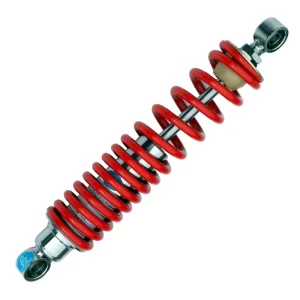
External adjusters offer a 10–15% range around the baseline valving, useful for compensating for fuel load changes or track conditions. For 500cc and 800cc engines, the baseline shim configuration must be built around the specific power curve. A 500cc twin with peak torque at 7,000 rpm applies a different impulse than an 800cc V-twin peaking at 5,500 rpm, and that affects how the rear suspension squats and how the front unloads. That’s why copying a shock valving setup from a different displacement class rarely works without re-tuning.
What Custom Shock Parameters Do You Need to Specify?
When you outgrow off-the-shelf shock lengths or valving, a custom order lets you specify stroke, eyelet type, reservoir hose length, spring rate, and valving curve directly. At our facility, we manufacture buggy shock absorbers to order, starting from a spec sheet that captures your vehicle’s motion ratio, corner weights, eye-to-eye open and closed lengths, and bushing or bearing dimensions. Providing these numbers removes the guesswork.
Typical parameters to define: eyelet inner diameter (12 mm, 14 mm, or 16 mm), shaft diameter (14 mm–18 mm for these buggies), total stroke, reservoir type and hose length, spring perch style (threaded, snap ring), and the desired damping profile—digressive, linear, or a blended curve. Nitrogen charge pressure is set on the final fill rig, usually between 250 and 300 psi. Minimum order quantities for custom shocks vary; we often run 20-unit pilot batches for race teams to test before committing to larger production, with lead times of 35–45 days after spec confirmation.
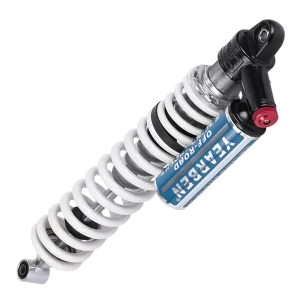
If you’re not sure what stroke or valving suits your build, sharing your track data and corner weights with a manufacturer that engineers its own valving helps narrow the options. A phone call or email with actual ride-height measurements beats any catalog guess. We’ve resolved mismatched spring rates and excessive shaft friction for customers simply by reviewing their geometry numbers.
What Are the Common Long Travel Shock Setup Mistakes?
Even with the right parts, installation and early tuning missteps can shorten shock life or ruin handling.
First, incorrect preload: winding the spring perch too tight trying to fix sag usually over-pitches the spring, reducing available droop and stiffening the initial ride harshly. Set preload to achieve the target ride height, then adjust spring rate if you can’t hit it within 10% of the spring’s free length.
Second, ignoring nitrogen pressure: losing 20 psi between rides means the reservoir nitrogen has leaked. Running low pressure invites cavitation—gas bubbles forming in the oil during high-speed shaft movements, which erase damping force and accelerate oil degradation. Check pressure with a no-loss chuck before every race.
Third, binding reservoir hoses: on remote reservoir shocks, routing the hose too tightly around the chassis creates kinks or loads the banjo fitting, which can crack. Leave enough slack for full suspension articulation, including side flex.
Fourth, carrying over valving from a different engine class: a 500cc shock valved aggressively for a heavy 800cc buggy will over-damp a light 500cc chassis, making it feel dead and harsh. When swapping engines, revalve accordingly.
Finally, neglecting seal inspection: a dust wipe or oil film on the shaft after a weekend may indicate a worn seal. If caught early, replacing the seal head and oil is a $50 maintenance item; if ignored, the piston bore can score. Building a setup log with ride heights, nitrogen pressures, and clicker settings helps spot trends before they become problems.
How Can You Get the Right Long Travel Shock Specs for Your Buggy?
Choosing shocks for a Baja buggy in the 500cc to 800cc range comes down to matching the suspension to the engine’s output and the chassis weight distribution. Off-the-shelf shocks with generic valving often miss the mark, leaving you chasing spring rates or fighting fade mid-race. Yearben Shock Absorber Technology manufactures buggy shocks with custom stroke, spring rate, valving, and reservoir configurations tailored to your build. Send your vehicle’s corner weights, suspension geometry, and engine spec to info@yearbenshocks.com or call +86-523-86566899, and our engineering team will work with you to specify a configuration that fits your program.
Common Questions About Long Travel Shocks for Baja Buggies
What spring rate should I start with for a 500cc Baja buggy?
With a 500cc buggy corner weight typically between 280 and 320 pounds, spring rates in the 180–220 lb/in range maintain proper ride height on most builds. However, this depends on motion ratio; buggies with highly angled coilovers need proportionally stiffer springs. I recommend weighing each corner and applying the motion ratio calculation before ordering springs.
Can I run the same shocks on a 500cc and 800cc buggy?
Not without revalving and re-springing. The 800cc engine adds vehicle weight and shifts inertia, requiring stiffer springs (250–300 lb/in) and more compression damping to control the heavier sprung mass. Using 500cc shocks on an 800cc buggy leads to bottoming and excessive dive; the opposite makes a 500cc chassis harsh and unresponsive. Swapping engine classes means recalculating the entire spring and damping package.
How do I measure for custom shock length?
Cycle the suspension through full bump and full droop without springs installed. Measure the eye-to-eye distance at both extremes. Subtract roughly 0.5 inch from full bump and add 0.5 inch to full droop to define the static stroke range. Provide those open and closed lengths to the shock manufacturer, along with eyelet inner diameter and bushing or bearing type.
Are Chinese-built long travel shocks reliable for desert racing?
Reliability depends on the manufacturer’s engineering quality, not the country of origin. Factories that build to race specs with proper seal, piston, and nitrogen charge processes produce shocks that perform well in desert conditions. Our facility, for example, pressure-tests every reservoir and uses ISO-certified seal materials. The key is to work directly with a manufacturer that understands valving rather than going through a trading company.
What maintenance does a long travel shock need after a Baja race?
Check nitrogen pressure; a loss of more than 20 psi indicates a reservoir leak. Inspect the shaft for scoring and the seal head for oil weepage. If the oil smells burnt or looks cloudy, fluid has aerated—rebuild with fresh oil and re-nitrogen charge. Bushings and spherical bearings should be checked for play. A quick post-race service keeps a shock performing consistently over a season. If your team runs a full schedule, establishing a rebuild interval with your shock supplier helps catch wear before it causes a DNF; sharing a maintenance log with Yearben can identify early wear patterns and keep your spares program optimized.
If you’re interested, check out these related articles:
Adjustable-Shock-Absorber-For-Car
Off-Road-Coilover-Shocks
Coilover-Shock-Absorber
Fixed-Preload-Atv-Shock-Absorbers