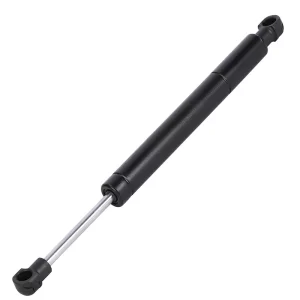
Long travel shocks are the foundation of an off-road suspension that stays composed at speed through whoops and rock gardens. Selecting between a bypass and an emulsion coilover design is not just a damping preference; it changes how the shock manages heat, how much maintenance it needs, and how it behaves across the full stroke. From over twenty years of developing and testing shock absorbers for ATVs, UTVs, and buggies, I have seen both designs pushed past their limits and can say the right choice depends on vehicle weight, travel speed, and how you use every inch of available droop. You need the shock that matches your use case, not just the one with more external tubes.
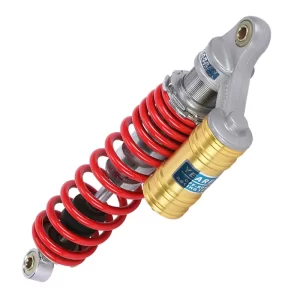
How Do Bypass and Emulsion Coilover Shocks Differ?
The core distinction between a bypass shock and an emulsion coilover is how the gas charge is managed and whether external bypass tubes are present. In an emulsion coilover, the nitrogen gas and damping oil share the same body cavity. As the shock cycles, the gas mixes into the oil, forming a micro-bubble emulsion that allows the piston to displace fluid without a separating piston. The coil spring wraps around the shock body, and the unit is self-contained.
A bypass shock, by contrast, runs a dividing piston that completely separates the nitrogen charge from the oil. The oil is routed through external tubes containing adjustable check valves that create multiple compression zones. The coil spring may be separate or carried on a coilover configuration. The key difference is that the bypass design isolates gas from oil, which prevents aeration under sustained use, while the emulsion design relies on the emulsion itself to absorb volume change. Emulsion coilovers are simpler to manufacture and seal, but the oil foaming can reduce damping consistency once heat builds up.
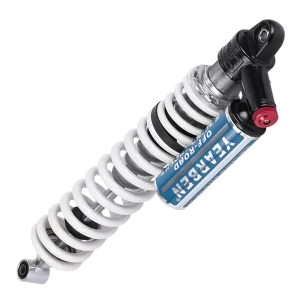
Why Does Gas Separation Matter Off-Road?
When the shock shaft enters the body, it displaces fluid. In a dividing-piston shock, the piston moves against the gas chamber without mixing. In an emulsion shock, the gas compresses into the oil. At low speeds, this works fine. At sustained high-speed cycling, the gas and oil emulsion becomes finer, increasing the chance of cavitation and reducing damping force. I have observed that emulsion coilovers on heavy UTVs running desert terrain can lose noticeable damping after 20 minutes of hard use, while a bypass or piggyback-reservoir shock with separated gas holds more consistent fade resistance.
Why Does Shock Fade Happen Faster on Emulsion Coilovers?
Heat is the primary culprit. The gas trapped in the emulsion absorbs heat from the oil and expands, lowering the effective damping viscosity. In a shock without an external reservoir, the body itself must dissipate all the heat. The emulsion design does not have a dedicated cooling path; the only heat sink is the steel body and the coil spring.
In contrast, a bypass shock with remote reservoir or piggyback canister distributes heat across a larger surface area. The external tubes themselves act as small radiators. We have measured shock body temperatures on test rigs and found that an emulsion coilover body can run 15 to 20 degrees Celsius hotter than a comparable bypass unit after a 15-minute high-speed run. This temperature gap widens as oil volume decreases, because less oil means less thermal mass to absorb and distribute heat.
For long-travel applications where a vehicle sees repeated full-stroke cycling at desert speeds, the thermal advantage of a bypass or reservoir-equipped shock is meaningful. It is not that emulsion coilovers fail, but rather that they begin to deliver unpredictable damping sooner, and the driver feels the steering and bottoming resistance soften in a way that erodes confidence.
How Does Heat Affect Oil Viscosity?
Shock oil viscosity drops as temperature rises. A typical 5-weight shock oil thins by about 30 percent when operating temperature reaches 100°C compared to 40°C. This thins the damping orifices and reduces compression and rebound forces proportionally. In an emulsion design, the thinning effect is compounded because aerated oil is already less dense; the result is a double loss of damping force that a non-emulsion system avoids.
How Do Bypass Tubes Change Damping Behavior?
Bypass tubes bring an entirely different approach to tuning. Instead of relying on a single piston valving stack to control both low-speed and high-speed damping, the bypass design routes oil around the piston through one or more external tubes fitted with check valves and adjustable bleed screws. As the shock compresses, the piston passes ports that open each tube. Typically, three tubes provide three compression zones: a firm initial stage, a softer mid-stroke, and a firm bottom-out resistance.
This external adjustability lets a builder tune for vehicle pitch, weight transfer, and terrain without revalving the main piston. The result is progressive damping that stiffens as the shock nears full compression, which is exactly what a long-travel suspension needs to avoid harsh bottoming while still controlling body roll.
From a manufacturing standpoint, we pay close attention to tube sealing and valve consistency. A bypass shock with even a slight internal leak between tubes will lose zone definition, and the driver will feel an unpredictable wallow in the mid-stroke. That is why, in our production, bypass tube check valves are individually tested and the tubes are welded under controlled gas flow to ensure clean internal passages.
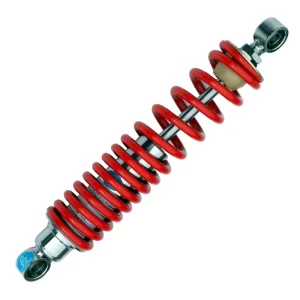
What Should You Know When Ordering Long Travel Shocks from a Factory?
Buyers sourcing long travel shocks for assembly lines or aftermarket kits often ask whether they should specify bypass or emulsion coilover. The answer starts with understanding the vehicle’s unsprung mass, target wheel travel, and the cooling environment. Emulsion coilovers are a good match for lighter vehicles (under 800 kg corner weight) where cost and simplicity matter, and where sustained high-speed runs are infrequent. Bypass shocks become valuable when the vehicle regularly cycles through 60 percent or more of its travel at speed, as in desert racing or aggressive trail riding.
When we work with an OEM customer, we first establish the maximum compressed and extended lengths, spring rate range, and mounting type. Then we discuss heat management: for an emulsion design, we may recommend a larger-diameter body to increase oil volume; for a bypass design, we size the reservoir based on shaft displacement. We also review valving: emulsion dampers typically use a single compression stack, while a bypass damper can be tuned across three zones, which gives the customer more granularity to dial in ride height sensitivity.
For a production run, bypass shocks add cost due to the extra machining, tube welding, and valve assembly. The customer must decide if the additional performance justifies the bill of materials. In my experience, builders targeting high-margin performance kits for UTVs and buggies tend to favor bypass shocks because the adjustment range becomes a selling point, while lawn and utility vehicle programs often stick with emulsion coilovers because the duty cycle never pushes the oil temperature into fade territory.
Can You Combine Emulsion Coilovers with External Reservoirs?
Yes, an emulsion coilover can be converted to a reservoir configuration, and we do this for customers who need better cooling without going to a full bypass design. The shock body remains emulsion-type, but a remote or piggyback reservoir is plumbed into the oil chamber, effectively adding oil volume and a dividing piston with a gas charge. This hybrid approach separates a portion of the gas from the oil, reducing aeration, while keeping the simpler body design.
The conversion requires a carefully sized reservoir because the emulsion body still starts with mixed gas and oil; adding a reservoir changes the compression ratio. We typically machine an inlet port near the top of the shock body and run a braided hose to a reservoir canister. The result is a shock that behaves like an emulsion unit in the first few cycles but recovers damping consistency faster because the reservoir allows gas to escape the main oil column.
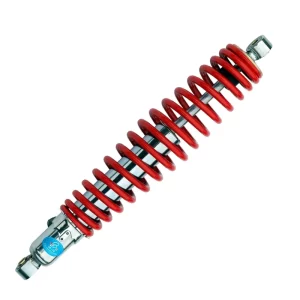
For off-road racing, a full bypass or piggyback remote reservoir coilover will typically outperform a converted emulsion coilover, but for many recreational and sport UTV applications, the conversion offers a practical middle ground that extends the fade-free window by a factor of two or more based on our thermal test data.
Which Option Holds Up Better in Real Off-Road Conditions?
Reliability comes down to seal integrity and oil cleanliness. Emulsion coilovers have fewer dynamic seals because there is no dividing piston, so they have fewer points of potential gas leakage. However, the oil is constantly aerated, which can accelerate seal wear at the shaft if the foam creates microscopic dry spots. We address this by using PTFE-energized shaft seals and ensuring the rod is hard-chrome-plated to a surface finish under Ra 0.2 µm.
Bypass shocks add external tubes and fittings, each a potential leak path. Quality control on tube flaring and O-ring selection is critical. When we build bypass shocks, every tube is pressure-tested before assembly, and the complete shock undergoes a nitrogen leak-down test at 200 psi held for 12 hours. The extra seal count makes bypass shocks more sensitive to assembly precision, but when they are built correctly, the separated gas charge means the oil stays incompressible longer, so the damping curve stays truer to the valving spec over a full day of racing.
Maintenance intervals differ: an emulsion coilover on a UTV might need an oil change every 40 to 50 hours of hard use because the oil shears and absorbs gas, while a well-built bypass shock can run 80 to 100 hours before the oil breaks down noticeably, assuming no external damage.
Matching Your Build to the Right Shock
A suspension system is not just a shock; it is the connection between the chassis, the tires, and the terrain. The shock you choose must work with the spring, the linkage, and the driver’s expectations. Long travel shocks that are either bypass or emulsion coilover each have a place, and the best choice emerges when you define the vehicle’s duty cycle first. If you are building a high-speed desert UTV that will run hard for hours, a bypass or remote-reservoir shock with separated gas gives you the fade resistance and zone tuning to keep the chassis predictable. If you are building a trail rig or a lightweight buggy where initial cost and simplicity matter, a quality emulsion coilover can provide excellent performance as long as it is correctly sized for oil volume and you accept shorter service intervals.
At our factory, we manufacture both types and regularly guide customers through the specification process because there is no universal right answer. What matters is matching the shock to the actual weight at each corner, the travel numbers, and the kind of heat load the vehicle will generate. We routinely test new configurations on our dynamometer and on customer-supplied vehicles to verify that the damping curve holds under repeated loading before production begins.
If your program involves high-speed desert racing or heavy vehicle weights, it is worth confirming heat rejection performance and tuning zone requirements before finalizing your bill of materials. Share your part number and quantity with us at info@yearbenshocks.com, and we will provide a specification sheet tailored to your platform.
Common Questions About Bypass and Emulsion Coilover Shocks for Long Travel
Are emulsion coilovers always cheaper than bypass shocks?
Yes, emulsion coilovers cost less to manufacture because they omit the dividing piston, external bypass tubes, and reservoir. The simpler body requires fewer machining operations and welds. For an OEM sourcing a few thousand units per year, the price difference can be 25 to 35 percent. The gap narrows when you add a remote reservoir to the emulsion design, but the base cost advantage remains.
Which design is easier to rebuild in the field?
In our programs supporting off-road teams, emulsion coilovers are generally easier to service trackside because you only need to bleed the oil and recharge nitrogen. A bypass shock requires careful calibration of the tube check valves and must be purged of all trapped air in the external passages, which demands a cleaner workspace and more tooling. If you plan on frequent field rebuilds, emulsion simplicity can be an advantage.
Can a bypass shock be used without a coil spring?
Yes, a bypass damper can be used with a separate spring on a control arm or leaf spring setup designed for remote coilover or divorced spring configurations. The shock body is mounted without a coil, and the external tubes remain unchanged. The damping performance is the same, but the suspension must provide a separate spring carrier.
Does an emulsion shock lose pressure over time?
Emulsion shocks do lose nitrogen slowly, primarily through the shaft seal as the gas permeates the oil film. The rate depends on seal material and rod finish, but a well-built emulsion coilover may drop from 150 psi to 100 psi over 12 to 18 months of use. This pressure loss reduces cavitation resistance but does not cause immediate failure. Recharging the shock restores the gas volume, but the oil should be changed to remove entrapped gas.
How do I decide between a piggyback reservoir and a full bypass for my UTV?
It depends on how much tuning you need and how hot the shocks run. A piggyback reservoir improves cooling over a plain emulsion body and adds a dividing piston, which separates the gas and prevents foaming. A full bypass shock adds compression zone adjustability that lets you tune for specific whoop sections or landing behavior. If you are racing where shock fade and mid-stroke control win or lose stages, the bypass is worth the extra cost. For trail and dune riding, a quality piggyback emulsion coilover is often enough. Share your vehicle weight, typical terrain, and desired travel with us, and we will confirm the right option before you order.
If you’re interested, check out these related articles:
Driver-Seat-Damper-24MM-Cylinder-Diameter
Adjustable-Gas-Shock-Absorbers
Remote-Reservoir-Shocks-Manufacturer
Custom shock absorbers for seat Φ41.5mm manufacturing