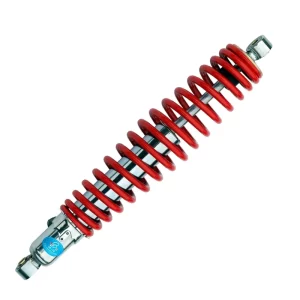
Lining up for a timed Baja run, I watched a team bolt new gas shocks onto their rear cage. Two hours of desert pounding later, the suspension was still holding, and the driver’s radio crackled: “Nothing faded—this thing’s planted.” That memory frames every load question I get from builders and fleet buyers. They want to know which shock type will stand up to weight without sinking or overheating, and the answer sits in how these two designs actually work, not in a marketing spec sheet.
How Hydraulic and Gas Shocks Differ Inside
A shock absorber turns kinetic energy into heat. In a hydraulic-only design, the piston moves through oil in a sealed cylinder, and the resistance from forcing fluid through precise valve ports generates the damping force. Because the cylinder isn’t pressurized, self-lubrication keeps seal wear in check when the stroke rate stays moderate, but heat buildup thins the oil faster once the shock gets hot. A gas shock starts from that same oil-based damping principle, but the cylinder is pressurized with nitrogen—typically 100 psi to 250 psi in off-road applications. The pressure serves two jobs: it keeps the oil from foaming under aggressive stroke frequencies, and it adds a small compressive force that resists the shaft entering the body, supporting static weight until a bump forces the piston further.
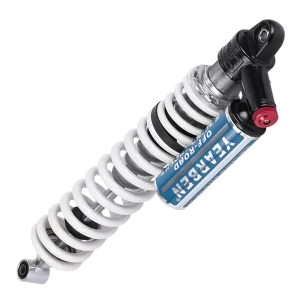
That gas charge is the pivot point for load behavior. When the shaft pushes in, the nitrogen column resists displacement more linearly than oil alone, so a gas shock responds to added weight with less free sag. In our shop, when we match a new UTV coilover assembly with an adjustable threaded nitrogen-charged body to a customer’s vehicle gross weight, we see less than 3 mm of unaccounted settling during the first cycle test because the pressure floor keeps the spring seat stable. Hydraulic-only dampers do the opposite: they rely entirely on spring preload and fluid restriction to hold position, so the initial sag under load can be 5 mm to 8 mm greater, and the damper only pushes back after the piston moves far enough to create a pressure differential.
What the Pressure Difference Means for Suspension Setups
A 2.0-inch smooth-body hydraulic shock on a lawn mower deck or a lightweight trailer sees modest shaft velocities, so heat stays low and the oil viscosity holds. When that same hydraulic design moves to a 500 kg side-by-side with cargo, the shaft speed through the seal head rises and the oil temperature climbs, cutting damping force by 10 % to 18 % inside twenty continuous minutes of aggressive terrain. The nitrogen in a gas shock stabilizes this because the pressurized chamber compresses in a more predictable curve, reducing viscosity changes that come from dissolved air. For fleet buyers evaluating hydraulic dampers for commercial mowers, I reference a 24 mm cylinder damper we produce for ride-on grass equipment: the combination of thin oil passages and zero internal pressure keeps the damping force consistent as long as the operator stays within the mower’s rated weight range, but pushing past that overloads the fluid film and lets the piston bottom earlier.
Load Support: Why Spring Rate Alone Doesn’t Decide
The suspension spring carries the vehicle’s weight, so many builders assume a stiffer coil is all it takes to handle more load. That misses half the equation. A shock absorber manages the speed at which the spring compresses and rebounds, and the damping force directly affects how much of the loaded mass is transferred to the tires before the spring reaches full compression. When a UTV is loaded with a bed box, tools, and a spare tire, the rear springs compress more, and the shock shaft velocity on a sharp bump rises because the unloaded stroke has already been eaten by static weight. The damper then has to generate more resistance in the first 30 % of travel, and that’s where gas and hydraulic designs separate.
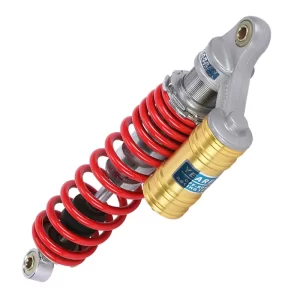
A gas-charged damper resists that initial intrusion earlier because the pressurized nitrogen counteracts the inertia of the sprung weight, so the shock doesn’t rely entirely on the piston valving to slow the first compression stroke. In our adjustable piggyback shocks for 4×4 builds, the gas reservoir volume and base pressure are set to match the corner weight, giving a more controlled pressure ramp that picks up the load before the piston dives deep into the compression shim stack. On a hydraulic-only shock, the same heavy corner weight forces the piston deep early, and the valving kicks in later—this can make the first hit feel softer, but it also uses up more travel before the damped resistance begins, leaving less margin for the next bump. So a spring-rate change alone can’t compensate for the difference in chassis support; replacing a coil with one 10 % stiffer might stop bottoming on light loads, but the driver still feels the front end drop harder, and the shock fluid still heats up.
When a Gas Shock Sustains the Load Better
Repeated heavy loading—think a mining seat shock that cycles an operator up and down all shift, or a rear UTV shock on a rocky trail day—forces the oil to shear constantly. A gas shock’s nitrogen pressurization keeps the oil from aerating even when shaft speeds hit 1.5 m/s or more, so the damping curve doesn’t collapse as fast as a hydraulic-only unit’s would. We test this on our 2.0-inch adjustable remote reservoir shocks by installing them on a loaded ATV utility rig and running a 30-minute sand whoop course; after the run, the nitrogen-charged bodies are within 4 % of the baseline damping force when measured cold, while a comparable oil-only damper can lose 12 % to 22 % depending on oil volume and ambient temperature.
That consistency under sustained load is why gas shocks dominate in off-road racing where a heavy Baja buggy lands repeatedly from jumps. The load spikes don’t just challenge the spring; they hammer the shock’s ability to keep the piston centered in the oil column. Nitrogen gives a spring-like cushion that the hydraulic fluid alone can’t provide, so the shaft doesn’t bottom as abruptly. I’ve seen a case where a customer running emulsion coilovers on a 800 cc Baja car had them fade halfway through a heat, but switching to a piggyback design with a higher nitrogen charge kept lap times stable because the rear end didn’t squat three inches lower by the end of the run.
| Shock Type | Initial Compression Support | Heat Fade Resistance | Load Sag (Typical) |
|---|---|---|---|
| Hydraulic-only | Relies on valving + spring preload | Moderate – affected by oil temperature | 5–8 mm (without gas spring) |
| Gas-charged emulsion | Gas column + valving | Good – oil less aerated | 2–5 mm |
| Remote/piggyback gas | Gas column + larger oil volume | Best – sustained pressure and cooling | 1–3 mm |
When Hydraulic Still Makes Sense for Heavy Applications
Not every heavy application benefits from a gas charge. Static-weight situations—a hydraulic damper supporting a seat frame in an electric bus, a steering damper on a lawn mower, or a deck-suspension shock on a commercial grass cutter—don’t experience the high shaft velocities that cause aeration. The load is constant, and the shock cycles slowly. For these, a simple hydraulic damper can be more reliable over 10,000 hours because there’s no nitrogen cavity to leak, no floating piston seal to wear, and fewer points of gas migration. We build a 38 mm cylinder damper for heavy equipment seats that runs a twin-tube hydraulic layout with a fixed oil volume; after a 200,000-cycle load test at a 90 kg operator weight, the damping force remained within the OEM’s ±8 % spec, and no gas recharge was necessary.
The other factor is cost structure. A hydraulic-only damper for a lawn tractor or a basic ATV rear application costs less to manufacture and simpler to validate because the production steps skip nitrogen charging and chamber pressure testing. When a buyer needs 5,000 shock absorbers for a zero-turn mower OEM and the vehicle weight doesn’t fluctuate, the extra 15 % to 25 % cost of a gas-charged unit rarely pays back in performance gain. In those programs, we see the suspension working well with a hydraulic damper as long as the spring rate and travel are dialed to the expected static load, and the shock’s oil volume is sized appropriately. So for a 200 kg utility ATV carrying a fixed sprayer tank, a nitrogen-charged shock might be over-engineered, and a well-valved hydraulic unit with a 41.5 mm bore can handle the ride comfortably without the complexity.
Construction Details That Determine Load Durability
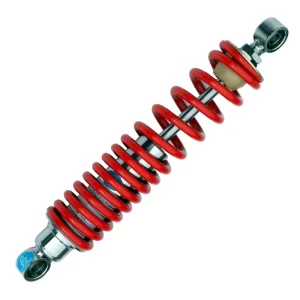
The internal design of a shock absorber matters as much as whether it’s gas or hydraulic. We spec the cylinder bore diameter to match the expected shaft-side force—for a 0-degree piggyback UTV shock, increasing the bore from 47 mm to 51 mm raises the oil volume under the piston by around 12 %, which directly widens the safe operating temperature before the fluid thins past its design viscosity. The piston material matters too; a steel piston body with hard-coat anodizing resists galling better than aluminum in a nitrogen-charged environment where acidic byproducts from hot oil can accelerate wear in non-coated bores.
The seal gland configuration is another load-sensitive detail. For custom adjustable damping shocks that see frequent bottoming, a multi-lip polyurethane seal paired with a bronze guide bushing doubles the shaft support compared to a single lip and plastic bushing, so the rod stays aligned under high side loads. Even the oil volume spec is deliberate: in a remote reservoir shock, the hose-and-canister design adds about 15 % to 35 % extra fluid capacity over a smooth-body emulsion shock. That extra fluid acts as a heat sink, shaving 8 °C to 12 °C off peak body temperatures in a hard desert run, and it’s one reason we push reservoir designs for heavy Baja trucks where the shock body will run above 120 °C repeatedly.
How to Match a Shock to Your Vehicle’s Load Profile
The first step is to define the maximum loaded corner weight and the worst-case dynamic load the vehicle will see. If the vehicle’s rear axle sees 300 kg static but the customer routinely drives off 0.5 m drops, the dynamic load can spike to 600 kg per corner, and the shock must control that without packing up. On an ATV with a front rack carrying fuel cans and a winch, the extra 60 kg up front tilts the weight forward, so the front shock’s preload adjustment and damping curve need a linear progression that resists hard bottoming without rattling the rider on small chatter.
For fleet managers sourcing suspension dampers for agricultural or construction equipment, listing the duty cycle—hours per day, average speed, terrain roughness, and load variation—lets the factory pin down the correct oil viscosity, nitrogen charge, and seal spec. We handle a variety of OEM programs where the same basic 24 mm hydraulic damper body gets a 10 % lower compression valving for a low-speed mower versus a 15 % higher compression shim stack for a heavier UTV application, all driven by the load profile data the customer provides. During the sample phase, I recommend testing the first batch on a chassis dyno under loaded conditions, not just on the road, because static measurements don’t expose the heat rise the shock will experience when working hard.
If your project carries a variable load—say, a fleet truck that runs empty some days and packed with maintenance gear on others—a gas shock with an external reservoir can keep the damping force stable across the weight range because the nitrogen charge cushions the low-load condition without allowing the body to top out, while on a heavy day the extra oil volume from the reservoir cools the fluid. In a hydraulic-only system without pressure assist, that same variable load forces the valving to cover a wider range, and the compromise usually shows in a stiffer mid-stroke that feels harsh when the truck is empty.
Common Questions About Shock Absorber Load Handling
Is a gas shock always better for heavier vehicles?
For vehicles that see rapid, repeated load cycles—racing ATVs, heavy UTVs with cargo beds, trophy trucks—a gas shock resists fade and bottoming better because the nitrogen keeps the oil homogeneous and adds a compressive force that supports weight from the first inch of travel. For a vehicle whose weight sits constant and doesn’t push the shock through rapid strokes, like a lawn mower or a hydraulic damper in a seat base, the gas charge adds cost and a potential leak path without a real load-handling advantage. The line moves once the corner weight exceeds the shock’s oil-only capacity to reject heat, and that threshold varies with the bore size and stroke length.
Can I convert a hydraulic shock to gas-charged?
You can’t reliably retrofit a hydraulic-only shock with a nitrogen fill because the body isn’t designed to contain pressure, the seal gland lacks a high-pressure shaft seal, and the piston likely doesn’t have a floating separator piston to isolate the gas from the oil. Without the separator, the nitrogen mixes with the oil and aerates it immediately, erasing the very benefit you wanted. The safer path is to replace the unit with a purpose-built gas shock or work with a manufacturer to design a gas-charged version matched to the same mounting points and travel range.
Does increasing spring preload compensate for a hydraulic shock’s weaker load support?
Increasing preload raises the ride height and delays the point where the shock piston enters the harder compression zone, but it doesn’t generate the same initial damping force that a gas charge provides. The result is a shock that still dives into its travel on the first heavy hit, and the added spring stiffness can make the small bumps harsher because the wheel can’t react as freely. If the hydraulic shock already uses the full travel frequently, a nitrogen-charged upgrade or a revised valving spec with a progressive damping curve is a better long-term fix than twisting the preload collar and hoping.
How should I spec a shock for a vehicle that hauls variable loads?
Share the minimum and maximum loaded corner weights, the average driving speed range, and the terrain type with the supplier. For suspension dampers on a fleet vehicle that toggles between empty and loaded, a gas-charged remote reservoir shock gives the most consistent damping because the nitrogen pressure provides a baseline support that works on both light and heavy cycles, and the reservoir keeps the oil temperature down when the vehicle runs at weight. Specifying the exact stroke length and the acceptable body diameter up front lets the factory select the right valve shim stack and base pressure before they ship samples.
How can I confirm that a gas shock will hold its charge under sustained load?
Ask for the shock’s pressure-drop specification after a durability cycle test—we target less than 5 % pressure loss on a remote reservoir unit after 300,000 strokes at rated load and temperature. An honest manufacturer will share the test curve that overlays damping force before and after the cycle, and you should see the compression curve remain within tolerance at full shaft speed. If you are sourcing a custom program from an off-road shock manufacturer, request a batch sample with a specific target voltage and nitrogen fill pressure, then test it on your own chassis dyno to verify that the load performance matches the claim before the series order.
If you’re specifying shock absorbers for a vehicle where load control is critical—whether that’s a commercial lawn mower fleet or a side-by-side that carries payloads over rough terrain—the decision between hydraulic and gas comes down to the precise weight range and duty cycle your application demands. Send us your corner weight data, projected shaft speeds, and the vehicle’s intended terrain at info@yearbenshocks.com, and our engineering team will recommend the right configuration and oil spec from a manufacturing perspective, not a catalog guess. Call +86-523-86566899 to discuss a custom valving or OEM program directly.
If you’re interested, check out these related articles:
Truck-Seat-Damper-38MM-Shock-Absorber-Manufacturer
Triple-Bypass-Remote-Reservoir-Shock
Adjustable-Hydraulic-Shock-Absorbers