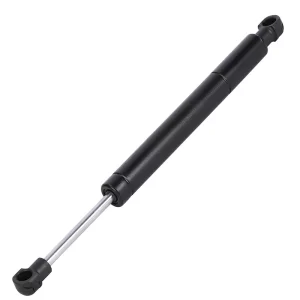
A shock absorber’s job looks simple: control spring movement. But when you compare a coilover shock to a regular shock, the difference goes deeper than the spring wrapped around it. I’ve spent over two decades working on shock absorber design and manufacturing, and the gap between these two types is where most vehicle projects either succeed or run into trouble. A coilover shock integrates the spring and damper into a single calibrated assembly, while a regular shock is just the damper, relying on a separate spring elsewhere in the suspension. That integration changes how the suspension behaves, how much room it takes, and how precisely you can tune it. If you’re specifying shocks for ATVs, UTVs, 4×4 builds, or even off-road buggies, understanding the structural and functional differences directly affects durability, ride quality, and your sourcing options.
How a Coilover Shock Is Built Differently
A coilover shock starts with the same foundational parts as a regular monotube or twin-tube damper: a piston, a cylinder filled with oil and pressurized gas, and a rod that moves through a seal. The addition of a coil spring, seated on adjustable or fixed perches, turns it into a self-contained suspension unit. One assembly handles both spring force and damping force. This reduces the number of mounting points and brackets needed, which is valuable in tight chassis layouts where separate springs and dampers would compete for space.
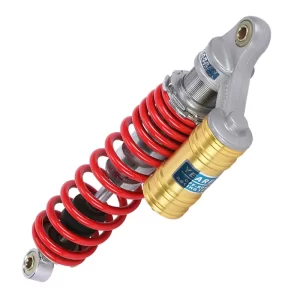
The spring and damper are matched during assembly. In our factory, coilover shocks go through a pairing process where the spring rate, preload, and damping valving are set to work together. A regular shock absorber has no control over spring rate; it only reacts to the motion the spring creates. By combining both functions, a coilover lets you adjust ride height and preload independently from the damping curve, something a regular shock can’t offer regardless of its quality.
| Feature | Coilover Shock | Regular Shock |
|---|---|---|
| Spring integration | Spring mounted directly on the body | Separate spring required |
| Ride height adjustment | Via threaded spring perch | Not adjustable; fixed spring length |
| Packaging | Compact; fewer components | Requires separate spring mounts |
| Tuning flexibility | Spring rate, preload, and valving | Damping only, unless spring swapped |
| Common use cases | ATV, UTV, buggy, 4×4 performance | Stock OEM, standard coil-sprung setups |
When a Regular Shock Makes More Sense
Not every vehicle benefits from a coilover shock. A regular shock is simpler, lighter in some configurations, and cheaper to produce. Many OEM ATV and UTV models use a separate spring and damper layout because it allows the manufacturer to mount the spring in a specific location that improves stability or weight distribution, without changing the damper’s mounting points. The shock itself becomes a straightforward replacement part: same extended and compressed lengths, same bushing dimensions, bolt it in. For fleets or operators who replace shocks on a schedule, a regular shock can be the more practical choice because there’s no spring to reuse or adjust.
Regular shocks also leave room for progressive-rate springs that coilovers don’t easily accommodate. A separate spring design can use conical or variable-wire springs that coilover perches can’t seat properly. In long-travel desert builds where you need maximum droop and a spring that compresses progressively, the regular shock plus separate spring setup still appears. I’ve seen trophy truck builders prefer this arrangement when they need extreme travel numbers that a coilover’s integrated package can’t achieve without binding.
What Changes in Damping and Heat Management
One misconception I hear often is that adding a spring to a damper somehow changes its damping characteristics. It doesn’t. The damping piston, valves, and oil volume inside the shock body remain independent of the spring. What does change is the heat profile. A coilover shock often runs hotter because the spring surrounds the body, reducing airflow. In remote-reservoir or piggyback coilovers, the reservoir helps offset this by increasing oil capacity and cooling surface area, but the base body still sees less direct air than a naked regular shock.
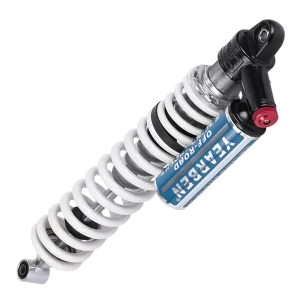
This matters when you’re selecting shocks for vehicles that sustain high-speed damping cycles. Our testing shows that a coilover without a reservoir can run 10–15°C hotter than a comparable regular shock over a 20-minute continuous run on washboard terrain. That temperature difference accelerates oil degradation and seal wear unless the shock is built with higher thermal margins. A regular shock, mounted with the spring elsewhere, can dissipate heat more freely. But the coilover’s tighter packaging often outweighs the thermal penalty in applications where space is the primary constraint.
OEM vs Custom: Sourcing Coilovers and Regular Shocks
From a sourcing perspective, the difference between coilover and regular shocks affects lead time, MOQ, and customization depth. Regular shocks are easier to standardize: fixed body lengths, fixed mounting eyes, no spring perches to machine. That makes them faster to produce and inventory. Coilover shocks require more assembly steps and more part numbers: spring perches, lock rings, springs in multiple rates and lengths, and additional weld or threading operations on the body.
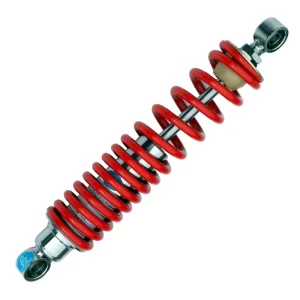
At our factory, a standard coilover shock for ATVs or UTVs involves threading the shock body, machining spring seats, and mounting the spring on a jig to set preload. A regular shock for the same platform skips those steps entirely. For buyers, that means coilover orders take longer and have higher minimums, but you gain the ability to specify spring rate, preload setting, and valving as one complete system without sourcing springs separately. If you’re running a vehicle program that needs consistent ride height and damping across multiple units, a factory-matched coilover eliminates the guesswork of mixing springs and dampers from different suppliers.
When to Consider Upgrading to a Coilover
The decision to switch from a regular shock to a coilover usually hinges on three things: space, adjustability needs, and ride height control. If your current link-based suspension can’t fit a separate spring and has limited travel, a coilover might be the only way to get the spring rate and damping you need. If you’re constantly swapping springs to tune ride height, a threaded-body coilover with adjustable preload saves time and lets you dial in corner weights more precisely.
However, not every vehicle benefits. A utility ATV that runs at low speed with light loads may never notice the difference between a coilover and a regular shock of comparable quality. Heavier, faster vehicles carrying varying payloads get more out of coilover adjustability than a recreational trail machine that stays within a narrow speed and load range. The real advantage appears when you need one unit to handle both spring and damping tuning without adding brackets, links, or additional mounting points.
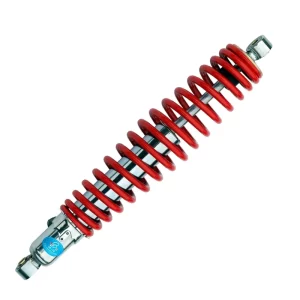
For buyers sourcing shocks, the difference between coilover and regular also impacts inventory. A coilover shock is vehicle-specific to a greater degree than a regular shock because the spring rate and preload must match the vehicle’s corner weight and motion ratio. Stocking multiple coilover variants for different models adds complexity. We’ve worked with distributors who carry a common regular shock body and offer separate spring kits for different applications; that approach works when the damper stroke and mounting dimensions are shared across platforms, but it can’t match the integration of a true coilover.
Common Questions About Coilover and Regular Shocks
Is a coilover shock always better than a regular shock?
Not always. A coilover shock provides more tuning flexibility and packaging efficiency, but a regular shock with a well-matched separate spring can perform just as well in many applications. The “better” choice depends on your suspension layout, the space you have to work with, and whether you need ride height adjustability beyond what spring swaps can achieve. For most recreational ATVs and UTVs running stock suspension geometry, a high-quality regular shock with the correct spring rate delivers the ride quality and durability the vehicle was designed for.
In programs we’ve supported, what’s the first sign a regular shock should be replaced with a coilover?
The first sign is usually bottoming resistance. When a vehicle starts bottoming out under loads that the spring should handle, and the shock itself isn’t leaking or faded, the spring rate is inadequate for the load. If the mounting layout doesn’t allow a larger or stiffer separate spring, a coilover with a higher-rate spring on the shock body can solve the problem without redesigning the suspension linkage. In a few ATV fleet programs we’ve seen, switching to coilovers eliminated persistent bottoming complaints that spring swaps alone couldn’t fix because the perches on the shock allowed precise preload adjustment.
Can a coilover shock be used without the spring as a regular shock?
Physically, yes, if you remove the spring and perches, the damper portion remains. But the shock body may have threaded sections, spring seats, or weld fillets that make it heavier and more expensive than a purpose-built regular shock. And the valving in a coilover is often calibrated for the spring rate it was paired with, so running it without the spring changes the relationship between damping force and wheel motion. It is not a performance advantage, just a workaround if you’re in a pinch and the mounting dimensions match.
It depends on the vehicle weight. Do heavier vehicles always need coilovers?
Heavier vehicles benefit more from coilovers when they need both higher spring rates and better heat management. The coil spring on the shock body can be spec’d to handle extra weight without increasing the footprint of the suspension. However, if the suspension design already has room for a heavy-duty separate spring and the shock’s damping is sufficient, a regular shock may still work. The deciding factor is usually whether the spring’s physical location can be relocated to the shock without causing clearance issues or changing the suspension’s leverage ratio.
What’s the most overlooked specification when ordering coilover shocks?
Spring preload range and perch thread length. Many buyers focus on extended and compressed lengths, body diameter, and valving, but forget that the spring perch’s adjustment range determines how much ride height change is possible without swapping springs. If the threaded section is too short, you might not be able to set the correct ride height for a heavier-than-stock vehicle. Before finalizing a coilover order, confirm the perch travel and the spring rates available for your corner weights. For custom coilover sourcing, sharing your vehicle’s corner weights and target ride height with the factory lets us match both spring and damping from the start. Reach out at info@yearbenshocks.com or call +86-523-86566899 with your requirements.
If you’re interested, check out these related articles:
Lawn-Mower-Damper-Shock-Absorber
Coilover-Shock-Absorber
Best-Off-Road-Coilover