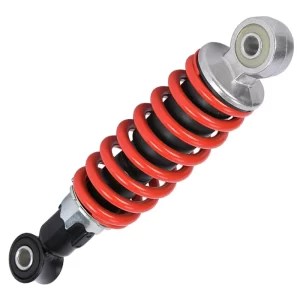
Coil suspension systems, when built as a matched coilover, deliver predictable off-road damping because spring rate and shock valving are calibrated together to the vehicle’s weight and terrain demands. Unlike leaf springs or simple spring-and-shock pairings, a coil suspension works as an integrated assembly where the spring surrounds the damper, and both components are designed to manage the same wheel movement. In my twenty years of engineering shock absorbers for ATVs, UTVs, and lightweight off-road buggies, I’ve seen how a properly matched coil suspension can reduce pack vibration by 30% or more on corrugated surfaces while still holding the chassis stable in high-speed cornering. Getting to that level of performance, however, depends on a few manufacturing and design choices that generic suspension suppliers often overlook.
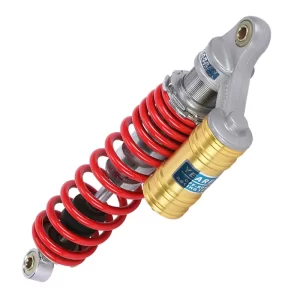
What Is Coil Suspension?
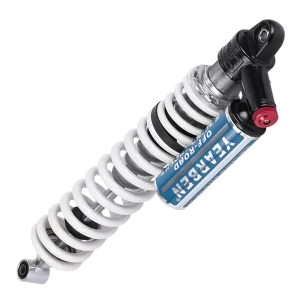
A coil suspension uses a helical coil spring mounted over a hydraulic shock absorber to support the vehicle’s sprung weight and absorb terrain inputs. The spring compresses and rebounds as the wheel moves, and the shock damps that motion so the wheel doesn’t bounce uncontrollably after a bump. In most off-road applications I work on, the coil suspension comes as a coilover—the spring is pre-assembled on the shock body and held between two spring perches. The advantage of this arrangement is that the spring and shock move as a single unit, which makes the assembly more compact and easier to tune for a specific vehicle weight and use case.
What Are the Core Components of a Coil Suspension System?
Every coil suspension system relies on five main components: the coil spring, the shock absorber body, the piston and shim stack, the mounting eyes or studs, and the spring perches with preload adjustment. The coil spring is rated in pounds per inch of compression, and the rate determines how much the suspension compresses under load. On most ATV and UTV coilovers we manufacture, the spring is wound from high-tensile chrome silicon wire, which resists sagging better than standard carbon steel after repeated cycles.
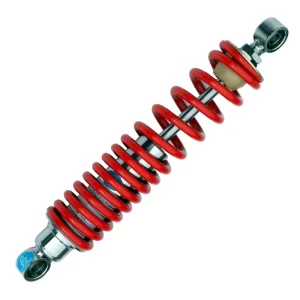
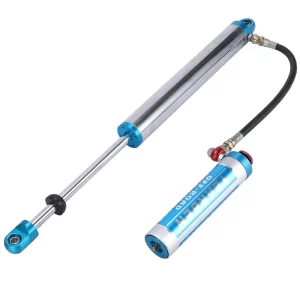
The shock body contains a precision-honed inner bore where a nitrogen-charged piston moves through hydraulic oil. Some off-road coil suspensions use an external reservoir to separate the gas charge from the oil, which prevents cavitation and keeps damping consistent when the shock runs hot. The mounting hardware transmits forces into the chassis and control arms, and the spherical bearings or rubber bushings in those mounts affect how much road noise and vibration reaches the driver.
How Does Coil Suspension Work in Terms of Spring Rate and Damping?
The coil spring stores energy when it compresses and releases it when it extends, and the shock absorber controls how fast that release happens. The spring rate is the primary lever for ride height and load support—higher rates support heavier vehicles and faster driving while lower rates provide a smoother ride on small chatter. In practice, we often specify a dual-rate spring setup, where a tender spring and main spring work in series. The tender spring absorbs small bumps, and the main spring takes over after a certain compression distance. This arrangement creates a progressive rate effect without the cost of a true progressive-wound spring.
Damping force comes from the oil flowing through the piston’s valving. On compression, the shock should slow the spring’s compression enough to prevent harsh bottoming. On rebound, it should control how quickly the spring returns to ride height. I typically recommend a rebound setting that returns the wheel to the ground quickly but without overshooting, because too slow a rebound will pack the suspension after repeated hits. Too fast, and the wheel will bounce off the terrain. The shim stack—a series of thin steel washers that flex under oil pressure—determines those timing characteristics, and a quality shim stack from a manufacturer who understands the target vehicle’s motion ratio is the difference between a suspension that feels planted and one that feels like it’s skipping over terrain.
What Is the Difference Between Coilover and Separate Spring-Shock Systems?
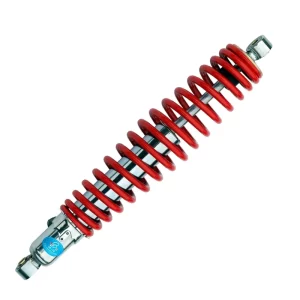
A separate spring-and-shock system mounts the coil spring independently on the chassis, often between the frame and a control arm, while the shock attaches in a different location. That layout works in passenger cars and some trucks, but for off-road vehicles where packaging space is tight and suspension travel is long, the integrated coilover is almost always the better choice.
A coilover combines both functions into one assembly that bolts directly between the chassis and the lower control arm or axle. That reduces parts count, eliminates the need for a separate spring pocket, and allows the spring and shock to share the same motion ratio. From a manufacturing standpoint, producing the shock body and spring seats on the same line also improves dimensional consistency. I’ve measured the assembly length tolerance on Yearben’s coilover production line, and we hold it to ±0.5 mm across a production batch, which means every unit has the same preload window when it arrives.
The other advantage is tuning: when you change spring rate on a coilover, you can often adjust the shock’s compression and rebound clickers to match. That paired adjustment is much harder with separate components because the damping curve was designed around a different spring motion.
How Does Manufacturing Quality Affect Coil Suspension Performance?
Everything that matters in a coil suspension—bore finish, seal material, weld integrity, gas charge consistency—originates from the factory floor. A monotube shock with a poorly finished bore will wear its piston seal within a few hundred miles of hard off-road use, and once the oil bypasses the piston, damping force drops off quickly. We hone every shock body to a surface roughness of Ra 0.2 µm or better before assembly, and we run every completed shock through a cycle test that checks for pressure loss over 100,000 cycles.
Seal quality is another place where cost-cutting shows up. The main shaft seal has to hold back 150 to 200 psi of nitrogen pressure while the shaft cycles thousands of times per ride, and it has to resist dirt, mud, and fine dust. A polyurethane seal with a secondary dust wiper will outlast a simple nitrile seal in Arizona desert conditions, but it costs more. That’s a specification we recommend to OEMs who sell into harsh environments because the warranty savings alone recover the part cost.
Weld quality on the mounting eyes and reservoir brackets is non-negotiable. We pressure-test every welded assembly after production, and a single leak means the unit gets scrapped. No repair welding on a charged shock—the heat cycle changes the base metal properties around the bore, and that can lead to ovality or stress cracking later. These are the points that separate a serious OEM shock supplier from a general metal fabricator.
What Are the Common Applications for Coil Suspension Off-Road?
Coil suspension shows up everywhere from lightweight sand rails to 4×4 rock crawlers, but the design changes significantly by vehicle type. For ATVs and utility UTVs, coilovers with 2.0-inch body diameters and 6 to 8 inches of travel are standard, and the spring rates usually range from 150 to 350 lbs/in depending on vehicle weight. Racing UTVs move up to 2.5-inch bodies and add external reservoirs to handle sustained high-speed use.
In desert racing buggies and trophy trucks, bypass shocks with coil carriers take over. Those shocks run multiple compression and rebound zones, and the coil is often a long, soft main spring paired with a stiffer tender spring to handle big whoops without sacrificing small-bump compliance. The motion ratio in a trailing-arm suspension changes how much the spring compresses per inch of wheel travel, so the spring rate has to be calculated against that ratio, not just the corner weight.
For recreational trail riders who want a bolt-on upgrade, a fixed-preload coilover with rubber bushings usually fits the bill, and it’s the easiest product to install. Fleet buyers and OEMs working on lawn mowers or electric utility vehicles often need a more specific damping curve because their vehicles run heavy static loads and slow speeds. In those cases, we work through a custom valving process that starts with a prototype ride test and ends with a production batch that consistently matches the prototype curve.
What I’ve noticed from years of supplying coil suspension is that the vehicles that perform best over their whole service life are the ones where the suspension was specified, not just “ordered from a catalog.” When the spring rate, shock valving, and motion ratio are designed together for the vehicle’s weight and top speed, the coil suspension does its job without overheating, bottoming, or blowing seals. If your project has a unusual weight distribution or needs a specific ride height target, it’s worth starting fresh with a spec review rather than forcing an off-the-shelf unit to work. Reach us at info@yearbenshocks.com or +86-523-86566899 with your vehicle weight, desired travel, and use case, and we’ll recommend a coil suspension package that matches your chassis.
Common Questions From Off-Road Buyers About Coil Suspension
Is coil suspension always better than leaf springs?
It depends on the application. Coil suspension gives more precise wheel control because the spring rate stays linear through the travel range, and the shock can be tuned to match. Leaf springs have a natural damping action from the friction between leaves, which helps on heavy trucks where simplicity matters more than fine control. For off-road performance where traction and ground contact matter, I’ve almost never seen a leaf-sprung setup match a well-tuned coilover. But if you’re hauling a constant heavy load at low speed, leaf springs still work. Make that call based on your vehicle’s primary duty cycle.
Can I adjust the ride height without changing the springs?
Some coilovers have adjustable spring perches that let you move the lower spring seat up or down and change the vehicle’s ride height. That’s fine within a small range, but you’re also changing the spring preload and static compression point. If you crank the perch up too high, you’ll lose droop travel, and the suspension may top out over bumps. For larger ride height changes, a different spring rate or a longer shock body is the right path.
How do I know if the springs are too soft?
Bottoming out too often is the clearest sign. If you hear the shock’s bump stop hitting on moderate hits, or you see the shaft bottoming into the body (you’ll feel a sudden metallic halt), the spring rate is probably too soft for the vehicle. Other clues: excessive nose dive under braking, or the vehicle leaning too much in corners. Mismatched springs will also upset the shock’s damping range, so the ride feels harsh even at low speed because the shock is working outside its intended velocity window.
What’s the advantage of a piggyback reservoir on a coilover?
A piggyback reservoir provides extra oil volume and separates the nitrogen gas charge from the main shock oil. That separation prevents the oil from foaming when the shock compresses rapidly, which keeps damping consistent during long, high-speed sections. In my experience, a piggyback reservoir coilover can run 15°C to 20°C cooler than a smooth-body emulsion shock under the same conditions, and that extra cooling often pushes the shock’s fade point beyond a full race heat. For trail riders who will only see occasional fast runs, a standard coilover is enough. For desert racing or high-HP UTVs, the reservoir is worth the extra cost. If you’re building a race vehicle and need a quotation for reservoir shocks that hold pressure under sustained load, send your specs to info@yearbenshocks.com—we’ll confirm the hose routing and gas charge procedure with your order.
If you’re interested, check out these related articles:
Adjustable-Shock-Absorber
Adjustable Seat Damper 41.5mm
Gas Charged Dual Rate Coilover Shock Absorber
Best-Shocks-And-Springs-For-Trucks