Sourcing steering dampers in volume means you quickly hit two numbers that determine whether a project moves forward or stalls: minimum order quantity and lead time. These aren’t arbitrary factory rules. In twenty years of shock absorber manufacturing, I’ve seen how batch production economics, raw material procurement cycles, and quality testing gates shape both. If you’re evaluating wholesale suppliers for hydraulic steering dampers, understanding the logic behind these numbers helps you plan inventory, negotiate practical terms, and avoid production delays. Here’s what actually drives MOQ and lead time from the factory side.
How MOQ Is Determined for Wholesale Steering Dampers
Minimum order quantity reflects the smallest batch a manufacturer can run without losing money on setup and material procurement. For hydraulic steering dampers, the key cost drivers are cylinder tube stock, chrome-plated piston rods, seal kits, and the time needed to set CNC machining and welding fixtures.
Standard catalog dampers with 18mm or 24mm cylinder bores and common stroke lengths can usually be ordered in batches of 50 to 100 units. At Yearben, we keep raw tube and rod stock for these diameters in regular supply, and the seal kits are used across multiple product lines, which reduces per-batch overhead. 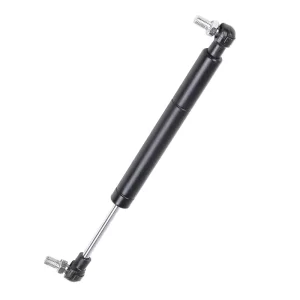
Custom dampers that require a non-standard bore, specific stroke interval, or unique mounting bracket geometry change the calculation. A new bracket often needs a dedicated welding jig and possibly a custom stamped or machined bracket component. If the cylinder bore moves outside our standard 15mm–41.5mm range, we may need to order a small lot of honed tube and matching piston blanks. In these cases the MOQ typically starts at 300 units to amortize tooling and material minimums.
What is a typical MOQ for steering dampers?
Most factories set MOQ between 50 and 200 pieces for catalog models that use existing tooling and common seal sizes. Custom steering dampers with modified stroke, damping characteristics, or mounting interfaces often start at 300 to 500 units. The gap reflects whether the factory can produce your order inside its standard batch process or must isolate a separate production run with dedicated setup time.
Can I start with a small trial order?
Sample orders of 5 to 10 pieces are standard practice, and I strongly recommend them before committing to a full production batch. Samples let you validate fit, damping force, and weld quality on your actual vehicle before the factory builds inventory. Plan for an extra two to three weeks in your development timeline for sample production and international shipping.
If your program involves non-standard stroke lengths or specialized mounting brackets, confirming production feasibility with the factory before finalizing your BOM can prevent lead time surprises. Reach out at info@yearbenshocks.com with your preliminary drawing.
Steering Damper Lead Time from Order to Delivery
Lead time breaks into four segments that procurement teams should model separately: raw material acquisition, manufacturing, quality testing, and freight. Understanding each segment reveals where schedules can compress and where they are fixed by supplier lead times.
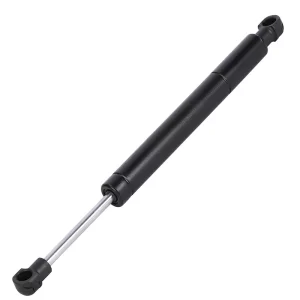
Raw material procurement usually consumes the longest block. Chrome-plated piston rod, seamless honed tube, and oil seals from our approved suppliers carry standard lead times of 15 to 20 working days when in stock, and up to 30 days if a specific grade or diameter requires a mill run. We order materials only after receiving the order deposit to avoid carrying inventory risk for custom configurations.
Manufacturing includes CNC machining of end fittings and piston rods, welding of mounting brackets, assembly, vacuum filling with hydraulic oil, and nitrogen charging if specified. A batch of 200 catalog dampers typically moves through production in 10 to 12 working days. Custom batches with new tooling add another 5 to 10 days for jig fabrication and first-article inspection.
Quality testing adds 5 to 7 working days. Every damper undergoes a leak-down test on a dedicated test stand, and we pull random samples for cycle durability testing at elevated stroke rates. If a sample fails, the entire batch is reworked or scrapped, which resets the production timeline.
Freight to Europe or North America by sea takes 25 to 35 days port-to-door, while air freight cuts transit to 5 to 7 days at significantly higher cost per kilogram. Most wholesale buyers combine sea freight with a buffer of two weeks for customs clearance and inland trucking.
How long does custom steering damper production take?
A custom steering damper order with new bracket geometry or non-catalog damping specifications typically requires 8 to 10 weeks from purchase order to factory dispatch, assuming no tooling delays. Standard catalog dampers ship in 6 to 8 weeks. Rush orders can shave 10 to 15 working days off manufacturing by pulling overtime and prioritizing your batch, but raw material lead times and sea freight remain fixed.
Factors That Affect MOQ and Lead Time
The table below captures the main differences between catalog and custom steering damper procurement from a manufacturing perspective.
| Factor | Catalog Dampers | Custom Dampers |
|---|---|---|
| Cylinder bore | Standard diameters (18, 24, 28mm) | Any diameter from 15mm to 41.5mm |
| Stroke | Common increments (40–80mm) | Customer-specified stroke length |
| Mounting type | Universal eyelet or clevis | Application-specific bracket geometry |
| Seal material | Standard nitrile or polyurethane | High-temperature or low-friction compounds |
| MOQ | 50–200 units | 300–500 units |
| Lead time | 6–8 weeks | 8–12 weeks |
Raw material availability is the factor most likely to disrupt both MOQ and lead time. Chrome-plated rod in specific diameters is not an off-the-shelf commodity for every size, and mill minimums can push a small batch into a higher MOQ tier simply because the factory cannot buy less than a full bar length. Similarly, specialized oil formulations for cold-weather or high-heat applications extend the procurement cycle.
What causes lead time delays?
In my experience, the three most common causes are out-of-spec raw material, first-article bracket misalignment, and seal leakage during endurance testing. We reject chrome rod that does not meet our 20-micron plating thickness specification, and if a tested damper shows oil seepage after 100,000 cycles, we strip the batch for re-honing and seal replacement. Each of these events adds 7 to 15 working days. Communicating these risks upfront lets buyers build realistic buffers into their launch timelines.
Ensuring Consistent Quality in Wholesale Orders
A steering damper that functions well in a sample can still degrade in a production batch if the factory does not control process variables. I look for three process controls when auditing a line: bore surface finish verification, seal compression fixture calibration, and 100% leak testing.
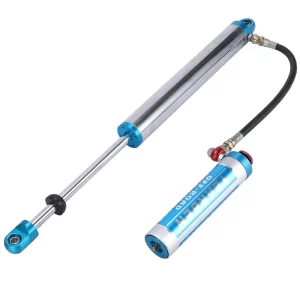
At Yearben, every cylinder bore is measured with an air gauge after honing to verify roundness within 5 microns and surface roughness below Ra 0.4. Seal installation is done on a calibrated press that records insertion force, which catches tolerance stack-up issues before assembly. After fill, each damper is cycled on a test bench that measures damping force at multiple velocities and confirms no pressure loss over 120 continuous cycles.
We also pull one damper from every 100-unit batch for a 200,000-cycle durability run. The pass criterion is less than 10% damping force degradation and zero visible oil weepage. Providing the inspection report from this test eliminates a lot of back-and-forth when technical buyers need objective proof of consistency.
How do I verify factory reliability before committing?
Start with a sample order of 5 to 10 pieces and ask for the dimensional and damping test reports that accompany those specific serial numbers. A factory that cannot trace test data to individual units is not operating with batch accountability. For larger projects, a factory visit to walk the production line and inspect test equipment pays for itself in risk reduction.
How to Place a Steering Damper Wholesale Order
A clean order package moves faster through engineering and production. Over the years I have condensed the information manufacturers actually need into a short checklist.
Provide the cylinder bore diameter, stroke length from center-to-center of mounting eyes at full extension and compression, mounting eye diameter and width, and the required damping force at a specified piston velocity – typically 0.3 m/s or 0.5 m/s. Include a reference vehicle or application so the factory understands the expected duty cycle. If your design uses a unique bracket, supply a 3D STEP file or a dimensioned 2D drawing with weld callouts.
Once we receive these details, our engineering team confirms technical feasibility within two working days and issues a quotation with MOQ, unit price, and a projected production schedule. After you approve the quotation and place the deposit, we order raw materials and begin production. Samples ship first for your sign-off before the full quantity enters final assembly and testing.
What information should I provide for a quote?
Send the bore and stroke dimensions, required damping force or expected vehicle weight per damper, mounting interface type and dimensions, any special environmental requirements like extreme cold or high duty cycle, and your target quantity. If you have an existing damper you are replacing, a photo with dimensions is often enough for us to reverse-engineer a compatible design.
Once you have a working specification, the next step is getting a production timeline that fits your procurement calendar. Send your part number, target quantity, and any custom requirements to info@yearbenshocks.com or call +86-523-86566899. We’ll respond with an MOQ and lead time estimate based on current material availability and production schedule.
Common Questions About Wholesale Steering Damper Sourcing
What is the smallest MOQ you offer for steering dampers?
For standard catalog models using existing tube diameters and common stroke lengths, the minimum order is 50 units. This floor is set by the batch quantity our seal supplier requires and the time needed to set up filling and test fixtures. If your program is still in prototyping, we can supply 5 to 10 samples without a full purchase order commitment, provided the sample batch covers tool consumables and testing labor.
How do I ensure the dampers match my vehicle’s steering geometry?
The most reliable method is to send us a dimensioned drawing or CAD model of the steering linkage, including the steering arm length and the damper’s intended mounting points. Our engineering team calculates the required stroke and damping force for that geometry and proposes a damper specification. If you already have a damper that fits mechanically but the damping feels off, we can adjust the internal piston valving to match your target damping curve without changing the external dimensions.
What certifications do your steering dampers hold?
Yearben operates under ISO 9001:2015 quality management certification. Individual steering damper batches can be supplied with material certificates for tube and rod stock, dimensional inspection reports, and cycle durability test data. For applications that require specific regulatory compliance, such as agricultural equipment standards, we can coordinate third-party testing at an accredited laboratory.
Can you ship directly to my warehouse overseas?
Yes. We ship sea freight FOB Shanghai or Ningbo to major ports worldwide, and can arrange door-to-door delivery with our freight forwarders. For urgent restocking, air freight to Europe or North America typically takes 5 to 7 business days. We pack dampers in individual poly sleeves inside reinforced export cartons, and can palletize with corner protectors and desiccant packs if you specify.
What happens if a batch fails quality inspection?
If a pre-shipment inspection identifies a quality deviation, the batch does not ship. We isolate the affected units, identify the root cause, and rework or reproduce the order at our cost. In twenty years, this has happened twice with custom bracket alignment issues, both caught during first-article inspection. For procurement teams working with tight delivery windows, discussing the quality hold and rework timeline early avoids downstream surprises. Share your requirements with info@yearbenshocks.com and we’ll outline a production and inspection schedule that matches your deadline.
If you’re interested, check out these related articles:
Remote-Reservoir-Shocks-Manufacturer
Aluminum-Utv-Shock-Absorber
Triple-Bypass-Remote-Reservoir-Shock
Adjustable-Shock-Absorber-For-Car