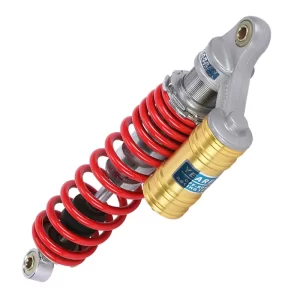
A seat damper that passes first-article inspection but leaks after six months has already cost more than any unit-price saving. Most seat hydraulic damper sourcing misses the same failure point: the factory was chosen on price and a 3D drawing long before process control, damping force, and endurance testing were fixed. We hold a different line at Yearben. For OEM buyers, the decision should weight testing data and process discipline above the quoted unit cost, because field failures in seat hydraulic damper programs almost always trace back to a specification gap, not a random defect.
Seat hydraulic damper specifications decide long-term performance
Before asking for a quote, we ask buyers to fix four values: extended length, compressed length, damping force at 0.1 m/s and 0.3 m/s, and mounting type. When any one value is missing, the factory fills the gap with an assumption. Those assumptions become the field failures later. The cylinder diameter is not the starting point; it follows from the load and the damping curve. We build seat hydraulic damper bodies from 24 mm through 41.5 mm, and the size decision matters only after the force requirement is clear.
| Cylinder diameter | Typical application | Main confirmation point |
|---|---|---|
| 24 mm | Light and mid-range driver seats | Damping force and mounting center distance |
| 28 mm twin tube | Utility vehicle and compact equipment seats | Low-speed to high-speed damping spread |
| 35 mm heavy duty | Construction and heavy equipment seats | Static load and rebound control |
| 38 mm | Truck seat suspension and heavy equipment | Mount orientation and service pressure |
| 41.5 mm adjustable | Commercial and NEV seats with adjustable damping | Adjustment range and click settings |
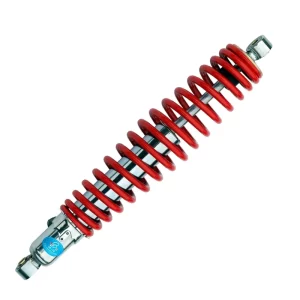
The gap we see most often in seat hydraulic damper sourcing is nonstandard mounting geometry. Buyers copy a supplier part number without confirming the eyelet width, clevis depth, or mounted center distance. A seat hydraulic damper that is 5 mm too short at full compression will bind the linkage and load the rod sideways. That sideways load destroys the seal well before the damping force has degraded. If the seat linkage travels differently from the original part, the quote should include a stroke check before any tooling is released.
Chinese seat hydraulic damper OEM factories win on process control
A Chinese seat hydraulic damper OEM plant is neither automatically good nor automatically poor. The difference is whether the line is organized around verification or around assembly speed. We run seat dampers from 24 mm to 41.5 mm on shared honing and damping-force test benches, and that tooling discipline carries across platforms. A factory that charges a nitrogen gas spring but cannot show a calibrated damping-force curve will not hold the repeatability a seat program needs.
The processes that matter most are cylinder bore finishing, rod chrome quality, seal installation, oil fill, and final damping-force validation. Bore finish controls seal wear. Rod chrome quality controls oil leakage and corrosion on exposed sections. Seal installation determines whether the damper will survive the first cold start or the first dusty season. Oil fill volume and air purging set the force plateau. If any one process is treated as a fit-and-forget step, the seat hydraulic damper will pass a quick visual check and still fail later under repeated seat travel.
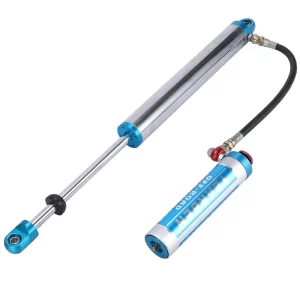
That is why we treat damping-force testing as a release gate, not a documentary formality. A seat hydraulic damper that leaves the line without a traceable force curve is an unverified spring. The buyer receives the part, but the buyer carries the validation risk. For OEM programs, the factory should be able to show the same test file format used from sample to batch production.
A factory audit reveals what a seat damper supplier cannot hide
When I walk a seat hydraulic damper line, I look at five things in this order: bore finish under a light cut, rod chrome thickness and surface texture, seal storage and handling, oil fill and purge procedure, and the calibration date on the damping-force tester. These five points reveal more than a quotation ever will. A clean final assembly area with poor honing discipline still produces short-lived dampers.
Ask the supplier how many full-stroke endurance cycles they run before approving a seat hydraulic damper platform, and ask whether the test load includes a side force or only a straight axial input. A damper that passes straight axial testing can fail quickly on a seat linkage that introduces a bending moment. We have seen this difference separate a one-season part from a five-season part without any change in cylinder diameter.
The other audit point is record keeping. If the factory cannot retrieve a damping-force curve for a batch produced six months ago, the process is not under control. Traceability is not a certificate on the wall. It is the ability to connect a field failure back to a specific honing lot, seal lot, and oil fill setting.
OEM pricing, MOQ, and lead time follow the part drawing
Pricing for a seat hydraulic damper is not a fixed list. It follows the cylinder diameter, the requirement for adjustable damping, the mounting hardware, and the testing protocol. MOQ rises when the part is nonstandard. A 24 mm standard seat hydraulic damper may carry a lower minimum than a 41.5 mm adjustable unit with custom click settings and a nonstandard eyelet. Lead time moves with tooling status: existing bore and rod sizes can ship quickly, while a custom stroke or a new mount usually adds time for honing and fixture work.
If your program involves mixed seat platforms, confirm the damping force target before finalizing the BOM. Buyers who skip this step end up with samples that meet the drawing dimensions but miss the ride feel. Send your drawing and target damping force to info@yearbenshocks.com and we will confirm the correct cylinder diameter, stroke, and mounting interface before quoting.
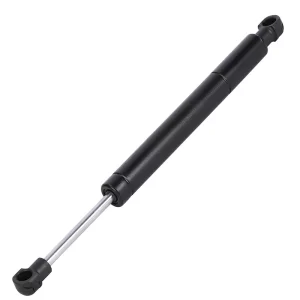
Sourcing seat hydraulic dampers starts with one decision
The pattern behind most seat hydraulic damper sourcing problems is a decision made too early on price alone. The fix is to put testing terms and process proof into the seat hydraulic damper inquiry itself, before the quotation. If you are finalizing a seat platform or replacing a failing damper, send your part number, quantity, and damping force target to info@yearbenshocks.com or call +86-523-86566899. We will confirm cylinder diameter, mounting interface, and test parameters first, so the quoted price reflects what the line must actually hold.
Common questions from seat hydraulic damper buyers cover quality and testing
Why do seat hydraulic dampers fail after only a few months?
Most buyers blame the seal, but in the programs I have reviewed the mounting geometry is the more common root cause. A seat hydraulic damper installed with even a small side load wears the rod seal unevenly, leaks oil, and loses force. The second cause is missing damping-force validation. A part that passes a visual check can still miss the intended curve by a wide margin. Confirm mounted center distance, eyelet width, and side-load angle before accepting a sample.
Should I choose a standard seat damper or go fully custom?
Choose a standard seat hydraulic damper when the mounting points and stroke already match a built size, and go custom when the seat linkage travels differently. Standard sizes such as 24 mm, 28 mm, and 38 mm cost less and quote faster. Custom units make sense for unusual compressed length, high static load, or adjustable damping requirements. The practical line is this: if the original part number matches an existing bore and mount, stay standard; if the seat structure has changed, pay for the custom validation.
How can I check whether a seat damper factory holds tolerances across batches?
It depends on two auditable things: whether the factory tests damping force on every batch and whether they retain those records. Ask for the damping-force curve from two production batches, not from the golden sample. Compare the force spread at the same stroke and velocity. A serious seat hydraulic damper supplier keeps these files as release records. If the curves are not available, batch consistency is unproven no matter what the ISO certificate says.
What should a seat hydraulic damper RFQ include?
In our OEM seat damper work, we ask for five pieces of data before any quote: extended length, compressed length, mounting type, damping force at 0.1 m/s and 0.3 m/s, and annual quantity. With those values we can match the cylinder diameter, stroke, and damping curve to the seat platform. Send these five values to info@yearbenshocks.com and we will confirm the matching seat hydraulic damper configuration before quoting.
If you’re interested, check out these related articles:
Gas Charged Dual Rate Coilover Shock Absorber
Lawn mower steering damper 18mm
Off-Road-Coil-Over-Shocks-Manufacturer
Hydraulic-Shock-Absorber-24MM
Off-Road-Coilover-Shocks