
A 4×4 shock that works in rocks can fade halfway through a desert race, and a race shock can make an overland rig feel harsh after eight hours of washboard. Matching 4×4 shocks to the application matters more than choosing the highest advertised damping force. Rock crawling, racing, and overlanding load the piston at different speeds, generate different heat, and require different valving priorities. The same external dimensions can hide a completely wrong damping curve if the use case is not specified.
How Rock Crawling Loads Change 4×4 Shock Requirements
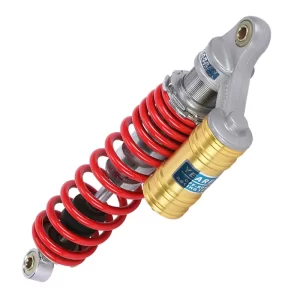
Rock crawling exposes 4×4 shocks to slow, high-flex movements. Shaft speeds stay low, but the damper must control body roll on off-camber ledges and resist sudden unloading when a tire drops into a hole. The main issue is rarely heat. It is valving that returns the wheel too quickly or too slowly.
Low-speed compression needs enough digressive force to keep the chassis from leaning, while low-speed rebound must hold the tire in contact without porpoising. A race-oriented shock with aggressive high-speed blowoff often feels loose here. I have watched rock crawlers with desert-valved shocks bounce on three wheels after a ledge drop because rebound was tuned for whoops rather than controlled release.
That does not mean any soft shock fits. A shock with inadequate rebound control lets the front axle unload too fast on steep climbs and can flip weight rearward. We specify firmer low-speed rebound and moderate low-speed compression for crawlers than for overlanding builds, even when the spring rate and vehicle weight are similar.
What Racing Demands from 4×4 Shocks and Valving
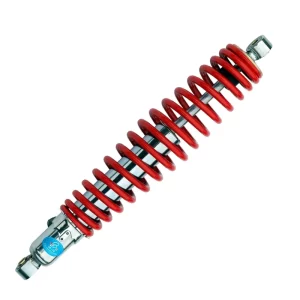
Desert and short course racing will find weak points in 4×4 shock valving within minutes. Piston speeds are high, impacts repeat, and oil temperature climbs fast. A shock without enough nitrogen pressure or oil volume aerates, the damping force fades, and the driver feels the rear end drift.
The valving priority shifts from positional control to energy dissipation. High-speed compression needs predictable blowoff, and rebound must settle the tire before the next hit. Remote reservoir shocks add oil volume and a separate nitrogen chamber, which slows heat buildup. Adjustable damping shocks matter less for a beginner than correct baseline valving, but they give teams a way to test spring and valving changes without a full rebuild.
For racing, I would rather start with a monotube or remote reservoir shock with a known baseline than an off-the-shelf twin-tube labeled heavy duty. We have seen fade complaints on race applications where the oil was correct but the reservoir hose routing trapped nitrogen against the divider piston. The result was inconsistent compression from one side to the other.
Why Overlanding Prioritizes Heat Management and Durability
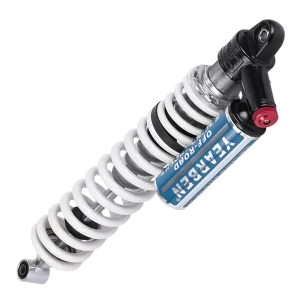
Overlanding is not lower demand than racing. It is a longer demand. A loaded 4×4 on washboard runs the shock through thousands of small strokes per hour, and heat builds gradually. The result is not usually a sudden failure; it is fading performance two hours into a remote road.
For this application I prioritize oil volume, seal quality, and serviceable construction more than peak valving aggression. A remote reservoir or piggyback shock with a 2.5 inch body often fits heavier overland builds better than a smooth body shock. The reservoir increases oil capacity and separates nitrogen, which keeps damping more stable as ambient and oil temperatures rise. Corrosion resistance matters on vehicles that cross wet or coastal terrain, so a quality hard anodized or coated body matters after the first season.
If your program mixes highway weight, trip payload, and rough trail use, it is worth confirming the shock’s oil volume and nitrogen charge before finalizing a BOM. Send your vehicle corner weights and typical trip load to info@yearbenshocks.com and we can confirm the right base valving.
How Vehicle Weight and Spring Rate Change 4×4 Shock Choice
Shock choice fails most often when the damper is treated as a fixed product rather than a match for sprung weight. A heavier vehicle needs more low-speed compression to control roll and dive, but the same setting on a light buggy will feel harsh and lift the inside wheel. Spring rate carries the load; the shock controls how fast the spring moves.
| Application | Primary shaft speed | Dominant failure mode | Typical shock type | Key specification |
|---|---|---|---|---|
| Rock crawling | Low | Rebound too fast or body roll | Progressive or linear coilover | Low-speed rebound and digressive compression |
| Racing | High | Oil aeration and fade | Remote reservoir or bypass | High-speed blowoff and nitrogen charge |
| Overlanding | Mixed | Heat fade over long runs | Remote reservoir or piggyback | Oil volume, seals, corrosion resistance |
Vehicle weight also decides whether an adjustable damper is worth the cost. A race team that changes tire size, spare placement, or fuel load between events gets real value from clickers. A fixed overland build with a consistent payload can run a well-valved fixed shock and reduce setup complexity.
How Do You Turn Application Requirements Into a 4×4 Shock Specification?
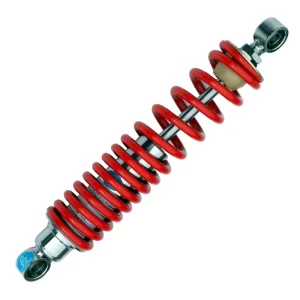
Most 4×4 shock inquiries start with a vehicle model and end with a generic fitment question. That is not enough. A useful specification needs corner weight, extended and collapsed length, spring rate or coilover springs, reservoir type, and the primary terrain the vehicle will see. Without those inputs, two buyers can both ask for a 4×4 shock and get two very different valving curves.
If your program involves mixed rock crawling and overlanding use, or you are moving from catalog shocks to a custom OEM build, confirm those inputs before the BOM is set. Send your corner weights, eye-to-eye lengths, and travel targets to info@yearbenshocks.com, or call +86-523-86566899 and ask for Chen. We will check the valving against the application rather than guessing from the vehicle name.
What Questions Should You Ask Before Ordering 4×4 Shocks?
Can one 4×4 shock work for rock crawling, racing, and overlanding?
Only if the three uses are occasional. A shock valved for crawling will not control repeated race-speed hits for long, and a race-valved shock will feel too busy on an overland truck carrying constant weight. Mixed use calls for a compromise, usually a remote reservoir shock with adjustable low-speed damping and a valving curve biased toward the most frequent terrain. If the vehicle spends most of its time overlanding and a few weekends in the rocks, start there and accept slower performance in the secondary use.
Do I need remote reservoirs for a 4×4 shock?
Not for a light trail rig. The common assumption is that reservoirs are only for racing, but the bigger reason is heat management. A remote reservoir adds oil volume and separates nitrogen from the working oil, which stabilizes damping on long runs. For slow rock crawling or short drives, a smooth body shock can be fine. For loaded overlanding, desert running, or repeated high-speed use, reservoirs become the more reliable choice because they slow fade before the shaft seal gets hot.
How do I choose between adjustable and fixed valving?
It depends on how often the vehicle setup changes. For a fixed build with known corner weights, a well-valved fixed shock gives fewer parts, less tune confusion, and lower cost. For a race team that alternates between dune and hardpack setups, adjustable compression and rebound clickers are worth the extra complexity because they shorten testing time. If you are not going to spend time tuning, a quality fixed baseline from the factory will usually ride better than a misadjusted adjustable shock.
What specs should I send for a custom 4×4 shock quote?
In quoting custom shocks we look for five numbers first: corner weight, extended length, collapsed length, eyelet width, and spring rate if the shock is a coilover. Vehicle model alone tells us less than buyers expect. The same model can run different bumpers, winches, spare carriers, and fuel loads, and those changes move the valving target. Send those five points plus the primary terrain split to info@yearbenshocks.com and we will confirm the base valving and reservoir recommendation before you commit to a batch.
If you’re interested, check out these related articles:
Twin-Tube-Hydraulic-Seat-Damper-28MM
Driver-Seat-Damper-24MM-Cylinder-Diameter