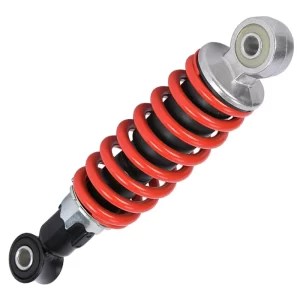
4×4 shock fade is the moment a suspension moves from controlled to unpredictable. After 30 or 40 minutes of continuous rock ledges, washboard, or sand, damping force drops even when springs and ride height look unchanged. The shock body overheats, hydraulic fluid thins, and the piston cannot generate enough resistance at high shaft speeds. I have rebuilt enough faded units at Yearben to recognize the pattern before the shock opens. The failure is rarely mysterious. It is heat plus airflow starvation plus the wrong fluid or gas charge for the trail speed.
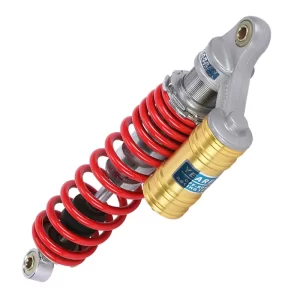
What Exactly Is 4×4 Shock Fade and Why Does Heat Cause It?
A shock absorber turns shaft movement into heat by forcing oil through piston orifices and shim stacks. Damping force comes from the pressure drop across the piston times the piston area. On hard trails, the shaft cycles through short strokes at high frequency while vehicle airflow remains low. Heat builds faster than the shock body can shed it.
Fade is not a spring problem. The springs continue holding the vehicle at the same static height. The suspension still cycles. What changes is the shock’s ability to resist motion. As the oil thins, the same orifice produces less resistance at high shaft speeds. The front end starts to float over repeated ruts, and the rear skates sideways on washboard. Drivers often call it a dead shock because the body no longer settles after impacts.
Oil alone does not tell the full story. If the nitrogen charge has dropped or the oil has absorbed moisture, low-pressure zones can form behind the piston on rebound. Dissolved gas comes out of solution as bubbles. Those bubbles pass through the valving with almost no resistance, which is exactly what the driver feels as fade. A unit can be dry on the outside and still be hydraulically dead on the trail.
Is Fade the Same as Overheating?
Overheating is the mechanism. Fade is the symptom. A shock can run hot for a short time and recover. Fade means the damping curve has already shifted far enough to change vehicle control. On a dyno, fade shows as reduced force at high shaft speeds before the body reaches peak temperature. Overheating left unchecked leads to fade, and faded oil left hot leads to permanent damage.
How Do You Tell Fade Apart from Mechanical Wear or a Leak?
Start with a cold baseline. Drive the same rock garden or washboard at the same speed before the shock body has soaked heat. Then run the trail long enough to fade. If damping force falls as shaft temperature climbs, fade is present. If the shock feels weak immediately from cold, look instead for mechanical wear, low gas charge, or lost oil.
Check the shaft and body next. A wet shaft or oil film around the seal points to a leak, but a dry shaft does not rule out fade. External leaking reduces oil volume and produces inconsistent damping, not a clean heat-related drop. Burned oil inside a rebuildable unit smells acrid, looks dark, and may show grey streaks from water or gas contamination. If the oil has turned thin and black, the fade damage is already past a simple fluid change.
Push on the bumper when the shock is cold, then again when it is hot. Fade often shows as a faster hot rebound cycle and less resistance in both directions. A worn shock can feel similar, so the differentiating point is temperature dependence. If the hot response returns to normal after a 20 minute cool-down, the unit is fading rather than worn out. If the softness remains after cooling, the valving or seal is mechanically finished.
If your trail profile includes long rock crawls, high ambient heat, or repeated high-frequency sections, confirm oil grade and reservoir size before finalizing the replacement. Email your current shock dimensions and the terrain that causes fade to info@yearbenshocks.com and we can check which heat path matches your loads.
Which 4×4 Shock Designs Resist Fade on Hard Trails?
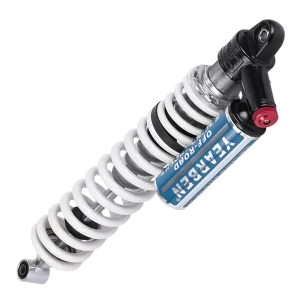
Monotube and reservoir designs solve different parts of the fade problem. A monotube body moves heat from the oil directly into the outer wall, which is why it usually outperforms a twin-tube of the same diameter on a slow hot trail. The benefit is not extra damping force. It is a shorter heat rejection path for each cycle.
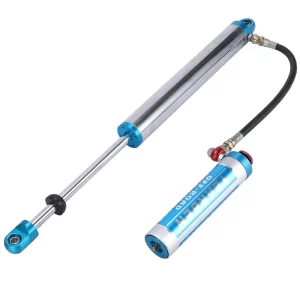
A piggyback or remote reservoir adds oil volume and gives the gas a separate chamber. That lowers peak oil temperature and delays cavitation. Remote reservoir shocks also move part of the fluid outside the wheel well, where it can cool without fighting the axle, exhaust, or caked mud. For long hard trails that never give the shock a long cooling break, a remote reservoir is the safer configuration. For tighter packaging, a piggyback unit still adds volume, though it may run hotter than remote.
| Design | Heat Path | Oil Volume | Trail Fade Resistance |
|---|---|---|---|
| Twin-tube hydraulic | Inner tube to outer body through an air gap | Lowest | Moderate on short runs |
| Monotube | Working oil directly against the body wall | Medium | Good for sustained heat |
| Piggyback reservoir | Body plus chamber mounted to the shock | Higher | Better for repeated loads |
| Remote reservoir | Body plus separate reservoir and additional cooling area | Highest practical | Best for long hard trails |
Body diameter and shaft finish matter too. A larger body holds more oil and spreads the same heat across more metal and fluid. The shaft surface finish retains the oil film that lubricates the seal and transfers heat from the moving parts. If the shaft is chrome plated and polished to the correct roughness range, less fluid escapes past the seal and the gas charge lasts longer.
Remote Reservoir or Piggyback for Hard Trails?
If the wheel well has clearance and the hose length can be routed safely, remote wins for heat rejection. If mounting space is tight or the vehicle works in brush that can catch a hose, piggyback is the practical choice. The difference is smaller than most catalog copy suggests until runs exceed roughly 20 to 30 minutes of continuous hard input.
Yearben’s remote reservoir shocks and monotube off-road units are both built around the same heat path question before valving is finalized.
What Should You Specify When Ordering Replacement 4×4 Shocks?
The wrong shock is rarely just too soft. It is usually the right spring rate on the wrong heat path. Before ordering, record the dimensions the current unit occupies: extended length, compressed length, eye or stem mount type, spring ID, spring length, and spring rate. Add the corner weight or axle weight for the vehicle as built, not the stock curb weight. Include tire diameter and the terrain that causes fade, such as low-speed rock, high-frequency washboard, or long climbs.
For fade specifically, tell the supplier two extra data points. First, note the nitrogen charge the current unit shows after cool-down if you can measure it. Second, state whether the current shock is a twin-tube, monotube, piggyback, or remote reservoir. Those two details turn the conversation from a generic replacement to a heat rejection correction.
If you cannot measure the charge, the supplier can still work from the vehicle build. A factory that produces off-road coil over shocks in volume has reference data for body size, reservoir size, and oil grade needed for a given corner weight and trail type. That reference data is what turns a parts order into a defined specification.
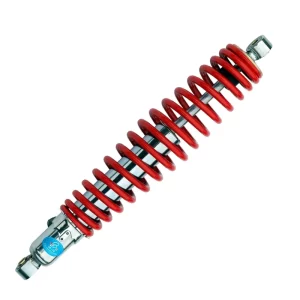
Want a Replacement That Keeps Damping When the Trail Gets Hot?
If fade returns after a fluid service or a clicker adjustment, the limitation is not the setting. It is the thermal specification. A fade-resistant shock starts with the correct oil volume, gas chamber type, shaft finish, and reservoir size for the way the vehicle actually runs. Yearben builds remote reservoir and monotube off-road units, and matches the valving and charge to the trail profile instead of shipping a one-size unit with only a spring change.
Send your current part number, extended and compressed lengths, spring ID and rate, corner weight, and the trail conditions that cause fade to info@yearbenshocks.com, or call +86-523-86566899. That specific set of details lets us return a configuration recommendation rather than a price list, because the fix starts with the right heat rejection path.
Still Have Questions About 4×4 Shock Fade?
Can I Keep Driving Once Fade Starts?
You can limp back to the trailhead, but only at reduced speed. Fade itself can reverse once the shock cools, but continued hot running accelerates seal wear and oil oxidation. If the shock reaches fade, the damping is already below what the vehicle needs for control. Slow down, reduce consecutive high-speed sections, and let the shock bodies cool before the next climb. If the fade repeats on every run, the failure is in the heat rejection design, not your driving.
Are Hard Trails Harder on Shocks Than Fast Desert Runs?
Many owners assume high-speed desert running is the harder environment. The opposite is often true for fade. A slow hard trail cycles the shock constantly at moderate shaft speeds while airflow is low, so heat accumulates and stays. Desert runs produce higher peak loads and faster shaft speeds, but they deliver more cooling air and longer gaps between hard sections. Heat destroys damping over time, and trails are time-heavy.
Do Stiffer Springs Stop 4×4 Shock Fade?
No. A stiffer spring changes ride height and load support; it does not remove heat from the shock. In some cases it increases cycle frequency because the body follows smaller terrain events more directly. The energy the shock absorbs still becomes heat inside the oil. If the shock cannot reject that heat, stiffer springs only move the problem higher in the speed range. The fix is oil volume, gas separation, and cooling area.
Is Fade Permanent or Temporary?
It depends on how far the oil broke down before you noticed the change. If the unit cooled and the damping returned to normal, the fade was temporary. If the oil smells burnt, looks dark, or the gas charge is low, the damage is usually permanent and a fluid change will not recover the curve. In the faded trail units I have opened, the deciding test is whether the oil still has its original color and viscosity. Send your current shock dimensions, corner weight, and the terrain that starts the fade to info@yearbenshocks.com and we will confirm whether a rebuild or a different heat path is the right fix.
If you’re interested, check out these related articles:
Adjustable-Hydraulic-Shock-Absorbers
Heavy duty seat damper 35mm, Shock Absorber Manufacturer
Adjustable-Shock-Absorber-For-Car
4X4-Heavy-Duty-Suspension
2-0-Air-Shock