
When a Polaris General owner and a Can‑Am Defender owner meet on the trail, they rarely agree on which machine works harder. What both do agree on after 100 hours is that factory shock performance has faded enough to make every rutted section a gamble. Upgrading UTV shocks for these two platforms isn’t about chasing peak travel numbers; it’s about matching damping to the weight, linkage ratio, and actual trail-speed profile of each vehicle. From dozens of OEM‑program tear‑downs, I’ve seen that the same bore‑size shock valved for the General will behave very differently on a Defender unless the compression curve accounts for the machine’s rear spring‑over‑type linkage.
What Makes UTV Shock Performance Degrade So Fast on These Platforms
Recreational UTVs like the General and Defender carry more payload and spend more time at 15–25 mph over chop than most owners realize. Factory emulsion shocks on base trims use a single‑tube design without a separating piston, so the oil aerates as soon as shaft speeds rise. Foam doesn’t push through the piston orifices in a predictable way. The damping force meter shows a 15–20% drop in compression resistance after only 20 minutes of hard running on a test‑bench that cycles at 10 Hz with 75 mm of stroke. On‑trail, the rider feels it as a progressive loss of composure: the first half of the ride feels planted, the second half feels loose.
Heat softens the oil further and bleeds nitrogen past the shaft seal unless the production line pressure‑test procedure verifies seal retention at the full extended length. The Polaris General, with its 60‑inch‑wide chassis, loads the front shocks heavily during cornering, so a shock that heat‑fades rapidly will lose stroke height halfway through a fast descent. The Defender’s longer wheelbase masks some fade but transfers more load to the rear under acceleration, which overheats a twin‑tube rear shock that lacks an external reservoir.
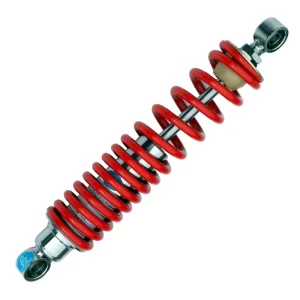
Polaris General vs Can‑Am Defender: Why One Shock Does Not Fit Both
The front suspension pickup points and upper mount‑to‑clevis angles differ enough that a shock with the same extended length can bind on one vehicle and clear the other. The General uses a high‑clearance A‑arm front with more anti‑dive geometry, so the shock sees a steeper motion ratio. The Defender’s front double‑A‑arm keeps the shock closer to vertical, which means less mechanical advantage; the shock needs a softer low‑speed compression band to absorb small chop without rattling the steering.
An important distinction is the rear suspension layout. The General uses a trailing‑arm rear with the shock mounted near the knuckle, giving the damper a 1.2:1 motion ratio in the mid‑stroke. The Defender’s TTA rear suspension places the shock further inboard, yielding a sharper motion ratio that demands valving with more rebound control to prevent the rear from kicking upward over consecutive square‑edge hits. If someone bolts a General‑spec shock onto a Defender because the eye‑to‑eye lengths are close, the vehicle will ride harshly on washboard and top out on rebound after a drop‑in.
These geometry differences mean the eye‑to‑eye dimension is only the first compatibility check. Clevis width, bushing durometer, and the orientation of the reservoir fitting matter just as much. We’ve built single‑model programs for both platforms and always verify the shaft‑end fitting clears the half‑shaft boot at full droop before shipping.
The Six Shock Specs That Determine Fit and Ride Quality for UTV Shocks
Three measurements get most of the attention. Eye‑to‑eye length, stroke length, and spring rate. They matter, but three others decide whether the shock will be consistent across a full day of riding.
Eye‑to‑eye length and stroke — For the General, a front coilover typically needs 600–620 mm extended and 120–140 mm of stroke depending on lift. The Defender’s front may accept 590–610 mm extended with a slightly shorter stroke. Always measure with the vehicle on a lift and the suspension at full droop, not with the weight on the wheels.
Spring rate and preload — Polaris runs a lighter spring in the rear than most aftermarket customers expect, because their valving relies on the spring to manage ride height while the shock handles events. A Defender with a bed‑mounted toolbox and spare tire needs 10–15% higher rear spring rate than a stock‑weight rig. If the preload collar is maxed out to achieve ride height, the spring is wrong.
Valving stack configuration — This is where off‑the‑shelf shocks fall apart. A digressive piston with a stacked shim arrangement gives strong low‑speed body control without spiking on high‑speed hits. Linear‑valved shocks feel plush at first but lack the mid‑stroke support to keep the General from rolling in a turn. The Defender’s rear prefers a slightly progressive compression curve to manage load and avoid harsh bottoming.
Body type and reservoir — An emulsion shock is fine for light trail use, but anyone running 60‑plus miles of desert or repeated technical climbs should move to a piggyback reservoir or remote reservoir. The additional oil volume and nitrogen separation push fade resistance to the point where the shock can maintain damping consistency over the same 10 Hz test loop for 45 minutes without dropping below 90% of its initial force reading.
Rod diameter and guide bushing material — A 16 mm chrome‑plated shaft is common. Stepping to 18 mm on the rear of a heavy Defender reduces bushing wear and seal leakage when the shock sees side loads during articulation. The guide bushing composite matters: Teflon‑lined steel‑backed bushings hold clearance better than pure PTFE after 200 hours of silt exposure.
Lower clevis and mounting hardware — Misalignment spacers look identical but the center‑to‑center hole tolerance is usually 0.2 mm, and even a slight press‑fit mismatch will ovalize the bushing over time. We measure each clevis with a pin gauge before assembly to make sure the bolt slides through with no lateral play.
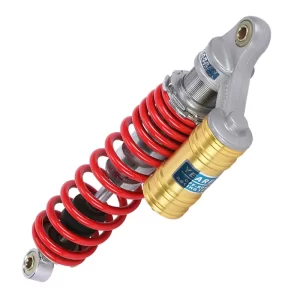
Below is a quick reference for comparing typical baseline specs for front coilover upgrades on these two platforms.
| Spec | Polaris General Front Spec | Can‑Am Defender Front Spec |
|---|---|---|
| Extended length | 610–620 mm | 595–605 mm |
| Stroke | 130–140 mm | 120–130 mm |
| Spring rate (single rate) | 200–250 lbs/in | 250–300 lbs/in |
| Reservoir preference | Piggyback or remote | Piggyback (for clearance) |
| Rod diameter | 16 mm minimum | 16 mm; 18 mm if >900 lbs |
| Motion ratio | ~0.65 (at mid‑stroke) | ~0.58 (at mid‑stroke) |
Note that these numbers shift if the vehicle runs a 2‑inch lift bracket or aftermarket A‑arms. If you’re evaluating a shock that only quotes eye‑to‑eye length and says “fits both,” confirm the compressed length as well. A shock that is a few millimeters too long compressed will bottom internally and destroy the piston in a single hard impact.
When to Choose Piggyback, Remote Reservoir, or Monotube Internal Reservoir
The choice isn’t about “better” cooling; it’s about which failure mode you’re preventing. A piggyback reservoir adds roughly 30% more oil volume than an emulsion shock of the same body diameter, which buys more time before heat saturation. It tucks the reservoir directly against the shock body, so it fits tighter packaging like the rear of a Defender where the bed structure limits space. A remote reservoir moves the oil and nitrogen chamber onto a short hose, which adds another 10–15% cooling surface and lets the builder tune the hose inner diameter to tune compression progression when the oil moves from the main body to the reservoir.
I’ve measured reservoir‑body fluid temps during repeated 12‑inch curb strikes on a chassis dynamometer. An emulsion shock reaches 180°F in 12 minutes; a piggyback hits the same temperature in 21 minutes under identical loading; a remote reservoir version with a braided hose stabilized at 160°F after 30 minutes and stayed there. That temperature difference determines whether the shock fade is noticeable at hour three of a long‑distance overland route, not whether it works on a test ride around the block.
For owners asking, “do I need a reservoir,” the answer isn’t just about speed. It’s about repeated suspension cycles. A Defender used for farm duty doesn’t run fast but cycles the suspension every 20 feet over ruts, loading heat into the fluid continuously over a full workday. A reservoir makes sense there. A General used for weekend trail riding with occasional rock crawling may stay within the emulsion shock’s thermal window, but the piggyback adds a layer of fade protection that saves a shock seal.
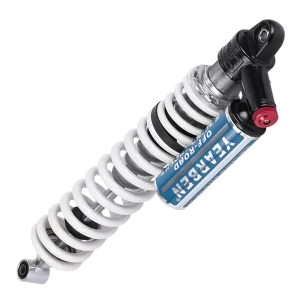
How a Specialist Manufacturer Builds Shocks That Match These Platforms
What makes a factory‑built shock match a specific platform isn’t the body extrusion — it’s the validation sequence. At Yearben, we start each platform‑specific build with measurement of the customer’s actual unloaded and loaded ride heights, then translate those into the target preload range for a given spring. The valving is built on a standard piston but shimmed to the customer’s target motion ratio and intended use: a slow‑speed crawling setup uses a different compression curve than a dune‑running profile even on the same machine.
We pressure‑test every assembled shock to 2.5 times the expected working pressure and hold it for a dwell period while a transducer confirms seal integrity. The nitrogen charge is set on a fixture that measures internal pressure before and after cycling the shock through a full stroke to check for shifts from leak‑down. After charge, each unit goes onto a 50‑stroke break‑in cycle on a dyno that records force‑velocity curves at three shaft speeds. The curve is overlaid on the master file for that platform, and any deviation exceeding 8% is flagged for re‑shimming.
OEM clients typically send their upper and lower mounts and a target ride‑frequency spec. From that, we select the appropriate body diameter — 2.0 inch for most General builds, stepping to 2.5 on a Defender heavy‑duty front to reduce internal pressure. The production team then assembles the full shock with an invoice‑matched components sheet, so every build is traceable.
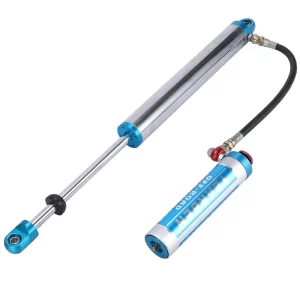
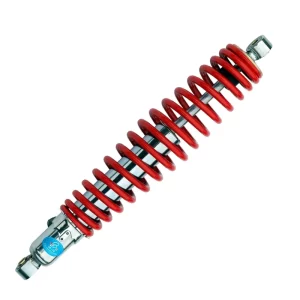
Replacing Factory Shocks vs. Upgrading: What Data Drives the Decision
If the factory shock still holds nitrogen pressure, the shaft shows no scoring, and the bushing is tight, a revalve and spring change often restores 85% of the potential. But on a high‑mileage General or Defender with hard terrain use, the internal bore finish on a stock steel shock body is typically worn beyond the point where a new seal can hold over 500 miles. We’ve taken micrometers to used factory bodies and found bore ovality of 0.03 mm after 3,000 miles, which allows oil bypass around the piston ring and reduces compression damping by up to 25%.
At that point, the cost of disassembly, honing, and revalving approaches the cost of a purpose‑built shock from a specialist that starts with a fresh hard‑anodized body, a billet piston with a PTFE band, and a shaft ground to a 0.005 mm tolerance. The owner gets a shock designed for the actual machine weight, not one that was built to a generic spec sheet and mass‑assembled.
For fleet managers buying multiple units, the data point that often tips the scale is rebuild interval. A properly sized monotube with high‑grade seals and a steel‑backed guide bushing can go 4,000–5,000 miles between service on a heavy utility UTV, versus 1,500–2,000 miles for a base‑level emulsion shock. Multiply that over a fleet of 20 machines, and the per‑shock cost premium pays back in service labor reduction within two seasons.
One area where I often see fleet owners over‑specify is spring rate. They’ll request a stiff spring because the machine is heavy, not realizing that a progressive spring combined with digressive valving controls the load without beating the driver. You want the spring rate to support the weight, and the compression valving to manage the energy; separating those two functions avoids the harshness that makes operators slow down.
Common Questions from Owners Replacing UTV Shocks on the General and Defender
Do I need to re‑valve if I add a 2‑inch lift bracket?
Yes, because the lift bracket changes the motion ratio and moves the shock’s working angle. A lift that pushes the lower mount outward increases leverage on the shock, effectively softening the spring rate and requiring more compression damping to control body motion. Skipping a re‑valve results in excessive dive under braking and a general looseness that feels like worn‑out shocks even on a brand‑new set. We generally ask for the bracket make and ride height contribution before building a lifted‑spec valve stack.
In our shop we’ve seen one Defenders with a spacer lift, still on stock shocks, ride worse than a General on the same trail. Could the shock be the only variable?
The spacer lift changes the preload point and can force the shock to operate in a part of its stroke where the internal piston position alters the compression curve. On a Defender, the rear shock’s internal top‑out washer can bottom prematurely if the spacer creates too much pre‑travel without increasing the shock’s extended length. The result is a harsh spike at minor articulation, not a soft ride. For spacer‑lifted machines, we specify a longer shaft and adjust the internal stop washer to match the new droop position.
Can I run the same shock on the front of both a Polaris General and a Can‑Am Defender?
The eye‑to‑eye length and stroke aren’t the only barrier. The mount‑side width, bushing hardness, and reservoir‑to‑body angle all differ enough that a friction‑fit install will either leak or bind. We physically test each platform combination before listing a cross‑compatible part. If a shock is cross‑listed for both, the valving must be a compromise that works for two distinct motion ratios. That usually means it’s under‑damped on one vehicle and over‑damped on the other. I recommend a platform‑specific valving profile over a universal one.
Will a reservoir really matter if I only ride slow technical trails?
Yes, if those trails involve prolonged slow‑speed articulation where the shock cycles continuously without high‑speed airflow cooling. A technical rock garden at 5 mph forces the piston through hundreds of short strokes per minute, building heat with no wind chill. A small piggyback reservoir adds enough oil volume to slow the temperature climb, protecting the seal and maintaining consistent damping through a long afternoon of sustained low‑speed crawling.
We lease 12 Defenders for ranch work and go through rear shocks every 1,200 hours. What spec should I ask for to extend that interval?
Specify an 18 mm chrome rod, a steel‑backed Teflon‑lined guide bushing, and a remote reservoir with a braided hose rated to 3,000 psi. That combination moves the seal‑wear point further into the service life and keeps oil temperature below the threshold where oxidation accelerates seal hardening. For fleet use, we also recommend a rebuildable body with replaceable end caps so the shock can be serviced instead of discarded. If you share your fleet weight, typical terrain, and preferred ride height, we can quote a valve profile matched to those conditions — reach out at info@yearbenshocks.com or call +86-523-86566899.
If you’re interested, check out these related articles:
4X4-Shock-Absorber-Supplier
Gas Charged Dual Rate Coilover Shock Absorber
Adjustable Seat Damper 41.5mm
Adjustable-Shock-Absorber