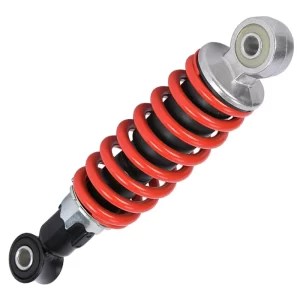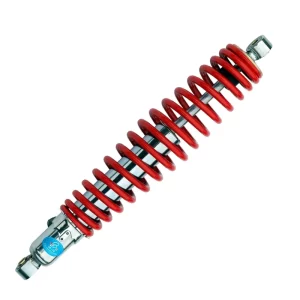
Off-road racing pushes suspension to its limits. Extended high-speed runs and constant impact loading generate intense heat inside any shock absorber, causing oil to thin, aerate, and lose damping consistency. In my two decades of suspension engineering, I have seen the same pattern: standard monotube or twin-tube shocks work for short bursts, but they surrender to fade precisely when the driver needs them most. Reservoir shocks for ATV and UTV off-road racing address that failure point directly—not by adding complexity for its own sake, but by increasing oil volume, separating gas charge, and managing heat far better than sealed-body designs. The real differentiator, however, is not the concept; it is how the shock is built. At TaiZhou Yearben Shock Absorber Tech, we have learned that seal quality, nitrogen charge stability, and production consistency determine whether a reservoir shock delivers a competitive edge or becomes a recurring maintenance headache.
How Does a Reservoir Shock Improve Damping for ATVs and UTVs?
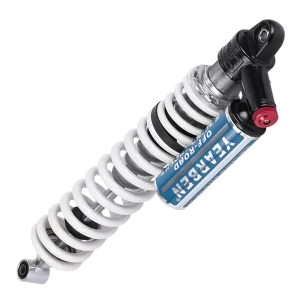
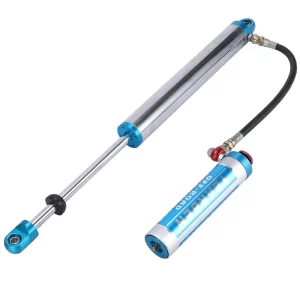
A reservoir shock separates the hydraulic oil from the nitrogen gas charge. In a standard emulsion shock, the gas and oil mix inside the main body. When the piston moves, the oil heats up rapidly and the gas bubbles through it, lowering viscosity and creating cavitation. A remote or piggyback reservoir redirects oil into an external canister where a floating piston or bladder keeps nitrogen isolated. This design accomplishes three things: the shock can hold more oil, the gas stays out of the working fluid, and the external body acts as a heat sink.
For ATV and UTV applications, that matters because even a moderate trail pace can generate oil temperatures above 250°F. More oil means the temperature rises more slowly and peaks lower. Separated gas prevents foaming, so damping force remains predictable from the first hard hit to the last corner. The reservoir also gives the shock a longer stroke for the same body length, beneficial when packaging constraints under a short-wheelbase vehicle limit mounting options.
Why Does Oil Volume and Heat Dissipation Matter for Racing?
The relationship between oil volume and fade is straightforward: a shock with twice the oil takes roughly twice as long to reach a given temperature under the same load. In an off-road racing scenario, where shock velocities are high and rebound cycles come milliseconds apart, the oil has almost no time to cool between impacts. Adding a remote reservoir that holds 150 ml to 300 ml of extra fluid increases the thermal mass and delays the point where damping falls off.
But volume alone is not a cure. The reservoir must be positioned in airflow and connected with a hose that does not restrict flow. During our testing, I have measured pressure spikes across reservoir fittings that robbed the damping circuit of response. The hose inner diameter and banjo bolt sizing matter more than most spec sheets suggest. When we design a reservoir shock for a 1,000 cc UTV that runs in sand dunes, we calculate flow demand at maximum shaft speed and confirm that the hose cross-section can pass it without causing a restriction. That engineering step is often skipped in catalog-order shocks, leading to the kind of fade the reservoir was supposed to prevent.
Is a Reservoir, Piggyback, or Standard Shock Best for Your Build?
Choosing between shock types depends on vehicle weight, running duration, and packaging space. The table below distills the conditions where each design excels.
| Shock Type | Oil Capacity | Cooling | Complexity | Best For |
|---|---|---|---|---|
| Standard monotube | Low | Poor | Simple | Light recreational ATVs, short rides |
| Piggyback reservoir | Medium | Good | Moderate | Trail UTVs, desert play, limited frame space |
| Remote reservoir | High | Excellent | Higher | Endurance racing, sand drags, heavy buggies |
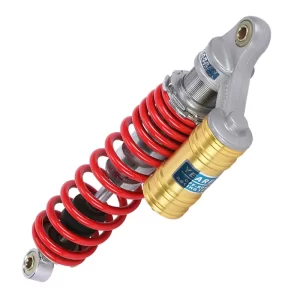
Piggyback reservoirs clamp directly to the shock body and add capacity without separate mounting brackets. They keep the gas charge isolated and are easier to package, but they share the shock’s heat and have less surface area for cooling. Remote reservoirs mount elsewhere on the frame, receiving better airflow and acting as a true heat exchanger. The trade-off is added complexity: longer hoses, more potential leak points, and mounting challenges.
If your build involves a heavy UTV with sustained high-speed desert running, the extra oil and cooling of a remote reservoir can be the difference between a podium finish and a shock that goes soft after twenty miles. Getting the valving and nitrogen pressure matched to your corner weights and spring rates matters just as much—reach out to us with your vehicle specs and race conditions to confirm what configuration will hold up under your program’s demands.
What Manufacturing Checks Protect Seal Life and Nitrogen Charge?
A reservoir shock is only as good as its seals. Nitrogen pressure exerts a constant outward force on the floating piston O-ring and the shaft seal. If the rod surface finish is poor—scored from grinding, chrome plating that is too thin or uneven—the seal will wear within hours of hard use. In our production line, shaft surface roughness is held below Ra 0.1 µm and plating thickness is verified with eddy-current inspection. We nitrogen-charge each shock to a target pressure, then let it rest and retest after 24 hours; any unit that loses more than a few psi gets torn down, because a slow leak at the reservoir cap or Schrader valve will become a total failure in the field.
One often-overlooked factor is the reservoir piston material. I have seen aluminum pistons gall against the inner tube when contamination enters the oil, whereas a properly clearanced nitrile or PTFE-acetal piston slides smoothly and resists degradation. The OEMs we supply for desert racing specify dual O-ring pistons with backup rings, and we follow the same standard for aftermarket shocks. Those details are invisible from the outside, but they determine whether the shock holds 200 psi or 20 psi after a season.
How Do You Specify Custom Reservoir Shocks for a Competitive Edge?
Ordering a custom reservoir shock begins with five measurements: extended length, collapsed length, upper and lower mounting style and width, and spring rate (if coilover). Beyond that, tell the factory your vehicle weight per corner, intended use, shaft size preference, and whether you need adjustable damping. For remote reservoirs, specify hose length and the orientation of the inlet fitting so that the hose clears suspension arms at full droop.
At Yearben, we maintain an annual capacity of 1.5 million units and keep over 200 shock models in production, which means custom piston tooling and valve stacks can be amortized across a platform rather than treated as a one-off expense. I work directly with buyers to define a damping curve: high-speed compression for square-edge hits, low-speed rebound for chassis roll control, and a blow-off point for extreme bottom-outs. Once the prototype is assembled, we cycle-test it on a dyno that recreates the exact temperature and velocity profile of your race environment. If you are developing a new ATV or UTV model, we can lock your specifications under an exclusivity agreement so that your suspension tuning stays proprietary.
If you have been piecing together off-the-shelf reservoir shocks and losing damping consistency after a few hours, consider a purpose-built design. Send your vehicle data, target performance, and quantity to info@yearbenshocks.com or call +86-523-86566899, and we will provide a specification proposal and lead time. A shock that is engineered to your exact loads and speed range does not just last longer—it lets the driver push harder with confidence.
Common Questions About Reservoir Shocks for Off-Road Use
Do I need reservoir shocks if I mainly ride trails?
It depends on trail length, pace, and vehicle weight. For light ATVs on short loops, standard shocks with good cooling may suffice. If you ride aggressively or carry heavier cargo, a piggyback reservoir offers a useful margin against fade without the complexity of remote mounting.
Can I add a reservoir to my existing shock?
Bolt-on reservoir conversion kits exist, but they rarely match the performance of a shock originally designed for external oil flow. The piston valving must be recalibrated for the additional fluid volume, and the hose port position affects air purging. On shocks we build from scratch, the reservoir circuit is part of the total damping system, not an afterthought.
Do remote reservoir shocks require more maintenance?
Yes, they have more seals and connections, but the maintenance is preventative rather than corrective. We recommend checking hose fittings for tightness after the first race and inspecting the reservoir piston pressure annually. A well-built remote reservoir shock that starts with clean assembly and properly cured seals should hold pressure within 5% for a full racing season.
Are reservoir shocks noticeably heavier, and does it affect handling?
A piggyback or remote reservoir typically adds 300 g to 700 g per corner, including the mounting hardware. That unsprung weight increase is small enough that most riders cannot feel it, but the improvement in damping consistency under load is immediate. If you are counting every gram for a lightweight buggy, a piggyback with an aluminum body offsets most of the weight gain. Share your current setup and weight targets; we will confirm the configuration that balances thermal performance and mass for your platform.
If you’re interested, check out these related articles:
Oil-free lawn mower shock absorber 24mm
Gas Charged Dual Rate Coilover Shock Absorber
4X4-Heavy-Duty-Suspension
Best-Off-Road-Shocks