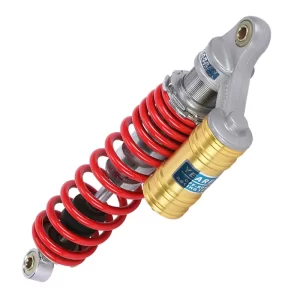
Lawn mower steering damper stiff steering symptoms usually get blamed on dry linkages, but in our production reviews the damper itself often carries the fault. A damper that holds too much low speed force makes a mower hard to turn before any bushing shows wear. Replacing the wrong part wastes a service interval and leaves the steering heavy. The fixes below start with external checks that cost nothing, then move into the internal damping settings that most repair guides skip. If you run a commercial mower or repair fleet, the target is light, centered steering that still resists bumps.
The Reasons a Lawn Mower Steering Damper Turns Stiff
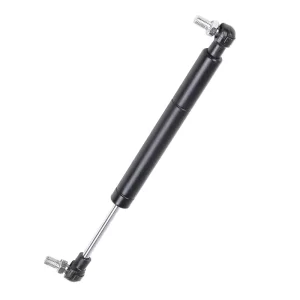
A steering damper on a lawn mower is not a shock absorber in the same sense as a deck suspension unit. Its job is to control handlebar or steering wheel feedback and stop the front wheels from hunting on rough ground. When the system feels stiff, the problem is either too much hydraulic resistance inside the cylinder or too much mechanical drag around the mounting points and steering pivots.
The most common mechanical cause we see is side load. A bent bracket, a poorly shimmed rod end, or a worn spindle pushes the damper rod slightly off axis. The piston scrapes the inner tube, the rod seal takes uneven load, and breakaway force rises until the operator notices the heaviness. The second cause is aged or contaminated oil. Over several seasons the oil picks up moisture and wear particles. At start-up the oil may be thick, and the bypass passages that should let slow steering move freely become partly blocked. The third cause is an incorrect replacement damper. We have removed new dampers from customer mowers that were built with a force curve much too aggressive for a light steering assembly, even though the dimensions fitted.
The distinction matters because a greased spindle will not fix an internal valving problem. A damper with excessive low speed compression damping stays stiff whether the deck is cold or hot, and the only reliable repair is replacement or recalibration.
Inspection Points That Separate Linkage Binding from Damper Failure
Before ordering a replacement, run a simple test. Disconnect one end of the damper from the steering arm. Turn the steering through its range with the engine off. If the steering still feels tight, the damper is not the main problem. Look at the spindle bushings, tie rod ends, and deck mounting bolts next. If the steering frees up with the damper disconnected, move on to checking the damper itself.
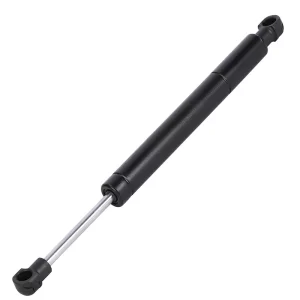
Push the rod in and out by hand. A healthy mower steering damper moves smoothly with a small amount of resistance. If the rod catches at one point or feels gummy, the internal piston or seal has likely worn. Inspect the rod for scratches, pitting, or an oil film. A bent rod usually leaves a polished line on one side. Check the mounting bolts and the rod end joints for play. A loose joint can change the angle of the rod and create side load, which mimics internal stiffness.
The table below matches the failure symptoms we most often confirm on returned units.
| Symptom | What to inspect | Likely cause | Repair direction |
|---|---|---|---|
| Stiff only after storage | Linkage grease and damper oil condition | Hardened grease or moisture contaminated oil | Clean pivots; replace damper if oil is milky |
| Stiff at the same spot in travel | Rod straightness, tube dent | Bent rod or damaged inner tube | Replace damper; check bracket |
| Stiff at all times but linkage free | Damper force curve | Over-valved replacement or wrong oil | Recalibrate or source correct damper |
| Free when disconnected | Spindle and tie rod | Worn steering components | Rebuild steering pivots first |
Internal Damper Holding Force and Its Effect on Steering Effort
In a hydraulic steering damper, the force you feel is velocity sensitive. A slow turn should be light because most of the oil flows through a bleed passage or around a metering orifice. A fast hit from a wheel should feel firmer because the same passages restrict the flow. Stiff steering means the low speed side of that curve is wrong for the mower.
We calibrate mower steering dampers at low rod speeds, typically checking force at 0.05 to 0.3 meters per second depending on the customer’s target. If the bleed groove is too narrow, if the shim stack has too much preload, or if the oil viscosity is too high for the operating temperature, the mower feels heavy before the operator starts moving. That condition is often misdiagnosed as a steering pump or front tire problem.
This is where a visual inspection stops being enough. A sealed damper gives very little to adjust from the outside. Some lightweight units have a serviceable gland or adjustable orifice, but most lawn mower dampers are sealed. If the linkage is proven free and the damper still feels stiff when pulled slowly off the mower, the internal hydraulic setting is the remaining variable.
If your mower runs a custom steering arm or the damper operates close to the deck, confirm cylinder diameter and force curve before choosing a replacement. Send the existing part number, extended length, and a photo of the mounting bracket to info@yearbenshocks.com and we will check the spec against our stock.
Matching Replacement Dampers to Mower Steering Geometry
A replacement damper is not just a length and two eyes. The mounting angle, stroke, and end fitting all determine whether the rod runs square inside the tube. Mower steering linkage often places the damper at an angle that changes through the steering arc. If the end fittings are not the correct type, the pivot binds before the damper reaches the end of its stroke.
We build mower steering dampers with 18 mm and 24 mm cylinders for light commercial and heavier deck applications. The smaller cylinder works for a compact zero-turn with limited steering load. The larger cylinder suits wider decks and machines where operators want more resistance to front end shimmy. The rod end and closed length are matched to the machine, because an off the shelf part with the right bore but the wrong stroke will still force a bind at full lock.
Before specifying a replacement, record the closed and extended lengths eye to eye, the mounting bolt diameter, and the thread direction on each rod end. Photograph the bracket and the seal area. Those details are usually enough for a supplier to determine whether you need a standard 18 mm damper or a custom 24 mm unit.
Sourcing a Damper That Keeps Steering Light and Stable
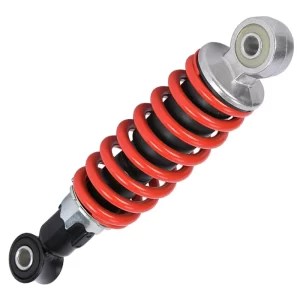
We hear the same sequence from repair shops: they clean and grease every pivot, install an aftermarket damper, and the mower still steers hard. The missing step is usually calibration. A generic replacement with matching eyelets can still carry the wrong damping curve, especially when the original machine was designed for a specific steering effort.
At Yearben we build dampers at the force curve each model needs, not just a generic replacement with matching eyelets. Send your current part number, the extended and closed lengths, and your mounting photos to info@yearbenshocks.com, or call +86-523-86566899. We will confirm whether a standard 18 mm or 24 mm unit works or quote a custom calibration.
Common Questions About Lawn Mower Steering Dampers
Can I grease the steering damper to make it turn easier?
Greasing the damper body does very little because the resistance comes from fluid passing through the internal piston, not from the outer tube. Grease can quiet a dry boot or rod eye, but if the rod remains stiff when moved by hand after the ends are disconnected, the hydraulic calibration or internal wear is the issue.
Does cold weather make a steering damper feel stiffer?
It depends on the oil. A damper filled with a high viscosity fluid will take several minutes to loosen up in cold weather, while a damper built for the mower’s operating range will stay close to its normal force. If the steering is heavy only for the first few minutes and then frees, cold oil is the likely cause. If it remains stiff, look at the valving.
Should I remove the damper to test steering, and is that safe?
Running a mower without the steering damper for a brief workshop test is usually acceptable if the steering linkage is in good condition, but do not leave it off for regular use. The damper absorbs shock through the steering arms and reduces kickback. Disconnect one end only to isolate stiffness, then reconnect it before any cutting.
What measurements do I need before ordering a replacement?
Record the closed and extended lengths eye to eye, the cylinder diameter, the rod end hole size, and the thread direction of each end fitting. A photo of the bracket angle shows whether side load is present before it repeats in the new part. With those details we can confirm whether an 18 mm or 24 mm mower steering damper fits your machine. Send them to info@yearbenshocks.com and we will confirm compatibility before you order.
If you’re interested, check out these related articles:
Twin-Tube-Hydraulic-Seat-Damper-28MM
Triple-Bypass-Remote-Reservoir-Shock
Off-Road-Coil-Over-Shocks-Manufacturer
Best-Shocks-And-Springs-For-Trucks