A lawn mower shock absorber that can’t survive a full mowing season points to a fundamental mismatch between the damper’s design limits and the actual operating conditions. In our work with commercial mower fleets and private operators, we consistently find that accelerated wear isn’t random, it follows predictable mechanical failure pathways. If the root cause is misidentified, swapping in an identical replacement just resets the clock on the same problem. This article walks through the engineering reasons a lawn mower shock absorber wears out quickly, how to confirm the failure mode, and what to look for in a replacement that actually holds up.
What Causes a Lawn Mower Shock Absorber to Wear Out Quickly?
Most rapid wear failures fall into three categories: overloaded damping circuits, seal degradation from heat and contamination, and component fatigue from high-cycle, low-amplitude oscillation.
| Failure Trigger | What Happens Inside the Damper | Typical Symptom |
|---|---|---|
| Sustained overload | Oil shear breaks down viscosity; valve stack operates outside design range | Loss of damping force after 20–30 minutes of use |
| Shaft seal contamination | Abrasive particles score the chrome rod; seal lip tears and leaks | Visible oil film on the shock body, soft damping from the start |
| Fatigue on mounting eyes | Repeated articulation wears the rubber bushing oval; metal-on-metal contact develops | Clunking noise over bumps, loose feel at the mower deck |
A shock absorber built for a lightweight residential mower will fail quickly if installed on a heavy ride-on machine used eight hours a day on rough ground. The hydraulic valving is tuned for a specific sprung mass and velocity range, push it outside that window and the damper becomes a disposable item. I’ve seen fleet operators go through three sets of OEM dampers in a single season before they switched to a unit with a wider load window and a hardened 18 mm chrome rod.
How Do You Know the Damper Has Failed?
The most reliable diagnostic isn’t a calendar interval, it’s a two-step bench test and a visual exam.
Remove the shock and cycle it through its full stroke by hand. A healthy hydraulic or gas-charged damper will offer firm, uniform resistance in both directions. If the rod moves easily for the first 20–30 mm, then suddenly stiffens, you’re feeling gas cavitation or oil loss in the pressure tube.
Inspect the chrome rod surface under bright light. Even light scoring that you can catch with a fingernail means the oil seal is grinding on damaged plating. That seal will fail completely within a few hours of use.
Once you’ve confirmed damping loss or seal failure, don’t reinstall the unit. A blown shock transfers all impact energy into the chassis and deck mounts, which accelerates frame fatigue and misalignment on the cutting deck.
What Type of Shock Absorber Should You Choose for Your Mower?
Lawn mowers typically use one of three damper constructions, and the right choice depends on the machine’s weight and the terrain.
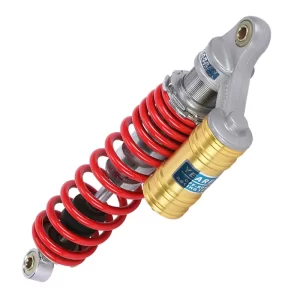
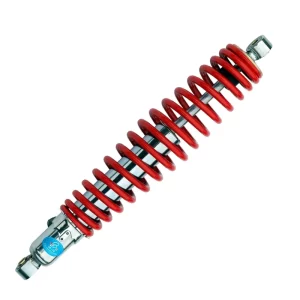
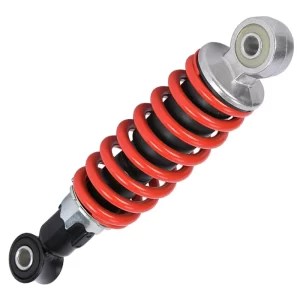
Twin-tube hydraulic dampers are common on entry-level ride-on mowers. They offer predictable low-speed damping but can overheat and fade under sustained high-cycle use because the outer tube traps heat around the inner working cylinder.
Monotube high-pressure gas shocks separate the oil and gas with a floating piston. This design dissipates heat faster, resists cavitation, and maintains consistent damping even when the shock is mounted at an angle, an advantage on zero-turn mowers where the damper often sits at 45 degrees or more relative to the vertical.
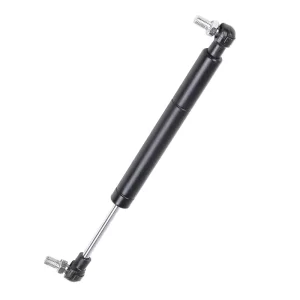
Steering dampers operate on a similar hydraulic principle but control lateral movement at the steering linkage. On commercial mowers with heavy front-end implements, a worn steering damper causes wander and increased operator fatigue. A 24 mm cylinder steering damper with hardened rod and PTFE guide bushing can outlast the OEM unit by a factor of three or more in these conditions.
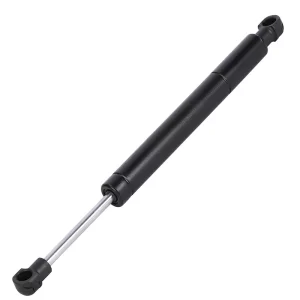
For operators who see heavy daily use, a unit like the lawn mower damper shock absorber built with a hardened 18 mm rod and a wider load window can deliver multiple seasons where an off-the-shelf damper fails in one. If your mower is used on slopes or heavily contoured ground, a gas-charged monotube will recover faster between impacts. For flat, park-like properties, a quality twin-tube with a 38 mm body and low-friction seals is often more than sufficient.
Does Material and Build Quality Affect Lifespan?
Yes, and it shows up at three specific points: the rod surface, the seal compound, and the oil specification.
An OEM lawn mower shock absorber typically uses a hard-chrome rod with a surface roughness of Ra 0.1–0.2 µm. Aftermarket units built to a price point may skip the super-finishing step and run a rod at Ra 0.4 µm or rougher. The difference is seal wear. At 0.4 µm, the shaft seal lip polishes away in 200–300 hours of operation. At 0.1 µm, that same seal can run 800 hours before showing measurable wear.
Seal material matters just as much. Nitrile rubber seals are the industry baseline and work well at temperatures under 90°C. On a mower with a damp deck suspension that sits directly above the engine exhaust, the damper body can reach 110°C in summer conditions. At that temperature, nitrile hardens within 50 hours and begins to leak. A fluoroelastomer seal adds cost but eliminates this failure mode entirely.
Finally, the damper oil. A standard mineral hydraulic oil with a viscosity index of 100–110 works for seasonal light use. For year-round commercial mowers in climates ranging from freezing to 40°C, an oil with a viscosity index above 150 and anti-foaming additives keeps the damping curve stable across the full temperature range. At Yearben, we match the oil blend to the customer’s climate and duty cycle as part of the pre-production spec sheet, not as an afterthought.
Where Can You Source a Long-Lasting Replacement?
The fastest way to stop replacing lawn mower shock absorbers is to move from an off-the-shelf catalog part to one spec’d for your machine’s actual sprung weight, motion ratio, and duty cycle. That requires a supplier who engineers dampers rather than just distributing them.
When we work with fleet operators and equipment dealers, we start with three measurements: the extended and compressed lengths of the existing damper, the mounting eye diameter and width, and an estimate of the dynamic load the shock sees in the worst-case terrain the mower runs on. From those inputs, we can build a damper with the correct bore size, rod diameter, seal material, and oil spec to match the application.
If your operation runs commercial mowers or rough-terrain equipment and you’re replacing shock absorbers more than once every two seasons, send the stock damper’s part number, a photo of the mounting layout, and a brief description of the terrain and daily run time to info@yearbenshocks.com or call +86-523-86566899. We’ll return a technical proposal with the recommended bore, stroke, damping force curve, and material upgrades that will extend service life to match the rest of the machine’s maintenance schedule.
Common Questions About Lawn Mower Shock Absorber Life
Can I extend the life of my current shock absorber without replacing it?
The only intervention that can measurably extend a damper’s life is keeping the chrome rod clean and free of debris. Wipe the rod with a dry microfiber cloth after each mowing session and check that the dust boot is intact and properly seated. If the rod is already scored or there’s oil mist on the body, no cleaning routine will reverse the damage. At that stage, the damper must be rebuilt or replaced. When you do replace it, a damper with a hardened rod will resist scoring better.
What’s the difference between a hydraulic damper and a gas-charged shock on a mower?
A pure hydraulic damper uses a single oil-filled tube and relies on the piston moving through the oil to create damping force. Under aggressive use, the oil can foam and form air pockets, causing temporary loss of resistance. A gas-charged shock adds a nitrogen-filled chamber behind a separating piston to pressurize the oil column, preventing foaming. On a mower that operates on rough terrain, the gas charge maintains consistent damping even when the damper is cycled rapidly, which is why we recommend it for commercial zero-turn and heavy ride-on mowers.
How often should lawn mower shock absorbers be replaced?
There’s no universal hour meter. A damper’s service life is determined by load, temperature, and contamination. A properly specced shock on a residential mower used two hours a week may last five seasons. The same damper on a commercial mower running eight hours a day on rough ground may fail in 150 hours. The practical check is: if you can compress the shock by hand with noticeably less resistance than when it was new, or if there’s oil at the rod seal, replace it.
Will upgrading to a heavier-duty shock improve mower comfort?
It can, but only if the damping rate matches the machine’s sprung weight. A damper rated for a 200 kg corner weight installed on a lightweight residential mower will feel harsh and can actually increase vibration transferred to the operator. The goal is a damper valved for the specific load, not the heaviest available unit. If you’re unsure what damping curve fits your mower, share your model number and a few measurements with us at info@yearbenshocks.com and we’ll confirm the right specification.
If you’re interested, check out these related articles:
Aluminum-Utv-Shock-Absorber
Adjustable-Gas-Shock-Absorbers
Steering-Damper-18MM
Custom shock absorbers for seat Φ41.5mm manufacturing
Off-Road-Coilovers