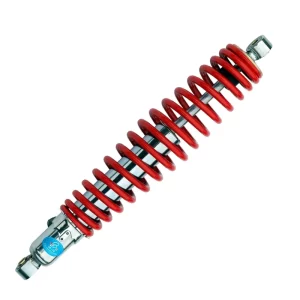
ATV shocks topping out on jumps isn’t just a noise issue—it’s a damping control failure that can cost you stability when the wheels reconnect with the ground. After two decades working with shock absorber valving and suspension dynamics at Yearben, I’ve watched riders chase spring preload adjustments while ignoring the real culprit: insufficient rebound damping and inconsistent fluid management. This article breaks down the hydraulic and mechanical reasons shocks top out and provides actionable fixes, from external tuning to internal revalving, drawn directly from how we diagnose and build performance ATV shocks at the factory level.
What Causes ATV Shocks to Top Out on Jumps?
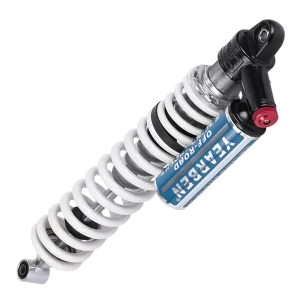
Topping out happens when the shock extends fully after compressing on a jump landing, hitting its physical extension limit with a metal-on-metal clunk. It’s not the same as bottoming out, which is the shock compressing fully on impact. With topping out, the rebound stroke accelerates too quickly because the damper isn’t controlling the shaft’s extension speed. In a properly tuned shock, the rebound shim stack and oil flow manage how fast the piston returns to the extended position. When the shaft snaps back uncontrolled, the shock top-out washer smacks the bearing, producing the harsh clunk.
Most stock ATV shocks are set up with a rebound calibration biased toward compliance over control, assuming the vehicle won’t see big air. The valving bleeds off too much fluid during rebound, and the spring, while possibly correct for ride height, cannot damp the extension velocity on its own. Riders often misdiagnose the symptom as a spring issue because the shock lunges upward, but that upward motion is purely an uncontrolled hydraulic event.
How Can You Adjust ATV Shocks to Stop Topping Out?
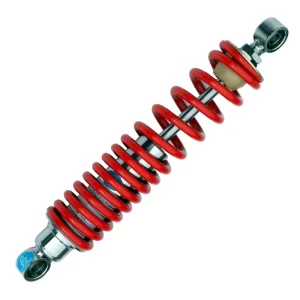
Before opening a shock, there are external adjustments that can significantly reduce topping out frequency and severity.
First, increase rebound damping. Many adjustable ATV coilover or piggyback shocks have a rebound adjuster on the clevis or reservoir. Turn it in two to four clicks at a time and retest on the same jump. The goal is to slow the shaft’s return without making the suspension pack down over successive bumps.
Second, verify spring preload is not overcompensating for weak damping. Running excessive preload to gain ride height can reduce the shock’s down-travel bias and actually worsen the extension spike when airborne, because the stored spring energy releases faster. Set the sag to roughly 30% of total travel with the rider aboard; if you need more ride height than preload can provide without ruining sag, you need a higher spring rate, not more preload turns.
Third, check the shock’s nitrogen pressure if the unit is serviceable. Low nitrogen pressure allows oil aeration, which creates foam and drastically reduces both compression and rebound damping. A shock with 50 psi when it should have 150 psi will top out sharply because the fluid loses viscosity under rapid shaft movement.
When Do Internal Valving and Fluid Issues Cause Topping Out?
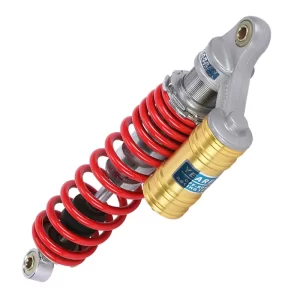
If external adjustments don’t tame the top-out clunk, the cause moves inside the shock body. The rebound shim stack is a series of thin steel washers that deflect under oil pressure to control flow through the piston. When rebound shims are too thin, too flexible, or have excessive bleed slots cut into them, they open too much under the extension stroke and allow the shaft to accelerate past the design velocity. We’ve disassembled hundreds of OEM and aftermarket ATV shocks at Yearben, and one of the most common findings in units that top out aggressively is a rebound stack that’s simply too soft for the rider’s weight and jump loads.
Fluid condition matters equally. Over time, shock oil breaks down from heat cycling and contamination. As viscosity drops, the damping force decreases across both compression and rebound, but rebound is often affected first because the extension phase relies on a narrower range of flow control. When the oil can’t resist the spring’s return force, the shaft overextends before the shims even have a chance to react. An emulsion shock that mixes oil and gas without a separating piston is especially susceptible; aerated oil provides almost no controlled rebound until the fluid degasses, which doesn’t happen quickly enough during a jump’s cycle.
| Shock Design | Rebound Control Architecture | Susceptibility to Topping Out | Notes |
|---|---|---|---|
| Emulsion coilover | No gas separation; piston valving only | High | Oil aeration disrupts consistent rebound damping |
| Piggyback reservoir | Separating piston, some gas pressure support | Moderate | Better gas management than emulsion, valve stack still critical |
| Remote reservoir | Dedicated reservoir with full-separation piston, high nitrogen volume | Low | Superior gas pressure stability, wider valving range |
| Monotube with gas separation | Internal floating piston, compact | Low | Piston seal integrity critical, excellent response |
A table like this underscores why the shock’s architecture determines how well it resists topping out, independent of external clicker settings.
Should You Rebuild or Upgrade Your ATV Shocks?
If you’ve adjusted rebound damping full stiff, verified nitrogen pressure, and reset sag, but the shock still tops out on medium jumps, it’s time to consider revalving or replacing the unit. Rebuilding with a stiffer rebound valve stack and fresh high-viscosity oil can bring an aging shock back to performance, assuming the piston band and shaft are not worn. The cost is lower than a full replacement, but the result depends entirely on the expertise of the person doing the revalve; a poorly shimmed stack will still top out or, worse, impose a harsh ride everywhere else.
Upgrading to a shock designed with a more aggressive rebound curve saves time and often yields better long-term reliability. We build ATX-performance coilovers with adjustable rebound damping and gas-charged reservoirs that are valved specifically for riders who send jumps. The advantage isn’t just the clicker—it’s the baseline shim configuration and the separation piston that keeps oil and gas apart, eliminating aeration-induced fade. When I evaluate a shock for a jumping application, I’m looking at the rebound knee point: the velocity where the shim stack transitions from bleed to full deflection. A shock whose knee is set too low for the rider’s weight will never control the extension on a hard landing, no matter how many clicks you add.
What Should You Look for in a Factory-Built Shock That Prevents Topping Out?
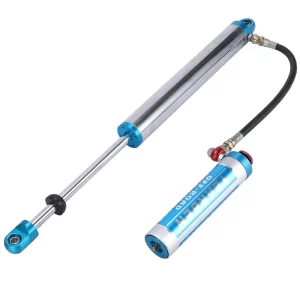
If you’re sourcing new shocks specifically to cure a topping out problem, the conversation with a manufacturer should go beyond eye-to-eye length and spring rate. Ask about the rebound shim configuration: how many shims, what diameter and thickness progression, and whether the piston has bleed circuits that can be closed down. Request a nitrogen fill pressure in the 150–200 psi range if it’s a reservoir shock, because higher gas pressure supports the internal floating piston and resists cavitation on fast extension.
Equally important is the shock body’s internal finish and the rod seal assembly. A rough bore or a poorly guided shaft creates stiction that masks itself as damping but actually causes inconsistent movement, which can provoke a top-out when the shaft breaks free suddenly. We hone every shock body to a consistent crosshatch and use PTFE-lined rod seals to maintain linear action. These are the details that separate a yard-sale ATV shock from a unit that will track straight through a full travel cycle without snapping at the limit.
Preventing Topping Out Before It Starts
Topping out on jumps is solvable, but the fix isn’t always in the clicker. It’s in the valving, the gas charge, and the hydraulic integrity of the shock. If you’ve been chasing the problem with preload and still hear that clunk, the most direct path is to either revalve your current shock with a rebounder-focused stack, or move to a gas-separated design built with sufficient rebound control from the start. At our factory, we valve shocks to a rider’s actual weight, jump height, and vehicle geometry—not to a generic ATV template—because the extension event is as load-specific as compression.
If your ATV is regularly topping out despite your best tuning efforts, send us your current shock specifications and a description of your riding conditions at info@yearbenshocks.com or call +86-523-86566899. Our engineering team can review your valving strategy and recommend a custom solution that addresses the real rebound deficit.
Frequently Asked Questions About ATV Shock Topping Out
What’s the difference between topping out and bottoming out?
Topping out is the shock extending fully and hitting its internal top-out washer, producing a sharp clunk on the rebound stroke. Bottoming out is the shock compressing fully on impact, usually felt as a harsh stop on landing. Topping out happens when rebound damping is too weak; bottoming out when compression damping or spring rate is too low. They have opposing causes and require different adjustments.
Does topping out damage ATV shocks?
Yes, repeated hard top-outs can damage the internal top-out washer, distort the piston, or accelerate rod seal wear. The metal-on-metal impact puts shock loads into the shock body that are not part of the normal damping cycle, shortening overall service life. If the clunk is sharp and consistent, internal damage may already be happening.
Can I fix topping out by just turning the rebound clicker?
In many cases, yes—especially if the shock has an external rebound adjuster and the setting is near the fast end of the range. Turning the rebound stiffer slows the shaft extension. But if the clicker is already near full stiff and topping out persists, the internal shim stack is the limiting factor and external adjustment won’t fully solve the issue.
Do emulsion shocks top out more than monotube shocks?
Emulsion shocks are inherently more prone to topping out under aggressive use because the mixing of oil and nitrogen creates foam when the shock cycles fast, reducing the oil’s effective viscosity on rebound. Monotube designs with a separating piston keep the gas isolated, maintaining consistent fluid consistency even under repeated jump cycles, which provides more predictable rebound control.
How do I know if I need a rebuild or a replacement shock?
If the shock body shows no signs of scoring, the shaft is straight, and the seal doesn’t leak, a rebuild with a revised rebound valve stack and fresh oil may restore performance at a lower cost. If the piston or bore is worn, the shock has leaked gas, or you want to move to a design with inherently better rebound architecture, replacement with a purpose-built unit is the more reliable investment. If your riding has progressed to bigger jumps, discuss your current spring rate and rebound setup with an engineer; we regularly revalve and upgrade shocks for riders transitioning from trail to jump-heavy terrain. Share your requirements and we’ll confirm whether a rebuild or a new specification makes more sense for your program.
If you’re interested, check out these related articles:
Utv-Shocks-For-Off-Road
Custom-Shocks-And-Struts
Ride-on Mower Shock Absorbers 38mm, Shock Absorber Manufacturer
Triple-Bypass-Remote-Reservoir-Shock