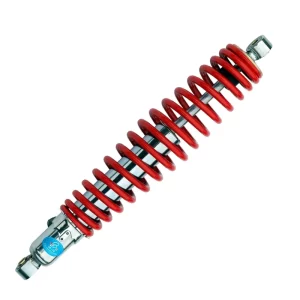
When specifying suspension dampers for off-road vehicles or seat applications, the choice between hydraulic and pneumatic types is more than a spec sheet decision. Hydraulic dampers, using incompressible oil, offer predictable damping and longer service life in high-hour applications. Pneumatic dampers, charged with nitrogen, reduce weight and can assist spring forces but demand tighter production control to avoid gas fade. In this article, I’ll draw on two decades of shock absorber manufacturing to compare the two technologies from a production engineer’s viewpoint, covering seal durability, real‑world performance, and what procurement teams need to know before committing to a supplier.
Hydraulic vs Pneumatic Damper Technology
The fundamental difference lies in how damping force is generated. A hydraulic damper forces oil through precisely machined valve passages as the piston moves. Because hydraulic oil is nearly incompressible, the damping force is directly proportional to shaft velocity and remains stable across a wide temperature range — typically from ‑20°C to 120°C with the correct oil formulation. A pneumatic damper, by contrast, uses a sealed nitrogen chamber. As the shock compresses, the nitrogen pressurizes further, providing a progressive spring effect while oil flow handles the damping. The result is a lighter assembly that also serves as a secondary spring, popular in height‑adjustable seats and some off‑road coilover applications.
| Feature | Hydraulic Damper | Pneumatic Damper |
|---|---|---|
| Damping medium | Mineral or synthetic oil | Nitrogen gas |
| Damping force generation | Oil displacement through valve stack | Gas compression combined with oil flow |
| Force consistency | Stable, proportional to velocity | Influenced by gas pressure and temperature |
| Weight | Heavier | Lighter |
| Adjustability | Via shim stack and valve tuning | Can include pressure adjustment and bleed valves |
| Typical OEM uses | Off‑road shocks, seat dampers, lawn mower dampers | Height‑adjustable suspensions, long‑travel ATV coilovers |
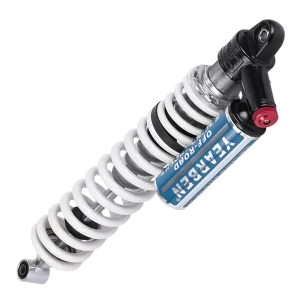
In hydraulic dampers, the damping curve is almost entirely dictated by the piston and shim stack geometry. That makes it reproducible across thousands of units once the production process is validated. Pneumatic dampers, however, rely on the interaction between gas pressure and oil film strength. If the initial nitrogen fill pressure varies by as little as 0.5 MPa, the on‑vehicle ride height and damping feel can shift noticeably. This becomes a consistency challenge when ordering 500 units from a supplier that doesn’t have fully automated gas‑charging stations.
Real‑World Damping Performance
In our own engineering lab, we cycle‑test hydraulic seat dampers and off‑road shocks daily. A well‑built hydraulic damper commonly holds damping force deviation under ±3% after 2,000 full‑stroke cycles at 0.3 m/s. Pneumatic dampers we’ve evaluated often lose 6–10% of their initial damping within the same cycle count, with the drop concentrated in the first 500 cycles as the nitrogen charge stabilizes and micro‑bubbles work out of suspension. That early fade isn’t incidental — it’s the moment when a soft initial ride turns into unexpected bottoming.
Heat management also separates the two types. Under sustained high‑speed damping, hydraulic oil shears in the valve ports and builds heat. An emulsion‑style damper can aerate and lose force. Pneumatic dampers, particularly remote‑reservoir designs, move heat away more effectively because the gas cavity acts as a heat sink. But they reintroduce complexity: any moisture trapped during charging degrades the oil and forms corrosive acids.
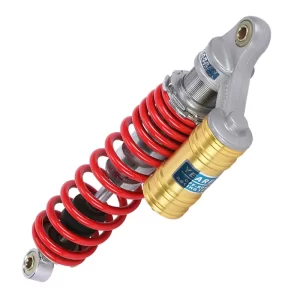
This trade‑off is visible in how off‑road racers use them. Short‑course trucks that need consistent chassis control run hydraulic coilovers with reservoirs. Vehicles that prize ground clearance adjustability and weight savings often switch to pneumatic coilover systems. The engineer’s task is to decide which failure mode the vehicle can tolerate — loss of consistent damping, or the maintenance overhead of checking nitrogen pressure every few rides.
Manufacturing Quality and Long‑Term Reliability
The longevity of any damper, regardless of medium, depends on the rod surface finish, seal material, and cleanliness of the assembly environment. A 12 μm chrome‑layer on the piston rod, combined with a double‑lip oil seal and a polyurethane dust wiper, can push seal life past 500,000 cycles in a hydraulic damper. Pneumatic dampers add another failure point: the gas‑to‑oil seal below the piston. If that seal’s compression set exceeds 15% after heat aging, nitrogen bleeds into the oil side and the damper loses both gas spring support and damping consistency.
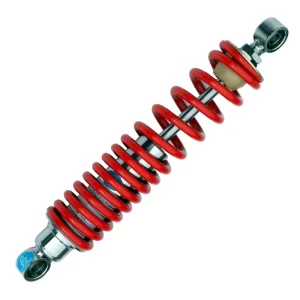
Because Yearben produces both hydraulic dampers and high‑pressure pneumatic assemblies in‑house, we’ve learned that the single biggest predictor of field reliability isn’t the design family but the assembly process. A hydraulic damper assembled with unfiltered oil or a burred valve seat will fail just as quickly as a pneumatic damper filled with wet nitrogen. The difference is that a hydraulic failure tends to be gradual — oil weepage, a soft clunk — while a pneumatic unit can lose damping almost completely in one run if the gas cavity seal ruptures.
If your current pneumatic damper specification is showing early fade on a batch order, the first thing to review is the nitrogen cavity seal design and the factory’s gas‑charging repeatability. Send your part number and a brief test history to info@yearbenshocks.com, and we can evaluate whether a manufacturing tolerance adjustment or a switch to a hydraulic platform would improve consistency.
Application‑Specific Damper Selection
Off‑road shock absorbers for ATVs, UTVs, and buggies almost always stay hydraulic. The suspension cycles too aggressively, and the transient forces from sharp whoop hits demand the instant, linear response that only an oil‑based damper can provide. 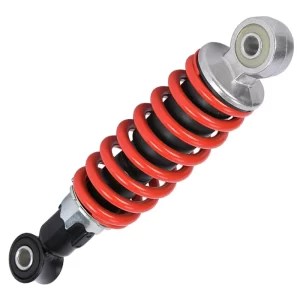 If you are ordering shocks for a 450cc‑class ATV, I’d recommend a hydraulic coilover with an external reservoir, not a pneumatic unit. The reservoir gives you the oil volume you need for heat control, and the hydraulic valving keeps the rear end from packing up over stutter bumps.
Seat damping for trucks, buses, and construction machinery splits along a different line. Where the primary goal is bounce suppression and the seat moves through 80–150 mm of vertical travel, hydraulic dampers with adjustable rebound are the safe default. They produce the same damping force every day without gas‑pressure drift. Pneumatic dampers become relevant when the same seat platform must adjust ride height for a lightweight operator and a heavy one, or when the installation envelope is so tight that every gram counts. In that case, a pneumatic damper with a separate height‑compensation valve can serve two functions without adding a mechanical spring.
Lawn mower steering dampers and deck suspension shocks, both in Yearben’s catalog, are overwhelmingly hydraulic. The duty cycle is high but the forces are moderate, so oil degradation is the limiting factor, not heat. A simple hydraulic twin‑tube design, properly sealed, will outlast the mower’s warranty period by a wide margin. Pneumatic designs offer no advantage here and introduce a leak path that most commercial mower operators have no capacity to monitor.
Sourcing Reliable Suspension Dampers
Conflicting damper specifications can stall procurement and lead to field failures that cost far more than the unit price difference between a hydraulic and pneumatic shock. When evaluating a supplier, ask for the tested damping‑force curve at three shaft speeds, the salt‑spray rating of the outer tube coating, and the pressure‑decay specification for any pneumatic cavity. A factory that cannot provide a damp‑force graph with its sample shipment is not controlling the tolerance stack.
Yearben supplies over 1.5 million dampers annually to OEMs producing ATVs, mowers, and specialty vehicles. The engineering team works through the full specification loop — from drawing review and prototype machining to reliability testing — so the damper that arrives in your crate matches the curve on the lab report.
If you are weighing hydraulic against pneumatic and the decision is holding up a production order, send your application details, target damping forces, and part number to info@yearbenshocks.com or call +86‑523‑86566899. We’ll review the spec, recommend the platform with the best life‑cycle stability, and quote production‑ready units with full performance documentation.
Procurement Engineers’ Questions About Damper Types
Do pneumatic dampers require more frequent maintenance?
In a low‑duty application like a height‑adjustable seat, a well‑manufactured pneumatic damper can run 3–4 years without service, but the nitrogen pressure should be checked annually. In off‑road environments with frequent full‑stroke cycles, internal gas‑to‑oil leakage becomes the dominant wear mode. We recommend installing a Schrader valve on pneumatic dampers used in racing and scheduling a pressure check after every 10–15 hours of hard use. Hydraulic dampers, by contrast, can often run 500–800 hours before any performance shift is measurable, provided the rod and seal are protected from debris.
How does temperature affect each damper type?
Hydraulic dampers thicken the oil in extreme cold, which raises low‑speed damping force until the oil warms up; a synthetic oil with a high viscosity index can narrow this effect. Pneumatic dampers see their gas pressure drop in the cold, which simultaneously reduces the spring assist and alters the damping force. On a sub‑zero morning start, a pneumatic unit can feel noticeably softer for the first few minutes. In high heat, both types thin their oil, but the hydraulic damper’s force loss is more predictable because the oil remains the sole damping medium.
Can hydraulic dampers leak oil?
Yes, if the rod seal is scratched by debris or the chrome layer wears through. A leak does not mean the design is poor; it usually points to a maintenance gap or an incorrect dust wiper specification for the operating environment. In our manufacturing line, we use a high‑frequency burnishing process on rod surfaces to reduce micro‑valleys that trap grit. For customers operating in sand or mud, we specify a triple‑lip seal arrangement that increases breakaway friction slightly but cuts seal damage by over 60% in lab tests.
Is it cost‑effective to switch from hydraulic to pneumatic?
That depends entirely on the vehicle’s usage profile. For a fleet of commercial lawn mowers that runs 800 hours a year, sticking with a hydraulic damper saves lifecycle costs because seal replacements and nitrogen refills are never needed. For a low‑volume specialty vehicle where 2 kg of weight reduction helps meet a payload target, a pneumatic damper may pay back its higher unit cost instantly. If you are unsure which direction makes financial sense for your production volume, send us your spec sheet and target BOM cost. We can map both options against your volume and recommend the one that hits your reliability margin without overspending.
If you’re interested, check out these related articles:
Off-Road-Coilover-Shocks
Lawn-Mower-Damper-Shock-Absorber
Adjustable-Shock-Absorber-For-Car
Triple-Bypass-Shock-For-Off-Road
Custom shock absorbers for seat Φ41.5mm manufacturing