
Two suppliers can quote the same extended length, body diameter, and nitrogen pressure for a UTV shock absorber and still deliver very different products. A UTV shock absorber supplier audit has to go past the sample room and into the force-velocity plots, charge retention logs, assembly records, and batch traceability that determine whether damping stays stable after hard use. I have spent more than twenty years working on shock absorber development and OEM customization, and the pattern is consistent: factories that measure damping force are rare; factories that can show you how they control it are even rarer.
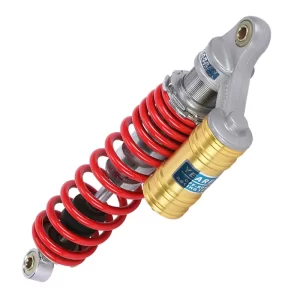
What Actually Fails First on a UTV Shock Absorber?
Most supplier audits start with the showroom. I prefer to start with failure modes. If a factory cannot explain what goes wrong inside a UTV shock absorber after hard use, the walk through the polishing line will not tell you much.
Three failure modes separate controlled suppliers from shops that just assemble parts. The first is gas charge loss. A UTV shock runs hot in dunes and hard trails, and heat cycles force oil past the seal until nitrogen pressure falls. The fix is not just a better O-ring; it is the rod finish, seal material, shaft alignment, and fill pressure all working together. Ask the factory to show the rod roughness specification and the seal material lot record, not the seal catalog.
The second is damping fade. This is usually oil aeration. The piston pulls a vacuum on fast rebound, dissolved gas comes out of solution, and the oil turns foamy. Damping force then falls when the shock is hot. A supplier that controls fade will have an oil specification, fill volume, and degassing procedure. A supplier that cannot show those has no control.
The third is valving inconsistency. Two shocks built on the same day can produce different damping curves if the shim stack is assembled from mixed lots or if the piston bore changes. I look for a piston machining tolerance and a shim thickness lot record before I trust any final inspection chart.
Which Factory Documents Reveal Real Manufacturing Control?
A trading company can photocopy an ISO certificate. The documents that reveal control are the ones tied to the specific batch you will receive. I ask for all of these before a visit, then verify them on the floor.
| Document | What it should show | Red flag |
|---|---|---|
| Control plan | Revisions, tooling, torque, charge settings | No revision date or generic company manual |
| Force-velocity curve log | Damping force at low and high shaft speed per batch | One sample curve repeated for every batch |
| Nitrogen charge record | Serial number, target pressure, final pressure, time | Pressures logged without serial numbers |
| Seal and rod material cert | Raw material lot, hardness, coating thickness | Material cert missing lot traceability |
| Process capability study | Cpk for damping force and critical dimensions | Only final inspection data, no process data |
| Lot traceability record | Raw part lots tied to finished serial numbers | Handwritten logs with no searchable link |
Do not accept a summary report. Request unedited logs for the production weeks that overlap with your order. Summary charts hide the exact problem batches; raw logs show whether the factory found the same issue you would have found.
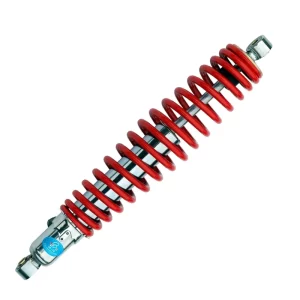
How Do You Verify Damping Consistency and Charge Retention on the Shop Floor?
Start at the dyno room. A serious UTV shock absorber supplier will have a shock dyno and will use it per batch, not per model. Ask to see a force-velocity curve for the batch you are auditing. The curve should show compression and rebound force at several piston speeds, and the factory should be able to explain the knee in the curve where the shim stack deflects. If the dyno sheet shows only a single number, you are looking at a pass/fail check, not damping control.
Then walk to the charging station. Nitrogen charge is simple in theory and easy to get wrong in volume. The charge should happen after oil fill and seal closure, and the final pressure should be recorded against the shock serial number. Ask what happens when a shock fails a pressure check after charging. If the operator must ask a supervisor, the control loop may be weak. A controlled station has a defined rework path and a reject path.
Check the sample plan at the end of the line. I look for a sampling rule tied to batch size and a clear action when one unit falls outside the control limits. If the factory says it tests everything, ask for the time data. Full testing of every UTV shock damper is possible on some lines, but the record should prove it.
If your program combines trail, dune, and high-horsepower side-by-side models, confirm that valving splits and charge targets are tied to each model before you freeze the bill of materials. Share your target curve and vehicle weight with info@yearbenshocks.com.
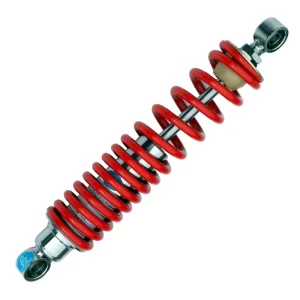
How Do You Protect Your UTV Shock Absorber Specifications and Process Control?
Spec protection starts before the first sample. The drawing package should lock extended length, compressed length, mount type, spring rate, nitrogen pressure, valving configuration, shaft diameter, rod finish, and surface treatment. If the factory pushes you toward an existing platform without documenting the deviations, treat that as a negotiation, not an engineering decision.
On the floor, look at how specifications are controlled at assembly. I want to see calibrated torque wrenches, a tooling register, and a clear first-article process. The station should show the current revision number at the workstation, not in a binder in the quality office. A serious factory controls revision at the operator level, because that is where a mixed spring perch or wrong seal lot becomes a shipped product.
Ask how the factory protects your valving code and custom tune. Legitimate factories will separate customer specifications by account and restrict access. If the factory cannot explain who can see your damping curve, your custom development may end up in a competitor’s next sample. I have rejected suppliers on this point alone.
Finally, confirm what happens after your order ships. The lot traceability record should link the raw parts used in your batch to finished serial numbers, so a field failure can be contained. If the factory cannot trace a failed shock back to a shim lot or seal lot, the audit is still open.
Why Send Your Requirement Pack Before the Next Production Run?
Most audit failures do not appear in the closing meeting. They appear later, when the first production batch arrives with a softer compression curve than the approved sample. That gap usually starts with missing information. If the factory does not receive your vehicle weights, travel targets, terrain profile, and performance priority before tooling is cut, it has to guess. Guessing is how a good sample becomes a poor batch.
The simplest closeout action is to send the factory a requirement pack before you leave the audit or right after it. Include the model list, expected volumes, target damping curve or ride characteristic, required nitrogen pressure range, mounting dimensions, and any exclusivity terms. Then ask for a fixed review response.
Yearben audits incoming requirement packs against current UTV shock absorber production data and will confirm feasibility, tooling lead time, and sample timing. Send your pack to info@yearbenshocks.com or call +86-523-86566899, and we will return a point-by-point response before sampling.
What Procurement Teams Ask About Auditing a UTV Shock Absorber Supplier
Do I need to visit the factory, or is a document audit enough?
A document audit can screen a supplier, but it cannot qualify a production process. I have never seen a serious UTV shock absorber program move forward without at least one on-site check of the dyno area, charging station, and traceability records. Documents tell you what the factory says it does. The floor shows you what actually happens when a batch drifts. For a stock replacement order, a document audit may rule out the weakest suppliers. For custom valving or high-performance builds, visit the line before you commit.
What should make me reject a supplier during the audit?
Many buyers assume a clean final inspection report means the process is controlled. It does not. A clean report from a supplier that cannot show force-velocity curves, nitrogen charge logs, or lot-linked material certificates is a warning sign. The reject point is not a missing certificate. It is a missing control loop. If the factory cannot tell you what happens when a shock fails a pressure check or how a valving lot is linked to finished serials, walk away before sampling. A factory with working process control can answer those questions without a meeting.
How long should a factory keep damping force and charge records?
It depends on what the record is meant to prove. For a standard trail UTV shock absorber, I look for routine batch data going back at least one production season. For an OEM program or custom race spec, the factory should keep force-velocity curves, charge records, and material certificates for the life of the program plus an agreed retention window, often two years or more after the last shipment. The key check is not storage time. It is whether the records are linked to serial numbers and product lots, because an unlinked file cabinet protects the factory, not the buyer.
Why do trading companies often pass a document audit but fail the floor check?
In factory audits I have run for UTV and side-by-side programs, the trading companies that looked strongest on paper were often the ones that could not walk me through the valve code history from one batch to the next. They had certificates and a partner factory, but no ownership of process data. That gap makes containment impossible when a field failure appears. A real manufacturer can open the dyno log and explain the batch. A trading company has to call someone. If your audit checklist includes custom valving or spec exclusivity, send your requirements to info@yearbenshocks.com and we will confirm which records apply to your build.
If you’re interested, check out these related articles:
2-0-Air-Shock
Off-Road-Coilovers
Oil-free lawn mower shock absorber 24mm
Custom shock absorbers for seat Φ41.5mm manufacturing