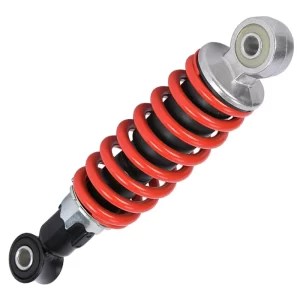
Monotube shocks earn their place in truck seats and engineering equipment when operators spend long shifts on rough ground, not when the machine sits idle. In a seat platform, the damper controls vertical energy without turning small inputs into harsh feedback. We have learned through seat damper work that valving errors produce operator fatigue complaints faster than structural failures do. Breakaway force, damping curve, and supplier process control matter more than cylinder diameter alone. The end of this piece gives the Yearben contact path for seat shock specifications.
Why Monotube Construction Matters in Seat and Truck Applications
Monotube construction places the working piston in a single cylinder. Nitrogen sits behind a separating piston at the base, oil remains on the rod side, and the outer body itself becomes the heat path. That separation is why a monotube shock behaves more consistently through long seat cycles than a twin-tube damper with mixed gas and oil. In truck seat and engineering seat applications, the advantage is not big travel numbers. It is metering at low shaft speeds where seat movement begins.

| Parameter | Monotube seat shock | Twin tube seat damper |
|---|---|---|
| Gas position | Separated by floating piston | Mixed or held in outer chamber |
| Low speed control | Direct piston response | Softer initial breakaway |
| Heat path | Outer body wall | Inner tube limits heat transfer |
| Mounting | Upright or inverted | Usually upright |
| Common seat cylinder bodies | 35 mm, 38 mm, 41.5 mm | 24 mm, 28 mm |
In our seat damper range we build 35 mm, 38 mm, and 41.5 mm cylinder bodies. The 38 mm heavy equipment seat shock and 41.5 mm adjustable seat damper share the same monotube logic but are valved differently because seat mass changes the force target. A procurement team should not treat all seat shock diameters as interchangeable. The body diameter alone does not set damping force; the piston stack and gas charge do.
The Load Input a Seat Damper Actually Sees
Seat dampers rarely see the full road displacement a suspension damper sees. The chassis and cab mount filter most of it. What reaches the seat base is part low frequency seat movement and part high frequency vibration from engine, driveline, and surface texture. If the engineer valving the damper reads it like a vehicle shock, the seat will chase every small input and the operator will complain about road buzz.
Why Breakaway Force Matters More Than Peak Force
I have watched seat damper samples pass peak force tests and still fail operator trials because breakaway force was too high. Breakaway is the first force the rider feels when the seat starts to move. In a monotube seat shock, high breakaway turns fine vibration into spinal fatigue before the piston has travelled a few millimetres. A lower controlled breakaway lets the seat float over texture while the main damping circuit still controls larger motion.
One failure mode we see is a seat shock valved for a heavy occupant installed under a much lighter operator. The heavier valving holds the seat up; the operator never settles into the suspension stroke. Over a full shift the back and hips absorb the feedback the damper should have removed.
Matching Damping Force to Seat Weight and Stroke
After breakaway, compression and rebound settings decide whether the seat bottoms out over a sharp edge and whether the operator gets tossed on the return. In a seat damper, compression controls the energy entering the occupant, rebound controls how quickly the seat returns to its neutral band. These are not mirror values. A seat shock with too much rebound feels dead and packs down after repeated hits. With too little rebound, the seat springs the operator back after every impact.

Adjustable Damping for Mixed Seat Models
Fixed valving works when the seat model and occupant weight range are stable. Adjustable damping works better when one part number must cover several seat weights or when the cab spec is still changing late in the program. Our 41.5 mm adjustable seat damper uses an adjustment mechanism to shift the damping curve without changing the cylinder body. We have shipped seat dampers with fixed and adjustable valving to seat manufacturers, and the deciding question is always the same: how many weight classes must this part cover?
If your seat platform sits between two weight classes or the stroke envelope changed during tooling, it is worth confirming the damping curve before the bill of materials freezes. Send the part number and seated weight range to info@yearbenshocks.com and we can check it against our 35 mm, 38 mm, and 41.5 mm monotube seat shock range.
Supplier Checks That Catch Monotube Quality Problems
Most seat shock failures we examine are not design failures. They are batch problems: a rod seal compressed too hard, a nitrogen charge set too high, or a bore finish that could not hold film strength. A serious monotube shock supplier should be able to show the damping curve, the gas charge process, and the seal batch control before the first article is approved.

- Ask for damper force curves at three shaft speeds, not only peak force.
- Confirm nitrogen charge pressure and check that every batch uses the same fill process.
- Ask what tests are used for shaft chrome and seal wear.
- Request cycle test data and clarify whether the seat shock is tested in its mounted orientation.
- Confirm batch routing includes a damping check before shipment.
At Yearben we build seat dampers in our Taizhou plant and keep the cylinder body, piston, and valving under one roof. That does not guarantee the right damping curve by itself. It does make specification changes easier to trace from drawing to batch.
Specifying Monotube Seat Shocks for Your Seat Platform
The most common sourcing error we see is locking a part number around peak force alone. When seated operator comfort or the cab package changes, breakaway force and stroke limits decide whether the seat passes evaluation. Yearben builds seat dampers in 35 mm, 38 mm, and 41.5 mm cylinder bodies and can match the damping curve to your seat weight range. Send your part number, seated weight range, and stroke envelope to info@yearbenshocks.com or call +86-523-86566899, and we will confirm the monotube seat shock specification before you finalize the drawing.
Common Questions About Monotube Seat Shocks
Can a Monotube Shock Replace a Twin Tube Seat Damper Without Changing the Seat Base?
A common assumption is that a monotube shock will make the seat stiffer. The opposite is usually true when breakaway and valving are set for the same seated weight. A monotube shock may fit the same eye-to-eye and compressed length, but the mounting orientation and force curve still need checking. If the existing twin tube damper runs upright and the new monotube shock carries a different gas charge, the seat base may feel different even with the same spring. We normally ask for the current part number and any force curve before confirming interchange.
What Matters More for Truck Seat Comfort, Compression or Rebound?
It depends on the complaint. If the operator reports bottoming over sharp edges, compression is the first place to look. If the seat feels busy or kicks back after larger hits, rebound is usually out of range. In truck seat evaluation, rebound complaints gather faster because the seat returns through the occupant’s spine. We set rebound as its own target rather than treating it as a remainder of compression. A monotube seat shock should have separate compression and rebound control logic even when it is not externally adjustable.
Does a Higher Nitrogen Charge Make the Seat Ride Firmer?
No. The nitrogen charge mainly keeps the oil from cavitating and stabilizes damping response. The seat’s steel or air spring sets the vertical support. A higher charge does raise internal pressure and can add a small extension force on the shaft, but it is not the right way to make the seat firmer. If the operator is sinking or floating, the spring rate and preload are the first correction path. The monotube shock controls how quickly the seat moves, not how much it carries.
What Should I Send to Get a Monotube Seat Shock Quotation?
In quotation requests for monotube seat shocks, the details that reduce revision time are seated weight range, stroke, mounting centers, rod diameter, and whether the damper is fixed or adjustable. Pictures of the old seat base and the failure description are useful too. We do not need a full CAD package to start, but missing stroke and mounting data usually creates at least one drawing loop. Share those values with your part number and quantity target and we can confirm the damping curve and lead time.
If you’re interested, check out these related articles:
Custom-Shocks-And-Struts
Steering-Damper-18MM
Gas Charged Dual Rate Coilover Shock Absorber
Truck-Seat-Damper-38MM-Shock-Absorber-Manufacturer
Hydraulic-Seat-Damper-Cylinder-Diameter-24MM