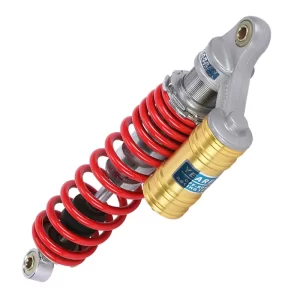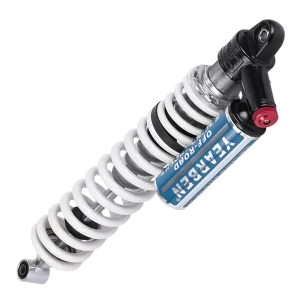
Lawn mower shock absorber vs steering damper is a comparison I field often from OEM buyers and dealer parts teams, and the two components manage different forces. A shock absorber controls vertical wheel and deck motion over rough ground. A steering damper controls rotational steering feedback at the front axle. Selecting the wrong one changes cut quality and operator effort in ways that appear only after long test hours. From suspension projects I have worked on, the most reliable sequence is to settle wheel travel damping first, then evaluate steering damping once axle feedback is measured.
What Does a Lawn Mower Shock Absorber Do?
A lawn mower shock absorber converts vertical suspension energy into heat through hydraulic resistance. It sits between the chassis and the wheel pivot or deck linkage, and it has two jobs that are easy to separate. The first is ride comfort. The second is deck stability, because an even cut depends on keeping the deck from bouncing across changing turf height.
Body diameter is the first specification I look at. Light domestic platforms usually run a 24 mm body. Heavier ride on mowers and commercial decks often move to a 38 mm body. A larger body holds more oil volume, which gives the damper more thermal reserve before damping force fades. Some low load deck applications use an oil free 24 mm damper, which removes maintenance concerns but changes the damping curve under repeated high speed mowing.
What Does a Steering Damper Change on a Mower?
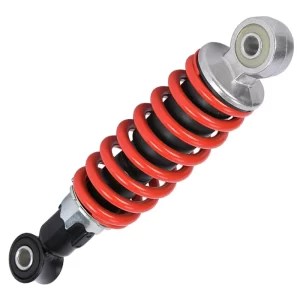
A steering damper is a compact hydraulic cylinder mounted across the steering linkage or steering shaft. It resists fast rotational input, which takes the sharp kick out of castering wheels on uneven ground. On zero turn mowers, the practical change is less arm fatigue because the operator is not correcting every wheel input by hand. On bigger ride on platforms, it reduces wander before the front wheels settle.
Common bodies in this category are 18 mm and 24 mm. Bore and stroke must match the steering angle. A damper that bottoms before full lock limits turning radius and feels stiff at the steering handgrip. Low speed steering movement should pass with little resistance. If it does not, the operator notices immediately at headland turns and tight gate entrances.
Why Are Lawn Mower Shock Absorbers and Steering Dampers Confused?
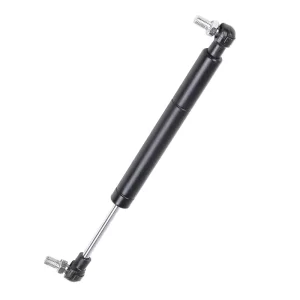
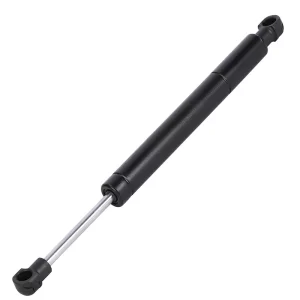
The confusion comes from the material list. Both are hydraulic dampers, both use a rod moving through oil, and both often have similar mounting eyes. When a buyer compares two samples side by side, the parts look interchangeable. They are not. A shock absorber is mounted near the wheel or deck and sees high travel frequency. A steering damper is mounted in the steering train and must stay low force at low speed while resisting high speed input.
At Yearben, we machine both types on the same damping line, which is exactly why this difference matters at the purchasing stage. Sharing a supplier does not mean sharing a part number.
If your mower platform has both deck suspension and steering feedback concerns, it is worth confirming whether the chassis needs one damping path or two separate damping paths before locking the bill of materials. Send your front axle layout and deck travel to info@yearbenshocks.com and we will confirm the load path.
How Do You Decide Which Lawn Mower Damping Part to Specify?
The decision is not which part is better. It is which force path is causing the complaint.
| Signal | Point to shock absorber | Point to steering damper |
|---|---|---|
| Uneven cut with visible deck bounce | Fix vertical travel | Not the main fix |
| Operator arm fatigue on rough turf | Secondary | Primary fix |
| Front wheel kick or wander | Secondary | Primary |
| Chassis bracket cracking near wheel mount | Primary | Not the main fix |
| Stiff steering at headland turns | Not the main fix | Check damper travel and valving |
When Wheel Bounce Is the Dominant Problem
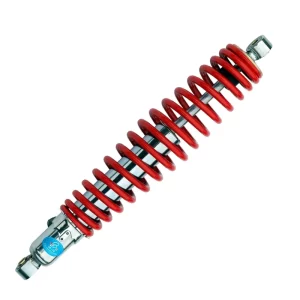
If the complaint is deck chatter, uneven cut quality, or cracked brackets near the wheel mount, start with a shock absorber. Match the body diameter and damping curve to axle travel and wheel frequency. In deck suspension work, I have seen 24 mm oil free dampers reduce deck rattle on light mowers, while 38 mm hydraulic dampers handle heavier commercial platforms without fading through a full day.
When Steering Feedback Is the Dominant Problem
If the complaint is arm fatigue, wandering, or stiff steering, look at the steering linkage before adding spring force somewhere else. An 18 mm body is typical for lighter steering systems. A 24 mm body fits more heavily loaded front ends. The key check is full lock travel, because a steering damper that binds at the end of travel makes the mower feel worse than no damper at all.
How Should OEM Buyers Specify Lawn Mower Damping?
Specifying correctly comes down to four numbers: deck travel, front axle weight, steering angle, and annual volume. Without these, a factory can only quote a generic part, and generic parts perform as expected. I start every mower damping review with duty cycle classification: domestic, municipality, or commercial turf. Commercial mowers that run eight hours a day need more thermal reserve, which changes body size and oil volume.
Getting this wrong shows up late. Commercial mowers return with chassis cracks, or operators complain about shoulder fatigue after a full season. That is why I ask for duty cycle, mounting points, and target damping force before sampling. Send your mower model, travel figures, annual volume, and target market to info@yearbenshocks.com or call +86-523-86566899, and we will confirm the right body diameter, valving, and mounting before tooling.
What Do Buyers Commonly Ask About Lawn Mower Damping?
Can a steering damper replace a lawn mower shock absorber?
No. A steering damper is tuned for low speed freedom and high speed resistance in rotation. A shock absorber is tuned for vertical travel frequency and wheel load. Mounting one in place of the other leaves wheel travel undamped or makes steering heavy. The two parts may share oil and seal technology, but the valving curve is different enough to create a safety issue on slopes and a ride quality issue on turf.
What happens if I fit a shock absorber in the steering linkage?
The common mistake is thinking that extra stiffness in the steering linkage equals stability. In practice, a shock absorber in the steering path resists low speed rotation, so the operator feels heavy steering at headland turns. High speed kick may reduce, but the bandwidth is wrong. Steering movement is low frequency and low force compared with wheel travel. A dedicated steering damper is valved for exactly that range.
Why do commercial ride on mowers wear body bushings quickly?
It depends on where the bushing sits. If the bushing is carrying vertical deck load, the cause is usually side load from misaligned mounting eyes or a damper body that is too short for the travel range. If the bushing is in the steering linkage, rapid direction changes and uneven torque load are the more common causes. Fix the mounting geometry and travel stop position before assuming the bushing material is the problem.
What should I send when requesting a custom lawn mower damper quote?
Instead of asking for a price first, narrow the request to four values: deck travel, front axle weight, required damping force, and annual volume. A drawing or photo of the mounting points also shortens the review. Most quote delays come from missing stroke and damping rate data, not from pricing complexity. Share your part number, dimensions, and quantity to info@yearbenshocks.com and we will confirm the correct damping configuration before sampling.
If you’re interested, check out these related articles:
Custom shock absorbers for seat Φ41.5mm manufacturing
Gas Charged Dual Rate Coilover Shock Absorber
Adjustable-Hydraulic-Shock-Absorbers
Triple-Bypass-Remote-Reservoir-Shock
Lawn-Mower-Damper-Shock-Absorber