
The choice between a hydraulic damper and a gas shock is not simply about ride quality—it is a sourcing decision that directly affects long-term reliability, manufacturing consistency, and the total cost of ownership for the vehicles you produce. In our suspension engineering work, we see too many procurement teams focus on the damping medium alone and overlook the production quality, seal life, and customizability that separate a consistent OEM supply from a one-time buy. This article compares hydraulic and gas shock designs from the perspective of a manufacturer who builds both, covering the performance differences that matter under load and the supply-chain factors that matter when ordering in volume.
How Hydraulic and Gas Shocks Differ in Damping Architecture
A hydraulic damper uses a piston moving through a cylinder filled entirely with oil. The oil is forced through precisely machined orifices and valve stacks, converting kinetic energy into heat. There is no compressible gas inside the working chamber, which means the damping force is purely a function of fluid flow. In our production, hydraulic dampers for steering and seat applications use cylinder diameters from 18 mm to 41.5 mm, with twin-tube configurations common for equipment that runs long continuous hours.
A gas shock introduces a pressurized nitrogen charge, typically behind a floating piston, to keep the oil under constant pressure. This pressure reduces aeration—when oil foams from agitation—and prevents cavitation, maintaining consistent damping even as the shock cycles rapidly. We build gas-charged monotube shocks for ATV and UTV applications with remote reservoirs and piggyback designs to increase oil volume and cooling surface area. The nitrogen charge also provides a small spring rate effect, though the primary function is oil stability, not spring force.
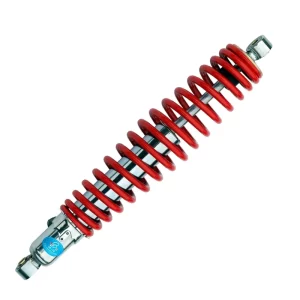
The practical difference emerges under sustained use. In a hydraulic damper, as oil temperature rises and viscosity drops, damping force can soften. In a gas shock, the pressurized oil remains more stable, and the separator piston keeps the gas from mixing with the oil. For a mower steering damper that operates at low speed, hydraulic is often enough. For a UTV shock hitting whoops at 40 mph, gas pressure matters.
Performance Under Load: Heat, Fade, and Response Consistency
We have tested both types on our in-house cycle dynos, and the pattern is clear: gas shocks maintain damping force longer under repeated high-speed inputs. The nitrogen charge delays the onset of fade because it suppresses oil foaming. Once oil aerates, damping force drops sharply, regardless of valving. Hydraulic dampers without gas can still perform well if the oil volume and cooling are adequate, but they reach their thermal limit sooner in aggressive use.
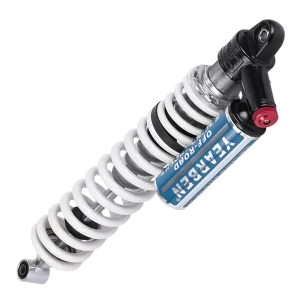
For commercial mowing equipment running 8-hour shifts on uneven ground, a properly sized hydraulic damper may never fade. The input velocities are low, and the oil has time to cool between cycles. For a desert racing UTV, fade resistance is non-negotiable, and a remote-reservoir gas shock with high oil volume and nitrogen pressure is the baseline. Our own emulsion coilover shocks serve well in moderate off-road use, but when customers push into sustained high-speed desert running, we recommend moving to a piggyback or remote reservoir design to get the gas separation and cooling they need.
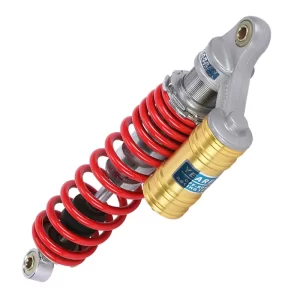
The response characteristic also shifts. A hydraulic damper’s damping curve follows fluid dynamics—it is progressive with velocity but can feel slightly dead in fast transitions. A gas shock with a pressurized separator piston responds more sharply because the oil is preloaded. That sharpness is valuable in a steering damper for precise control on rutted trails. In a seat damper, however, too sharp a response can transmit vibration rather than absorb it, which is why we often select hydraulic designs for operator seat applications.
Manufacturing Consistency: What Separates a Reliable OEM Supply
This is where our engineering work diverges from a typical rider review. When you order 5,000 shocks for a production run, the damping medium matters less than the assembly process that seals that medium inside the damper. We have found that the primary source of field failures—whether hydraulic or gas—is seal integrity, not the working principle.
For hydraulic dampers, the critical process is rod chrome plating quality and seal lip geometry. A microscopic surface defect on the chrome rod will abrade the seal within the first hundred cycles, causing oil weepage. We use certified chrome plating processes with surface roughness held below Ra 0.1 μm, and every rod is inspected under magnification before assembly. For gas shocks, the additional point of failure is the floating piston seal and the nitrogen charge valve. A leak rate of even 0.5 bar per month will shift the damping curve noticeably by the time the shock reaches the end user.
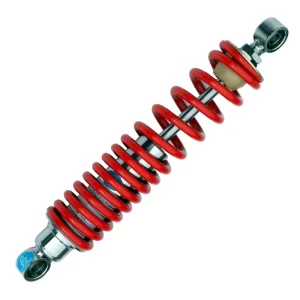
We pressure-test every gas shock after nitrogen charging and hold them for a stabilization period to catch slow leaks. In our experience, the batch rejection rate is more strongly correlated with seal supplier quality than with shock type. A well-built hydraulic damper from a factory that controls rod finish and seal geometry will outlast a poorly assembled gas shock every time. This is the conversation we have with OEM procurement engineers: do not choose based on the operating principle alone—audit the factory’s surface treatment and seal testing protocols.
Matching the Shock Type to Your Vehicle Platform
The vehicle’s weight, travel speed, and operating environment dictate the damping architecture more than any general recommendation. In our production planning, we use a simple decision tree:
| Application | Typical Speed | Continuous Duty | Recommended Type | Key Reason |
|---|---|---|---|---|
| Lawn mower steering | Low | Yes | Hydraulic damper | Low velocity, sufficient oil cooling, cost-effective |
| ATV/UTV trail riding | Medium | Intermittent | Emulsion coilover or piggyback gas | Moderate fade resistance needed, packaging constraints |
| Desert racing / dunes | High | Sustained | Remote reservoir gas shock | Maximum cooling, nitrogen separation, fade prevention |
| Truck seat suspension | Variable | Yes | Hydraulic adjustable damper | Comfort tuning, consistent low-speed control |
| Commercial zero-turn mower deck | Low-medium | Yes | Hydraulic damper with large oil volume | Low cost, robust for long hours |
The table reflects what we have seen across hundreds of custom orders. A hydraulic damper in a lawn mower application typically runs for several seasons without issue. Put that same damper on a side-by-side that sees 50 mph whoops, and the oil will foam and fade within minutes. The platform, not the price, determines the right choice.
Custom Orders, MOQ, and Lead Times for Industrial Buyers
For procurement teams considering a new OEM shock program, the hydraulic versus gas decision intersects directly with customization requirements and production minimums. Our standard hydraulic dampers—used widely in seat and steering applications—carry lower tooling costs because the machining is simpler: no gas charging port, no floating piston groove, fewer seal interfaces. A customized hydraulic damper with a 24 mm cylinder, specified stroke, and end fittings can move from drawing approval to pre-production samples in about 25–35 days, with MOQs starting around 500 units.
A gas-charged piggyback shock for a UTV, by contrast, requires more manufacturing steps: welding the reservoir can, machining the hose fitting interface, charging with nitrogen to a specific pressure, and verifying the charge after a dwell period. The MOQ for a custom gas shock is typically higher—1,000 units or more—because the setup cost per SKU is absorbed across the run. Lead times stretch to 40–50 days for a first order when new tooling is involved.
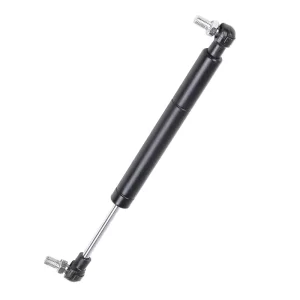
We also counsel buyers to consider the service life of the supply relationship. A hydraulic damper design may have fewer variables to control; you validate the valving, rod finish, and seal material, and you are largely set. A gas shock design adds nitrogen pressure as a second parameter that must be specified and held within tolerance across batches. If your incoming quality control does not include a shock dyno, you are trusting the factory’s charge verification process, which makes supplier qualification paramount.
If your program spans both low-speed utility equipment and faster off-road vehicles, sourcing hydraulic and gas shocks from a single manufacturer simplifies logistics but requires a supplier with competence in both sealing technologies. We often recommend starting with the more demanding gas shock spec first—if a factory can hold nitrogen charge tolerance and pass a 100-hour dyno test, their hydraulic dampers will almost certainly meet your requirements.
Common Questions About Hydraulic Dampers and Gas Shocks
Does a gas shock always outperform a hydraulic damper?
No. In low-speed, constant-load applications like seat suspension or mower steering, a well-built hydraulic damper performs identically to a gas shock for the entire service life, and costs less to manufacture. The gas advantage appears only when heat buildup and oil aeration threaten damping consistency. If your equipment never reaches those thermal thresholds, the extra cost of a gas charge buys you no measurable benefit.
Why do some hydraulic dampers feel stiff after sitting overnight?
The oil in a hydraulic damper can settle and develop a slight static stiction at the seal-rod interface. This is normal and disappears within a few cycles as the oil redistributes and the seal warms up. If the stiction persists beyond 10–15 cycles, the seal may be oversized or the rod surface may have a finish defect. In our assembly process, we pre-lube seals with a specific tack-reducing compound to minimize this breakaway force.
How can I verify the nitrogen charge in a gas shock without a dyno?
Direct measurement requires piercing the valve or using a very low-volume pressure gauge, neither of which is practical in incoming inspection. Instead, we suggest a simple functional check: compress the shock by hand and release it. A properly charged gas shock will extend fully on its own at a steady rate. If the shaft stops before full extension or moves with uneven speed, the charge is likely low or the floating piston seal has leaked. This is a pass-fail check, not a calibration, but it will catch gross failures before the unit is installed.
Can I switch from hydraulic to gas shocks on an existing vehicle platform?
Yes, but the mounting dimensions, damping curves, and spring rates must be re-evaluated. Gas shocks often have a slightly different force-velocity profile due to the nitrogen preload, and for coilover designs, the spring perch and overall length may need adjustment. We always recommend a short prototype build and test fit before committing to production quantities. Share your vehicle weight, travel specifications, and current damper dimensions, and we can confirm whether a drop-in gas shock is feasible or whether a full re-engineering cycle is needed. Reach us at info@yearbenshocks.com or call +86-523-86566899 with your requirements.
If you’re interested, check out these related articles:
2-0-Air-Shock
4X4-Heavy-Duty-Suspension
Fixed-Preload-Atv-Shock-Absorbers