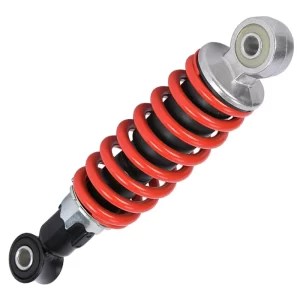
Converting a leaf-sprung 4×4 to coilover suspension changes more than the spring type. The entire load path, shock valving curve, and suspension geometry shift in ways that aren’t obvious from a parts list. I’ve seen too many conversions where the owner bolted on coilovers while keeping the old leaf-spring shocks or mismatched the spring rate, then wondered why the truck handled worse than stock. A coilover conversion demands different damping characteristics than leaf springs because the spring itself behaves differently under load. This article breaks down what actually changes at the component level when you swap leaf springs for coilovers on a 4×4.
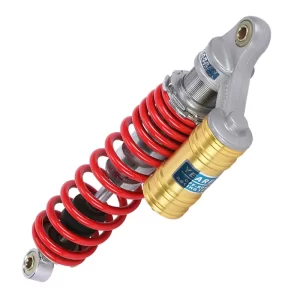
How Coilover and Leaf Spring Suspension Differ in Load Handling
Leaf springs carry the axle load and locate it at the same time. The spring pack bolts to the axle and the leaf eyes attach to the frame through shackles and fixed mounts. This means the leaf spring handles vertical load, lateral axle location, and longitudinal thrust all in one component. It works, but every function is coupled. When the spring compresses, the axle moves slightly forward on the shackle side. When torque hits the axle, the leaf wrap loads the spring eyes unevenly.
A coilover suspension splits these jobs. The coil spring handles only the vertical load. Separate links handle axle location and torque control. The shock absorber inside the coilover unit handles damping, not location. This separation is why coilover conversions can improve both ride quality and articulation. The spring rate doesn’t have to compromise with location stiffness, and the damping curve can be tuned purely for motion control rather than compensating for leaf-spring friction.
This difference in load handling is the foundation for every other change in the conversion. It dictates what shock valving you need, what mounts must be fabricated, and how the suspension behaves under braking, acceleration, and off-camber loading.
Shock Valving and Spring Rate Changes After the Conversion
This is where most conversion discussions go quiet. Leaf springs have internal friction between the leaves. When the spring compresses, the leaves slide against each other and against the friction pads. This interleaf friction provides a small amount of inherent damping, maybe five to ten percent of the total damping force, but it’s there on every cycle. A coil spring has none of this. It’s a linear or progressive-rate wire coil with negligible internal friction. That means the shock absorber in a coilover setup must handle 100 percent of the damping work from the first millimeter of travel.
I’ve measured the difference on the dyno. A shock valved for a leaf-spring application typically runs lighter compression damping because the leaf pack contributes some resistance. Move that same shock to a coilover setup and the front end feels floaty on compression. The damping hole is too large because the leaf friction is gone. The rebound side often needs adjustment too. Leaf springs store energy differently than coils, and the rebound damping that controlled leaf-spring oscillation at 60 kilometers per hour on corrugations may be half a turn too light for a coil spring cycling at the same shaft speed.
The spring rate itself shifts as well. Leaf packs are progressive by nature. As more leaves engage under load, the rate climbs. A coilover can use a single-rate or dual-rate coil. A dual-rate setup with a tender spring lets the initial rate stay soft for small bump compliance, then transitions to a stiffer main rate as the tender coil binds. Matching the transition point to the vehicle’s corner weight and intended use takes engineering time, not just a catalog lookup. If the crossover ring position is wrong, the coilover will either feel harsh at ride height or blow through the travel on bigger hits.
Frame and Mounting Changes Required for Coilover Conversion
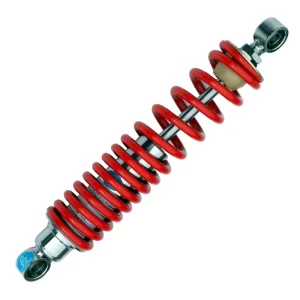
Removing the leaf springs means removing the leaf-spring hangers, shackle mounts, and possibly the factory bump stop pads. On most 4x4s, the rear frame rails were designed to distribute leaf-spring loads across a broad area through the hanger brackets. A coilover concentrates that load into the upper shock mount and the lower link brackets.
The upper coilover mount must tie into a reinforced crossmember or an engine-cage structure. The force that was spread across two leaf-spring eyes and a shackle now enters the frame at one upper mount point per side. I’ve seen mounts crack on early conversions where the builder used plate brackets without gusseting. The mount doesn’t just see vertical load. Under articulation, the coilover applies an angled force vector that tries to twist the mount off the frame. The weld area, plate thickness, and gusset design need to account for this.
Lower link brackets on the axle housing take the place of the leaf-spring perch. The brackets set the link separation and the instant center geometry. Vertical separation between upper and lower link mounts at the axle determines anti-squat. Getting this geometry right matters more for predictable handling than the spring rate choice. A poorly placed upper link mount on the axle creates anti-squat values that spike under power, making the rear end hop on steep climbs. Leaf springs handle anti-squat through the spring-eye geometry and shackle angle. A coilover conversion means the builder now controls this through link placement, and there’s no default setting that works for every wheelbase and center of gravity combination.
A track bar or panhard bar becomes necessary if the conversion uses a three-link setup. The leaf springs used to locate the axle laterally. Without them, lateral location needs a separate link running from the frame to the axle at an angle. The track bar length and angle affect roll center height and lateral axle shift through the travel arc. Longer bars reduce shift but require more packaging space. Most conversion kits address this, but a custom conversion needs the builder to calculate or at least understand the trade-off.
Ride Quality, Articulation, and Load Capacity Comparison
The performance differences between leaf springs and coilovers fall into three categories: ride quality on graded and rough surfaces, suspension articulation at low speed, and load-carrying behavior.
| Performance Factor | Leaf Spring Setup | Coilover Conversion |
|---|---|---|
| Small-bump compliance | Limited by interleaf friction | Excellent; zero stiction, shock controls motion |
| Articulation (RTI) | Moderate; leaf twist limited by pack stiffness | Higher; links decouple location from spring movement |
| Load capacity | Strong; progressive rate from leaf pack | Requires rate selection; can sag if undersprung |
| High-speed stability | Predictable but can axle-wrap on power | Better, with separate links controlling axle rotation |
| Maintenance | Low; inspect bushings periodically | Moderate; spherical bearings and heims wear in dirt |
The articulation gain is the main reason most people convert. A leaf-sprung rear end on a typical 4×4 might score 450 to 550 on an RTI ramp. The same vehicle with a properly set up coilover conversion and the right link geometry can push past 650 without increasing ride height. The links let the axle droop farther because the spring isn’t trying to twist itself into a bind at the leaf eyes.
Ride quality improves most noticeably on washboard roads and rocky trails. The stiction breakaway force on a leaf pack, the initial resistance before the leaves start sliding, transmits small impacts directly to the chassis. A coil spring starts compressing from the first Newton of load, so those small chatter vibrations never reach the frame if the shock valving is correct.
Load capacity is the one area where leaf springs hold an advantage without specific engineering. A leaf pack’s progressive rate handles a range of payload weights without bottoming. A coilover conversion needs the spring rate chosen for the anticipated load. Running empty with a rate set for loaded touring means a harsh ride. Running loaded with a rate set for trail use means sagging onto the bump stops. Some builds address this with hydraulic bump stops or adjustable-rate coilover platforms, but it’s an added cost that leaf-spring trucks don’t face.
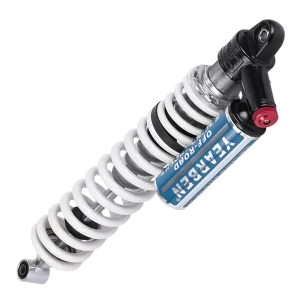
If your conversion involves a custom link geometry or an unusual corner weight, the spring rate and valving spec can’t come off a shelf chart. Getting the crossover ring position and damping curve right for a mixed-use 4×4 that crawls one weekend and runs desert the next takes data, not guesswork. Send your vehicle specs and intended use to info@yearbenshocks.com and we’ll help you confirm the coilover configuration before you cut metal.
Coilover Conversion Cost vs Performance Value
A complete coilover conversion kit for a 4×4 typically lands between 2,500 and 5,000 US dollars for parts alone if you’re buying from a known off-road brand. That includes the coilovers, link bars, mounting brackets, track bar, and hardware. Fab work adds another 1,000 to 3,000 depending on whether you weld it yourself or pay a shop.
The coilovers themselves are the largest single line item. A pair of 2.5-inch body remote-reservoir coilovers with adjustable compression and rebound runs 1,500 to 2,500. A 2.0-inch emulsion coilover pair might be 800 to 1,200, but emulsion shocks fade faster under sustained use because the oil and nitrogen mix as they heat up. For a vehicle that sees long desert runs or repeated rock-crawling sections, the remote reservoir’s extra oil volume and separation piston pay for themselves in consistent damping.
From an engineering standpoint, the value of a coilover conversion isn’t in the parts list. It’s in the tuning headroom. A coilover with adjustable valving lets you dial compression and rebound independently to match tire size, vehicle weight, and driving style. Leaf springs don’t offer that. You change the pack or live with it. For builders who treat suspension as a system to be tuned rather than a checklist of parts, this control is the real reason to convert. If you only need to carry heavy loads on graded roads and don’t push articulation limits, the conversion cost is harder to justify. But for 4x4s that see mixed terrain, crawling one weekend, desert the next, daily driving in between, the adjustability of a properly set up coilover system pays back on every surface change.
If your build involves a custom coilover conversion where off-the-shelf kits don’t match your vehicle specs or link geometry requirements, it’s worth confirming spring rates, valving curves, and mount dimensions before ordering. Reach out to our team at info@yearbenshocks.com or call +86-523-86566899. We help builders and shops specify coilover setups from the shock body diameter to the crossover ring position.
Common Questions About 4×4 Coilover Conversion
Can I use my existing leaf-spring shocks with coilovers?
No. Leaf-spring shocks are valved for the friction and spring-rate characteristics of a leaf pack. Even if the extended and collapsed lengths happen to match, the compression and rebound circuits inside the shock are tuned differently. A leaf-spring shock on a coilover setup will feel under-damped on compression and often unstable on rebound. The mounting style also differs. Most leaf-spring shocks use eyelet mounts on both ends, while coilovers use a spherical bearing top mount and a bar-pin or eyelet lower. If you’re spending on a coilover conversion, cheaping out on shocks undermines the entire project.
Do I need a track bar with a coilover conversion?
If the conversion uses a triangulated four-link, the links themselves locate the axle laterally and no track bar is needed. A three-link setup uses one upper link and two lower links, which locate the axle longitudinally but leave lateral movement free. That setup requires a track bar or panhard bar. A parallel four-link with a separate track bar is common on rear conversions because packaging a triangulated upper link around the fuel tank and exhaust is difficult. If your conversion kit includes a track bar bracket, it’s a three-link or parallel four-link. Triangulated four-link kits don’t need one and won’t include the bracket.
How does towing change after a coilover conversion?
Towing puts tongue weight on the rear axle. Leaf springs handle this by engaging more leaves as the pack compresses, effectively increasing the spring rate under load. A coilover with a single-rate spring compresses linearly, at 200 pounds per inch of sag for a 200 pound-per-inch spring, regardless of whether the vehicle is empty or loaded. If you tow often, you’ll either need a higher-rate spring selected for the loaded condition, a dual-rate setup with a transition point below ride height so the stiffer main rate engages under load, or air-bag helpers inside the coil springs. Do not use the coilover’s preload adjuster to compensate for tongue weight. Preload changes ride height, not spring rate. Cranking preload to level a loaded truck just limits droop travel and makes the ride harsher.
What fails first on a DIY coilover conversion?
Bracket welds. The upper coilover mount sees repeated impact loads at angles that aren’t intuitive. A vertical gusset on one side of the mount plate may handle vertical force but leave the mount free to twist under lateral loads. The lower link brackets on the axle housing crack at the toe of the weld if the bracket plate isn’t fish-mouthed to distribute stress or if the welder used too much heat and created a brittle heat-affected zone. After bracket welds, the next failure point is usually the spherical bearings in the link ends. They wear fast in mud and sand if they aren’t PTFE-lined or regularly cleaned and lubricated. If you’re in the planning stage and want to confirm bracket design, link geometry, or coilover valving specs before cutting metal, send your proposed setup to info@yearbenshocks.com. We work with builders on coilover conversions regularly and can help spot issues before they become trail failures.
If you’re interested, check out these related articles:
Custom shock absorbers for seat Φ41.5mm manufacturing
Steering-Damper-18MM
Twin-Tube-Hydraulic-Seat-Damper-28MM
Triple-Bypass-Shock-For-Off-Road
Adjustable-Shock-Absorber-For-Car