
When an air suspension system starts leaking pressure on a trail or fails to hold ride height overnight, the repair calculus shifts fast. Air springs, compressor diagnostics, and leak-down tests eat into budget and downtime in ways a mechanically simple coil over shock does not. Coil over shocks for air suspension conversion eliminate the compressor, air lines, and air spring bladders entirely, leaving a sealed nitrogen-charged damper and a steel coil spring to handle both load support and damping. But not every coil over sold as a conversion solution holds up. The engineering difference between a shock that matches the vehicle’s weight and use case and one that fades after a season comes down to internal build quality that most buyers never see before purchase.
Why Coil Over Shocks Replace Air Suspension Without Losing Function
Air suspension works by substituting a metal coil spring with a pressurized air spring. When it works, it adjusts ride height and spring rate on demand. When it fails, a single pinhole in a bladder or a stuck solenoid valve can leave the corner sagging. Coil over shocks remove these dependencies. A steel coil spring carries the load with a fixed or adjustable preload collar, and the shock absorber handles compression and rebound damping through a sealed hydraulic circuit. There is no compressor to burn out and no air line to chafe against the frame.
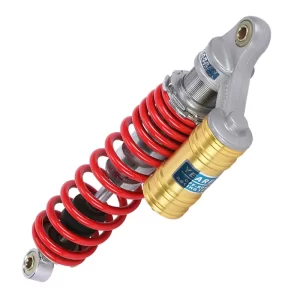
The functional trade-off is losing on-the-fly height adjustment. In return, the system gains mechanical simplicity and more predictable damping behavior. I have seen air-to-coil conversions on overland trucks where owners ran air suspension for two seasons of constant troubleshooting before switching to coil overs and never touching ride height again. The conversion itself is straightforward: pull the air spring and shock assembly, install a coil over unit matched to the vehicle’s corner weight, and set preload. What makes or breaks the outcome is whether the coil over was built to handle the specific load and use case, not whether it has enough adjusters.
What Specs Determine Whether a Conversion Coil Over Will Hold Up
| Spec Parameter | Why It Matters for Air-to-Coil Conversion | Common Range |
|---|---|---|
| Spring rate (lbs/in) | Must match corner weight; too soft causes bottoming, too stiff makes the ride harsh | 150–600 lbs/in depending on vehicle |
| Shock body diameter | Larger diameter holds more oil volume for heat dissipation | 2.0 or 2.5 inches |
| Stroke length | Must match suspension travel range after coil conversion | 6–14 inches depending on platform |
| Nitrogen charge pressure | Maintains oil stability under repeated cycles; low charge causes cavitation and fade | 150–250 psi |
| Seal material | Determines leak resistance under side loading and temperature cycling | PTFE or HNBR |
Spring rate selection is the spec that causes the most post-conversion complaints. Air springs adjust rate dynamically as pressure increases under load. A coil spring has one rate, so getting it wrong means the vehicle sits too high, too low, or blows through travel too fast. We calculate spring rate based on measured corner weight at ride height plus the motion ratio of the suspension linkage. If a conversion-kit supplier cannot tell you the corner weight assumption behind their recommended spring rate, the spec was chosen generically, not for your vehicle.
Damping range matters differently in a conversion than in a fresh build. Air suspension conversions often run slightly higher spring rates than the original coil-sprung version of the same platform because the air system’s progressive rate is being replaced by a linear coil. The shock’s compression valving needs to control that spring without being so stiff that small bumps transmit straight through the chassis. Adjustable damping helps here, but only if the adjustment range was calibrated to the spring rate in use. A shock with 24 clicks of compression adjustment means nothing if the valving stack underneath those clicks was designed for a spring half as stiff.
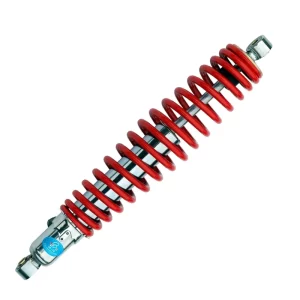
How Factory Build Quality Separates a Conversion Shock That Lasts
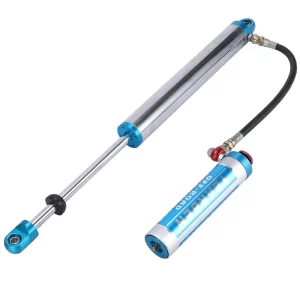
This is where the article diverges from what most coil over guides cover. The external features people compare — body diameter, adjuster count, reservoir style — matter less than four internal quality factors that determine whether a shock damps consistently for years or degrades within months.
Weld integrity at the spring perch and mounting eyes is the first place I check when evaluating a coil over from a new factory. A welded spring perch that is not fixtured squarely during assembly introduces side load on the damper shaft from the first cycle. Over time, that side load wears the shaft seal unevenly and oil begins to weep. In our factory, perch welds are fixtured and then pull-tested on a sample basis because a weld that looks clean on the outside can still have inadequate penetration on the inside.
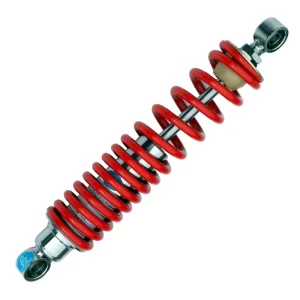
Nitrogen charge consistency is the second factor. A monotube coil over relies on a pressurized gas chamber behind the dividing piston to keep the hydraulic oil from aerating under rapid cycling. If the nitrogen charge varies by 30 or 40 psi between units on the same axle, the damping force curve shifts enough that the vehicle behaves asymmetrically under load. We charge every shock and verify pressure on a test gauge before packaging, because catching a low charge after the shock is installed on a vehicle means the owner is already feeling the imbalance.
Seal and bushing material selection is the third factor and one that separates OEM-grade coil overs from short-lifespan alternatives. PTFE shaft seals handle side loading and temperature cycling better than standard rubber seals, and the difference becomes visible within a season of off-road use. I have disassembled shocks returned from desert racing applications where rubber seals had hardened and cracked after sustained high-temperature operation, while PTFE seals in the same batch were still pliable and holding pressure.
Shaft surface finish and chrome plating quality is the fourth factor. A damper shaft with inconsistent surface roughness or thin chrome plating will abrade the seal lip gradually, causing a slow oil leak that the owner notices as fading damping force over several rides. Our shafts go through centerless grinding and are inspected for surface finish before chrome plating, then checked again after plating. This step costs more but is the difference between a shock that holds its performance for three seasons and one that needs a rebuild after one.
If your conversion project involves heavy vehicles or sustained high-speed running, it is worth confirming the manufacturer’s seal material spec and nitrogen charge procedure before committing to a bulk purchase. Reach out at info@yearbenshocks.com with your vehicle weight and intended terrain and we can confirm which internal specifications apply.
Sourcing Coil Over Shocks Directly from the Manufacturer
Buying coil over shocks for an air suspension conversion from a factory rather than a brand-label reseller changes the information you can access. A factory that designs and builds the shock in-house can supply the engineering data behind the spring rate recommendation, the damping curve, and the material certifications for seals and shafts. A reseller can often only confirm what is printed on the box.
When sourcing directly, the minimum order quantity matters. Some factories producing off-road coil overs will accept small trial orders of 10 to 20 units for a single platform. Others set MOQs at 200 or 500 units and will not break below that threshold. At Yearben, our MOQ depends on whether the shock is a standard catalog model or a customized specification. For air suspension conversion projects where spring rates and valving need to be dialed in per vehicle, we typically work through a sampling phase before committing to production volumes.
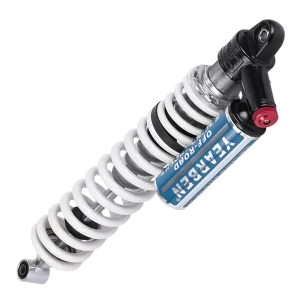
Three questions separate an OEM supplier who understands conversion applications from one who is just selling parts. First, can they provide a damping dyno curve for the specific spring rate and valving combination you are ordering, not just a catalog photo? Second, do they pre-assemble and pressure-test every shock individually, or do they batch-test? Third, will they disclose the seal material, shaft surface finish specification, and nitrogen charge tolerance for your order? If the factory hesitates on any of these, treat it as a signal that internal quality documentation is not available, not just that the sales contact does not have it handy.
What to Verify Before Finalizing Your Coil Over Conversion Order
Before committing to a production run, ask the factory to send a pre-production sample built to your exact specification. Test-fit it on the vehicle, cycle the suspension through full travel, and measure the installed spring preload and ride height. A sample that fits on the bench does not always clear suspension links, brake lines, or frame gussets at full droop and full compression.
Confirm damping consistency across multiple units from the same sample batch. If the factory cannot supply dyno graphs for three consecutive shocks off the same line, you are relying on process consistency you have not verified. In our experience, damping force between units should fall within a 10% band at key shaft velocities. Wider variation indicates either nitrogen charge inconsistency or valving assembly tolerances that need tightening.
Finally, confirm packaging and shipping protection. Coil over shocks with exposed shafts are vulnerable to shipping damage if the shaft is not protected from lateral impact. A foam sleeve or cardboard tube over the shaft costs almost nothing and prevents the most common cause of out-of-box seal damage. We include this as standard because a shock that arrives with a nicked shaft and leaks on installation costs far more in reputation than the packaging material.
Common Questions About Coil Over Shocks and Air Suspension Conversion
How do coil over shocks compare to air suspension for ride quality after conversion?
Coil overs deliver a more consistent and predictable ride because the spring rate is linear and the damping does not depend on compressor pressure. Air suspension can feel plusher over small surface variations but at the cost of complexity. The owner who switches to coil overs should expect slightly firmer initial compliance over sharp bumps, with more consistent behavior across temperature and altitude changes where air systems sometimes drift.
In programs we have supported, what causes the most post-conversion dissatisfaction?
The most common issue is a spring rate mismatch. When a coil over spring is too soft for the corner weight, the vehicle bottoms frequently and the owner assumes the shock is defective. When it is too stiff, the ride is punishing. Getting corner weight data before ordering is the single step that prevents most post-installation complaints.
Can I install coil over shocks myself on a vehicle that had air suspension?
If the coil over is designed as a direct replacement for the air spring and shock assembly on your specific platform, installation is typically a bolt-in process. Some vehicles require a suspension link or mounting bracket change if the air setup used unique attachment points. Confirm fitment with the supplier before ordering and do not assume universal coil over kits will bolt up without modification.
Do coil over shocks require rebuilding, and how does that compare to air suspension maintenance?
Quality monotube coil overs can run for 20,000 to 40,000 off-road miles before damping performance degrades noticeably, depending on use conditions. Rebuilding involves replacing seals, oil, and recharging the nitrogen — a shop service, not a trailside repair. Compared to air suspension systems that can require compressor replacements, solenoid swaps, and leak tracing within the same timeframe, the maintenance burden shifts from frequent troubleshooting to less frequent but planned rebuilds.
Why do some coil over shocks feel different after conversion compared to the original suspension design?
A coil spring has a linear rate while an air spring is progressive. The difference is most noticeable at the extremes of travel: near full compression, the air spring ramps up resistance while the coil remains linear. This is an inherent characteristic, not a defect. Selecting a dual-rate coil spring or a shock with position-sensitive damping can narrow this difference. If your conversion project has specific ride-height or load requirements, send your vehicle specifications and target terrain to info@yearbenshocks.com or call +86-523-86566899 and we will confirm which spring and valving configuration best matches your use case.
If you’re interested, check out these related articles:
Heavy duty seat damper 35mm, Shock Absorber Manufacturer
Piggyback-2-0-Coilover-Shock
Adjustable-Shock-Absorber-For-Car