
Monotube shock bore finish controls seal life more than most buyers realize. As a suspension engineer who has spent over twenty years in shock absorber manufacturing, I have seen how a bore surface that looks clean to the naked eye still contains microscopic peaks that grind through seal lips within the first few hundred miles. These surface imperfections directly cause oil leakage, damping degradation, and early rebuilds. Understanding the relationship between bore finish, measured in microns of roughness, and the material compatibility of seals gives engineers and procurement teams the data they need to specify durable shocks. This article breaks down the exact manufacturing parameters that separate a shock that holds pressure for years from one that weeps oil after a season.
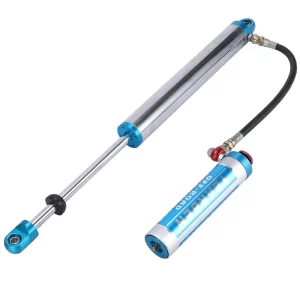
The Engineering Link Between Bore Finish and Seal Wear
The bore is the inner cylindrical surface of the shock body, and it is the running track for the piston seal and the wiper seal. It is not simply a tube wall. A smooth-looking bore still carries a surface texture left by the honing process. Under magnification, this texture reveals peaks and valleys. When the shock cycles, the seal lip rides over these peaks. If the peaks are too pronounced or inconsistently spaced, they act like fine sandpaper, wearing the seal compound and creating a leakage path.
How Does Monotube Bore Finish Affect Seal Life
Surface roughness directly determines the friction and wear rate at the seal-bore interface. In a monotube design, the working chamber is under high gas pressure, which pushes the seal lip harder against the bore. A rough surface with high peaks concentrates contact stress on small areas, accelerating seal lip abrasion. This generates heat and shears seal material, opening microscopic channels for oil to escape. In my experience, even a Ra value difference of 0.1 µm can shift seal life from several thousand hours to under 500 hours in a high-load ATV application.
Can Poor Bore Finish Cause Shock Failure
Yes, and the failure often appears as oil weeping around the shaft or external body. But the root cause is not the seal material alone. I have disassembled failed shocks where the bore surface showed chatter marks from a worn honing stone. These chatter marks create an irregular surface that the seal cannot follow, so it leaks at low speed and degrades rapidly at high speed. The shock loses damping force, and the vehicle’s handling suffers.
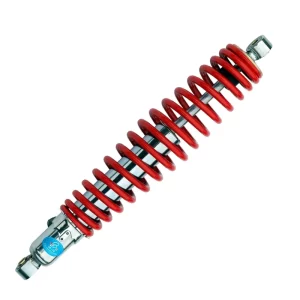
Surface Roughness Parameters That Dictate Seal Life
Two parameters dominate bore finish specification: Ra, the arithmetic average roughness, and Rz, the mean peak-to-valley height. Ra gives a general idea of surface smoothness, but Rz reveals the extreme peaks that actually contact the seal. For monotube shocks running PTFE-based seals, I target a bore finish of Ra 0.1–0.2 µm with Rz below 1.5 µm. That produces a plateaued surface where load-bearing peaks are flattened enough to support the seal without abrasive attack.
What Surface Roughness Is Recommended for Monotube Shocks
The target depends on seal compound, stroke speed, and expected service life. The table below maps common combinations from our production data.
| Bore Finish (Ra µm) | Seal Material | Typical Seal Life Range |
|---|---|---|
| 0.1 – 0.2 | PTFE, filled PTFE | 5,000+ hours, low friction |
| 0.2 – 0.4 | Nitrile, polyurethane | 2,000–5,000 hours |
| 0.4 – 0.8 | EPDM, butyl | Under 1,000 hours, high wear risk |
If your application involves continuous high-speed or heavy-load use, confirming the bore finish specification before ordering can prevent early seal failure. Reach out at info@yearbenshocks.com to discuss your damper requirements.
Honing and Finishing Processes in Shock Manufacturing
High-quality bore finish in monotube shocks does not come from the raw tube stock. It is achieved through a multi-stage honing process after the tube is precision-drawn or DOM (drawn over mandrel). The honing tool uses abrasive stones to remove material peaks and create a crosshatch pattern. That pattern retains oil and reduces friction. The final plateau honing step removes upper peaks without deepening the valleys, producing a surface that is smooth to the touch but oil-retentive in texture.
In a production environment, the consistency of bore finish across a batch depends on the condition of the honing stones, the coolant flow, and the speed-pressure control of the honing machine. When stone wear is not monitored closely, bore finish drifts above specification, and seals that would last years start failing in months. This is one of the most common quality slip points in low-cost damper supply.
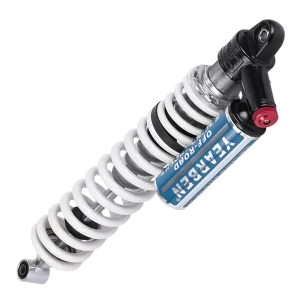
Detecting Bore Finish Issues That Cause Oil Leakage
A profilometer measurement is the direct method, but many rebuild shops and importers lack this equipment. There are indirect indicators. A clean white cloth dragged along the bore should slide without catching. Any fiber pull means micro-burrs or spiking roughness. Visual inspection under bright light reveals scoring or chatter marks. If the crosshatch pattern is missing or irregular, the honing process was incomplete.
How to Check Bore Finish Quality in a Shock Absorber
Beyond tactile checks, I look for a consistent surface reflection. A bore with proper plateau honing reflects light evenly, while a poorly honed bore shows dull patches. In extreme cases, pitting from inadequate tube cleaning before honing creates craters that trap oil and carbonize under heat, hardening into abrasive deposits. When we receive inspection samples at our factory, we also measure roundness and concentricity. A bore that is out of round by more than 0.01 mm will load the seal unevenly, causing diagonal wear and early weep.
Specifying Bore Finish Requirements for OEM Shock Orders
Most purchase orders specify only the shock’s extended and compressed lengths and maybe the damping force. Bore finish is rarely called out. That is a mistake. If you are sourcing monotube shocks for high-mileage fleet use or performance ATV applications, write the bore finish into the RFQ. The specification should include Ra and Rz values, the honing method, and whether surface inspection reports will be supplied with each batch.
Working with a manufacturer like Yearben, who performs in-house honing and provides surface finish reports, eliminates guesswork. In our facility, every production batch of monotube bodies is checked with a profilometer, and the honing process is adjusted based on tool wear data. This data-driven finishing is what keeps seal failure rates below our OEM customers’ warranty thresholds.
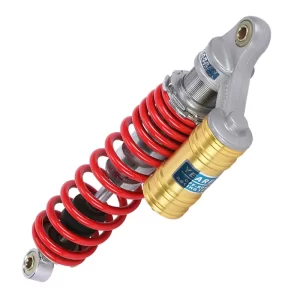
When a shock loses oil pressure prematurely, the root cause frequently traces back to bore finish that was never checked. Whether you are sourcing shocks for high-volume OEM production or a performance rebuild program, confirming the surface finish specification is a low-cost step that prevents expensive field failures. At Yearben, we maintain bore finish standards that directly extend seal life, and we provide inspection data with every batch. Send your part number and quantity to info@yearbenshocks.com, or call +86-523-86566899, and we will confirm stock and finish certification.
Common Questions About Shock Bore Finish and Seal Longevity
How can a shock still leak after new seals are installed
Replacing seals without inspecting the bore is one of the most frequent causes of repeat oil leakage. If the bore surface has scoring, pitting, or a roughness profile above the seal material’s tolerance, new seals will be damaged within the first hours of operation. In many cases, the bore needs to be re-honed or the body replaced entirely before seal work can be effective.
Which is more critical for seal life, bore finish or oil cleanliness
Both are important, but bore finish is the initial condition. A bore with correct surface finish still needs clean oil to maintain performance. However, a rough bore will destroy seals even with perfect oil, because the seal lip experiences mechanical abrasion from the first stroke. Contamination accelerates wear, but roughness initiates it.
Can I reliably check bore finish without sending a shock to a lab
A profilometer is the only way to get quantitative Ra and Rz values. For a quick field check, the cloth drag test and visual inspection under magnification give a reasonable go/no-go assessment. If the roughness is enough to catch cloth fibers, the bore needs rework. For sourcing decisions, we always recommend requesting surface finish data from the manufacturer rather than relying on post-arrival sampling.
Does bore finish matter more for monotube shocks than twin-tube
Monotube designs are more sensitive because the floating piston applies consistent gas pressure against the seal. This pressure forces the seal lip into continuous contact with the bore, amplifying the effect of any roughness peak. In a twin-tube design, seal loading is typically lower, so bore finish tolerance can be slightly wider without causing immediate failure, though seal life still benefits from precision finishing.
Share your shock specifications and operating conditions, and we will help you determine the right bore finish tolerance for your application. Reach Yearben at info@yearbenshocks.com or +86-523-86566899.
If you’re interested, check out these related articles: