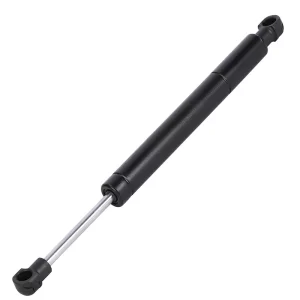
Single vs dual adjustment shock absorbers differ in how many damping circuits can be tuned without opening the damper. A single adjustment unit changes one circuit, usually rebound or compression. A dual adjustment unit splits two circuits so the builder can set the shock for two distinct conditions, such as slow rock crawling and high speed desert running. That does not make dual adjustment the default choice. The better default is to match the adjustment structure to the load range and surface mix. If neither load nor surface changes much, the extra circuit becomes unused complexity. If both change, the second circuit earns its cost quickly.

What Does a Single Adjustment Shock Absorber Actually Change?
A single adjustment shock absorber changes one damping circuit and leaves the others fixed. On most suspensions, that adjustable circuit is rebound damping. The operator turns a clicker or threaded collar to move a bleed needle, which opens or restricts the low-speed flow path. One circuit is enough when the vehicle has a stable sprung weight and one dominant surface condition.
For a lawn mower deck suspension or a seat damper in a fixed-cab truck, the load band is narrow. A single rebound adjustment lets the buyer reduce bounce on smooth ground or add control on rutted ground, and that may be all the application has room to use.

The limitation appears when two conditions have to be solved at once. If the same vehicle runs slow rock sections that need firm low-speed compression control and fast whoops that need softer high-speed compression, one circuit has to be set as a compromise. In our OEM discussions, I ask whether the operator will actually stop and adjust between surfaces. If the answer is no, single adjustment is only worth specifying when the compromise is acceptably small.
What Changes When You Move to a Dual Adjustment Shock Absorber?
A dual adjustment shock absorber separates two damping circuits so they can be set independently. The two most common configurations are compression and rebound on separate adjusters, or low-speed and high-speed compression on separate circuits. The second arrangement is more valuable on off-road vehicles because the same shaft can travel at very different speeds. Low-speed adjustment controls body motion during cornering, braking, and throttle transfer. High-speed adjustment controls how the valve reacts when the wheel hits a sharp lip, square edge, or rut at speed.

Independent circuits do not eliminate the need for correct base valving. A dual adjustment shock absorber still starts with a piston and shim stack matched to the spring rate and shaft travel. The adjuster shifts a portion of the curve, usually the bleed and the first stage of the stack, not the whole damping curve. That distinction matters when buyers expect a clicker to fix a spring that is two rates too firm. It will not. What it will do is let the same shock work across two distinct load or terrain windows without a revalve.
What Is the Difference Between Compression and Rebound Adjustment?
Compression adjustment changes how much force resists the shaft moving into the body, and rebound adjustment changes how quickly the shaft returns after the wheel hits a bump. They are not interchangeable. A vehicle that dives too fast under braking needs more compression control. One that feels bouncy after the impact or packs down over repeated hits usually needs rebound work. Dual adjustment makes sense when the two faults appear in the same vehicle.
When Does Dual Adjustment Justify the Extra Cost?
Dual adjustment adds a second seal path, adjuster mechanism, and calibration step. The unit cost increase is real, and so is the additional sample time. The decision rule we use in OEM work is simple: if the vehicle has two distinct operating conditions that cannot be solved by one damping setting, dual adjustment earns its place. A desert UTV that carries a passenger and cargo on one run and runs empty on the next has a changing sprung weight. A rock crawler that also runs graded access roads needs different low-speed and high-speed reactions. Those are two dimensional tuning problems.
If the application has one fixed weight and one surface type, the second adjuster is often set once and never moved. That is not money well spent. We have seen buyers request dual adjustment on a ride-on mower deck shock because the spec sheet offered it, then ship with the second adjuster locked at the factory setting. The right conversation before ordering is not how many adjusters are available. It is how many conditions the operator will actually tune for.
If your program involves a changing payload or a surface mix, confirm the high-speed and low-speed circuit ranges before finalizing the bill of materials. Send your two hardest use cases to info@yearbenshocks.com and we will check whether one adjustment is enough or two are required.
How Do You Match Single vs Dual Adjustment Shocks to a Vehicle?
Start with the two conditions that matter most: sprung corner weight and shaft speed range. A shock for a single seat damper with a 24 mm cylinder sees a narrow load band and primarily low-speed movement. A 38 mm shock on a long travel UTV sees a broad load band and high shaft speeds. Single adjustment is sufficient for the first; dual adjustment starts to matter for the second.
| Application condition | Single adjustment | Dual adjustment |
|---|---|---|
| Fixed payload, one surface | First choice | Usually not needed |
| Mixed terrain, same weight | Workable if operator adjusts | Better |
| Variable payload, mixed terrain | Compromise | Preferred |
| Race setup with frequent valving changes | Not enough | Preferred |
| Seat or mower deck damping | First choice | Only if load range is wide |
Spring rate still has to be correct before any adjuster can work. If a vehicle sags, wallows, or packs down after a series of hits, the first correction is spring rate and ride height. Adding a second adjuster on top of a wrong spring only moves an incorrect curve around.
Builders also need to confirm the adjustment range in absolute damping force, not clicks. Two shocks can both have ten clicks and produce very different force steps. Ask for the dyno plot. A dual adjustment shock should show two separate curves that move without collapsing into each other at the ends of the range.

Can a Dual Adjustment Shock Be Run as a Single Adjustment Unit?
Yes, and it is sometimes the sensible specification. The second adjuster can be set to a fixed position and marked. This gives a buyer future tuning room without requiring the operator to tune two circuits every time. We use this approach when the vehicle platform will later carry different bodies or kits. The trade-off is cost and seal count. Only accept it if the second adjuster is not leaking, detenting cleanly, and holding its position across the durability cycle.
What Should Buyers Confirm Before Sourcing Single or Dual Adjustment Shock Absorbers?
Many procurement issues start with the drawing, not the road. Before sampling, confirm the adjuster location, the number of detents, and the adjustment mechanism. A top-mounted clicker is convenient on an ATV but may be unreachable on a seat base. A hex adjuster may be easier to seal but less convenient in the field. The specification should call out the range in force, not just the number of clicks.
Also confirm whether the dual adjustment version shares the same body, shaft, and seal package as the single adjustment version. It often does, and that shared platform reduces spare part complexity. The valving and adjuster assembly are the difference. If a supplier cannot show the dyno plot for both adjuster positions, treat that as an open item, not a minor detail.
The costly mistake is not choosing one over the other. It is freezing a damping curve before the load and ride height are final. At Yearben, we ask for sprung corner weight, shaft travel, and the two most frequent surface conditions before recommending single or dual adjustment. With those three inputs, the selection is usually straightforward.
Send your target damping curves, part number or drawing, and annual quantity to info@yearbenshocks.com or call +86-523-86566899, and we will confirm whether a single adjustment or dual adjustment configuration is the better starting point for your program.
What Questions Do Engineers Ask About Single and Dual Adjustment Shock Absorbers?
Is a dual adjustment shock absorber always better for off-road vehicles?
No. A dual adjustment shock absorber is better only when the vehicle has two distinct tuning demands, such as a wide payload range or terrain that switches between low-speed crawling and high-speed running. Many utility ATVs with a fixed load and one surface type do well with a correctly valved single adjustment shock. The extra adjuster earns its place only when the operator will actually use the second circuit. If it stays locked at one setting, it is not a performance gain. The base valving and spring rate still do most of the damping work.
Can I convert a single adjustment shock absorber to dual adjustment later?
You cannot simply add an adjuster to an existing single adjustment shock. Dual adjustment requires a dedicated piston or bypass assembly, separate flow paths, and a body designed for the second circuit. Some shared platform shocks may be upgraded by replacing the adjuster assembly and valving stack, but that is a factory operation, not a field change. If you think the program may need dual adjustment later, specify the dual adjustment body at the start. Retrofitting after production often costs more than the price difference between the two configurations.
What does dual adjustment change on an ATV or UTV?
It depends on the shock architecture. On most off-road dampers, dual adjustment separates low-speed and high-speed compression or separates compression and rebound. On an ATV or UTV, high-speed adjustment changes how the shock responds to sharp square edges and landing impacts. Low-speed adjustment changes body control under braking, cornering, and throttle transfer. Compression-rebound separation is more useful for vehicles that need to control both dive and kickback. Ask for the dyno curves for both circuits before selecting which architecture to sample.
What information should I send before ordering adjustable shock absorbers?
The useful first message is not the number of adjusters you think you need, it is the set of measurements that define the application. Start with sprung corner weight, total shaft travel, spring rate, and the two most frequent surface conditions. Add the adjustment mechanism location and mounting dimensions from your drawing. If the vehicle has a known issue, such as bottoming on jump landings or packing down in whoops, describe it. Photos or short videos of the vehicle in use save time in valving. Send those requirements to info@yearbenshocks.com and we will confirm the correct single or dual adjustment configuration and dyno targets before sampling.
If you’re interested, check out these related articles: