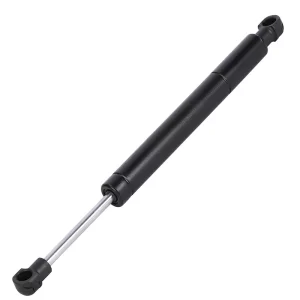
Coilover shocks vs separate components is not just a spring location decision. In the ATV, UTV, and light off-road programs I work on, the choice changes packaging height, service access, spring-rate inventory, and how the vehicle behaves when the suspension cycles under cornering load. A coilover shock packages the spring and damper on one axis. A separate spring and damper layout splits those loads across two mounting locations. Most production utility and off-road builds start with the integrated package, but there are real cases where separate components are the better engineering call.
What Do Coilover Shocks vs Separate Components Change at the Axle?
At the axle, the difference shows up as parts count and load path. A coilover shock carries the spring load through the shock body, the spring seat, and the two mounting eyes. A separate setup adds a spring pocket or coil bucket, a locating seat, and at least four mounting points where the damper and spring anchor independently. That extra hardware changes more than build complexity. It changes the angle at which cornering force enters the frame.
From an OEM perspective, fewer mounting points is usually simpler to qualify. The shock body still handles bending loads from the spring, so the body diameter, rod finish, and upper mount bearing become more important. On high-cycle utility vehicles, I want a hard-chromed rod and a spring seat that will not fret under spring rotation. A separate spring and damper can hide a poorly matched damping curve because the spring is not sitting on the damper, but it can also create a packaging envelope that is harder to tune around.

Where Do Separate Springs and Shocks Still Win?
Separate components still earn space when the spring rate needs to change frequently without a full assembly teardown. On race buggies and short-run off-road trucks, a separate coil or torsion spring can be swapped at the chassis side while the damper stays in place. That is harder with a coilover because the spring and damper share the same centerline and the spring seat has to be compressed or reset before removal.
They also win when the vehicle architecture puts the damper inboard and the spring outboard, or when the package height would force a coilover spring perch into a CV boot or steering link. I have worked on UTV layouts where a separate spring let us shorten the damper eye-to-eye length by nearly twenty millimeters, which changed the half-shaft angle enough to avoid a full droop bind. Not every platform has that conflict, but when it appears, the separate layout solves it faster than trying to shrink a coilover body.
How Should You Compare Spring Rate, Preload, and Tuning Effort?
Most buyers compare initial cost first. That is the wrong first question. A coilover shock usually ships as a matched assembly, so the spring rate, preload, and damping curve have already been defined for a target corner weight. A separate spring and damper package often requires the builder to match those values from different suppliers, which creates a calibration risk that does not show up until the vehicle is on rough ground.
Does a coilover shock limit spring rate choices?
Not necessarily. You can run single-rate, dual-rate, or tender springs on a threaded body. The constraint is more practical: changing a coil spring on an assembled coilover requires spring compression and usually removes the shock from the vehicle. If your test program expects ten spring-rate changes per week, separate components may be faster on the shop floor.
Can you set preload and ride height independently?
On a threaded coilover you can adjust preload and the lower spring seat, but the spring and damper positions are coupled. A separate spring pocket or bucket can use different adjusters for each. That independent control matters more on vehicles with large corner-weight differences, but for most ATV and UTV builds it is extra complexity rather than a clear advantage.
| Factor | Coilover Shock | Separate Spring and Damper |
|---|---|---|
| Mounting points | Two main eyes plus spring seat | Four or more independent anchors |
| Spring rate changes | Slower on vehicle, faster with spare assemblies | Faster at the pocket if designed for service |
| Packaging height | Single-axis, shorter in the wheel pocket | Depends on spring and damper placement |
| Calibration control | Matched at factory, less first-test risk | More freedom, more matching responsibility |
| Heat path | Body carries spring heat into damper oil | Spring sits away from the damper body |
That table explains why I start with a coilover shock for packaged OEM builds and keep separate components for unusual chassis constraints.

If your program involves a UTV or buggy platform with several spring-rate targets across trim levels, it is worth confirming the coilover body length, spring perch range, and damping curve before finalizing the bill of materials. Send the eye-to-eye length and corner weight targets to info@yearbenshocks.com and we will check the available assembly range.
What Should OEM Buyers Check Before Choosing Coilover Shocks?
Before choosing, I ask for three measurements: eye-to-eye extended length, compressed length, and the motion ratio at the axle. A coilover shock looks compact, but the spring seat diameter and reservoir angle can still hit an upper arm or frame rail at full compression. If the vehicle has an existing separate spring pocket, the switch to a coilover often changes the spring seat location by enough to require a different bump stop.
Should you verify rod finish and seal type before comparing quotes?
Yes. A separate spring and damper layout can use a relatively standard rod finish because the damper does not carry the spring bending load. A coilover shock carries that load into the rod guide and seal. In my experience, the first place a cheap coilover fails is not the piston, it is the seal lip wearing against a rough rod after a season of trail use. Yearben uses the same technical review on coilover and separate damper programs: confirm the rod hardness, seal compound, and spring seat clamping method match the duty cycle before locking the spec.
If you are comparing multiple suppliers, ask whether the coilover uses a welded spring seat or a threaded sleeve. A threaded sleeve gives you height adjustment without replacing the shock body, but it also adds a tolerance stack. The two designs are not equal in either cost or service life.

Which Setup Should You Specify for Your Next OEM Build?
Most buyers get stuck because they try to choose from a catalog before defining the vehicle’s packaging envelope. If your team is still comparing spring rate charts without eye-to-eye dimensions, the decision will keep swinging back and forth.
For a production ATV, UTV, or light off-road program, I usually recommend specifying the coilover shock first and keeping the separate layout as a fallback for packaging or spring-service problems. The integrated setup reduces parts count, simplifies assembly, and gives a cleaner first-test result. If your build has a known clearance conflict or needs weekly spring-rate changes, tell us the conflict early and we will design the separate arrangement around that constraint.
Send your platform, extended and compressed lengths, corner weights, and target spring rate to info@yearbenshocks.com or call +86-523-86566899. We will confirm whether a coilover shock or separate spring and damper setup fits your packaging before you commit to a bill of materials.

What Else Do Buyers Ask About Coilover Shocks vs Separate Components?
Do coilover shocks ride better than separate components?
Not automatically. Ride quality comes from the damping curve and spring rate matching the vehicle’s corner weight, not from how the spring is mounted. A coilover shock with the wrong spring rate will ride worse than a well-matched separate damper and spring. The advantage of the coilover is that the spring and damper are packaged on one axis and usually calibrated as a matched unit. Separate components give the builder more freedom to tune, but also more ways to introduce a mismatch.
Are separate springs and shocks always cheaper?
That is a common misconception. In low-volume service builds, separate parts may cost less because replacement parts are sold individually. In production, the opposite often happens: a separate layout adds brackets, seats, and assembly stations. The real cost comparison needs to include assembly time, bracket tolerance, and the risk of mismatched spring rates from two vendors. We usually review both configurations because the chassis envelope, not the catalog price, determines the final cost.
When is the separate layout the right choice?
It depends on the vehicle’s motion ratio and packaging. If the damper and spring can share the same centerline without interfering with a drive shaft or steering link, the coilover shock is the simpler solution. If the spring must sit inboard or outboard for clearance, separate components are easier to package. I would not decide without measuring the extended and compressed positions at the actual wheel travel.
Which setup do most production off-road programs end up using?
In the UTV and buggy programs we have handled, most production builds moved to coilover shocks after the first prototype because assembly time dropped and the damper curve was easier to repeat across units. A separate spring and damper stayed only on models with tight inboard packaging or twin-rate testing needs. If your program has an unusual tandem axle or high-heat desert requirement, send the damping curve and oil volume target to info@yearbenshocks.com and we will confirm the correct configuration.
If you’re interested, check out these related articles:
Best-Off-Road-Shocks
Remote-Reservoir-Shocks-Manufacturer
Fixed-Preload-Atv-Shock-Absorbers
Adjustable-Hydraulic-Shock-Absorbers