
A hydraulic steering damper not centering usually points to one of three faults: the piston seal, the rod guide, or the valve stack. I have measured this across dozens of teardowns at Yearben, and the pattern repeats often enough that repair can be methodical rather than guesswork. A damper that returns partway, wanders, or holds steering pressure to one side is telling you the pressure balance inside the cylinder has failed. This article walks through the failure modes, the checks that separate a serviceable unit from a scrap unit, and the repair path I would take before ordering a replacement.
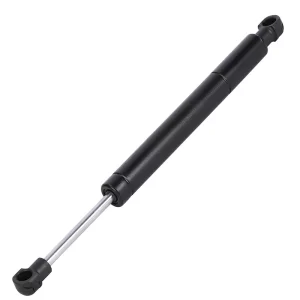
Why a Hydraulic Steering Damper Stops Centering
A hydraulic steering damper is a hydraulic control device, not a centering spring. In most ATV, UTV, and lawn mower systems the damper is supposed to resist steering input proportionally to shaft speed. A healthy unit is position-neutral. It develops force when the shaft moves and drops that force almost immediately when the shaft stops. When the steering wheel or handlebar rests off center after a corner, or the machine needs constant pressure to hold a straight line, the damper is either creating an asymmetric force or binding.
The first failure mode is a bent or scored shaft. A bent rod pushes the piston against one wall of the cylinder. The resulting side load wears the rod guide, scores the bore, and changes friction depending on stroke position. The damper then feels harder in one direction and may stop returning to the same neutral point after each steering input.
The second failure mode is internal seal leakage. A worn piston seal or a scratched bore lets oil bypass from one side of the piston to the other. The unit still builds some resistance at high shaft speed, but at low speed it cannot maintain balanced pressure across the piston. That low speed leakage shows up as a wandering neutral or a slow drift back toward center.
The third failure mode is valve stack damage. A bent shim, a blocked bleed passage, or debris trapped under a check plate changes the damping curve. The open and closed directions become uneven, and the steering will often stick slightly before releasing. This is the failure I suspect first when a customer reports a catch near the center of travel.
In cold weather the complaint is often masked. Thicker oil hides seal bypass just long enough for the machine to pass a quick yard test. After ten or fifteen minutes of operation, the damper warms, viscosity drops, and the position drift begins. If you only test a steering damper cold, you will miss this failure on many units.
How to Inspect a Steering Damper That Won’t Center
Start by measuring the extended and compressed length of the unit, then mark the mounting orientation before removal. A steering damper installed upside down or with crossed mounting eyelets can create a bind that feels identical to an internal centering fault. Remove one end and cycle the damper through its full stroke by hand. You are feeling for three things: a hard catch, a direction change in force, or a soft spot that appears at the same stroke point.
Then perform the following checks in order:
- Measure shaft straightness with a dial indicator or a known flat surface. Any visible runout at mid stroke is a replace decision.
- Inspect the exposed rod for chrome wear, rust, or a dull wear ring. A worn ring under the rod guide is a common cause for off-axis piston movement.
- Drain the unit and check the oil. Fine metal particles indicate bore scoring. Aerated oil indicates a bleed or fill problem.
- Inspect the piston shims and check plate for distortion. A bent shim will not seal evenly and gives a notchy release.
- Pressure test the fully assembled damper after service. A repeatable lower-than-specified pressure in one direction points to internal bypass.
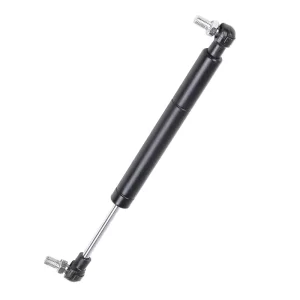
The symptoms below are the most common patterns I see on bench teardown:
| Symptom | Most likely cause | Repair decision |
|---|---|---|
| Steering pulls to one side after release | Bent shaft or worn rod guide | Replace rod and guide |
| Catch near center of travel | Bent valve shim or blocked bleed passage | Replace shim stack and clean bleed circuit |
| Wanders only after the unit warms up | Seal bypass as oil thins | Reseal and retest at operating temperature |
| Pull appeared immediately after installation | Mounting eyelet bind or wrong hardware | Realign mount and torque fasteners |
| Handlebar oscillates around neutral | Worn piston seal | Replace piston seal and inspect bore finish |
How to Fix a Hydraulic Steering Damper Not Centering
Once the inspection is complete, I take a repair position based on the bore. A clean bore can be resealed. A scored bore, a bent body, or a chrome-damaged shaft gets replaced. That decision protects the customer from a second failure at 20 hours.
For a serviceable damper, follow this sequence:
- Discharge any gas charge through the fill port. Do not open a gas charged damper while it is still pressurized.
- Drain the oil into a clean container and measure the volume. The drained volume is a useful reference when the manufacturer’s fill specification is not available.
- Remove the rod guide, piston nut, piston, shims, and check plates in order. Photograph the shim stack before disassembly.
- Clean all internal parts. Check the bleed passages carefully; a single metal chip can recreate the original notch.
- Replace the shaft seal, piston seal, and rod guide bushing even if they look acceptable by eye. The seals take a set during use.
- Refill with the specified oil, vacuum bleed the unit, and recharge gas if the design uses a gas charge.
- Bench cycle the damper at low and high shaft speed, then record the force or pressure reading in both directions.

If the unit will not hold repeatable pressure in both directions after this sequence, the bore clearance or piston fit is beyond a simple rebuild. The next repair step is replacing the cylinder body or moving to a customized damper with the correct bore and stroke.
If the existing damper has a welded body, an odd mounting spacing, or a stroke you cannot source as a stock item, it is worth confirming the bore diameter, piston clearance, and stroke before rebuilding. A used welded body may not be serviceable, and forcing a rebuild wastes the oil and seals. Send the part number and the measured extended length to info@yearbenshocks.com and we can check whether it is a stock service part or a custom-run item.
When a Customized Steering Damper Is the Better Repair
Repeatedly fitting an off-the-shelf damper with incorrect eyelet width or a mismatched stroke creates the same centering fault after installation, even when the product is mechanically sound. I see this often on commercial lawn mowers and special vehicles where the factory damper has been discontinued and a near-size replacement is forced into the mounts. The mounting angle changes slightly, the rod side-loads, and the steering wanders after the first few hours of use.
Yearben builds hydraulic steering dampers to the vehicle’s actual stroke, bore, and damping force rather than to a standard category. We match the mounting ends, the oil volume, and the valving direction to the steering speed of the machine. That removes the most common root cause of post-replacement wander: a damper that fits the eyelets but not the operating envelope.

If you have replaced the same steering damper twice and the neutral drift comes back, stop repeating the same part callout. Send us the failed unit or the drawing with the extended length, compressed length, stroke, rod diameter, and mounting bolt size. We can return a production cost for a matching hydraulic steering damper and confirm the lead time from your order date. Email info@yearbenshocks.com or call +86-523-86566899 with the part number and the number of units you need.
Common Questions About Hydraulic Steering Damper Centering
Can a hydraulic steering damper cause a vehicle to pull to one side?
Yes, but only when the damper is generating an asymmetric force or a mechanical bind. A healthy linear damper resists motion, it does not steer. A pull usually follows a bent shaft, a damaged internal valve, or a worn guide that lets the piston run slightly off its bore axis. The quick test is to disconnect one end, lift the front wheels off the ground, and steer by hand. If the pull disappears, the damper circuit is biased. If it remains, look at steering geometry, tire contact, and caster split first. On ATVs we often find the damper was blamed when the real issue was a twisted radius-rod mount.
Is it better to rebuild or replace a steering damper that will not center?
It depends on what you find after disassembly. If the piston bore is smooth, the rod is straight, and the only fault is a worn shaft seal or rod guide bushing, rebuilding makes sense because the core structure is sound. If the shaft shows visible chrome wear or the body has internal scoring deeper than a light polish, replacement is cheaper and safer. A rebuild that leaves a scored bore will feel better briefly, then the centering fault returns. I treat service life as the deciding data point: under 30 operational hours on a commercial unit, replace it; over 100 hours with clean internals, rebuild it.
Why does my steering damper center when cold but not after a long ride?
In units we have torn down after this complaint, the failure was rarely the piston. Heat expands the oil and increases internal leakage past a worn seal. Cold oil is thicker and can mask bypass, so the damper feels fine for the first ten minutes. As the cylinder warms, fluid viscosity drops and the same seal path lets more oil through. The result is a wandering neutral point only after the steering damper reaches operating temperature. I have also found air trapped behind the rod guide doing something similar because the air pocket changes volume as the damper heats. Bleed the unit and reseal it before chasing suspension geometry.
Can a lawn mower steering damper be replaced with an ATV damper?
The common assumption is that any steering damper with matching eyelets will work. It will not, because lawn mower steering dampers and ATV units are tuned for different steering speeds and force levels. A lawn mower unit is usually low speed and low force to reduce deck steer feedback. An ATV damper has firmer valving for higher speed kickback and impact loads. Fit an ATV damper to a mower and the steering becomes heavy at the yoke without adding meaningful stability. Cross reference the extended length, stroke, and damping force at the steering speed the machine actually uses. Send the current damper’s extended and compressed lengths plus the mounting bolt diameter and we can confirm whether a customized damper fits your deck.
If you’re interested, check out these related articles:
Adjustable-Gas-Shock-Absorbers
Ride-on Mower Shock Absorbers 38mm, Shock Absorber Manufacturer
Truck-Seat-Damper-38MM-Shock-Absorber-Manufacturer
