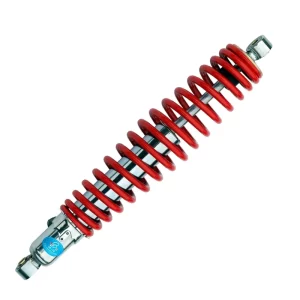
Every coilover shock catalog promises OEM-grade quality, but after two decades of designing, testing, and manufacturing suspension systems, I can tell you that a factory’s seriousness shows up in specific operational details, not just in brochures. The gap between a genuine coilover shock factory and a trading office that subcontracts assembly is invisible in a polished showroom but unmistakable once you examine production traceability, in-house testing depth, and the quality of technical conversation during a supplier meeting. The five signs below are what I personally look for when evaluating whether a facility can deliver consistent damping performance across a production run. Each one reflects a layer of engineering discipline that a serious OEM builds into its daily workflow.
Production Transparency and Material Traceability
A factory that takes coilover shock manufacturing seriously will never hesitate to show you its material certs. Forged piston rods, for instance, should come with mill test reports that specify the steel grade, heat number, and chrome plating certification, and these records should be tied to batch numbers that follow the finished shock through assembly. In our facility, every monotube shock body is traceable to the original tubing lot, which means we can isolate and investigate any hardness or roundness issue that might show up in a customer’s fleet months later. If a supplier deflects material-source questions with vague answers or says the information is confidential, that is not a trade secret; it is a sign they do not control their supply chain tightly enough to document it.
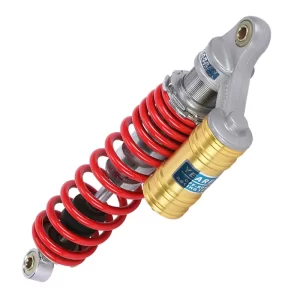
In-House Testing That Goes Beyond the Basic Dyno
A force-velocity graph is the bare minimum. A serious coilover shock factory runs temperature cycling on assembled dampers to confirm seal stability across the operating range, logs nitrogen pressure retention over time to catch micro-leaks that a quick dyno pull will miss, and subjects coating samples to salt spray testing that mirrors actual field conditions. I have seen shocks pass a 20‑cycle dyno test perfectly and then lose 15% of their gas charge after 48 hours in a heat chamber because a single O-ring gland was cut during assembly. The factory I trust will have in-house equipment to find that failure before shipping, not rely on the customer’s warranty claim to discover it. When you walk the production floor, ask to see the test logs, not just the shiny pass/fail report.
| Test Type | Minimum Indicator of Serious Capability |
|---|---|
| Force-Velocity Dyno | Automated data logging with stored curves per serial number |
| Nitrogen Leak-Down | 72-hour pressure retention test on every batch |
| Salt Spray Corrosion | At least 500 hours to red rust on coated bodies |
| Temperature Cycle | 200 cycles from –20°C to +80°C with damping check |
Engineering Depth in Custom Valving and Tuning
You can gauge a factory’s engineering culture by how they talk about damping. A sales‑oriented contact will promise “comfortable ride.” A serious manufacturer will ask about your vehicle’s sprung mass, motion ratio, and the terrain speed range where you need the most body control, then explain how they would adjust the piston bleed, shim stack preload, or valve spring rate to match. I have worked on ATV coilover programs where the difference between a happy customer and a returned batch came down to a 0.1‑mm change in shim thickness on the compression side. That level of tuning requires an engineering team that understands low-speed damping hysteresis and can run iterative dyno calibrations, not one that pulls a preset valving code off a shelf and ships it.
If your program involves multiple vehicle platforms with different weight distributions, it is worth confirming the factory can map a distinct damping curve for each variant rather than applying the same off‑the‑shelf tune. A short call to their engineering lead often reveals more than a dozen emails with sales.
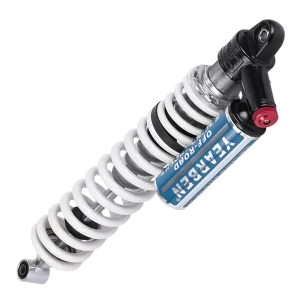
Precision Manufacturing and Assembly Cleanliness
Bore finish inside the shock body and rod surface roughness directly control seal life and breakaway friction. A factory that does not own a profilometer cannot hold the Ra 0.1–0.2 µm surface finish that a modern low-friction seal demands, and the result is leakage that shows up after a few hundred hours of hard use. Equally important is assembly cleanliness: dust and debris trapped inside a coilover during final assembly will embed in the piston band and score the bore during the first compression stroke. In a serious facility, you will see cleanroom protocols for cartridge assembly, automated fluid filling under vacuum to eliminate air pockets, and end-of-line testing that records the breakaway force signature as a quality gate. When I walk a new supplier’s line, I spend more time looking at the sealing and filling station than at the CNC lathes.
Post-Production Support and Failure Analysis
Even the best coilover shock factory ships a unit that eventually needs service, and what happens next separates a serious OEM from a transaction‑only supplier. The factory I would return to maintains a database of failure‑analysis reports, categorizes root causes by production batch, and can produce a corrective action report within 72 hours of receiving a field return. When a customer sent us a set of shocks that had leaked after six months in a mining environment, we cut open the damper, identified an elastomer swelling issue caused by a specific hydraulic fluid exposure that our standard seal material could not handle, and re-engineered the seal compound for that application. That loop, from field failure to engineering correction, is a capability a sales office cannot offer. Before placing a volume order, ask the factory to walk you through a recent failure‑analysis case. If they cannot produce one that is recent and specific, they are not doing the engineering work.
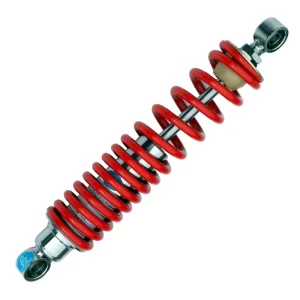
Questions Buyers Often Overlook When Qualifying a Coilover Shock Factory
Are ISO certificates enough to verify quality management?
ISO 9001 tells you that a factory has a documented quality system, but it does not tell you whether that system is applied to every damper that leaves the line. What I look for is evidence that the quality plan is active: in‑process inspection records at the honing and filling stations, real‑time SPC charts on piston rod runout, and a closed‑loop corrective action log that shows the factory actually uses its own data to improve. A certificate on the wall is a starting point. A trail of inspection records that traces a specific batch through every critical operation is what matters.
How can I verify a supplier’s testing claims without visiting the factory?
Request a test‑report sample for a shock that matches the type you intend to order, and ask for the raw data file, not a summary PDF. A serious coilover shock factory can export a force‑velocity CSV from its dyno controller with the timestamp, operator ID, and serial number intact. If the response is a screenshot or a cleaned‑up presentation slide, assume the data has been filtered. We routinely share raw dyno curves with customers during the sampling stage because the transparency itself is part of the quality assurance.
Does a higher unit price always mean a more serious factory?
Not necessarily. Some high‑priced suppliers spend more on marketing than on process control, and some cost‑competitive factories invest heavily in automation but keep margins thin by running high volumes. The real indicator is not the price per shock but the consistency of the production cost structure: a factory that can break down the cost contribution of the piston rod, seal kit, oil volume, nitrogen charge station amortization, and testing labor per unit has command of its process. A factory that only quotes a total unit price without that granularity may not understand its own cost drivers well enough to control them.
What is the most overlooked sign of a factory that cuts corners?
The hydraulic fluid. Shock absorber oil is the least visible component in a coilover, and it is the easiest place to save a few cents per unit. A high‑quality damper uses a synthetic fluid with a stable viscosity index and anti‑foam additives, specified by an internal part number that is tied to a validated source. If the factory cannot tell you the fluid’s viscosity at 40°C or the foaming tendency according to ASTM D892, it is likely using a generic commodity oil that will shear down and aerate during hard use. We have seen shocks sent back from desert racing events where the damping loss could be traced entirely to fluid degradation. Asking for the fluid datasheet is a quick test of transparency; if you have specific operating temperature requirements, share them with the factory and see whether they recommend a fluid change or acknowledge the limitation. We routinely match fluid grades to customer operating profiles, and you can reach us at info@yearbenshocks.com or call +86-523-86566899 to discuss your application’s requirements before finalizing a specification.
If you’re interested, check out these related articles:
Steering-Damper-18MM
Best-Off-Road-Shocks
4X4-Heavy-Duty-Suspension
Lawn-Mower-Damper-Shock-Absorber
Best-Off-Road-Coilover