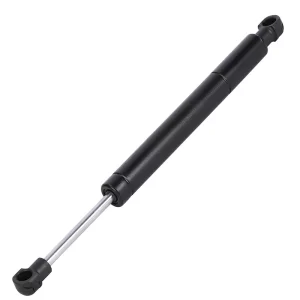
Shock fade on a long off-road run is rarely a spring problem. It is a heat problem. Remote vs Internal Bladder Reservoir design decides where that heat goes and how fast the oil can shed it. In our suspension lab, we have watched internal bladder shocks soften after repeated full stroke cycles while remote reservoir units held damping longer. The difference comes down to oil volume, surface area, and the path gas has to reach cooler ambient air. This article compares the two layouts for sustained off-road use so you can specify the right reservoir before production.
What Happens to Shock Oil When Heat Builds Up?
Every damping cycle turns suspension movement into heat. The piston forces oil through the shim stack, and that flow restriction creates damping force. Repeated high speed compressions push oil temperature upward. As temperature rises, oil viscosity falls. Low speed and mid speed damping bleed off first, and the shock starts to feel softer even though the gas charge is technically still holding. Fade is a thermal event before it is a mechanical failure. A suspension that feels stable during the first section of a loop can lose composure as the oil thins.
In our test bay, we have seen rebound force fall after sustained cycle testing at race pace without any external leakage or gas pressure loss. That pattern tells us to treat oil temperature, not shaft seal condition, as the first limit in reservoir selection.

How Does a Remote Reservoir Manage Heat Differently?
A remote reservoir changes the thermal path by taking most of the reserve oil and gas charge out of the shock body. The canister mounts in open air at the end of a hose. That gives the assembly more oil mass to absorb the same heat input, which lowers peak temperature for identical damping work. The canister also adds surface area exposed to airflow. A remote reservoir can be positioned in front of a radiator or along a chassis tube where moving air carries heat away. Gas pressure stays more stable because the nitrogen charge does not sit next to the hot piston.
The hose itself is not a major radiator, but it allows service and packaging flexibility. That matters on UTV and ATV builds where the shock body is buried inside a narrow control arm pocket.

What Limits an Internal Bladder Reservoir?
An internal bladder reservoir keeps the gas charge inside the main body. That layout is compact and light. It fits stock suspension pockets, needs no hose routing, and is easier to package across multiple OEM platforms. The tradeoff shows up in sustained heat. Less oil volume means the same damping energy produces a faster temperature rise. Less external surface area means the body has to reject heat through a shorter path, often into surrounding components instead of airflow.
For short cycles, this is fine. For long races or heavy vehicles on hard trails, the internal bladder layout approaches fade earlier than a remote reservoir of equivalent piston size.
Which Reservoir Design Fits Your Vehicle and Terrain?
| Factor | Internal Bladder Reservoir | Remote Reservoir |
|---|---|---|
| Oil volume | Lower | Higher |
| Cooling surface | Shock body only | Body plus canister and hose |
| Packaging | Compact, fits stock mounts | Needs hose routing and mounting |
| Fade resistance in long runs | Moderate | Stronger |
| Service complexity | Simpler package | Hose and fitting checks required |
For a trail UTV that sees short climbs and occasional rock gardens, an internal bladder reservoir is usually the better packaging choice. For desert racing, dune running, or a trophy truck with long repeated whoops, remote reservoirs are the standard.
If your program mixes trail riding with long high speed runs, the heat load is not constant. It is worth confirming oil volume, gas charge, and canister placement for both layouts before freezing the bill of materials. Send your terrain profile and expected run time to info@yearbenshocks.com, and we will confirm which reservoir configuration holds damping force under your heat load.

What Should Buyers Confirm Before Selecting a Reservoir Shock?
Selecting between remote and internal bladder reservoirs means trading sustained cooling for packaging and service simplicity. If fade on long runs is the main concern, remote reservoir tends to be the more stable path. We can confirm hose length, oil volume, nitrogen charge, and mount position against your vehicle before you commit. Send your part number, target oil volume, and mounting constraints to info@yearbenshocks.com or call +86-523-86566899, and we will return a reservoir recommendation with lead time.
What Buyers Ask About Remote and Internal Bladder Reservoirs
Which type cools better for sustained off-road use?
A remote reservoir cools better in sustained hard use because it adds oil volume and separates the gas charge from the hot piston body. The canister also sits in airflow instead of inside the shock tower. Still, the gap only matters when the shock is pushed long enough to get the oil hot. On light trail machines, either layout stays within a safe range.
Does a remote reservoir always add more maintenance?
Not as much as buyers expect. The additional hose and fitting create two leak points that need checking after hard races, but they do not require constant attention. We pressure test remote reservoir hoses and fittings before shipping, and most issues appear at installation or after a crash. For a cleanly routed hose, maintenance is just a visual check. A short inspection after each event is enough.
Can an internal bladder reservoir handle desert racing?
It depends on run length and vehicle weight. In a light buggy doing short bursts, an internal bladder reservoir can survive. In a heavy truck running continuous whoops, the smaller oil volume gets hot earlier and damping fades. We usually recommend remote reservoirs for desert racing once sustained speed is part of the program. The decision is not about quality; it is about thermal capacity.
What should I provide to get a reservoir spec quote?
The useful baseline is terrain type, vehicle weight, current shock dimensions, and whether you need a remote hose or a package friendly internal layout. Also include mount space for the canister if you want remote. We use that to confirm bore, stroke, oil volume, and gas charge. Send those details through the product page inquiry form and we will return a spec sheet with lead time.
If you’re interested, check out these related articles:
Piggyback-2-0-Coilover-Shock
Lawn mower steering damper 18mm
Damping-Adjustable-Shock-Absorber