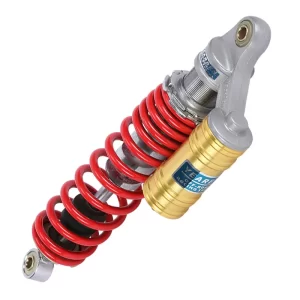
Long travel suspension for UAE desert racing is usually ordered from a travel figure and then rebuilt once the car has a season behind it. The travel figure is the easy part. What decides whether a buggy or a 4×4 keeps its damping through a full run is how much of that travel stays usable at speed, how quickly the damper sheds heat in fine sand, and whether the seals keep the sand out between services. Those three constraints are worked through here in the order a builder meets them, ending with the specification sheet worth sending to a supplier.
What Long Travel Changes in UAE Desert Terrain
Long travel suspension is a geometric arrangement that lets each wheel move further from the chassis than the production layout allowed, usually through longer control arms, a raised upper damper mount and a longer damper. Travel is a distance. What the desert tests is whether the spring and damper can use it.
Soft sand rewards compliance at low shaft speed. The tire has to follow the surface without the chassis being pushed upward, because a chassis riding up on the sand loses the contact patch that keeps it floating. Dune crests invert the requirement. As the body unloads over a crest, droop has to keep the tire pressed down. If the spring goes loose before the limit strap stops the axle, the wheel hangs unloaded and the car lands on the next face with nothing to absorb it. Washboard and hard pack work the damper in the other direction, at higher shaft speed and small amplitude, where too-free rebound lets the suspension pack down over successive bumps.
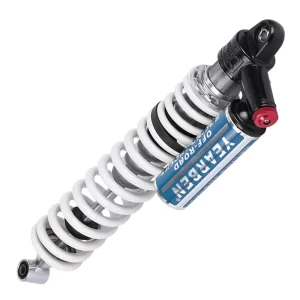
Long travel also rewrites the rest of the chassis. Camber and toe curves change through a longer arc, CV joint angles open up at droop, and brake hoses, wiring and breathers need length that no longer depends on the damper holding the axle in place. Those parts rarely fail because the travel number was wrong. They fail because the travel number was chosen before anyone measured what the chassis could accept.
More travel is not automatically more grip. Droop that the spring cannot keep loaded simply lets the tire hang, and bump travel that arrives after the bump stop has already loaded the chassis does nothing except lift the body. Usable travel is the part between those two limits, and it is a measurement rather than a catalogue figure.
| Record | Method context | Responsible use | Do not infer |
|---|---|---|---|
| Full-bump damper length | Springs removed, chassis on stands, suspension cycled until the bump stop contacts | Fixes the shortest length the damper has to survive | That the bump stop is correctly sized for the load |
| Full-droop damper length | Same session, opposite direction, with limit strap, hoses and wiring connected | Fixes the longest length and the shaft exposure the wiper will see | That the CV or tripod joint is content at that angle |
| Motion ratio at both ends of the arc | Ratio measured between damper and hub at bump and again at droop | Converts damper stroke into wheel travel | That the ratio stays constant in between |
| Damper body and reservoir temperature after a run | Same points, same instrument, same cooling time after each run | Compares one setup against another on the same car | That a surface reading describes oil condition or remaining service life |
These records belong to one chassis. A length copied from a similar buggy, or from a post about the same model, describes a different set of arms, mounts and stops, and it cannot be used to approve a damper for this car.
Matching Travel to the Car Before Choosing a Damper
The order of decisions matters more than any single figure. Travel comes from the chassis, the damper is chosen to fit that travel, and the spring is chosen to keep the damper working inside it.
Wheel travel at the hub is roughly damper stroke multiplied by the motion ratio at that point of the arc. The ratio changes between bump and droop on almost every independent layout, so calculate it at both ends and treat the smaller result as the travel the damper actually controls. A long damper on an arm with a poor ratio adds shaft length without adding much wheel movement.
Four clearance checks belong in the same session as the length measurements:
- CV joint angle at full droop, checked with the joint under drive rather than hanging free.
- Spring free length and coil bind at full bump, with the bump stop compressed as it will be in service.
- Damper body, reservoir and hose routing through the full arc and on steering lock, since a reservoir that clears at ride height can meet a tire at lock.
- Brake hose, sensor lead and breather length at droop, checked with the wheels turned.
The limit strap, not the damper, should set full droop. A damper used as the droop stop loads the shaft, the top mount and the seal in tension, and the fault shows up later as a stretched shaft or a leaking wiper rather than as an obvious break. Bump gap works the same way. The bump stop should be carrying load before the damper reaches its shortest length, and the gap should be measured with the spring fitted rather than on a bare chassis.
Bypass, Piggyback or Remote Reservoir for Dunes
Three damper families appear most often in desert builds, and they are usually presented as a quality ladder. They are not. Each solves a different problem, and one build can need more than one of them.
A bypass damper controls force by position, using tubes that open or close as the piston passes fixed ports, which gives the last part of the travel extra control without making the first part harsh. A reservoir, whether piggyback or remote, adds oil volume and a place for the gas to work, raising thermal capacity and reducing the chance of cavitation under hard use. A coilover carries the spring on the damper body, which solves packaging and lets preload and rate change without new mounts. These properties overlap, since a bypass damper can carry a coil and a coilover can carry a remote reservoir.
| Architecture | What it solves | Where it costs | Suited to | Poor fit when |
|---|---|---|---|---|
| Bypass, two or three tube | Position-sensitive control in the last part of travel, tunable per zone | External tubes exposed to stone strikes and sand blasting, more seals, higher cost | High-speed dune work with repeated hard bottoming | The car is also a road vehicle and the tubes cannot be inspected regularly |
| Piggyback coilover | Extra oil volume and spring packaging in one body | Reservoir sits on the damper body, small heat sink, limited routing freedom | Tight chassis where a remote hose cannot be protected | Runs last long enough that oil volume, not valving, becomes the limit |
| Remote reservoir coilover | Oil volume separated from the body, accessible valving, service room | Hose and fittings add joints and a bleeding step | Sustained dune running with frequent tuning | Hose routing cannot be shielded through the full steering and suspension arc |
| Emulsion coilover | Simple, light, low cost, adequate for mixed use | Oil and gas share a chamber, so consistency drops as the damper works hard | Trail, light desert and mixed recreational use | Repeated high-speed runs where force has to stay repeatable |
A bypass damper answers a position problem that a larger reservoir cannot answer. <Triple-Bypass-Remote-Reservoir-Shock> covers triple bypass shock configurations that pair zone control with remote oil volume.
The category does not rank performance. A well-specified emulsion damper on a light buggy can hold its force better than a bypass damper that was valved for a different car and never re-tuned, and the difference usually shows in the temperature record rather than the parts list. What the table can settle is the service and packaging burden you are willing to carry for the terrain you actually drive.
Why Heat and Sand Set the Valving
Damping turns motion into heat in the oil, and the oil does not care where the motion came from. On a long dune run the damper may work continuously for minutes at a time, which is a different duty from a short trail section with cooling gaps. As oil temperature rises its viscosity falls, and a damper set up cold delivers less force when hot. The car then bottoms where it did not bottom on the first pass, and the driver reads that as a shock failure when the setting has simply drifted with temperature.
Gas pressure in the reservoir keeps the oil from cavitating on the rebound side. When the oil is hot and the pressure is low, the damper can lose force in a way that turning an adjuster cannot recover, because the problem sits in the oil rather than in the valving. Oil volume and heat path decide how long that takes. This is the argument for a remote reservoir on a desert car. Not that the damper is inherently better, but that it holds more oil and has more surface to shed heat through before force drops.
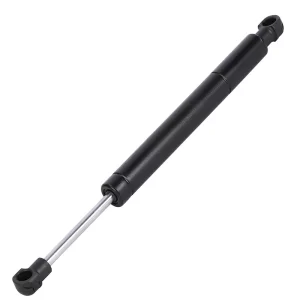
Sand adds a second problem, and it is mechanical rather than thermal. Fine sand that reaches the shaft is carried past the wiper and into the oil, where it works as a lapping compound on the piston band and the bore. A damper with contaminated oil does not fail suddenly. It loses force gradually, and by the time the loss is obvious the bore is often past a simple re-seal. Shaft finish, wiper design and a service routine based on inspection matter more here than the published damping curve.
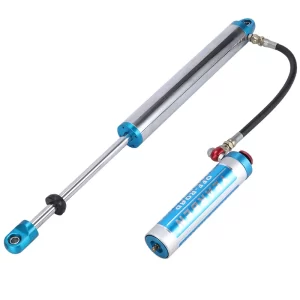
Extra oil volume helps only if the hose and fittings survive the same terrain. <Remote-Reservoir-Shocks-Manufacturer> covers remote reservoir shock construction and supply.
Valving changes are worth making only when one change can be attributed. Adjust one adjuster, run the same section, and record damper temperature and the point in the travel where the car bottoms. Compression adjustment changes how the car takes a face and how hard it lands. Rebound adjustment changes how quickly the suspension returns between bumps and whether it packs down. Making both changes on one run produces a result nobody can read.
Seals, Shaft Finish and Service Access in Desert Use
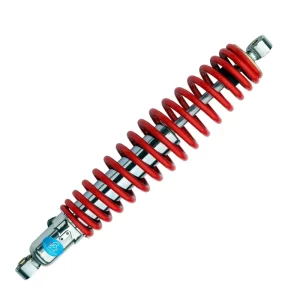
Dust protection is a design choice with a real trade-off. A boot keeps stone strikes off the shaft and slows sand ingress, but a boot that has split unnoticed holds grit against the shaft and does more damage than no boot at all. Builds that run without boots trade shaft exposure for easier inspection.
The routine is short. After a run, look for an oil film on the shaft and on the body around the wiper, wipe the shaft before the car is parked so sand is not drawn in on the next stroke, check the exposed shaft for scoring at the height where the wiper rests, and check the reservoir hose and fittings for chafing against the chassis. On a car that runs in sand regularly, these checks set the service interval. A calendar interval borrowed from a road application either wastes seal life or leaves contaminated oil in place for months.
Preload, Bump Gap and Limit Strap Sequence
Preload, bump gap and limit strap interact, and the order below avoids rework.
- Fit the springs and set ride height at running weight, including fuel, spare, tools and occupants. Setting ride height on an empty chassis produces a preload figure that will be wrong on the start line.
- Measure the bump gap with the spring fitted. The gap between the bump stop and its contact face at ride height tells you how much travel remains before the chassis takes load.
- Set the limit strap at full droop with the damper disconnected, so the strap defines the stop rather than the shaft. Leave enough shaft exposed that the wiper stays inside its swept area at full extension.
- Check the spring for coil bind over the same travel with the bump stop compressed. A spring that binds before the stop takes load sends that load into the damper body.
- Set the adjusters to the supplier baseline, then change one at a time on a known section, recording damper temperature and the bottoming point after each run.
- Re-check all four measurements after the first full run. Springs settle, straps stretch, and a chassis that was correct in the workshop is often not correct after a day in sand.
The Specification Sheet to Send a Supplier
A supplier can build a good damper from good data and a poor damper from a vague request. The fields below change the outcome, and most of them come from measurements the builder has already taken.
| RFQ field | What to send | Why it changes the result |
|---|---|---|
| Platform and duty | Buggy or 4×4, race or recreational, typical run length and terrain mix | Sets the thermal duty and the valving baseline |
| Measured lengths | Full-bump and full-droop damper length, plus the method used | Stops the damper being built to a catalogue length that does not fit the arc |
| Mounting detail | Eye or clevis, bolt diameter, width, offset and mount angle | A mount a fraction too narrow will not fit and cannot be corrected on the car |
| Spring and load | Corner weight at running weight, spring rate fitted now, single or dual rate | Determines preload and whether the spring stays loaded at droop |
| Valving intent | Adjustable or fixed, which adjusters, and the problem the car has now | Turns a request for desert valving into a change the factory can actually make |
| Environment and service | Sand exposure, dust sealing preference, service access, ambient conditions | Decides wiper specification, boot choice and service recommendations |
| Weak line in an RFQ | What to write instead |
|---|---|
| Long travel bypass shocks for a buggy | Measured damper lengths at full bump and full droop, mounting drawing, corner weight, spring rate, run length, and the travel where the car bottoms |
| Desert valving, set up for sand | Current compression and rebound settings, the section where the car loses control, damper temperature after that run, and whether the problem appears early or late in the run |
A factory that builds across several off-road platforms has more reason to keep reservoir and bypass parts in stock. <Off-Road-Coil-Over-Shocks-Manufacturer> covers off-road coil over shock manufacturing.
Factories that build across ATV, UTV, buggy and off-road vehicle platforms, Yearben among them, generally build to a drawing and a set of measured lengths rather than to a model name, because the same model can carry different arms in different markets.
Send Your Build Data Before You Order Valving
A useful inquiry for a UAE desert build carries five things: measured damper length at full bump and full droop with the method used, corner weight at running weight, the spring rate fitted now, the terrain and run length the car sees, and where in the travel the car bottoms. With those, valving and gas pressure can be proposed against your car instead of against a general desert setting.
Taizhou yearben shock absorber Technology Co., Ltd. builds dampers for ATV, UTV, buggy and off-road vehicle platforms and takes custom orders from a drawing or a measurement sheet. Email info@yearbenshocks.com or call +86-523-86566899 with the build data and the intended use.
FAQ
How much wheel travel is enough for UAE dunes?
There is no universal figure, because travel at the hub depends on arm length, motion ratio, tire size and how the car is driven. Work from measured geometry instead of a target number: establish full bump and full droop, set the limit strap so the damper is not the droop stop, and confirm the spring still loads the tire at full extension. If the car reaches the bump stop in normal use, the answer is usually more damping or better valving rather than more travel.
Do I need bypass shocks for dune running?
Not automatically. A bypass damper adds position-sensitive control in the last part of the travel, which helps a car that bottoms repeatedly at speed. If the car rarely reaches that part of the travel, or if the real symptom is force loss late in a run, oil volume and heat path matter more than an extra tube. Decide from where the car bottoms and when force drops, not from the category.
Why do my shocks fade partway through a run?
Heat is the usual cause. Oil viscosity falls as temperature rises, so a damper set up cold delivers less force when hot, and low gas pressure allows cavitation on rebound. Contaminated oil produces a similar gradual loss. Measure body and reservoir temperature at the same points after each run: if force returns once the damper cools, the problem is thermal and points to oil volume, gas pressure or valving. If it does not return, service the damper.
Will a remote reservoir stop overheating on its own?
It raises thermal capacity and gives the oil a larger path to shed heat, which helps on sustained runs. It does not correct a hose routed against a hot component, a system that was never properly bled, or sand already inside the oil. Treat the reservoir as one part of the cooling and sealing plan, alongside wiper specification, shaft condition and the service routine.
What should I measure before ordering custom long travel shocks?
Measure damper length at full bump with springs removed, damper length at full droop with the limit strap connected, the motion ratio at both ends of the arc, corner weight at running weight, and the spring rate currently fitted. Add a mounting drawing and a note on where the car bottoms. These give a factory enough to propose length, spring and valving for your chassis rather than for a similar model.
If you’re interested, check out these related articles:
Adjustable-Gas-Shock-Absorbers
Remote-Reservoir-Shocks-Manufacturer
2-0-Air-Shock
Hydraulic-Seat-Damper-Cylinder-Diameter-24MM
Lawn mower steering damper 18mm