
Bypass shocks are dampers that carry extra oil paths outside the main cylinder, and those paths let damping force change with the position of the piston instead of responding to shaft speed alone. Off-road, that gives a build a soft middle stroke over washboard and chatter, then a firmer zone near full bump and full droop where the chassis needs control. The extra tubes are the visible part. The value comes from the valving logic behind them, and so does the cost: packaging space, tuning time, and a rebuild routine that a simple monotube does not demand. What follows covers the mechanism, the tube layouts that produce it, and the cases where a reservoir shock or a well-valved monotube is the better purchase.
What Bypass Shocks Change in a Damper
A conventional damper gives oil one route: through the piston, past shim stacks that open as shaft speed rises. Damping tracks velocity, so a fast hit produces a large force whether the piston sits mid-travel or close to bottoming. Engineers tune around that by picking a compromise. Valve the damper soft and the vehicle floats over small chop but slams the bump stop on a big hit. Valve it firm and the same vehicle skips across chatter on gravel.
A bypass damper keeps the piston and adds external tubes that connect windows in the cylinder wall. Each tube carries a check valve that opens when the piston passes its inlet window and closes once the piston moves beyond it, so oil can travel around the piston instead of through the shim stack. While a tube is open, part of the flow escapes the piston and damping falls inside that zone. Outside the zone the damper behaves like a normal monotube. Damping becomes a function of piston position as well as shaft speed, and that is the entire design idea.
The layout of those zones carries the tuning. A common arrangement leaves the final part of bump travel without an open compression tube, so force rises before the bump stop. Another tube opens through the middle of the stroke to soften fast, small inputs. A rebound tube does the same work near full droop so the axle does not slam into the limit of the shock.
| Zone and tube state | Damping result | What it buys off-road | What it does not fix |
|---|---|---|---|
| Mid-stroke with the tube open | Part of the flow bypasses the piston shim stack, so force falls at the same shaft speed | Compliance over washboard, loose rock and trail chatter | Wheel travel that is already too short, or a spring rate that is too soft |
| Final bump travel with the tube closed | All flow passes through the piston, so force rises as the stroke ends | Control before the bump stop and less harsh bottoming on big hits | Bottoming caused by limited travel or a soft spring |
| Near full droop with a rebound tube open | Extension force drops inside that zone | Softer topping out and less chassis upset when the axle unloads | A damper that is too short for the droop the suspension can produce |
| Sustained fast stroke with tubes and reservoir working | More oil volume and external surface share the heat | Slower force loss during repeated high-speed runs | Unlimited fade resistance, or a cure for worn oil and low gas charge |
Two side effects matter more than catalogs usually admit. External tubes add oil volume and surface area, so the damper sheds heat faster than a compact body monotube, which helps on long high-speed sections. They also add width, mass, and exposed hardware at the place where the vehicle is most likely to meet a rock or a trailing arm. A tube damaged at full articulation turns into a leak, and repairing a bypass damper costs more than a standard rebuild.
How the Zone Tubes and Check Valves Work
Each tube is a separate circuit with its own windows, check valve, and usually its own adjuster. The valve is one-directional: it allows flow along the tube only while the piston sits on the correct side of its inlet, and it shuts as the piston passes. That is why a single tube can be open in compression and closed in rebound, or the reverse, depending on how the windows and the valve are arranged.
The adjuster changes how much oil the tube can pass, which shifts damping inside that zone alone. Turning it in or out has no effect on a stroke section where the tube is already closed. That is the practical difference between a bypass adjuster and a piston clicker: one moves the force curve inside a position band, the other scales the curve across the whole stroke.
What Each Adjuster Changes
Record the baseline before touching anything: count clicks or turns from the as-delivered setting on every tube, then change one zone at a time. A compression zone screw mainly affects how the vehicle takes square-edge hits and how firmly it resists bottoming. A rebound zone screw affects how the body settles after a crest and how the axle behaves when it unloads. Test on the same section of trail or the same stretch of road, because a zone change alters one part of the stroke and leaves the rest as it was.
What Adjustment Cannot Fix
An adjuster does not supply spring rate, travel, or oil condition. If the chassis bottoms out because the spring is too soft or the bump stop sits too close, opening a compression tube moves the problem rather than solving it. If the damper fades on repeated fast hits while the adjusters still respond, suspect gas charge loss, foamed oil, or a worn seal before blaming the valving. Chasing those symptoms with adjuster changes usually produces a setup that is soft everywhere and still bottoms out.
Bypass units hold a gas charge behind the oil to keep the fluid under pressure and limit cavitation. When charge pressure drops, slow moves can still feel firm while repeated fast hits lose control, because aerated oil cannot generate consistent force. A pressure check belongs in any diagnosis before an adjuster is turned.
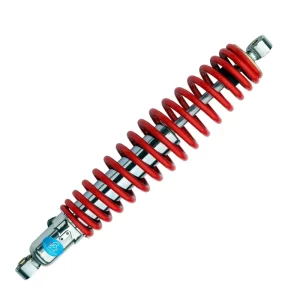
Bypass vs Reservoir vs Coilover for Your Build
Three labels get used as if they were alternatives, and they are not. Bypass describes a damping architecture. A reservoir describes where extra oil is stored. A coilover describes a damper that also carries the spring and sets ride height. One part can be all three at once, which is why build sheets get confusing: a bypass coilover with a remote reservoir is a single damper answering three separate questions.
Take the reservoir question first. A piggyback reservoir mounts on the damper body, so there is no hose to route and no second can to find space for. A remote reservoir moves the oil can away from the body, which allows more volume and cleaner air for cooling, at the cost of a hose, fittings, and a mounting point that has to survive vibration.
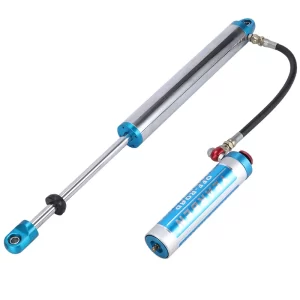
A reservoir decides how much oil and heat capacity the damper has, not how its force changes with position. <Piggyback-2-0-Coilover-Shock> covers the compact reservoir layout used on off-road coilovers.
| Damper type | What changes | Choose it when | Skip it when |
|---|---|---|---|
| Standard monotube with piston valving | Force follows shaft speed only | Budget builds, moderate terrain, predictable service | You run long travel at sustained speed and need both compliance and end-of-stroke control |
| Piggyback reservoir monotube | Adds oil volume and heat capacity in a compact package | Space is tight and repeated fast hits cause fade | You need force to change with piston position |
| Remote reservoir monotube | More oil volume with cooler reservoir placement, plus hose routing | Long high-speed sections and room to mount the can safely | Hose routing cannot be protected or the build has to stay simple |
| Bypass damper with two or three tubes | Force changes by piston position inside each zone | High-speed off-road use, long travel, and a crew that will tune it | Springs or travel are the real limit, or service capacity is limited |
| Coilover with bypass tubes | Carries the spring and adds position-sensitive damping in one unit | Ride height, spring rate, and zone tuning need to be set together | The existing spring and damper layout already works and packaging is tight |
The honest answer to the comparison is that most trail vehicles do not need position-sensitive damping at all. A correctly sprung monotube with a good piston valve and enough travel handles forest roads, gravel, and moderate rock at a fraction of the cost. Bypass hardware starts earning its place when the same vehicle repeatedly runs long travel at speed, where one fixed valve curve cannot be both compliant over chatter and firm near bottoming.
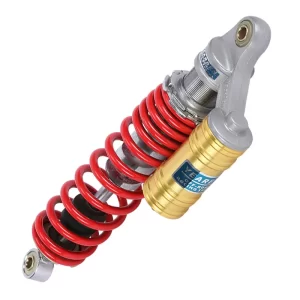
Where Bypass Shocks Earn Their Cost Off-Road
The case for bypass tubes is about repetition at speed and long travel, not about a single hard hit.
High-Speed Desert and Washboard Sections
At sustained speed the damper has to absorb many small, fast inputs without losing force to heat, and it still has to hold the chassis in the last part of the stroke. A bypass layout can stay open and compliant through the middle of travel, then close and build force as the stroke ends. That combination is what makes a truck feel settled across a washboard section instead of skating or hammering the bump stops.
Rock, Technical Terrain and Slow Climbs
At low speed, position sensitivity helps in a different way. A tube that opens near full bump lets the suspension absorb a ledge without transferring the entire hit into the chassis, while closed zones keep body control during a climb. The benefit is real but smaller than in desert use, and a poorly sprung vehicle will still unload a wheel on a ledge whatever the tubes are doing.
When They Do Not Help
Bypass tubes do not add travel. If the shock is the limiting component, the tubes only change how the last part of a short stroke feels. They do not correct axle geometry, spring rate, or bump stop placement, and they do not make an under-cooled damper immune to fade. A vehicle that spends most of its life on road and occasional gravel gains little from the hardware and takes on its maintenance instead.
The tradeoffs are concrete: purchase cost, added unsprung mass, exposed tubes and fittings, more tuning hours, and a service routine that includes gas pressure checks and periodic rebuilds. Street legality is a separate question, because many competition bypass dampers are sold for off-road use only. Confirm the sales designation and local inspection rules before fitting them to a registered vehicle.
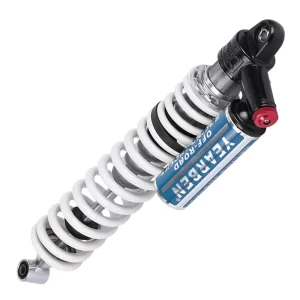
How Many Tubes and Zones You Actually Need
Tube count is a tuning decision, not a ranking. Two tubes, one working in compression and one in rebound, produce the basic position-sensitive behavior and cover most off-road builds. A third tube adds a second compression zone so that a fast, deep hit and a slow, deep hit can be handled in separate bands. Four tubes add another band and more adjusters, and they belong on competition vehicles where the crew has test time and a setup sheet.
A three-tube layout separates a fast desert hit from a slow ledge hit by giving compression two position bands. <Triple-Bypass-Shock-For-Off-Road> covers a triple-tube bypass damper built for off-road use.
| Layout | Zones it covers | Typical use | Limit to accept |
|---|---|---|---|
| Two tubes | One compression zone and one rebound zone | Trail, overland, and mild competition builds | One compression zone cannot separate a slow ledge hit from a fast desert hit |
| Three tubes | Two compression zones plus one rebound zone | Desert running, go-fast trucks, and long-travel UTVs | More adjusters to document and keep consistent |
| Four tubes | Three compression zones plus rebound control | Race vehicles with test time and a written setup sheet | Tuning workload and leak points rise faster than the benefit |
More zones also mean more ways to mis-tune. Each extra tube is another circuit with a check valve, a seal, and an adjuster that can leak, stick, or be set inconsistently. For a vehicle that runs a handful of events a year, a two-tube layout with a clean baseline and one mid-stroke compression zone is usually the more reliable purchase.
Tubes do not set ride height. Spring rate, free length, and preload do that, and a bypass damper will not compensate for a spring that sags or a perch set too low. Match the tube layout to the spring and travel the suspension actually has, then confirm the damper has the stroke to use both.
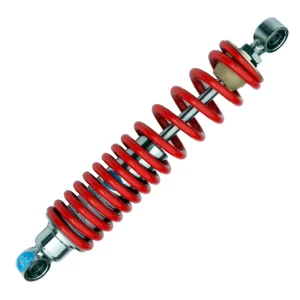
What to Specify When You Order Bypass Dampers
A bypass damper is a custom part in most cases, so the quality of the order sheet decides the quality of the result. Measure travel at the wheel, weigh the corners, and describe the terrain before choosing tube count. Send mounting dimensions, available clearance at full articulation and full lock, and the spring rate the damper will work with.
| Field | What to send | Why it matters |
|---|---|---|
| Vehicle and use | Model, weight, terrain, and typical speed range | Tube count and zone spacing follow the duty, not the catalog |
| Corner weights | Measured or estimated load at each corner | Spring rate and damping force targets depend on mass |
| Travel and mounting | Wheel travel, shock length, mounting centers, clearance at full articulation | A zone layout that runs out of stroke is unusable |
| Tube layout | Requested tube count, zone positions, and adjuster type | Prevents a mismatch between expected behavior and delivered zones |
| Spring and preload | Rate, free length, and planned preload | Tubes cannot correct ride height or bottoming caused by springs |
| Baseline and service | Requested valving baseline, gas charge, rebuild plan, and spares | Keeps the second order comparable to the first |
Factory capability shows up in places a specification sheet can hide. Bore finish and seal fit determine how long gas pressure and damping stay consistent, and a bypass unit depends on both. A supplier that builds the monotube body, machines the tube windows, and runs a dyno check on every batch controls those variables in one process. Yearben works that way on its off-road dampers, which matters most when a second order has to match the first.
Tube layout and valving only hold up when the base monotube keeps oil clean and gas pressure stable. <Monotube-Shock-For-Off-Road> covers the monotube structure these bypass assemblies are built on.
Send the Build Sheet Before You Commit to a Tube Layout
Ordering bypass dampers works better as a specification conversation than as a catalog pick. Send the vehicle and intended use, corner weights, usable wheel travel, shock length and mounting at both ends, spring rate, the terrain that matters most, and the service interval you can live with. With those numbers, a tube count and zone layout can be proposed and checked against real travel rather than guessed from a product photo.
Chen Yibo, Taizhou yearben shock absorber Technology Co., Ltd., info@yearbenshocks.com, +86-523-86566899.
FAQ
Are bypass shocks street legal?
It depends on the jurisdiction and on how the damper is sold. Many bypass units are designated for off-road or competition use, and a registered vehicle may need a damper that carries the relevant approval. Check the seller’s designation, the local inspection rules, and your insurer’s position before fitting external tubes to a road vehicle. A damper that is legal for a competition class is not automatically legal for public roads.
Do bypass shocks make a truck ride better on rough roads?
They can, if the vehicle also has enough travel and a suitable spring rate. The tubes allow a soft middle stroke over small chop while keeping force near the end of travel. On a vehicle with limited travel or an overloaded rear end, the improvement is smaller than the cost suggests. Ride quality on rough roads comes from the whole package: springs, travel, tires, and valving.
How often do bypass shocks need rebuilding?
There is no universal interval, because duty varies so much between a trail vehicle and a race truck. Service decisions usually come from inspection: oil condition, gas pressure retention, seal weep, and consistency between runs. Competition use with frequent high-speed sections warrants shorter intervals than occasional trail use. Start with the supplier’s recommendation and adjust using your own inspection records.
Can bypass tubes be added to an existing shock?
Usually not. The tube windows are machined into the cylinder wall during manufacture, and the body, seals, and check valves are designed as one assembly. Retrofitting a standard damper would mean cutting into a finished, pressure-tight body. The practical route is to order a bypass damper built on the same mounting dimensions, or to keep the existing damper and accept that its force will not change with piston position.
Are bypass shocks worth it on a mostly stock UTV?
For most stock or lightly modified UTVs, a well-valved monotube or a reservoir damper is the better first purchase, because travel and clearance are the real limits. Bypass hardware becomes worthwhile when the machine already runs long travel, is driven hard for sustained periods, and the owner is prepared to tune and service it. Buy travel and spring rate first, then position-sensitive damping.
If you’re interested, check out these related articles:
Hydraulic-Shock-Absorber-24MM
Best-Off-Road-Shocks
Off-Road-Coilover-Shocks
Best-Shocks-And-Springs-For-Trucks
Heavy duty seat damper 35mm, Shock Absorber Manufacturer