Getting front shock absorbers right before committing to a production run saves downstream time and cost, but many buyers skip straight to unit price and lead time. The real differentiator is the front shock absorber OEM sample and test process: how a factory validates damping curves, seal life, and weld integrity on a handful of pre-production units before the first bulk order. In this article, I will walk through what a thorough sample and test cycle looks like from the factory side, what to check in a test report, and where we most often see projects stumble.
The OEM Sample Submission Process
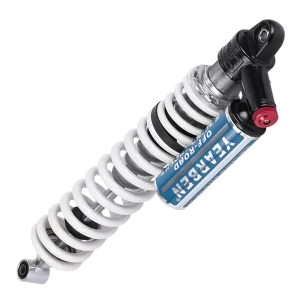
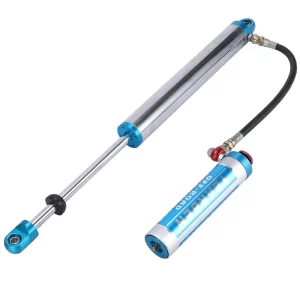
Before any dyno run or fatigue test begins, the foundation is the sample submission package. We ask for the application vehicle, target mounting points, extended and compressed lengths, spring rate if it is a coilover, and the intended use case. Without this, even a perfectly machined shock can miss the mark. For custom orders, we also need the required nitrogen charge range and any unique valving preferences. This initial data exchange typically takes three to five working days, and it is the place where we catch most fitment conflicts. After we receive the specs, our engineering team builds three to five sample units with hand-checked components and documents the starting measurements for every unit.
Testing Procedures That Validate Performance
The test cycle on a front shock absorber sample covers dimensional accuracy, force output, and endurance. First, we measure open and closed length, eyelet diameter, and bushing hardness against the spec sheet. Then the unit goes to the dyno. We run at multiple shaft speeds and capture both compression and rebound force curves. A common target is a force tolerance of plus or minus 10% from the agreed curve, with less than 5% variation between the three sample units. Next, we check the nitrogen charge pressure and hold the shock at temperature to verify seal integrity. For coilovers, we also measure spring free length and rate. Finally, we run a fatigue test at the mid-travel position while monitoring damping force drop-off. A drop beyond 15% of the baseline triggers a teardown to inspect piston band wear and shim stack deformation.
Below is a summary of the standard test parameters we apply to front shock absorber samples.
| Test | Typical Pass Criterion | Measurement Method |
|---|---|---|
| Dimensional Check | Within 0.5 mm of drawing | Caliper and height gauge |
| Gas Charge | Loss less than 5 psi after 24 hours | Pressure gauge with check valve adapter |
| Damping Force | Within 10% of target curve | Dyno at specified shaft speeds |
| Seal Integrity | No visible weep after dyno run | Visual and white paper wipe test |
| Fatigue Endurance | Force drop less than 15% at 100,000 cycles | Dyno pre and post cycle comparison |
Interpreting Test Reports for Informed Decisions
A dyno plot can look clean and still hide a problem. I look at three things in every report: symmetry between the three sample units, the shape of the force-velocity curve in the low-speed region, and any hysteresis that suggests internal friction or a sticky floating piston. If one unit shows a 12% deviation at low speed while the other two are within 3%, we reject the lot and trace back to the piston machining batch. Also, note the temperature during the run. Damping force shifts with fluid viscosity. A responsible factory will note the stabilised fluid temperature on the report.
For buyers who are not dyno operators themselves, the key number is the batch variation. A test report that shows three samples with identical curves is suspicious. Genuine manufacturing variation produces slight differences. What matters is that all three curves fall within the agreed tolerance band. If a supplier delivers a report with no unit-to-unit spread, ask for the raw data.
Avoiding Common Sample Approval Mistakes
We have seen projects delayed by a few correctable oversights. The most frequent is sending incomplete application data. A shock absorber designed for a 250cc ATV with a specific linkage ratio will behave differently on another platform, so sharing only the extended and compressed lengths is not enough. The second mistake is treating the sample test as a pass-or-fail gate rather than a calibration tool. The sample phase is the time to fine-tune the damping curve, not just confirm it. I have adjusted piston bleed holes and shim stack configurations on the spot during sample reviews because the data showed a crossover speed mismatch that would cause harshness on the trail.
Another pitfall is overlooking the fatigue test scope. A simple 50,000-cycle test may satisfy a 100-hour service interval spec, but if the vehicle is used in commercial agriculture and runs 12 hours a day, we move the target to 150,000 cycles or more. Specify the intended service life upfront.
Transitioning from Sample to Production
After sample approval, we lock the bill of materials and damping curve into a production control plan. This includes a first article inspection report for the initial production run. We pull random units from the line and dynamometer-test them against the approved sample benchmark. At Yearben, we also implement a process capability check on the nitrogen charging station and torque verification on the seal head cap to catch assembly drift early. For orders above 500 units, we set up a sample retention program. One sealed unit from each production batch is stored for future reference if a field performance issue arises.
This phase is where the OEM relationship moves from technical validation to supply reliability, and the factory’s internal quality management system becomes just as important as its dyno.
Front Shock Absorber Testing Without Surprises
An OEM sample and test cycle reveals more about a manufacturer than any marketing material. If you are evaluating a front shock absorber supplier, examine their test reports for unit-to-unit consistency, ask about the fatigue test cycle count they use by default, and confirm that they can adjust damping curves based on dyno feedback. If your program involves a unique mount configuration or extended travel requirements, it is worth confirming the test fixture setup before approving samples. Send your part number and quantity to info@yearbenshocks.com or call +86-523-86566899 and we will review the sample plan with you before any commitment.
Common Questions About Front Shock Absorber OEM Sample Testing
How long does the OEM sample testing process typically take?
In most programs where the specifications are complete and no major adjustment is needed, we deliver sample units within 15 to 20 working days, with another 5 to 7 days for the full dyno and fatigue report. Custom valving or specialised coatings may extend this timeline, but the engineering review alone often prevents delays by catching data gaps early.
Are sample test results representative of the full production batch?
They establish the baseline. Production consistency depends on the factory’s internal process controls, including material traceability, tooling maintenance cycles, and in-process inspection frequency. A sample that passes all tests with low unit-to-unit variation gives good confidence, but a serious OEM implements a first article inspection at the start of each batch to verify that the line is still producing to the approved golden sample.
What if a sample fails a test?
We treat a failure as a development data point, not a rejection. A torn seal at 80,000 cycles might mean the guide bushing clearance was too tight. A hysteresis spike at low speed might point to a rough honing finish on the inner tube. We rerun the analysis, correct the process, and produce new samples. The goal is to arrive at a robust spec, not to pass on the first attempt.
Do I need to specify fatigue cycle count or just rely on the factory standard?
Standard fatigue cycles vary by factory and application. For a front shock absorber on a utility ATV, 100,000 cycles is a reasonable baseline. If your vehicle faces sustained high-speed operation or extreme temperature swings, specify a higher cycle count and request a temperature-stabilised run. Share your requirements and we will confirm the appropriate durability test scope for your specific shock.
If you’re interested, check out these related articles:
Adjustable-Hydraulic-Shock-Absorbers
4X4-Heavy-Duty-Suspension
Heavy Equipment Seat Shock Absorber 38mm
Utv-Shocks-For-Off-Road
Customized Lawn Mower damper 24mm