A suspension shock absorber supplier can hold a valid ISO 9001 certificate and still ship dampers that miss your force-velocity curve, because the certificate describes a management system rather than your part. That distinction sets the order of the work. The certificate shortens the shortlist; the site visit and the records behind it decide whether the supplier can hold a damping specification across thousands of units and several model years. What follows is the sequence that holds up in practice: confirm the standard your program actually requires, request the right documents before booking travel, read scope and validity properly, verify the damper-critical processes on the floor, then connect the findings to sample approval and the first production lot.
What an ISO 9001 certificate does and does not prove
ISO 9001:2015 sets requirements for a quality management system, and a certified site has been audited against those requirements rather than against your drawing [1]. The auditor tests whether the site defines its processes, assigns responsibility, controls its measuring equipment and reacts to nonconformity. What the auditor does not test is whether a given damper reproduces the force-velocity curve in your specification, or whether its valving suits your vehicle.
The gap comes from the structure of the standard itself. Clause 8.4 requires control of externally provided processes, products and services, and clause 8.5.1 requires production under controlled conditions, but the technical content of those controls comes from the customer rather than from ISO 9001 [1]. A supplier can therefore run a tightly controlled process that repeats the same damper, batch after batch, with the same deviation from your requirement. Consistency is what the certificate supports. Correctness for your application is a separate question, and only sample testing answers it.
None of this makes certification worthless. Screening twenty candidate factories against a certificate requirement removes the ones with no documented process at all, and it gives you a body of records to audit instead of a verbal assurance. The reverse also holds: a specialist factory without certification is not automatically a poor choice, but the verification work shifts to your incoming inspection and trial lots, and that cost belongs in the approval decision.
The practical tradeoff is that two suppliers can fail in opposite ways. A mature system with narrow technical capability gives you clean documentation and a part that misses your valving target. A testing-focused factory with a thin system gives you a competitive sample and unpredictable batch consistency. An audit that checks documents and floor processes in one sequence catches both patterns.
Which standard your suspension program actually requires
ISO 9001:2015 is the working baseline for most suspension damper supply, including aftermarket ATV, UTV, buggy and lawn equipment programs. When the damper feeds a vehicle manufacturer’s supply chain, whether in a seat suspension or a chassis position, the requirement is usually IATF 16949:2016, which adds automotive sector requirements and customer-specific requirements on top of the ISO 9001 foundation [2].
Match the audit to the purchase order rather than to the supplier’s preference. If your customer’s contract names IATF 16949, audit against it and do not accept an ISO 9001 certificate as a substitute, because the additional requirements cover what your customer is measuring. If you distribute replacement dampers, ISO 9001:2015 plus visible product validation usually carries the approval decision. For mining, military or other regulated applications, confirm the applicable scheme with the end user before booking travel, since the wrong checklist wastes a visit that could have gone to process controls.
Check the revision as well as the standard. ISO 9001:2015 replaced the 2008 edition, and certificates issued to the older edition fell out of validity when the transition period ended in 2018 [1]. A supplier presenting an outdated certificate may have a filing problem, or it may show that nobody reviews the certification status of the business.
Two more schemes appear in supplier packs and deserve a correct reading. ISO 14001 addresses environmental management and ISO 45001 addresses occupational health and safety. Neither is evidence of damping quality, though both can indicate a factory that maintains its systems. Customer-specific requirements issued by the vehicle manufacturer sit above all of these and take priority when they conflict.
Documents to request before you schedule the audit
An audit begins with a document request. A supplier that cannot assemble the pack within a few working days usually has a documentation weakness the visit will confirm, and you have saved a trip.
| Request | What to ask for | What it prevents |
|---|---|---|
| Certification scope | Certificate copy showing the certified site address, scope wording, standard revision, expiry date and accreditation mark | Auditing a sales office or a sister plant that does not make your part |
| Standard set | Every management system certificate held, with issuing body and validity | Assuming automotive approval that does not exist |
| Process control plan | The control plan for a damper close to your model, covering oil fill, gas charge, weld, plating, torque and final test | Receiving generic quality documents that say nothing about damper-critical characteristics |
| Test capability | Dynamometer, burst or pressure test, salt spray and cycle test equipment, with current calibration records | Damping data that cannot be traced to a calibrated instrument |
| Corrective action history | Internal and external nonconformities from the last twelve months, with closure status | Discovering a repeated failure after your first shipment |
| Change notification | The written rule for informing customers before material, process or sub-supplier changes | Silent substitution of a seal, oil or plated rod after approval |
A vague request produces a vague answer, and a vague answer is expensive to audit. The pair below is the difference in practice.
Reject this line: “Please send your ISO certificate and your best price for shock absorbers.”
Replace it with: “Confirm the certified site and the exact scope wording, the standard revision, the damper-critical process controls for oil fill, gas charge, welding and plating, the calibrated equipment used for damping and corrosion testing, batch traceability from component lot to carton, and your written change notification rule.”
Capability claims in a catalogue are supplier declarations, not audit evidence. A factory may state a model count and an annual capacity, as Yearben does with more than 200 models and 1.5 million units of stated annual capacity, and those figures help you judge whether the plant size fits your program. They do not show that the lines behind them are controlled, so pair every capability claim with a request for the production and test records underneath it.
Reading certificate scope, site, and validity
Start with the address. The certified site must be the site that appears on your shipping documents and packing list. Group certificates sometimes list a head office whose scope covers sales, while production sits at another address holding a separate certificate or none.
Read the scope wording literally. “Manufacture of hydraulic shock absorbers” covers production of the article. “Sales and distribution of shock absorbers” does not. If the scope names a product family that excludes your item, the certificate does not cover your order even though the logo looks familiar.
Then check who issued it. Certification bodies work under ISO/IEC 17021-1:2015, which sets requirements for bodies providing audit and certification of management systems [3]. Accreditation by a member of the International Accreditation Forum is what makes a certificate independently checkable. A certificate from an unaccredited issuer can be a genuine document and still carry little weight in a supplier approval file.
Validity needs a second look. ISO/IEC 17021-1:2015 requires surveillance audits at least once a calendar year and a recertification audit before the certificate expires [3]. A certificate in its third year with no surveillance record behind it is a question worth asking before you travel.
Records answer narrower questions than buyers expect. The table separates what each common document can support from what it cannot.
| Record | Method context | Responsible use | Do not infer |
|---|---|---|---|
| ISO 9001:2015 certificate | Third-party certification audit of a named site against the stated scope | Confirms the site held a certified management system at the audit date | That your drawing, damping curve or material specification is met |
| IATF 16949:2016 certificate | Automotive sector certification of a manufacturing site | Indicates automotive sector requirements sit inside the audited system | That your part carries approval, PPAP status or released validation |
| Nonconformity closure report | Surveillance or internal audit finding with dated closure evidence | Shows the finding was addressed in that process at that site | That the same failure mode is absent from another line or shift |
| Dynamometer record | Bench test on stated samples at stated speed and stroke settings | Supports batch consistency of the tested samples against internal limits | Field durability, or behaviour on another vehicle and setting |
| Salt spray result | Accelerated corrosion test of a stated finish for a stated duration | Supports comparison between tested finishes and batches | Service life in a particular climate, or a warranty period |
These are boundaries of evidence types, not a verdict on any supplier. The same document can be strong support for one claim and no support for another, which is why the audit file should record the claim next to the record.
What to verify on the shop floor for damper-critical processes
The visit tests whether the control plan exists outside the binder. Three areas carry most of the risk in suspension dampers, and each one has a record you can ask to see while the line is running.
Hydraulic fill and gas charge
Oil volume and gas precharge pressure, usually nitrogen, shape the force-velocity relationship, so both need a controlled method rather than an operator’s judgment. Ask whether fill is metered by volume, by weight or by stroke, how the value is checked during a run, and what happens to a unit that fails the check. Then ask to see the fill record for the lot on the line and match its batch code to the parts in the tray.
Gas charging deserves the same treatment. The station should hold a set pressure per model, a calibrated gauge with a current label, and a leak check after charging. In a plant without temperature control, oil temperature at fill affects the volume delivered by a fixed setting, which is a reason to look at how the shift start is verified rather than only at the specification sheet.
Welding, plating, and corrosion control
Spring perch and reservoir welds carry structural load. Ask for the weld procedure, the operator qualification records and the inspection method used on production, whether visual, penetrant or pressure test. A weld sample in a display case proves the process can produce a good weld; the inspection record per lot proves the process is being checked.
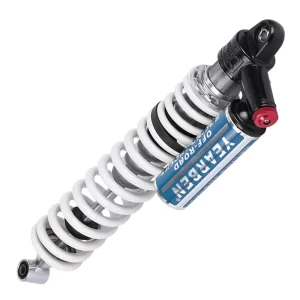
Coil-over units add a spring seat and a perch to the damper body, so weld control and perch strength carry extra weight in the audit. <Off-Road-Coil-Over-Shocks-Manufacturer> covers the coil-over shock range offered for off-road vehicle applications.
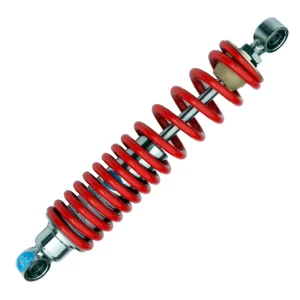
Rod plating affects two things at once: seal life through surface finish, and corrosion resistance through coating thickness. Ask for thickness records and for salt spray results on the finish you are buying. ASTM B117 defines the neutral salt spray practice [5], and ISO 9227 covers salt spray testing in artificial atmospheres [6]. Keep the boundary in view: a salt spray result reports hours to a defined rating under a defined test, and it does not transfer to a different finish, a different substrate or a real service environment.
Damping verification and traceability
The dynamometer is where a shock absorber stops being a metal tube. Confirm the machine’s calibration status, check that the test speed and stroke in the record match the specification you agreed, and confirm the acceptance limits were written before the test rather than after it. Read one force-velocity curve from a recent lot and see whether it carries a date, an operator and a batch code.
Adjustable dampers need one more step. Each click or damping position should have its own acceptance limit and its own record; a line that only confirms the adjuster moves freely has not verified the adjustment. Ask how many positions are checked per lot, and whether the check runs on every unit or on a sample.
Adjustable dampers only hold their value if each setting is verified against its own curve rather than against free movement of the adjuster. <Adjustable-Hydraulic-Shock-Absorbers> covers the adjustable hydraulic shock absorber range.
Traceability closes the section. One carton label should lead back to the oil lot, the seal lot, the plated rod lot and the assembly date, and a supervisor should be able to walk that path for a shipment you point at. If a defect appears in the field, the batch code decides whether you contain a month of production or a container load.
| Damper characteristic | What to verify | Record that supports it |
|---|---|---|
| Oil fill volume | Metered method, mid-run check, reaction to a failed unit | Fill record matched to the batch code |
| Gas precharge | Set pressure per model, current gauge calibration, leak check | Charge log with gauge identification |
| Weld integrity | Procedure, operator qualification, production inspection method | Weld inspection result per lot |
| Rod plating | Coating thickness, surface finish, adhesion | Plating report and coupon results |
| Damping curve | Calibrated dynamometer, agreed speed and stroke, signed limits | Force-velocity record per sampled unit |
| Batch traceability | Component lots linked to the carton label | Traceability sheet for the shipment |
Grading findings and closing them without a second visit
An audit produces findings, and their value depends on classification and on the evidence you accept as closure. ISO 19011:2018 provides guidelines for auditing management systems, including how findings are reported to the auditee [4]. Most buyers work with three levels: major, where a control is absent or ineffective and product risk is direct; minor, where the control exists but lapsed in an instance; and observation, where a weakness has no current product effect.
Set the level by product effect rather than by the host’s discomfort. A missing calibration label is a record problem. A gauge used past its calibration interval is a process problem, and it requires a review of every lot measured with that gauge rather than a new sticker. Grade the second one as major and ask for the review, because the affected lots are the reason you are auditing.
Closure needs four parts: containment of suspect product, root cause, corrective action, and dated evidence with an owner. You also choose the bar for evidence. A practical bar is records from the production lot completed after the fix plus confirmation at the next visit, and you can tighten it for a safety-related characteristic.
Where the finding touches a damper-critical characteristic such as oil fill, gas charge, weld, plating or final test, keep the order on hold until the evidence is verified. Where the finding is documentation only, a conditional release with a dated verification step is a reasonable tradeoff for a first small lot, because it tests the supplier’s response speed with limited exposure.
Connecting the audit result to sample approval and the first order
The audit answers whether the supplier can control the process; sample approval answers whether the product fits. Keep them as separate lines in your decision record: system and process findings from the audit, dimensional and damping data from the sample, and commercial terms from the quotation. A supplier can pass an audit and fail a sample, and that outcome still saves time because the failure gets diagnosed against a known process.
Categories do not transfer automatically. An off-road coil-over is judged on spring seat strength, travel and behaviour at full droop, and those checks run on the coil-over assembly cell rather than on a general damper line.
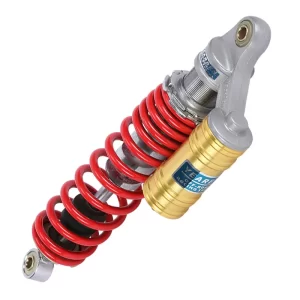
Seat and cab dampers sit in a different validation regime, where load holding and low-speed hysteresis carry more weight than travel.
Seat and cab dampers sit in a different validation regime, where load holding and low-speed hysteresis carry more weight than travel. <Truck-Seat-Damper-38MM-Shock-Absorber-Manufacturer> covers the 38 mm truck seat damper range.
For the first order, define pre-production approval before the purchase order is signed: first article inspection, a damping curve at the agreed settings, and a corrosion sample from the same finish. Keep the first lot traceable and quarantined until those checks pass, and record the line and shift that produced it. Put the change notification clause in the purchase order as well as the audit report, because the clause only works if someone is contractually required to send the notice.
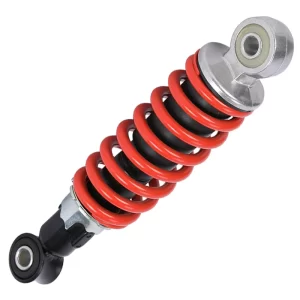
A lawn and garden program shows why the paperwork has to follow the part. A mower shock absorber or deck damper runs in a vibration environment with different duty cycles from a trail vehicle, so the acceptance tests and batch sizes differ even when the same factory builds both. Audit the line that will make your part, not the line that impressed you during the tour.
What to send when you are ready to audit a supplier
Send the application and the specification before you ask for a visit slot, and the audit becomes a verification of specific claims instead of a general tour. Tell us the application (ATV, UTV, buggy, 4×4, seat or lawn equipment), the model and mounting dimensions, the travel, the target damping curve and any adjustable settings, the standard your customer requires, your annual volume, and the acceptance tests you intend to run.
Taizhou Yearben Shock Absorber Technology Co., Ltd. can respond with the certificate pack, the model list and the test records behind the range, so you can compare documents before deciding whether a factory visit is worth the travel. Reach us at info@yearbenshocks.com or +86-523-86566899, and include the drawing revision you are working from so the answer matches the part you actually need.
FAQ
Is an ISO 9001 certificate enough to approve a shock absorber supplier?
No. The certificate confirms that a named site operates a certified quality management system within a stated scope [1]. It does not confirm that your damping curve, material specification or corrosion requirement is met. Use it to shortlist, then verify the damper-critical processes on the floor and approve the part through sample testing. A supplier with a certificate but no dynamometer records is a weaker position than a supplier holding both.
Should a shock absorber supplier hold IATF 16949 instead?
It depends on where the part goes. Dampers feeding a vehicle manufacturer’s production chain usually fall under IATF 16949:2016, which adds automotive sector requirements to the ISO 9001 foundation [2]. Aftermarket ATV, UTV and lawn equipment programs commonly work from ISO 9001:2015 plus product validation. Follow the contract or the end customer’s requirement rather than the supplier’s preference, and confirm the revision on the certificate.
What should I look at first during a factory visit?
Start with the line that will make your part and the records attached to the lot running on it. Ask for the fill record, the gas charge log, the weld inspection result, the plating report and the dynamometer trace for the same batch code. If those five documents exist, match, and carry dates and signatures, the rest of the audit is detail. If they do not exist, the certificate has told you less than you hoped.
What records show damping consistency between batches?
A force-velocity record per sampled unit, produced on a calibrated dynamometer at an agreed speed and stroke, with acceptance limits written before the test. The record should carry a batch code, a date and the operator, and a supervisor should be able to connect that code to the oil lot, seal lot and plated rod lot. One curve from a golden sample shows capability; a series of curves from consecutive lots shows consistency.
Can we approve a supplier that holds no ISO certificate?
It is possible, but the verification burden moves to you. Without a certified system you cannot audit against a recognized baseline, so incoming inspection, first article approval, trial lots and periodic re-testing carry the whole quality argument. Budget for more testing and keep the first orders small and traceable. For safety-related or high-volume programs, the absence of certification is usually a reason to keep looking.
References
[1] ISO 9001:2015, “Quality management systems — Requirements,” International Organization for Standardization, 2015.
[2] IATF 16949:2016, “Quality management system requirements for automotive production and relevant service parts organizations,” International Automotive Task Force, 2016.
[3] ISO/IEC 17021-1:2015, “Conformity assessment — Requirements for bodies providing audit and certification of management systems — Part 1: Requirements,” ISO/IEC, 2015.
[4] ISO 19011:2018, “Guidelines for auditing management systems,” International Organization for Standardization, 2018.
[5] ASTM B117-19, “Standard Practice for Operating Salt Spray (Fog) Apparatus,” ASTM International, 2019.
[6] ISO 9227:2022, “Corrosion tests in artificial atmospheres — Salt spray tests,” ISO, 2022.
If you’re interested, check out these related articles:
Aluminum-Utv-Shock-Absorber
Utv-Shocks-For-Off-Road
Monotube-Shock-For-Off-Road
Adjustable Seat Damper 41.5mm