
Long travel shocks are not a longer version of a standard damper. They are a damper built around a longer stroke and a larger swept volume, and every part that touches the shaft has to carry the bending load, the oil displacement and the heat that come with it. When the order goes to a Chinese factory, the risk rarely sits in the machining. It sits in the interface: the numbers you send, the way the first article is accepted, and whether the drawing you paid for stays yours. This guide follows a custom long travel order from the geometry sheet to the acceptance report, in the order the decisions actually arrive.
What Long Travel Changes in the Shock Itself
Travel is a vehicle number and stroke is a damper number. On a long travel build the wheel moves further, but how much of that movement reaches the damper depends on where the damper is mounted. A shock mounted at an angle, or inboard on a link, sees only a fraction of the wheel travel. Dividing wheel travel by the motion ratio gives an approximate stroke, and that estimate holds only while the linkage geometry stays roughly constant through the range. Measure eye to eye at full bump and at full droop instead of calculating it, and record the angle at both ends while you are under the vehicle.
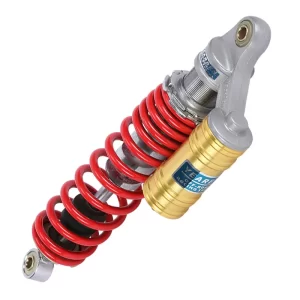
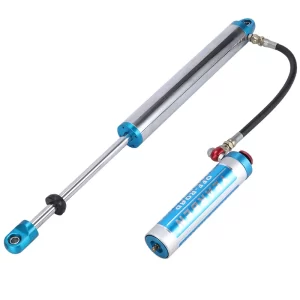
A monotube damper with a separating piston has to make room for the oil the shaft displaces. That volume is the shaft cross section multiplied by the stroke, and it has to go somewhere, normally into the gas chamber where it compresses the nitrogen charge further. Lengthen the stroke and full bump compresses the gas harder, which adds a spring force the valving never asked for. Moving the gas volume into a piggyback or remote reservoir softens that effect because the reservoir has more room to absorb displacement. This is one reason long travel builds drift toward reservoir layouts, and it has nothing to do with fashion.
Bending load at the guide grows with the distance between the mounting points and with any side load pushed into the shaft. Side load comes from three places: a mount that is not square to the shaft axis, a coil spring whose axis does not pass through the load line, and a linkage that pulls the damper sideways at full droop. The damage shows up at the wiper seal as a scored shaft and a slow leak, but the seal is the victim rather than the cause. A longer extended length gives the same side load a longer lever.
Damping turns motion into heat in the oil. More stroke and higher shaft speed both raise the work done per cycle, so a long travel damper on a fast section runs hotter than a short travel damper doing similar work. When the body cannot reject that heat, oil temperature climbs, viscosity falls and the force curve sags. Separately, the damper should not be the droop stop. At full extension the top-out washer and the shaft take the load, and repeated metal contact there damages the seal head. Long travel builds need a limit strap or a droop bump stop sized for the axle, not a damper used as a check strap.
The Numbers to Settle Before You Ask for a Quote
Most sourcing threads open with a travel figure. A factory can price from that, and the price will be a guess with a number attached to it. Six fields remove most of the guesswork, and each one maps to a failure that appears later in the build.
| RFQ field | What to send | Why it matters |
|---|---|---|
| Mounting geometry | Eye to eye distance at full bump and full droop, plus the angle at each end | A stroke figure without mount positions produces a damper that runs out of travel on your chassis |
| Mounting detail | Eye or stem, bolt diameter, bushing width, misalignment allowance | A mount narrower than the bracket loads the shaft in bending |
| Corner mass | Sprung and unsprung mass at each corner | Valving is a force decision made against mass, and a guess here becomes a ride complaint |
| Spring data | Rate, free length, inside diameter, coilover body or separate seat | The spring and damper share one travel budget, and a mismatch shows up as bottoming or topping out |
| Use profile | Terrain, speed range, run duration, load carried in the vehicle | Heat and fade follow the duty cycle rather than the travel number |
| Service expectation | Adjuster type and detent count, rebuild interval, seal kit availability | Field adjustment and rebuild planning belong in the drawing, not in the after-sales email |
Measure extended and collapsed lengths on the vehicle, not from a catalog. A damper listed as long travel describes the chassis it was designed for, and that chassis is not yours. Photograph the mounts with a ruler in frame, sketch the bracket, and note whether the bolt runs through a bushing or a spherical bearing. Those details cost nothing to send and they eliminate the most common cause of a sample that fits badly.
Valving is a force decision made against mass. Send the sprung and unsprung mass at each corner, the spring rate and free length, and where the spring sits. A damper valved for a lighter corner rides harsh, and one valved for a heavier corner feels soft and bottoms on the same obstacle it should absorb. If the vehicle is still being built, send the estimated masses and label them as estimates, so the valving can be revised after the first weigh-in instead of being rebuilt from scratch.
Say which adjusters you want, how many detents, and what the adjustment range should cover. A clicker with a wide range and no defined reference position is difficult to set in the field, because two units can sit at the same click number and produce different force.
Adjuster behaviour is easier to specify once you know how the adjustment mechanism itself is built. <Adjustable-Shock-Absorber> covers adjustable shock absorber configurations and the adjustment range that goes with them.
Emulsion, Piggyback or Remote Reservoir for Long Travel
Once stroke and mass are settled, the layout question usually answers itself. The four common layouts differ in where the gas sits, how much oil volume is available to absorb heat, and whether the damping force can be made position sensitive.
| Layout | Where it fits | Limit on long travel | Choose it when |
|---|---|---|---|
| Emulsion | Short body, budget-led builds | Foaming at sustained high shaft speed | Travel is moderate and the duty cycle is slow |
| Piggyback | Reservoir clamped to the body | Heat rejection limited by where the body sits | You need more oil and gas volume in a tight package |
| Remote reservoir | Reservoir mounted on the chassis with a hose | Hose routing and fitting wear | Runs are long or shaft speeds are high enough to need airflow |
| Bypass | Position-sensitive zones along the stroke | Cost, packaging and tuning time | The problem is one landing zone rather than overall force |
The decision rules are narrower than the table suggests. Choose emulsion when the vehicle runs moderate travel at trail speeds and the budget sets the build. Choose piggyback when you need more oil volume and heat capacity but the body area is tight. Choose remote reservoir when run duration or shaft speed is high enough that the reservoir has to sit in airflow away from the body. Choose bypass when the complaint is positional, such as bottoming in one landing zone while the rest of the stroke feels correct, because a bypass tube adds force control by position rather than by velocity alone.
A reservoir is a heat and gas-volume decision, and it does not change the spring rate. Fitting a remote reservoir to a build that is under-sprung leaves the same bottoming problem in place with a higher parts cost. Ask the factory to state what the layout change does to gas volume and to the force curve before you approve it.
Reservoir layout, hose length and bracket design are usually the parts of a custom order that get settled last and cost the most to change. <Remote-Reservoir-Shocks-Manufacturer> covers remote reservoir shock construction and the mounting questions that come with it.
What a Chinese Factory Can Customize and What It Cannot
Custom work falls into three layers, and factories quote them differently. Fit changes alter length, mounts and spring seating. Damping changes alter the shim stack, the piston and the adjuster. Process changes alter coating, marking and packaging. A supplier that treats all three as one request will quote a number that later moves.
| Change | What it triggers inside the factory | What to expect commercially |
|---|---|---|
| Marking, label and packaging | Artwork approval only, no new tooling | Lowest quantity tier, shortest path to a sample |
| Length change inside existing tube and shaft blanks | New drawing, machining and assembly setup | Middle tier, with sample and first article time |
| New body diameter, reservoir routing or mount forging | New fixtures, gauges and often new supplier tooling | Highest tier, with tooling cost and a longer schedule |
| New spring rate or free length | Spring winding or a new spring supplier | A separate minimum from the damper order |
| New shim stack or adjuster detents | Dyno time rather than tooling | Low tooling cost, more validation hours |
What a factory cannot do cheaply is invent a material qualification or carry a certification it does not hold. Ask which quality management certification applies and read the scope on the certificate, because a certificate covering assembly does not cover machining or plating. If your vehicle programme needs an automotive quality management system such as IATF 16949, confirm the scope in writing before the drawing is released, and expect that requirement to change the supplier shortlist rather than the price alone.
Minimum order quantity follows setup time, not part cost. A new shim stack consumes dyno hours. A new spring consumes the spring supplier’s minimum. A new body tube consumes fixture and gauge time. That is why a factory can often accept a small order for marking and a length change but not for a new forging, and why asking for the MOQ per change type gives you a more useful answer than asking for one number.
Yearben, the factory behind the examples in this article, builds more than 1.5 million units a year across 200-plus models. That scale tells you the fixtures, gauges and process documents exist. It does not tell you that a new long travel design will pass your first article, because that depends on the drawing you supply and the way the sample is validated.
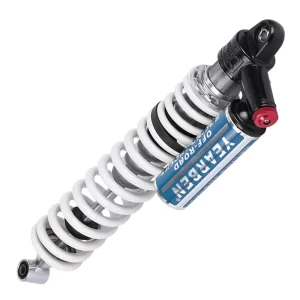
Coilover bodies, spring perches and thread length are where fit changes and damping changes meet, and they are the most common source of a second sample. <Off-Road-Coilover-Shocks> covers off-road coilover shock configurations and the body dimensions that come with them.
What the First Sample Should Prove
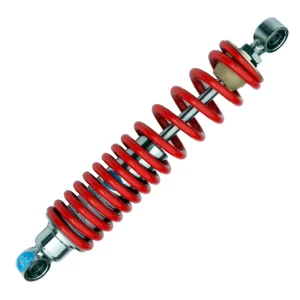
A first article is evidence about a process, not a finished product. Write the acceptance sheet before the sample is built, so both sides know what a pass looks like, and keep the report with the drawing revision it belongs to.
| Record | What it measures | What it can support | What it cannot support |
|---|---|---|---|
| Dimensional report | Extended, collapsed and stroke length, mount width, runout | The unit matches the drawing within the stated tolerance | That the drawing matches your chassis |
| Damper dyno sweep | Force at defined shaft velocities and adjuster positions | Curve shape and adjuster delta on that unit | Batch consistency, or behaviour on a different corner mass |
| Leak and pressure test | Seal integrity at a stated pressure and dwell | The assembly held at the test condition | Long-term seal life, or resistance to a side impact |
| Coating test | Coating performance under the agreed method | Performance of that coating under that test | Corrosion life in your climate and your road salt |
| Vehicle test | Behaviour on a known route at known speeds | Behaviour on that route with that load | Transfer to a heavier vehicle or a different linkage |
The acceptance sheet should name five things: which dimensions are measured and with what instrument, which shaft velocities the dyno sweep covers, the allowed deviation at three points on the curve, the minimum force difference between adjuster positions, and the leak test pressure and dwell. Without those five, the sample review turns into a conversation about feel, and feel does not transfer to a production batch.
Two habits keep a first article useful. Keep the approved sample as a reference unit and store it with the drawing revision, the valving build and the gas charge. And approve the process rather than the part: ask which measurements will be repeated on production units, how often, and who signs the record. A sample that passes with no production sampling rule has proved that one unit can be built well on a good day.
Factory Audit Questions That Reveal Real Capability
An audit answers one question: can this plant keep a specification stable after the sample is approved. The questions below produce useful answers, and each one is followed by what the answer tells you.
- Which operations happen in this building? Machining, hard chrome, welding, assembly, gas charging and dyno testing under one roof mean fewer handoffs than a plant that assembles from bought-in parts. What it reveals: how much of the quality chain the supplier actually controls.
- Can the dyno run while I am standing there? A sweep on a real part shows the fixturing, the calibration practice and whether the operator can explain the curve. What it reveals: whether testing is a routine or a slide in a presentation.
- What is recorded per unit at assembly? Serial number, valving build, gas charge, leak test result. What it reveals: whether a fault can be traced back to a lot.
- How is shaft surface finish measured and recorded? Instrument, sampling and the record itself. What it reveals: whether the surface the seal runs on is controlled or inspected by eye.
- What happens to a unit that fails the leak test? Rework, teardown or scrap. What it reveals: whether failures are contained or blended back into the shipment.
- Who signs the first article report, and who can stop a shipment? A name and a role, not a department. What it reveals: whether quality holds authority separate from production.
- How do you keep my drawing and valving out of other customers’ builds? Access control, drawing numbering, segregated shim stacks. What it reveals: whether confidentiality is a system or a promise.
- What is your change notification rule? Which changes require my written approval before shipment. What it reveals: whether an approved part can quietly change.
RFQ Lines That Get You a Generic Quote
A vague line gets a vague price, and the difference usually appears after the sample arrives, when the only options are rework or a second order.
Reject this line: long travel coilover shocks, 300 mm travel, for a buggy, best price for 50 sets.
Replace it with: coilover damper with eye to eye distances measured at full droop and full bump on the attached sketch, stroke taken from those measurements, shaft and body diameters specified, reservoir type and hose length specified, spring rate and free length specified, valving target derived from the corner masses on the attached sheet, adjuster type and detent count specified, and a first article supplied with a dimensional report, a dyno sweep at listed velocities and a leak test record.
Three shorter rewrites follow the same principle. Replace “same as last year’s sample” with the drawing revision, the valving build and every item that changed. Replace “no leaks, good quality” with the leak test pressure, the dwell, the test temperature and the percentage of units tested. Replace “best price for 500 sets” with the annual volume, the call-off pattern and the change you are willing to accept to reach that price.
Send the Geometry, Not the Travel Number
An order that starts with a travel figure and a quantity ends with a sample nobody can accept, because there is no agreed measure of success. An order that starts with mount positions, corner masses and an acceptance sheet ends with a damper that can be signed off, repeated and reordered. That is the difference between buying a part and building a supply line.
Send the following and a factory can quote against real numbers: eye to eye distance at full bump and full droop with the angle at each end, mounting type, bolt diameter and bushing width, sprung and unsprung mass at the corner, spring rate and free length, intended terrain and speed range, load carried in the vehicle, adjuster type and detent count, target quantity and call-off pattern, and the dimensional and dyno checks you want on the first article.
Yearben designs and manufactures shock absorbers for off-road vehicles, ATVs, UTVs, buggies and other platforms, and takes custom orders against customer drawings and vehicle data. Email info@yearbenshocks.com or call +86-523-86566899 with the geometry sheet, and ask for the first article acceptance sheet along with the quotation.
FAQ
What shock stroke do I need for a long travel build?
Stroke is set by wheel travel and by where the damper mounts, so no single figure transfers between vehicles. Cycle the suspension to full bump and full droop with the springs out, measure eye to eye at both positions, and record the angle at each end. Then check that the damper reaches its bump stop before the shaft bottoms inside the body, and that a limit strap or droop stop stops the axle before the damper tops out. A catalog travel figure describes the chassis it was designed for, not yours.
Can a Chinese factory build long travel shocks to my drawing without taking the design?
Build capability and design ownership are separate items and belong in separate clauses. Ask who owns the tooling, whether drawings are version controlled under your revision numbers, whether the shim stack and valving specification are treated as your document, and what notice period applies before a process change. Ask to see how drawings are stored and who inside the plant has access. A supplier that cannot answer these plainly is a supply risk regardless of price, and the answers belong in the contract rather than in a conversation.
What MOQ applies to custom long travel shocks?
MOQ follows the number of setups, not the price of the part. Marking, packaging and a length change inside existing tube and shaft blanks usually sit in the lowest tier. A new body diameter, reservoir routing or forged mount adds fixture and gauge work and moves the order up. A new spring rate carries the spring supplier’s own minimum, separate from the damper order. Ask for the MOQ per change type rather than one figure for the whole project, and ask what would make it lower.
How can I check valving before committing to a batch?
Approve a first article against a written acceptance sheet. Ask for a dyno sweep at defined shaft velocities, at the adjuster positions you will actually use, together with the dimensional report and the leak test record for that unit. Compare the shape of the curve with your target and check the force difference between adjustment positions. One unit proves the process can produce that curve. It does not prove batch consistency, so a sampling rule for the production run still has to be agreed.
What drives lead time from drawing to delivery?
The sequence is drawing review, sample build, first article checks, your approval, then production. Tooling and spring sourcing usually sit on the critical path, with dyno scheduling behind them. Ask for a schedule with named gates and the date each gate depends on your approval, rather than one total figure. If the change is marking and a length inside existing blanks, the path stays short. If it needs a new body tube or a wound spring, those two items set the pace.
If you’re interested, check out these related articles:
Custom shock absorbers for seat Φ41.5mm manufacturing
Customized Lawn Mower damper 24mm
Adjustable-Hydraulic-Shock-Absorbers
Off-Road-Coilovers